


Enterprise and Microsoft Collaborate on Data and Technology to Evolve the Fleet of the Future
From state-of-the-art onboard sensors to wireless telematics and more, Microsoft Azure is going to help Enterprise scale its fleet to a 350,000+ vehicle connected force by the end of the year. A fully connected worldwide fleet may be just five years away.


Kyle Sabie, assistant vice president of rental at Enterprise

Enterprise
Kyle Sabie, assistant vice president of rental at Enterprise, is looking forward to an interconnected, digitally robust future. Last month, Enterprise announced a collaboration with Microsoft and its Azure technology platform to bring telematics and analytical data to life within the Enterprise fleet, which includes Enterprise Rent-A-Car, National Car Rental, and Alamo Rent A Car brands. “We’re taking some of the most trusted brands in their respective industries (auto/computing) and we’re working together to bring some of these fields to life,” Sabie says.
The numbers are staggering — as soon as possibly the end of 2021, Enterprise estimates that the Microsoft collaboration will help bring more than 350,000 vehicles — and their data — to bear, priming the way for a fully connected fleet within five years.
“Consumers want a more streamlined car rental experience, and our manufacturer partners are looking for more information about how our vehicles are performing,” said Shane Behl, vice president information technology for Enterprise Holdings, in a recent press release. “As we approach 350,000 connected vehicles in the U.S. by year’s end, we are not only looking at growing that number, but also exploring and enhancing the additional capabilities a connected fleet can offer with an emphasis on improving the customer experience, as well as the operational efficiencies it offers.”
Enterprise sees this opportunity as a twofold effect benefitting every single person who touches the fleet; streamlining rote tasks such as checking fuel levels and odometer readings eliminates the need for rental representatives to appear within the vehicle, improving the check-in and checkout processes for customers, and on the business side of the equation, state-of-the-art onboard sensors within connected vehicles have the ability to share select vehicle information to Enterprise’s systems, streamlining communications from the vehicle to the data center as well as to and from its original equipment manufacturer (OEM) partners.

Sabie
“Working directly with the OEMs is really exciting,” Sabie continues. “We can’t avoid the pandemic, and it’s been a great example about what we could possibly do with a connected fleet. How could we improve the rental transaction? Early in the pandemic, for example, we were able to eliminate touchpoints during the rental process and increase safety. By bringing that to life wirelessly, we improve the process at both ends, expediting the rental and making the best use of everyone’s time. It sped up the rental transaction incrementally, but as you scale that at an airport, for instance, those minutes add up and make real differences for customers and our team.”
Sabie points out that today’s vehicles have over five thousand data points; consuming them all at once not only is nearly impossible but nonsensical. “But we can sequester them,” he says, “say a customer is in an accident or locked out of their car in an environment they’re unfamiliar with; even using basic info such as location services from the vehicle allows us to—with the consent of the customer, of course—use that data to provide a more accurate and quicker tow dispatch. So something even as basic as location begs the question, how does that help a customer in their journey? Even more so, what are the moments like these that matter in a life cycle of a rental?”
EV Implications
As the consumer and fleet vehicle markets are at a tipping point between internal combustion engines (ICE) and electric vehicles (EVs)—and while state and federal incentives and goals continue to dictate the future and reflect that technological sea change—a connected fleet is going to be able to ride that wave and benefit from increased efficiencies, data, and security transparency, and ultimately a more simplified and streamlined rental process for the consumer.
“Take batteries,” Sabie continues, “batteries have become the focal point of the EV conversation as adoption increases. There’s a lot of anxiety about EVs, so how can we better improve by reading the battery level before, during, and after transactions? We’ll be able to provide a remote unlock after rental authentication—there’s a day in the future where that’s coming. You can take it all the way to the end of the spectrum where you may be in a position where you could rent vehicles in more unattended ways, like many major cities’ bike and scooter rental programs. If you know where the vehicle is and you can see the odometer and gas levels, your phone could eventually be the key. It will allow customers to pick up cars outside of business hours. And that’s in addition to some of the less exciting data—maintenance of the car; basics of oil changes; tire rotations. Once you understand how the technology could work, the future becomes more exciting. And Enterprise is ready to embrace it.”
The Connected Fleet Future
Sabie says nothing is more important to Enterprise than education—education for its employees, its consumers, its drivers, and the people and families who rely on them.
“We’ve spent 60+ years building a trusted brand within the industry. Technology can be a slippery slope, and we never want technology to diminish that reputation. Technology and privacy are highly regulated, not only domestically but also in Europe where we hope to bring this collaboration and connectivity to life as well. We’ve been very thoughtful and thorough; we’d rather take a slow-and-steady approach than a west-coast style tech startup approach (no offense to tech startups!). We’re going to educate ourselves and our customers.”
Enterprise Holdings has long been considered a primary leader in ground transportation and mobility, and the company continues to invest in technology research and development, with a focus on removing friction from customer transactions. Since the onset of the global pandemic, this goal has become more crucial and timelier as customers not only deserve but expect that sort of bespoke rental experience. Connected car technology allows that expectation to not only be met but surpassed as breakthrough processes and efficiencies—and hi-tech implementations such as a connected fleet with a partner like Microsoft — push Enterprise into the future.
“The opportunities and capabilities to bring this to life might be endless,” he says, “but it’ll take time, good partnership, and technology.”
Originally posted on Automotive Fleet
More Electric Vehicles
PowerFlex, The Mobility House Join Forces to Advance Fleet Electrification
Two EV charging providers are joining forces to deliver a broader portfolio of energy management and fleet electrification solutions.
Read More →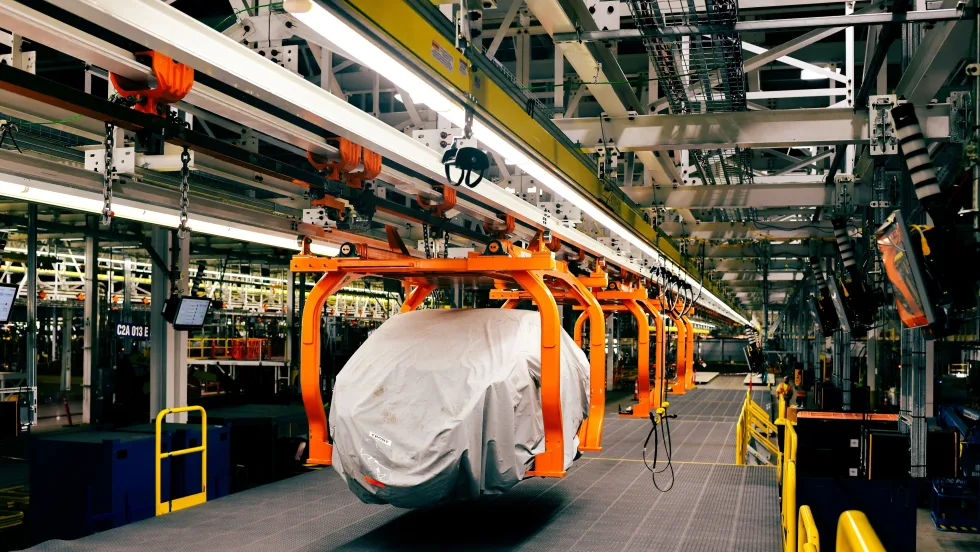
Ford Retools Louisville Plant for Fathom Electric Truck Production
Ford's $2 billion Louisville Assembly Plant overhaul introduces a three-part assembly process for the Fathom midsize electric truck, with production scheduled to begin in 2027.
Read More →
Merchants Fleet Reports 290M EV Miles as Fleets Navigate Changing Electrification Market
From millions in operating savings to hundreds of millions of EV miles, Merchants Fleet’s latest report reveals what’s working and what’s changing in fleet electrification.
Read More →
California District Commits to Electrify 25% of School Bus Fleet by 2028
One of the nation's largest school bus electrification projects to date demonstrates how grants, charging infrastructure, and public-private partnerships can help fleets transition to EVs at scale.
Read More →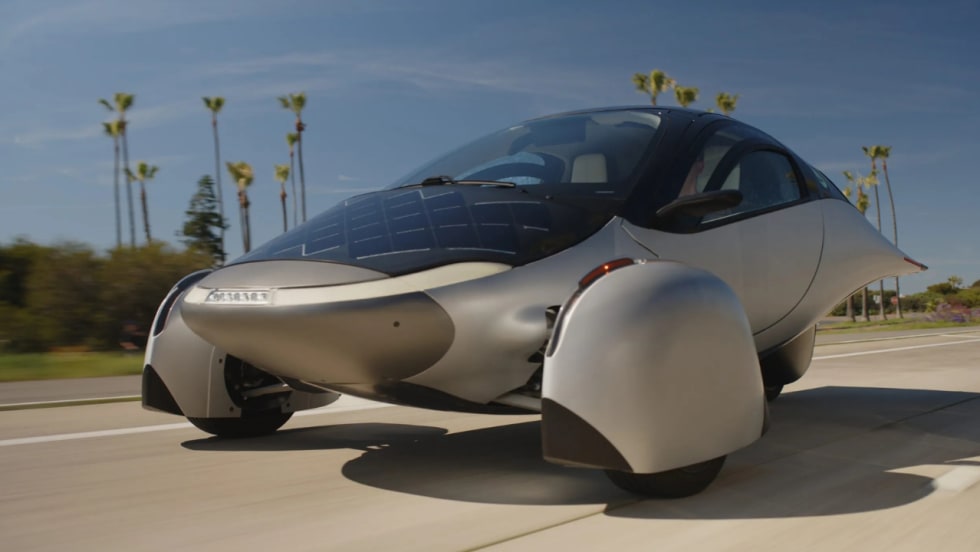
Aptera Orders Bodies and Chassis for Its First 40 Production Vehicles
Aptera Motors Corp. has issued purchase orders for the major structural components of its first 40 vehicles, and body and chassis components are expected to begin arriving in October.
Read More →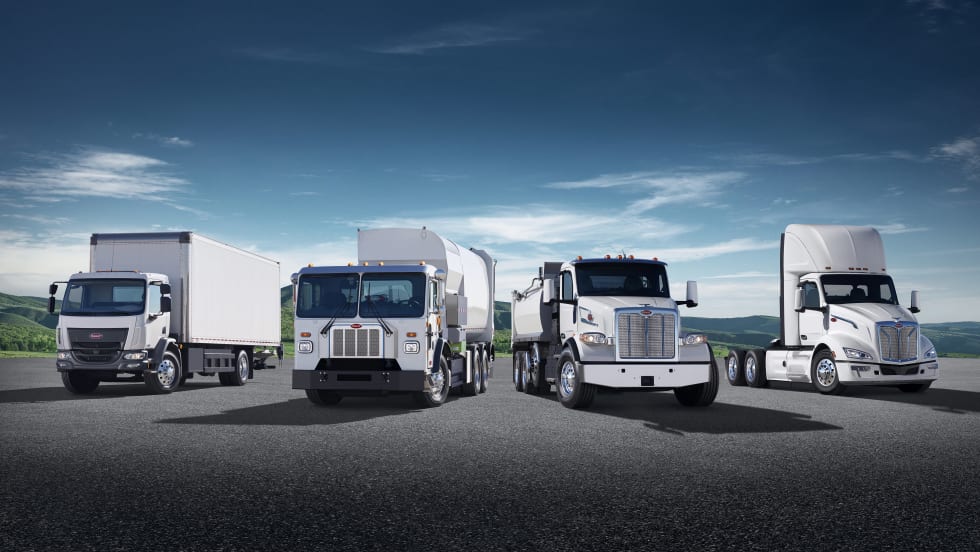
Peterbilt Expands Sourcewell Purchasing Agreement to Include Electric Trucks
The cooperative purchasing contract, now extended through July 2028, adds Peterbilt's battery-electric lineup for eligible government, education, nonprofit and tribal organizations.
Read More →
PITT OHIO Donates DC Fast Chargers to Community College of Allegheny County
The logistics company donated two 75-kW DC fast chargers to CCAC to support electric vehicle education and workforce training programs.
Read More →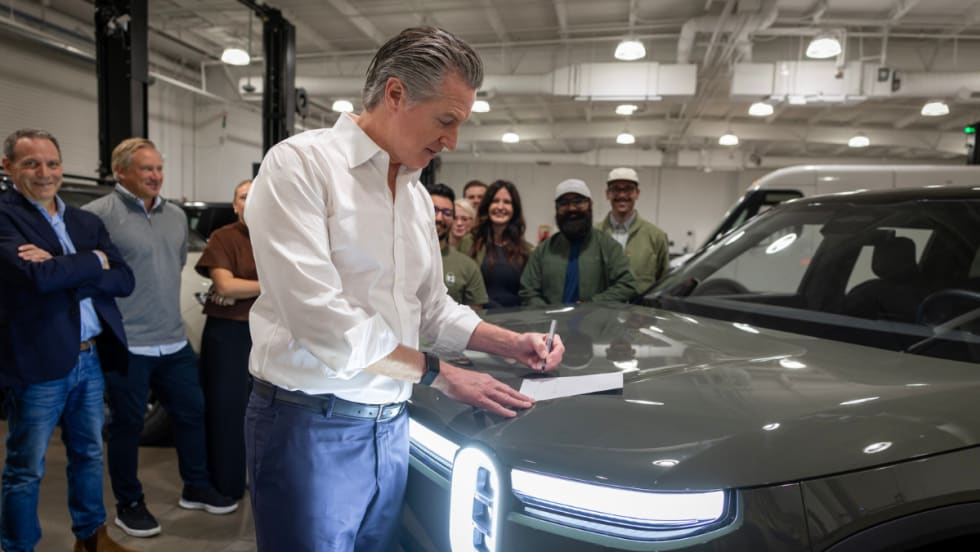
California Governor Approves Instant ZEV Rebates For First-Time Buyers
That instant rebate is the centerpiece of a broader $600 million package Governor Newsom signed into law, keeping California active in the global clean transportation race.
Read More →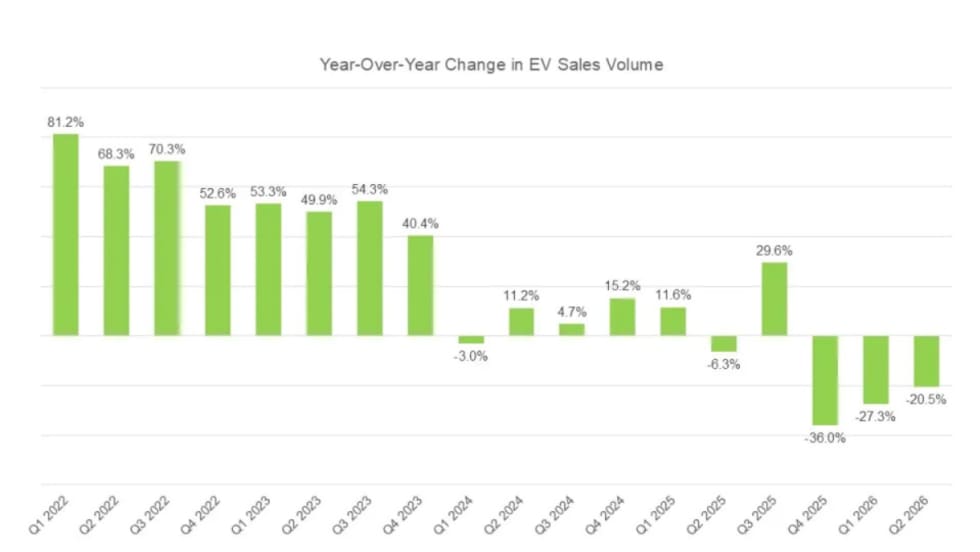
New Vehicle Models Stabilize Electrified Market In Q2
But more credit goes to hybrids than to all-electric vehicles, as more buyers look for fuel-efficient alternatives amid high gas prices.
Read More →
Xos White Paper Asserts LA Olympics Will Lack Enough EV Chargers
The commercial EV fleet company recommends some faster and more flexible remedies to relieve the anticipated shortfall.
Read More →