


Designing the Right Electric Vehicle Charging Depot
Q&A: The precision required for EV fleet charging infrastructure involves a series of steps rooted in specific goals and upfront planning.

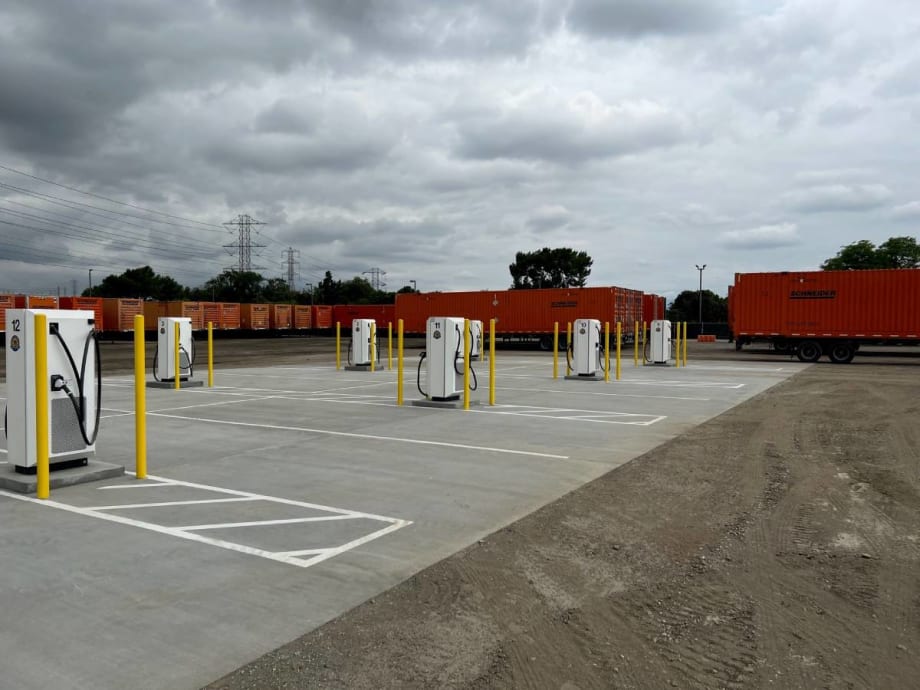
In addition to equipment, an EV charging fleet project might take one to two years. That takes design and installation partners to develop a plan, including a plan for operations and maintenance.
Photo: Martin Romjue / Bobit
Plug n’ play may be suited best to music, but for electric vehicle charging, the opposite applies.
Determining, planning, and installing an EV charging depot involves three primary factors: Time, patience, and plenty of specific information. The more precise the goals and plans, the more success a fleet operation gains with connecting fleet vehicles, duty cycles, and efficient charging times.
For an overview of the steps in concept design and EV power planning, Charged Fleet recently spoke with an expert in this area. Jessica Cain is a professional civil and environmental engineer for Kimley-Horn, one of the nation's leading engineering, planning, and design consulting firms headquartered in Raleigh, N.C. Cain has more than 20 years of experience in the electric vehicle industry, renewable energy, and telecommunications. She has worked in a wide array of efforts that include the development of NEVI (national electric vehicle infrastructure) plans, the design and set up of public and fleet EV charging stations, and ground based and rooftop solar projects.
[The transcribed conversation below has been edited for length and clarity].
Big Charging Projects Overview
Q:Give us a brief overview of the two charging infrastructure projects that you have worked on for fleets.
A: I worked on two very different versions of fleet charging programs. One was for a utility client. They knew right from the start that they were interested in adding solar to provide an onsite source of electricity and leverage battery storage. This helps energy consumption from the grid at peak demand, and they wanted to use as much renewable energy as possible to power their electric vehicles.

Jessica Cain, a professional civil and environmental engineer for Kimley-Horn, has worked in a wide array of efforts that include the development of NEVI (national electric vehicle infrastructure) plans, the design and set up of public and fleet EV charging stations, and ground based and rooftop solar projects.
Photo: Kimley-Horn
The project included an extensive solar canopy and battery storage microgrid controller for over 40 charging stations. The chargers were a combination of level 2 and DC fast chargers for their fleet vehicles that typically drive 50-60 miles per day. The second fleet program that I've been leading for a national logistics company is a series of sites.
The goal is to use only the existing electrical capacity. We focused on level 2 charging stations for vehicles with routes that were typically 80-100 miles a day. That involved quite a bit of planning to ensure the right routes were paired with EVs.
Key Steps for Designs and Plans
Q:What are some of the key design and planning steps for an EV charging depot even before construction starts?
A: There was a lot of upfront planning for both projects, and they differ in approaches, timelines, and budgets. The first step is to understand the goals of the clients. What budget do they want to work within and what does success look like for them?
We start by discussing the use case. Is it for private charging? Is it publicly accessible but geared toward fleet vehicles? A combination? Do they have performance agreements and uptime guarantees that they have signed with private fleets that will use that site? And after that, two steps that go together are a site survey and evaluation and then early coordination with the utility company.
I can't stress enough that early on, it’s critical for the utility company to understand project timelines. We evaluate the electrical configuration of a particular site, work with a utility company to determine the current electrical capacity available for that depot site, and provide the additional load we're requesting in terms of chargers.
Then we work with the utility company to determine the cost and timeline the utility company will need to serve that request. In addition, we evaluate the entry and exit routes, the traffic patterns of the sites, the water patterns, and what subsurface features we might need to consider, especially where we're boring underground or adding large piers to support solar canopies.
Plus, we'll review the environmental permitting requirements, jurisdictional code, and design requirements. There's a lot that goes into it.
Advantages of a Sustainable Microgrid
Q:How do the power grid, battery storage, solar sources all work together to create a reliable charging depot?
A: A microgrid generates electricity onsite, which is typically done with renewables such as solar panels and sometimes also backup generators. Those generators might use a renewable source of fuel such as renewable types of propane, natural gas, or renewable diesel. You might see wind and often a combination of these generation sources. The battery energy storage system, which you'll also hear of called BESS (battery energy storage system), can store the energy generated and deploy it during outages or during peak demand.
You have a resilient site backup in the event of an outage, creating a reliable charging depot. It's the insurance policy that fleet managers are looking for.
Microgrid Versus Direct Power Grid Options
Q: For those fleet operations that only want to be connected to the power grid, what equipment and resources need to be in place for that?
A: If they only want to be connected to the power grid, you can still have those resources. You can still have solar and battery storage and be connected to the power grid. If you are looking at only the power grid without some of those onsite generation resources, you typically see large transformers and large switchgear supporting those facilities.
Q: Regarding the equipment and resources for a microgrid is there anything else that must fit into that equation?
A: The systems would have a microgrid controller, which monitors the status of the onsite generation, the power grid, the battery storage, and the loads. The loads are in the form of charging stations or other demands on the system. The controller can switch between the power sources. We work with clients to set objectives and priorities during the planning process.
It’s critical to determine what portion of the expected daily electricity consumption will come from onsite generation. Other keys for site operations are space and budgetary constraints, the needs and state of the vehicles, and their routes.
Without onsite generation, fleet managers must rely only on the power grid. We work to make electrification as straightforward as possible and enable fleet managers to leverage our insights from our previous experiences.
Lessons Learned from Installing EV Chargers
Q: What would you say are some of the primary lessons that fleet managers can learn from the experience of planning and installing EV chargers based on your observations?
You’re best-off working with a team to create a plan. Clearly outline the objectives and realize that you don't have to be at 100% electrification. If that's your eventual goal, then pick the deadline to achieve it. It's going to take some time, and work toward the milestones to get you there.
Also, what do you want your charging equipment and software platform to provide? What types of ESG or sustainability reports are you looking for? I'll say it originates with the utility company, and work that early into your plan and understand what the cost of upgrades might be and don’t be afraid to talk to others doing the same thing. Ask them also to share their lessons learned.
There are so many fleet managers going through this right now and there are some very real supply chain constraints now. Understand the equipment lead times of the charging equipment, the transformers, and the switchgear. It’s important at the start of a project and it varies depending on the area of the country you're in. Besides the equipment, your fleet project might take a year, 18 months, and in some cases over two years. So that takes design and installation partners to develop a plan, including a plan for operations and maintenance.
Originally posted on Automotive Fleet
More Electric Vehicles

EV Charging Use Is Outpacing Infrastructure Growth
ChargePoint’s 2026 Charging Forward Report points to rising charger use, higher-powered charging, commercial vehicle electrification, and energy-management technology. Here’s what fleets should know.
Read More →
EV Realty Names Henrik Holland President as Charging Platform Expands
The former Prologis Mobility and Shell executive will help expand EV Realty’s truck charging business and move its power-first infrastructure model into autonomous vehicle depots and other fleet sectors.
Read More →
GreenPower Expands New Mexico EV Pilot With Larger Buses, V2G Testing
After logging more than 17,000 electric miles in the first year, New Mexico’s statewide pilot is moving into its second phase with larger vehicles, continued charging evaluations, and more.
Read More →
Can EV-as-a-Service Help Fleets Scale Electrification?
Sustainability Partners CEO Adam Cain explains how matching EVs, charging infrastructure, and duty cycles can help fleets scale electrification.
Read More →
How EV-as-a-Service Is Moving Fleets Beyond Pilots
Adam Cain, president and CEO of Sustainability Partners, explains how EV-as-a-service can help fleets scale deployments by addressing duty-cycle requirements and charging challenges.
Read More →
PowerFlex, The Mobility House Join Forces to Advance Fleet Electrification
Two EV charging providers are joining forces to deliver a broader portfolio of energy management and fleet electrification solutions.
Read More →
Ford Retools Louisville Plant for Fathom Electric Truck Production
Ford's $2 billion Louisville Assembly Plant overhaul introduces a three-part assembly process for the Fathom midsize electric truck, with production scheduled to begin in 2027.
Read More →
Merchants Fleet Reports 290M EV Miles as Fleets Navigate Changing Electrification Market
From millions in operating savings to hundreds of millions of EV miles, Merchants Fleet’s latest report reveals what’s working and what’s changing in fleet electrification.
Read More →
California District Commits to Electrify 25% of School Bus Fleet by 2028
One of the nation's largest school bus electrification projects to date demonstrates how grants, charging infrastructure, and public-private partnerships can help fleets transition to EVs at scale.
Read More →
Aptera Orders Bodies and Chassis for Its First 40 Production Vehicles
Aptera Motors Corp. has issued purchase orders for the major structural components of its first 40 vehicles, and body and chassis components are expected to begin arriving in October.
Read More →