Charged Fleet Logo

Charging Networks and Smart Energy Management

It’s important to know the charging levels, the accessibility of charging levels along the routes you take, and whether you will add chargers at your facility.

by Ronnie Wendt
September 17, 2021
Charging Networks and Smart Energy Management

Electric vehicles (EVs) have large lithium-ion batteries that store direct current (DC) and deliver it on demand.

Photo: Charlotte Stowe/Unsplash

2 min to read


Once you decide on converting your fleet to electric vehicles (EVs), a key consideration for implementation involves the charging network. It's essential to know the charging levels, the accessibility of charging stations along the routes you take, and whether you will add chargers at your facility. 

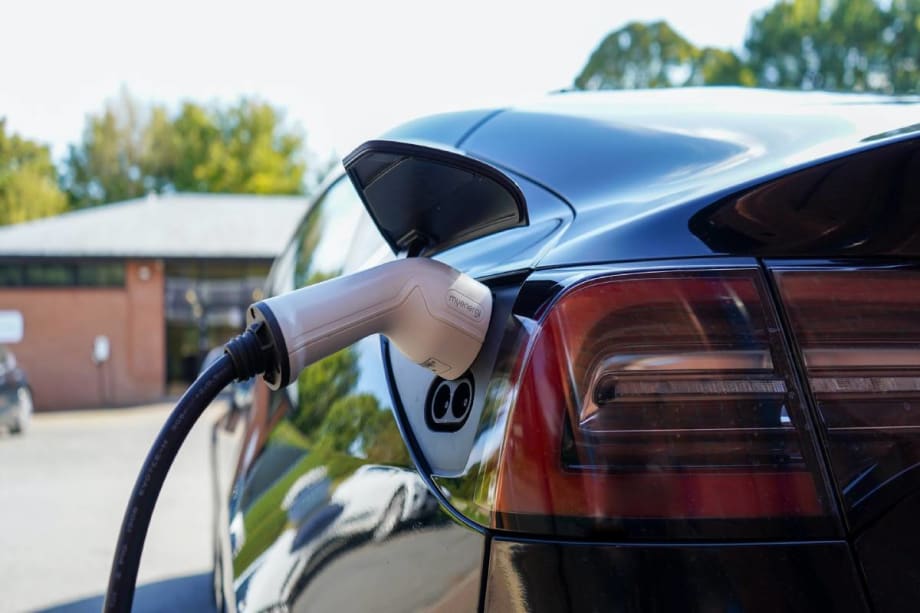
EVs have large lithium-ion batteries that store direct current (DC) and deliver it on demand. This functionality allows direct electricity transfer from the electric grid through a cord that connects the vehicle to a power source or public charging station.

Ad Loading...

The Three Levels to EV Charging


Level 1

Level 1 charging is the slowest form of charging and can be obtained by connecting an EV to a standard household outlet. This is an uncommon form of charging for fleets and is recommended for those fleets that travel 40 miles at most daily.

Level 2

Level 2 charging is the most common type for fleets and can occur at home or at a depot. For most applications, adding chargers to home-based depots will be essential. Level 2 Charging requires a 240-volt at-home outlet (such as the outlet often used for dryers and refrigerators) and a specialized EVSE "box" that becomes the intermediary between the power source and the car. The EVSE costs around $1,200 and adds 10 to 60 miles of range per charge hour.

Level 3

Level 3 charging is the fastest and most expensive method. The charger is roughly the size of a gas pump and is found in public. Drawing 480-volt, Level 3 chargers provide about 90 miles of range in approximately 30 minutes and are ideal for heavy-duty trucks. Most fleets do not need to consider Level 3 Charging due to the incredible expense involved.

Additional considerations include looking into networked smart chargers that use technology to help locate and reserve nearby charging infrastructures and provide summary reports for charging sessions. These differ from stand-alone charging stations because smart chargers are managed with networked software that exchanges financial, driver, and other sensitive data. These are helpful for fleets to find the nearest charging stations on the road.

When assessing your operation, you may realize the need to build more robust charging mechanisms that include on-site power generation to manage risk from power supply disruption. Real-time visibility into your charging network is significant. Ensure you have tools available to deliver real-time visibility of chargers, charging network, and access snapshot uptime performance. Microgrids and generators set on-site will ensure your vehicles will have power when and where you need it. Consider using data analytics and alerts to inform you of charger status and defects, hourly and daily utilization, CO2 generation data, energy use, etc. 

Charging is the fuel for EVs. It is vital for your company and fleet electrification to understand the different charging mechanisms and then implement the best one for your EVs.

Originally posted on Automotive Fleet

Subscribe to Our Newsletter

More Electric Vehicles

Kia Telluride hybrid SUV driving on a mountain road at sunset, highlighting award-winning electrified models recognized by U.S. News for performance, efficiency, and value.

Three Kia Models Win Hybrid, Electric Car Awards From U.S. News & World Report

The magazine highlighted the Telluride HEV, Niro HEV, and Sportage HEV for efficiency, performance, and overall value.

Read More →
Hyundai IONIQ 5 electric SUV parked near wind turbines, named Best Compact Electric SUV, highlighting fast charging, modern design, and efficiency.

Hyundai Sweeps EV and Hybrid Awards On U.S. News & World Report Best List

Hyundai earns three top spots in U.S. News’ 2026 hybrid and EV rankings, led by repeat wins for the Tucson Hybrid and IONIQ 5 and a category win for the new IONIQ 9.

Read More →
PG&E PowerHouse demo home in San Ramon with wall-mounted EV chargers, batteries, and electric systems, showcasing all-electric home technologies and energy management solutions.
Chargingby News/Media ReleaseApril 23, 2026

All Electric Test House Could Ease Path To EV Usage

An experimental model home shows how residential charging could enable electric fleet operations by allowing drivers to take EVs home.

Read More →
Ad Loading...
Subaru electric SUV driving along a coastal highway at sunset, representing the 2027 Getaway with three-row seating and all-electric performance.
Suppliersby News/Media ReleaseApril 22, 2026

Subaru Unveils New Electric SUV, a Three-Row 2027 Subaru Getaway

Subaru introduces the all-electric 2027 Getaway, a three-row SUV with 420 hp, over 300 miles of range, and fast-charging capability, expanding its EV lineup.

Read More →
Charts show March EV sales: 82,629 new units (up month over month, down year over year) and 42,924 used units (up sharply), with EV share at 5.9% new and 2.5% used.

High Gas Prices Spur EV Sales Rebound

EV sales showed strong month-over-month gains and surging used EV demand, while tighter inventory and declining prices narrowed the gap with gas-powered vehicles.

Read More →
Electric vehicle charging in a home garage with wall-mounted charging and energy systems, illustrating WEX EV At-Home fraud protection and fleet charging verification technology.
Chargingby News/Media ReleaseApril 21, 2026

WEX Launches Solution to Close EV At-Home Charging Visibility Gap

At NAFA I&E 2026, WEX debuted an EV solution that adds a layer of verification to help fleets track, validate, and trust every at-home charging dollar.

Read More →
Ad Loading...
Lucid electric vehicle equipped with rooftop sensors parked outside a modern building, representing expanded partnership with Uber for future robotaxi deployment.

Lucid Receives New Investments As It Expands Uber Robotaxi Venture

Lucid and Uber partner to provide at least 35,000 vehicles, backed by new investments totaling $750 million to support the deployment of autonomous fleets.

Read More →
Orange Slate electric pickup truck parked outdoors between industrial structures, representing the company’s upcoming customizable EV supported by new funding.
Suppliersby News/Media ReleaseApril 17, 2026

Slate Auto Raises $650 Million In Funds As It Prepares E-Truck Production

Slate Auto will use the money to advance production plans, with more than 160,000 reservations and deliveries targeted for late 2026.

Read More →
Aerial view of large EV truck charging hub in San Bernardino with multiple charging lanes and infrastructure for fleet vehicles.
Chargingby News/Media ReleaseApril 15, 2026

Major Truck Charging Hub Opens In Southern California

EV Realty opens a 76-port, 9 MW truck charging hub in San Bernardino, designed to support more than 200 medium- and heavy-duty vehicles per day with CCS and MCS capability.

Read More →
Ad Loading...
Dan Hilson and Martin Romjue photos on the title page.
Chargingby Martin RomjueApril 14, 2026

Software Speeds Up EV Fleet Charging

Learn about a new level of energy management that helps fleets control costs while maintaining service reliability. [VIDEO]

Read More →