


Best Practices in Emissions-Reduction Strategies
Delivery, food, and beverage fleets — and everything in between — have proven that it is possible to reduce emissions today, with just a small investment in time and money.

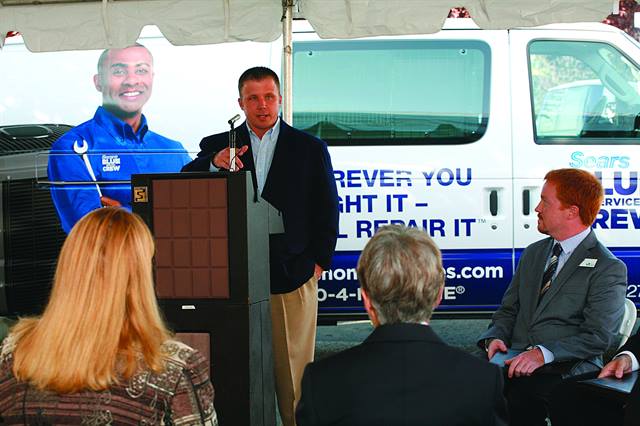
Todd Mouw, vice president, sales and marketing for ROUSH CleanTech speaks from the podium at the launch of Sears’ 27 new propane-autogas vans.
Fleets across the country are looking to reduce emissions, and have found numerous ways of doing so. From deploying alternative-fuel vehicles, to utilizing telematics, to moving to four-cylinder vehicles, major fleets are getting serious and successful at significantly reducing emissions.
Sears Holdings Uses Propane Autogas to Decrease Emissions
Sears Holdings deployed 27 new ROUSH CleanTech Ford E-250 cargo vans, fueled by propane autogas, in its Sears Home Service (SHS) fleet in the Seattle area for in-home service and repair visits.
“Propane autogas has proven safe, reliable and environmentally friendly, and we look forward to putting this fuel to work in our fleet,” said Stu Reed, Sears Holdings senior vice president and president of Sears Home Services. “The conversion of 27 of our product repair vans to propane autogas is one of several initiatives we have underway to improve the efficiency of our fleet of 10,000 Home Services vans. If we get the type of efficiencies we expect by converting these vans to ROUSH CleanTech propane autogas, we could scale this to all 10,000 service vans.”
Other environmental steps SHS has taken include a no-idling policy and installing “economizer” devices on 4,800 of its service vans to ensure technicians drive at speeds that optimize fuel efficiency.
[PAGEBREAK]
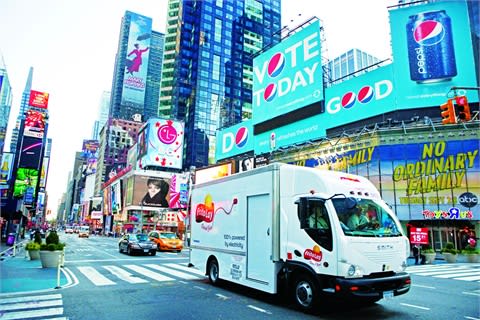
Frito-Lay Rolls Out Fleet of All-Electric Delivery Trucks
California is home to Frito-Lay’s 105 all-electric delivery trucks. The company now has more than 275 electric trucks deployed in the U.S., making it the largest commercial fleet of all-electric trucks in the country, according to the company. In May 2012, Frito-Lay reached a milestone of 1-million all-electric miles driven.
The initial rollout of all-electric trucks in California eliminated the need for an estimated 50,000 gallons of fuel and 1 million lbs. of greenhouse gases (GHG). Frito-Lay expects to eliminate 200,000 gallons of fuel and nearly 4.5 million lbs. of GHG annually in the state of California with its entire electric-vehicle fleet. The all-electric trucks will operate from distribution centers located throughout California.
“Nearly 20 percent of our medium- and heavy-duty delivery trucks in the state of California are slated to be transitioned to all-electric vehicles,” said Leslie Starr Keating, senior vice president, supply chain for Frito-Lay North America.
In the U.S., Frito-Lay hopes to reduce its total fuel consumption and GHG emissions by 50 percent by 2020, compared to its 2007 baseline. This effort supports PepsiCo’s commitments to environmental sustainability, particularly in fuel and GHG reduction. Across PepsiCo, in addition to electric trucks, the company has introduced 267 hybrid-electric trucks and 67 compressed natural gas (CNG) tractors; 176 hybrid-electric vehicles and 14 CNG tractors are scheduled to operate in California.
Once all of the electric trucks are fully deployed across the U.S., Frito-Lay will eliminate the need for 500,000 gallons of fuel annually.
Waste Management Leans on CNG
Waste Management launched a fleet of 25 clean-burning compressed natural gas (CNG) trucks and unveiled Louisville, Ky.’s first public-access, 24-hour CNG fueling station. According to the company, the fleet is the first of its kind in Kentucky, replacing heavy-duty collection trucks with new state-of-the-art vehicles that run on CNG.
Waste Management will roll out additional CNG-powered collection vehicles in the area in the future.
“Since natural gas-powered collection trucks run cleaner and quieter, we’ve made the commitment to use more in our local operations and support sustainability in this community by opening a public CNG station,” said Tim Wells, area vice president for Waste Management in Kentucky, Alabama, Arkansas, and Tennessee.
Waste Management collaborated with PetroCard to develop the first CNG fueling station in Louisville. The new Clean N’ Green Fuel facility, funded by Waste Management and PetroCard, makes CNG available to commercial fleets, as well as private individuals with CNG-equipped vehicles.
The self-service station will be open 24/7 and accept major credit cards as well as Clean N’ Green and other fleet cards such as WEX, Voyager, and Fuelman.
The Louisville fueling station and local CNG vehicles are one element in Waste Management’s broader sustainability efforts in Louisville and elsewhere around North America. In 2007, the company set a goal of reducing fleet emissions 15 percent and increasing fuel efficiency 15 percent by 2020.
“Each additional Class 8 diesel truck we replace with natural gas reduces diesel use by an average of 8,000 gallons per year and cuts annual greenhouse gas emissions by an average of 22 metric tons,” Wells said.
[PAGEBREAK]
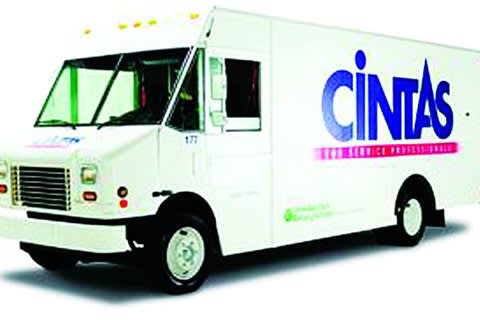
Cintas Uses Telematics to Reduce Idling
Cintas Corp., a company that specializes in providing a range of services, including the design, manufacture, and implementation of corporate identity uniform programs to businesses, is using telematics to reduce the number of vehicle incidents its drivers experience and shrink its carbon footprint.
“Cintas has dedicated considerable resources to ensure its employees return home safely each and every day,” said Josh Moore, six sigma black belt at Cintas.
The company installed telematics technology from inthinc in 1,200 vehicles in its Uniform Rental division.
In addition to improving overall driver safety, Cintas focused on using the technology to reduce vehicle idling. The telematics technology notifies drivers when a vehicle is idling for too long, and, if the driver doesn’t respond, sends a notification to the fleet manager.
“Cintas is making a strong, conscious effort to reduce its footprint on the environment,” Moore said. “By setting up these alerts, our drivers are aware of how long their vehicle has been running idle and are reminded to turn the key, allowing us to not only save on gas, but substantially reduce carbon emissions as well.”
Osram Sylvania Moves to Four-Cylinder Vehicles
Lighting products company Osram Sylvania has made major changes to its U.S. fleet vehicles to meet corporate emissions-reduction goals. Overall, the company has successfully reduced its corporate absolute GHG emissions by 20 percent since 2006. Originally, Osram Sylvania had pledged to reduce its corporate GHG emissions by 10 percent between 2006 and 2011.
The majority of Osram Sylvania’s fleet resides within Sylvania Lighting Services (SLS), the company’s lighting services and maintenance division. Part of the company’s improvement effort involved changing its fleet composition significantly. This included replacing vehicles with larger displacement engines with smaller engines, adding clean-diesel-certified vehicles to its fleet, and implementing a corporate-wide program to reduce idling and speeding.
Osram Sylvania has a total of 1,180 vehicles, according to Jennifer Dolin, manager of sustainability and environmental affairs. Out of that total, 800 are service vehicles (375 bucket trucks, 375 vans and utility vehicles, 30 box trucks, and 20 large aerial/crane trucks), and the rest consist of 80 pickup trucks in a motor pool and 300 SmartWay-certified passenger vehicles for SLS and all corporate sales divisions.
Dolin explained that it replaced 75 percent of its full-size eight-cylinder pickup trucks over the last four years and planned to replace the remaining 25 percent by the end of 2012, all with smaller four-cylinder pickup trucks.
The company also replaces 8- to 10-percent of its service fleet each year in order to cycle out older, inefficient models, replacing them with new, certified clean-idle vehicles and those that don’t need to idle when operating an aerial device. For the aerial trucks, Osram Sylvania is using a direct drive battery system, which eliminates the need for power take-off and any need to idle while operating the aerial device.
The company also has programs and training for its drivers that are designed to reduce emissions.
“We have a strict company vehicle speed limit policy in place and educate our drivers on regular scheduled fleet/safety meetings,” Dolin explained. “We also have an anti-idling policy in place in addition to educating our drivers on federal/state and local regulations/ordinances for vehicle idling.”
In 2011, Osram Sylvania was recognized by the U.S. Department of Energy’s National Clean Fleets partnership for its efforts to reduce emissions.
[PAGEBREAK]
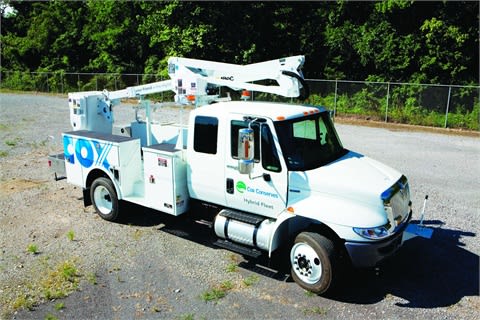
Cox Enterprises Celebrates Sustainability Milestone
In 2012, Cox Enterprises celebrated the fifth anniversary of Cox Conserves, the company’s national sustainability program, and provided details on its 12,000-vehicle fleet’s specific achievements in its latest corporate sustainability report. The company launched the program in 2007.
Cox Enterprises said it currently employs flex-fuel vehicles and is replacing fleet vehicles with a mix of more fuel-efficient models and hybrids. The company said a number of these vehicles are used by its Cox Communications division.
Currently, 90 percent of Cox’s executive fleet vehicles each get 27 mpg, 10 percent of the fleet consists of partial zero emissions vehicles (PZEV) and LEED-certified vehicles, and the fleet now has nearly 300 hybrid vehicles. For the company’s network operations vehicles, 90 percent of them use a new hybrid operating system that allows them to emit zero emissions during aerial operation.
Cox also employs a GPS system, now installed in a total of 5,000 vehicles in the fleet, which the company said saves more than 1 million gallons of fuel each year. The system also helps Cox reduce its carbon footprint by more than 25 million lbs. of CO2. Other features of the GPS/telematics system include a vehicle diagnostics component, which the company said helps drivers reduce fuel use (by controlling engine idle time) and CO2 emissions, and a “GeoManager” module. The company also created a “no-idle” zone at the Atlanta headquarter’s loading dock.
For the executive vehicle program, Cox employees must choose a vehicle that achieves 27 mpg or better. Cox partners with Georgia’s Clean Air Campaign and the Perimeter Transportation Coalition.
[PAGEBREAK]
Several major Fleets Join Future of Fuels Initiative
Several companies and organizations, including Coca-Cola, Nike, Shell, Suncor, UPS, the U.S. Department of Defense, and Walmart have joined an initiative, put together by consulting and research company BSR, which collects data that helps companies make better choices about their fleets’ fuels.
The initiative is designed to give companies more information about the sustainability impact of the fuels their fleets use.
According to BSR, the initiative is designed to help companies answer the following questions:
• How can companies establish an effective, consistent approach to fuel purchasing and use, as questions continue to be raised about new energy sources and technologies?
• What information is available to help them navigate the shifting landscape and promote the most sustainable long-term outcomes?
BSR will publish original research and hold discussions in order to frame the current issues at hand, outline fuel choice options, and highlight opportunities for collaboration with different partners, such as energy and fuel producers and transportation and logistics services.
Originally posted on Automotive Fleet
More Vehicle Research
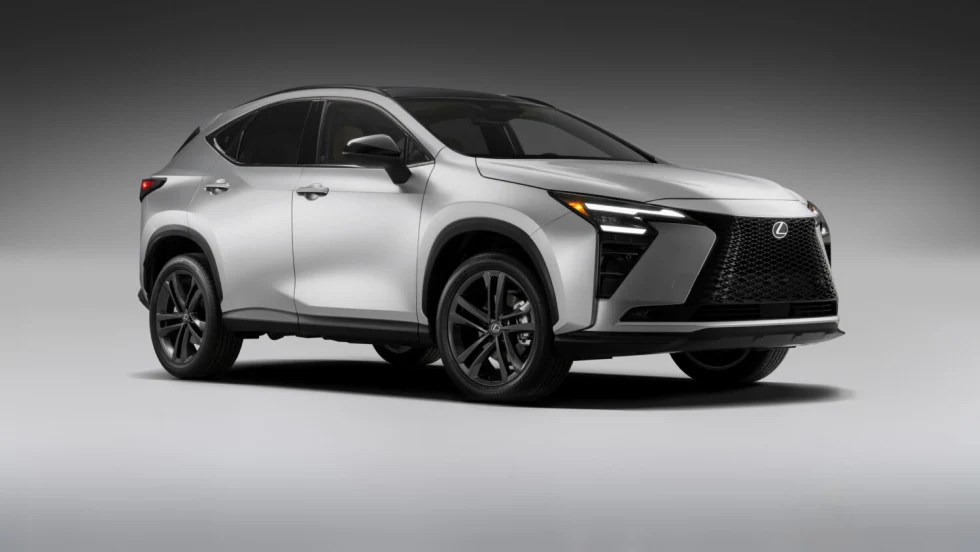
2027 Lexus NX Moves to Fully Electrified Lineup
For 2027, the NX moves to an entirely electrified lineup, with either hybrid or plug-in hybrid powertrains.
Read More →
2027 Mitsubishi Eclipse Sportback Named Green SUV of the Year
Green Car Journal recognized Mitsubishi’s new battery-electric crossover, which offers NACS compatibility and DC fast charging at up to 150 kW.
Read More →
Dave Carroll Named President of Ford Energy
Carroll succeeds Lisa Drake, who will remain with Ford through Dec. 31 to support the leadership transition.
Read More →
City of Long Beach Named No. 1 Green Fleet of 2026
NAFA's 2026 Green Fleet Awards recognized fleets for sustainability efforts spanning alternative fuels, technology, facilities, workplace culture and fleet operations.
Read More →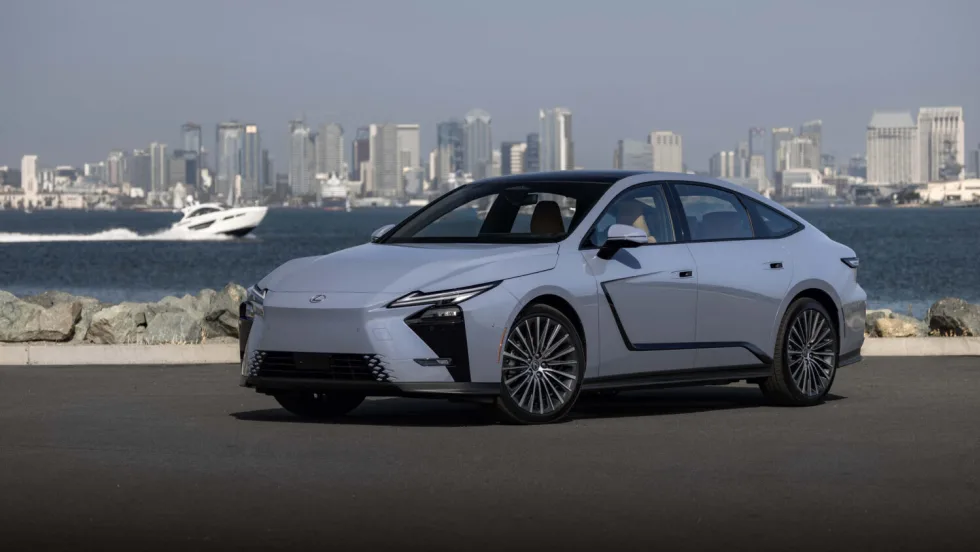
2027 Lexus ES Adds First Battery-Electric Models
The ES 350e and ES 500e join the hybrid ES lineup with up to 338 hp, an EPA-estimated 307 miles of range and standard NACS charging capability.
Read More →
EV Fleet Reality Check: What Operators Wish They Knew Before Electrifying Their Work Vans
Electric work truck upfits bring new compatibility questions. Learn how parts availability, OEM guidance, power demands, and route planning can affect fleet performance.
Read More →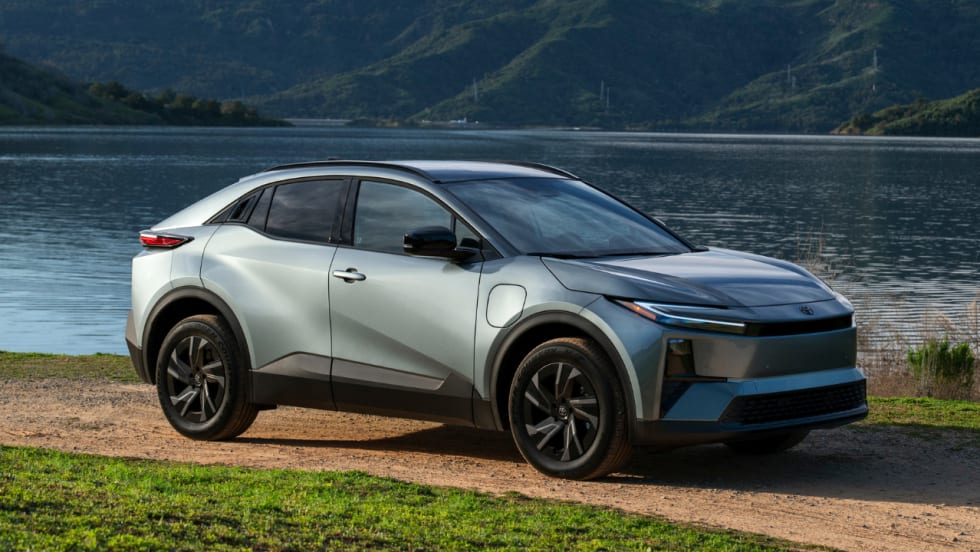
2027 Toyota C-HR Offers 287-Mile Range and Standard AWD
Toyota’s 2027 C-HR brings 287 miles of estimated range, standard all-wheel drive, and NACS fast-charging capability to the compact EV market. See what its mix of performance, cargo space, and everyday technology could offer business users.
Read More →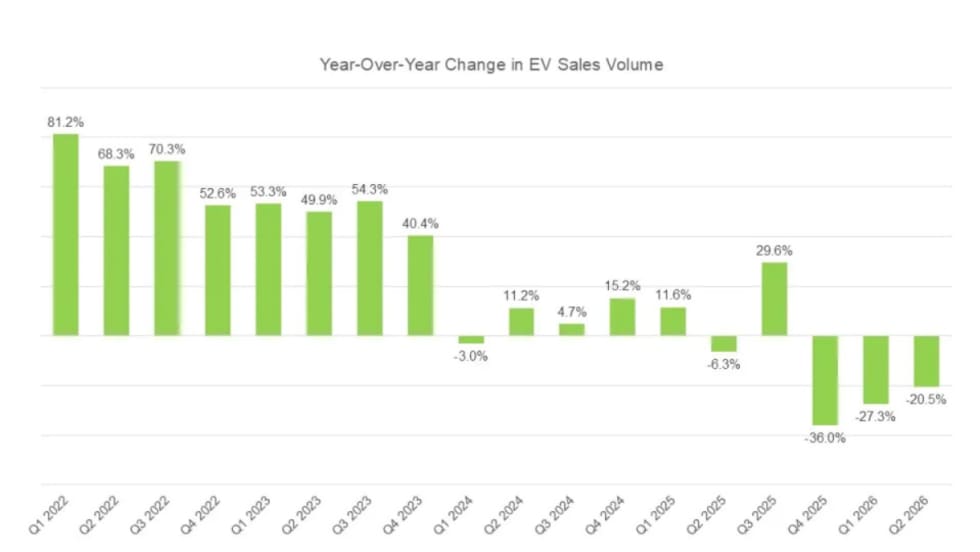
New Vehicle Models Stabilize Electrified Market In Q2
But more credit goes to hybrids than to all-electric vehicles, as more buyers look for fuel-efficient alternatives amid high gas prices.
Read More →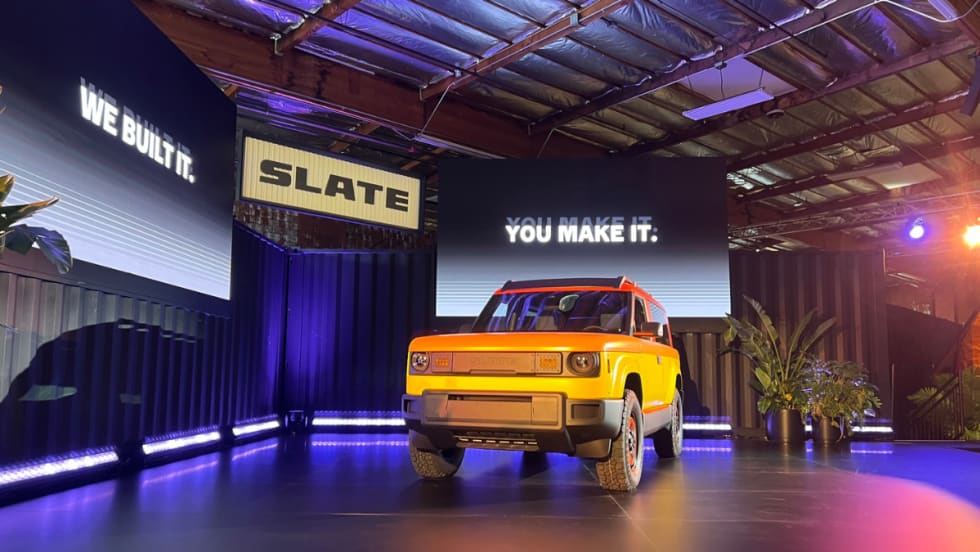
Slate Debuts Colorful, Unique EV Models
A recent media and client event, studded with electric vehicles dressed up on platforms, planted a new position for the manufacturer in the wider EV market. Fleets will find cost-saving advantages.
Read More →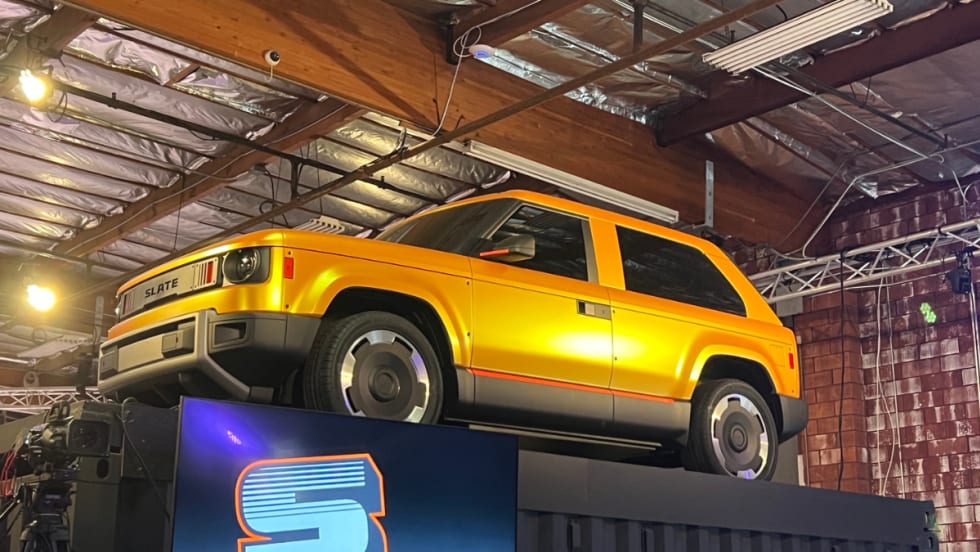
Slate Electric SUV, Pickup Switchable Model Aims For Light-Duty Fleets
Everything about this EV is counterintuitive and understated, making it stand out from the crowd.
Read More →