


Upfitting 101: What Fits My Truck!?
6 Principles for Selecting Upfits with Ergonomics in Mind
Spec’ing vehicles with driver ergonomics will make a happier, safer driver who will be more enthusiastic and better prepared for work.
by Staff
November 15, 2013
Service body trucks enable field technicians to easily reach the tools they use most frequently
4 min to read

Properly loading and unloading a ladder from a ladder rack ensures safe transport and minimal strain.
Musculoskeletal disorders (MSDs), which affect the muscles, nerves, and tendons, usually in the neck, upper extremities, and lower back, are caused by lifting heavy items, reaching overhead, and performing repetitive, high-strain movements — all of which increases risk of injury for drivers and technicians who work out of their vehicles.
Fleets can prevent work-related MSDs through proper ergonomics — that is, fitting the truck to the job and the worker — to lessen muscle fatigue, increase productivity, and reduce the number and severity of MSD incidents.
Vehicle ergonomics also makes economic sense for employers, helping protect their bottom lines from expensive workers’ compensation claims, employee downtime, and other costs associated with injuries, such as MSD.
“It is ideal to specify a vehicle that makes it easier for employees to do their job and limits opportunities for injury,” said Sean Otterberg, manager, special projects, Auto Truck Group, which specializes in the design, manufacturing, and installation of truck equipment for a wide range of fleet applications.
And, a growing number of fleets seem to be taking this idea to heart.
What Fleets Are Focusing On
“Fleets are focusing on higher vehicle return on investment (ROI), worker health, reducing injury claims, and improving driver satisfaction. As a result, fleet managers are reaching out to [their fleet management companies] to make ergonomic recommendations for upfits packages,” said Joe Birren, light-duty truck application specialist with Donlen, a full-service fleet management company headquartered in Northbrook, Ill., and a wholly owned subsidiary of the Hertz Corporation.
Ken Gillies, manager of truck ordering and engineering at GE Capital Fleet Services, a full-service fleet management company based in Eden Prairie, Minn., agreed. “Once you bring the safety supervisors into the vehicle specification discussion, it becomes a lot less about the capitalized cost.
The safety people will say, ‘Yes, it may cost a few hundred dollars more for an ergonomic friendly ladder rack, but we could spend $50,000 in a heartbeat on one driver that has an injury,’ ” Gillies said.
To best select ergonomic upfits, follow these six ergonomic principles:
Create Easy-to-Reach Access
What tools and equipment does the technician need most frequently? Are those items stored in a way that they can be accessed with minimal strain? Make it easier for technicians to load and reach their equipment ergonomically by spec’ing upfits such as drop-down ladder racks, slide-out cargo trays and drawers, and exterior side-access panels on pickup truck toppers and inserts.

Service body trucks enable field technicians to easily reach the tools they use most frequently
Step In and Out with Minimal Movement
How high is the first step into the cabin or cargo area? Is it at a height that presents minimal strain for workers to enter and exit the vehicle? Or is there potential for injury?
Charles Mathew, senior order specialist for Donlen, advised that fleets should consider running boards or step bars, hitch steps, side-door step wells (for box trucks), and grab handles to ensure safer ingress and egress from the cargo area.
Spec Vehicle Height for Driver Posture
When technicians must bend their necks and backs for extended periods of time, they’re at risk of chronic injuries. Birren with Donlen recommended making sure the van roof configuration or truck body interior height accommodates workers who spend significant amounts of time each day in the vehicle cargo area, so that they have enough room to work while maintaining proper posture.
Invest in Leverage Equipment
“Fleet managers should solicit input from their workers: Are there heavier items on the floor? Why don’t we get them up within reach and put them in a spot where they’re easier to move?” advised Otterberg with Auto Truck Group.
For heavy cargo that could cause strain and fatigue for workers, especially those items that must be lifted several times a day, Otterberg recommended spec’ing lifting devices, such as a small crane or liftgate, depending on the vehicle and application.
Minimize the Weight of Movable Truck Parts
Take stake bodies, for example, which are typically built out of heavy steel. The lighter the material for each rack section, the less effort and time it takes to remove all of them to load and unload cargo. When appropriate to the application, consider spec’ing stakes manufactured with lightweight materials, such as composite or aluminum, to minimize fatigue for workers and, in turn, boost overall productivity.
Remove Driver Obstructions to Increase Comfort
Gillies pointed to partition placement (between the cabin and cargo areas) inside work vans as a potential issue when it comes to driver comfort. This is because partitions can impede drivers (especially taller drivers) from being able to recline the seat sufficiently. In these instances, he recommended working with the upfitter to determine the optimal partition placement to accommodate drivers who need more room without sacrificing cargo space requirements.
“If you give the driver a more comfortable seating position, they’re going to be less prone to back tension when they do need to lift something in or out of their vehicle,” Gillies said. “If there’s less stress on the driver, he or she is going to be happier and more productive. And, a happier driver is going to be doing a better job for your customer.”
The better an employee’s customer relations are the better the company’s bottom line will be.
Topics:ErgonomicsAuto Truck GroupLadder RacksService BodiesUtility FleetsCargo ManagementElectric Vehicles
Originally posted on Work Truck Online
Subscribe to Our Newsletter
More Electric Vehicles

EV Charging Use Is Outpacing Infrastructure Growth
ChargePoint’s 2026 Charging Forward Report points to rising charger use, higher-powered charging, commercial vehicle electrification, and energy-management technology. Here’s what fleets should know.
Read More →
EV Realty Names Henrik Holland President as Charging Platform Expands
The former Prologis Mobility and Shell executive will help expand EV Realty’s truck charging business and move its power-first infrastructure model into autonomous vehicle depots and other fleet sectors.
Read More →
GreenPower Expands New Mexico EV Pilot With Larger Buses, V2G Testing
After logging more than 17,000 electric miles in the first year, New Mexico’s statewide pilot is moving into its second phase with larger vehicles, continued charging evaluations, and more.
Read More →
Can EV-as-a-Service Help Fleets Scale Electrification?
Sustainability Partners CEO Adam Cain explains how matching EVs, charging infrastructure, and duty cycles can help fleets scale electrification.
Read More →
How EV-as-a-Service Is Moving Fleets Beyond Pilots
Adam Cain, president and CEO of Sustainability Partners, explains how EV-as-a-service can help fleets scale deployments by addressing duty-cycle requirements and charging challenges.
Read More →
PowerFlex, The Mobility House Join Forces to Advance Fleet Electrification
Two EV charging providers are joining forces to deliver a broader portfolio of energy management and fleet electrification solutions.
Read More →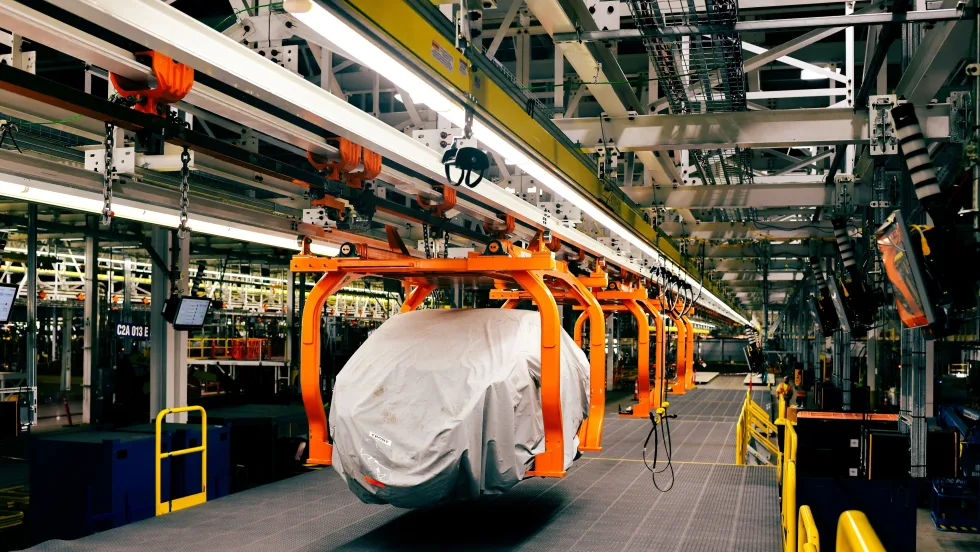
Ford Retools Louisville Plant for Fathom Electric Truck Production
Ford's $2 billion Louisville Assembly Plant overhaul introduces a three-part assembly process for the Fathom midsize electric truck, with production scheduled to begin in 2027.
Read More →
Merchants Fleet Reports 290M EV Miles as Fleets Navigate Changing Electrification Market
From millions in operating savings to hundreds of millions of EV miles, Merchants Fleet’s latest report reveals what’s working and what’s changing in fleet electrification.
Read More →
California District Commits to Electrify 25% of School Bus Fleet by 2028
One of the nation's largest school bus electrification projects to date demonstrates how grants, charging infrastructure, and public-private partnerships can help fleets transition to EVs at scale.
Read More →
Aptera Orders Bodies and Chassis for Its First 40 Production Vehicles
Aptera Motors Corp. has issued purchase orders for the major structural components of its first 40 vehicles, and body and chassis components are expected to begin arriving in October.
Read More →