



MoveEV Introduces Fleet Electric Vehicle Home Charging Saving Calculator
MoveEV Unveils Stipend vs. True Cost Calculator for Home EV Charging
MoveEV’s new Stipend vs. True Charging Cost Calculator helps fleet managers uncover hidden costs, eliminate tax waste, and ensure fair, compliant reimbursements. See how much your work truck fleet could save!
January 21, 2025
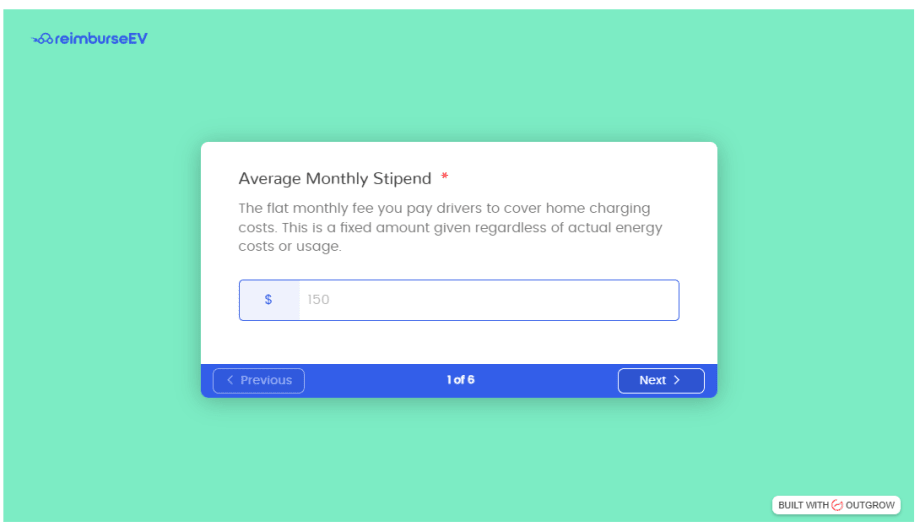
MoveEV's new Stipend vs. True Charging Cost Calculator gives fleet managers a clear view of the true cost of at-home EV charging, helping eliminate unnecessary spending and legal risks
Photo: MoveEV
2 min to read
MoveEV, a provider of at-home charging reimbursements for corporate and government EV fleets, has launched its new Stipend vs. True Charging Cost Calculator, a tool designed to help fleet managers understand the hidden costs of their home charging reimbursement program and unlock significant savings.
When organizations send electric fleet vehicles home to charge, they often offer employees a monthly stipend to cover the cost of home electricity, which leads to substantial over-compensation and economic waste. This occurs because stipend payments are taxed as income, which means that as much as 37.5% of the reimbursement budget could be diverted to federal and FICA taxes alone.
The result is an inefficient program that can drain a work truck fleet manager’s budget without providing real value to employees. By entering basic information, such as average monthly stipend amounts, annual mileage, vehicle efficiency, and local utility rates, MoveEV’s new “true-cost” calculator generates a customized report that identifies potential savings, tax waste, and miscompensation.
The new calculator empowers commercial fleet managers to move away from inefficient stipend programs and transition to a true cost reimbursement model that ensures fair compensation for employees while maintaining compliance with legal requirements.
“It is bad practice for organizations to provide employees with a stipend for at-home charging.’” said David Lewis, Founder & CEO of MoveEV. “If you have a fleet of 50 drivers, offering a stipend of $150 a month easily equates to spending $30,000 a year just on federal taxes alone, and corporations are likely overpaying for the electricity on top of that. Switching to a ‘true cost’ reimbursement model can save companies $60,000 annually.”
Under-compensation is also a serious issue. If a stipend is too low or doesn’t accurately reflect the true cost of home charging, companies risk exposing themselves to potential legal liability. Under laws like CA2802, employers are required to fully reimburse employees for any necessary expenses incurred in the course of performing their job duties, which includes the costs of using personal electricity for charging company-owned fleet vehicles and work trucks.
Failing to properly reimburse employees can result in employee dissatisfaction and legal claims, which could lead to costly consequences for the employer.
“Employee dissatisfaction due to undercompensation isn’t just a morale issue; it can lead to legal risks as well,” Lewis added. “Running an inaccurate and more expensive program t makes no sense.”
MoveEV’s new Stipend vs. True Cost Calculator offers work truck fleet managers a straightforward way to compare stipend vs. true cost calculations to make informed decisions.
Originally posted on Work Truck Online
More Electric Vehicles
EV Charging Use Is Outpacing Infrastructure Growth
ChargePoint’s 2026 Charging Forward Report points to rising charger use, higher-powered charging, commercial vehicle electrification, and energy-management technology. Here’s what fleets should know.
Read More →
EV Realty Names Henrik Holland President as Charging Platform Expands
The former Prologis Mobility and Shell executive will help expand EV Realty’s truck charging business and move its power-first infrastructure model into autonomous vehicle depots and other fleet sectors.
Read More →
GreenPower Expands New Mexico EV Pilot With Larger Buses, V2G Testing
After logging more than 17,000 electric miles in the first year, New Mexico’s statewide pilot is moving into its second phase with larger vehicles, continued charging evaluations, and more.
Read More →
Can EV-as-a-Service Help Fleets Scale Electrification?
Sustainability Partners CEO Adam Cain explains how matching EVs, charging infrastructure, and duty cycles can help fleets scale electrification.
Read More →
How EV-as-a-Service Is Moving Fleets Beyond Pilots
Adam Cain, president and CEO of Sustainability Partners, explains how EV-as-a-service can help fleets scale deployments by addressing duty-cycle requirements and charging challenges.
Read More →
PowerFlex, The Mobility House Join Forces to Advance Fleet Electrification
Two EV charging providers are joining forces to deliver a broader portfolio of energy management and fleet electrification solutions.
Read More →
Ford Retools Louisville Plant for Fathom Electric Truck Production
Ford's $2 billion Louisville Assembly Plant overhaul introduces a three-part assembly process for the Fathom midsize electric truck, with production scheduled to begin in 2027.
Read More →
Merchants Fleet Reports 290M EV Miles as Fleets Navigate Changing Electrification Market
From millions in operating savings to hundreds of millions of EV miles, Merchants Fleet’s latest report reveals what’s working and what’s changing in fleet electrification.
Read More →
California District Commits to Electrify 25% of School Bus Fleet by 2028
One of the nation's largest school bus electrification projects to date demonstrates how grants, charging infrastructure, and public-private partnerships can help fleets transition to EVs at scale.
Read More →
Aptera Orders Bodies and Chassis for Its First 40 Production Vehicles
Aptera Motors Corp. has issued purchase orders for the major structural components of its first 40 vehicles, and body and chassis components are expected to begin arriving in October.
Read More →