


Learn More: How Leveraging Technologies Makes Fleets More Efficient
Leveraging AI & Data Technologies to Better Control Charge Costs for Electric Vehicles
Advanced data and sophisticated AI-powered connected telematics are now in place to help fleet operators and users identify the most optimum time to plug in.
by Sumit Chauhan, Cerebrum X
October 2, 2023
Understanding AI and data can help fleets control costs.
Photo: Canva
4 min to read
Battery charging for electric vehicles (EV) remains difficult because of high electricity costs, and users of electric vehicles are frustrated by inconsistent pricing practices, frequently broken equipment, and a lack of battery chargers in strategic locations for all but Tesla drivers.
Some drivers find charging for EVs to be a frustrating experience, especially for those located in states with steadily rising electricity rates due to inflation and intermittent renewable energy sources (wind and solar power).
According to a J.D. Power study of EV owners who use Level 2 charging stations, overall satisfaction with the charging experience has decreased 12 points since last year, primarily because rising electricity prices are starting to affect consumers directly.
Because the permitting and construction of chargers can take 18 months or longer, those funds have not produced many new chargers.
This issue also affects vehicle fleet operators and businesses with fleets since each has a significant interest in “going green” with their fleets.
Fortunately, advanced data and sophisticated AI-powered connected telematics are now in place to help fleet operators and users identify the most optimum time to plug in.
The Cost of Electricity Can Be Problematic
Aside from all the challenges with infrastructure, the energy costs alone can be severely problematic for fleets and users of EVs, further driving the need for this advanced connected vehicle data and insights.
The energy cost for an EV is equated to the cost of electricity per kilowatt-hour (kWh) and the vehicle's energy efficiency.
For example, to determine the energy cost per mile of an electric vehicle, select the location on the left axis (Electricity Cost per kWh) at 10 cents in the graph below.
Draw a horizontal line to the right until you bisect the EV 3 mi/kWh line. Now draw a vertical line down until you bisect the bottom axis (Energy Cost per Mile).
This tells you that the fuel for an electric vehicle with an energy efficiency of 3 miles per kWh costs about 3.3 cents per mile when electricity costs 10 cents per kWh.
It is important to note that electricity costs in the U.S. is about 10 cents per kWh, while the average residential rate is about 11.7 cents per kWh.
Charge rates for EVs in select areas may vary by time of use, day, and season. In the past, these rates have ranged from 3 cents to as high as 50 cents per kWh. Older electric vehicles can also have varying levels of electricity usage, as well as different brands of vehicles.
To determine a gasoline vehicle's energy cost per mile, pick the location on the right axis (Gasoline Cost per gallon) at $3.50.
Draw a horizontal line to the left until you bisect the Gas 22 mi/gal line. Now draw a vertical line down until you bisect the bottom axis (Energy Cost per Mile). This tells you that the fuel for a gasoline vehicle with an energy efficiency of 22 miles per gallon costs about 15.9 cents per mile when gasoline costs $3.50 per gallon.
The mileage for commercial fleet vehicles such as light-duty pickups range from below 17 miles per gallon to generally about 22 miles per gallon.
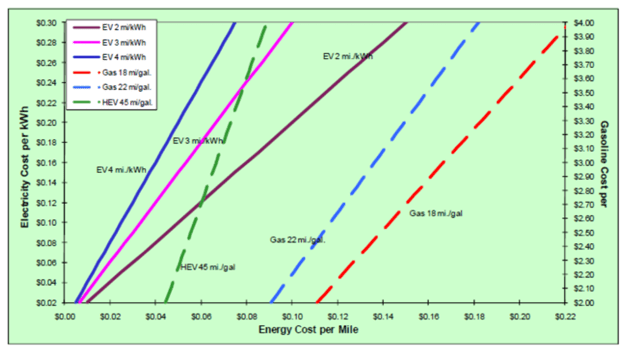
Photo: Idaho National Laboratory
Understanding How AI and Data can Help Control Costs
Despite all of this, leading AI and data technology are offering intelligent solutions that can reduce the headaches and costs associated with driving and charging an EV, or a fleet of EVs for a business.
Today’s leading EV charge data solutions for fleets and vehicles leverage an Augmented Deep Learning Platform (ADLP) that leverages machine learning and data science with unique indicators that allow predictive real-time data insights to OEMs that enhance their vehicle’s performance and quality as well as the customer experience related to vehicle usage.
This data connects and analyzes everything in real time from charge stations to optimized energy outputs at locations and time of day, cost savings, congestion reduction rates, and it can even predict failure cycles that holistically feeds data into smart city data infrastructure platforms.
This AI-driven connected vehicle data helps fleet customers and EV users make a more seamless, successful transition to a greener, cleaner, and sustainable future.
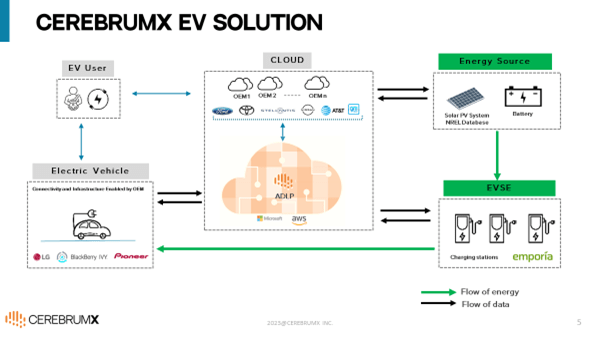
Photo: Cerebrum X
Users can charge EVs with accurate energy cost and rate plan selections. Intelligent energy consumption means they will lower the impact on their energy bill and get the most out of their solar panels by charging Evs at the most optimal time.
Lastly, they can leverage the power of smart cities by receiving in-car notifications for the nearest charging station, and reserving charging slots soon.
With these AI and data strategies available, fleets and drivers of EVs will have a better experience in adopting a greener solution for transportation while better controlling the cost of charging.
Originally posted on Automotive Fleet
Subscribe to Our Newsletter
More Electric Vehicles
EV Charging Use Is Outpacing Infrastructure Growth
ChargePoint’s 2026 Charging Forward Report points to rising charger use, higher-powered charging, commercial vehicle electrification, and energy-management technology. Here’s what fleets should know.
Read More →
EV Realty Names Henrik Holland President as Charging Platform Expands
The former Prologis Mobility and Shell executive will help expand EV Realty’s truck charging business and move its power-first infrastructure model into autonomous vehicle depots and other fleet sectors.
Read More →
GreenPower Expands New Mexico EV Pilot With Larger Buses, V2G Testing
After logging more than 17,000 electric miles in the first year, New Mexico’s statewide pilot is moving into its second phase with larger vehicles, continued charging evaluations, and more.
Read More →
Can EV-as-a-Service Help Fleets Scale Electrification?
Sustainability Partners CEO Adam Cain explains how matching EVs, charging infrastructure, and duty cycles can help fleets scale electrification.
Read More →
How EV-as-a-Service Is Moving Fleets Beyond Pilots
Adam Cain, president and CEO of Sustainability Partners, explains how EV-as-a-service can help fleets scale deployments by addressing duty-cycle requirements and charging challenges.
Read More →
PowerFlex, The Mobility House Join Forces to Advance Fleet Electrification
Two EV charging providers are joining forces to deliver a broader portfolio of energy management and fleet electrification solutions.
Read More →
Ford Retools Louisville Plant for Fathom Electric Truck Production
Ford's $2 billion Louisville Assembly Plant overhaul introduces a three-part assembly process for the Fathom midsize electric truck, with production scheduled to begin in 2027.
Read More →
Merchants Fleet Reports 290M EV Miles as Fleets Navigate Changing Electrification Market
From millions in operating savings to hundreds of millions of EV miles, Merchants Fleet’s latest report reveals what’s working and what’s changing in fleet electrification.
Read More →
California District Commits to Electrify 25% of School Bus Fleet by 2028
One of the nation's largest school bus electrification projects to date demonstrates how grants, charging infrastructure, and public-private partnerships can help fleets transition to EVs at scale.
Read More →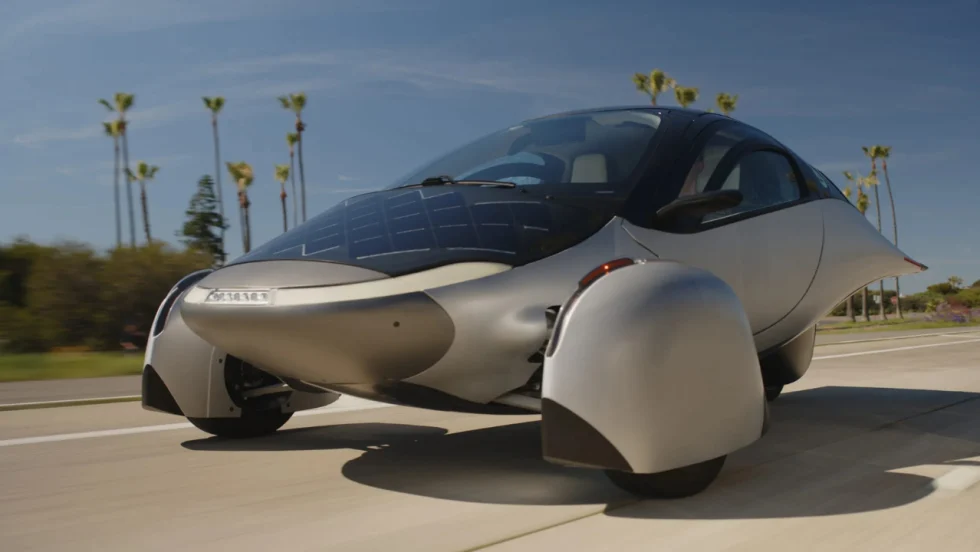
Aptera Orders Bodies and Chassis for Its First 40 Production Vehicles
Aptera Motors Corp. has issued purchase orders for the major structural components of its first 40 vehicles, and body and chassis components are expected to begin arriving in October.
Read More →