


Polestar: 2025 To Be Strongest in History
See how Polestar’s strategy revamps operations, boosts EV sales, and drives sustainable growth with innovative technology and market expansion.
January 17, 2025

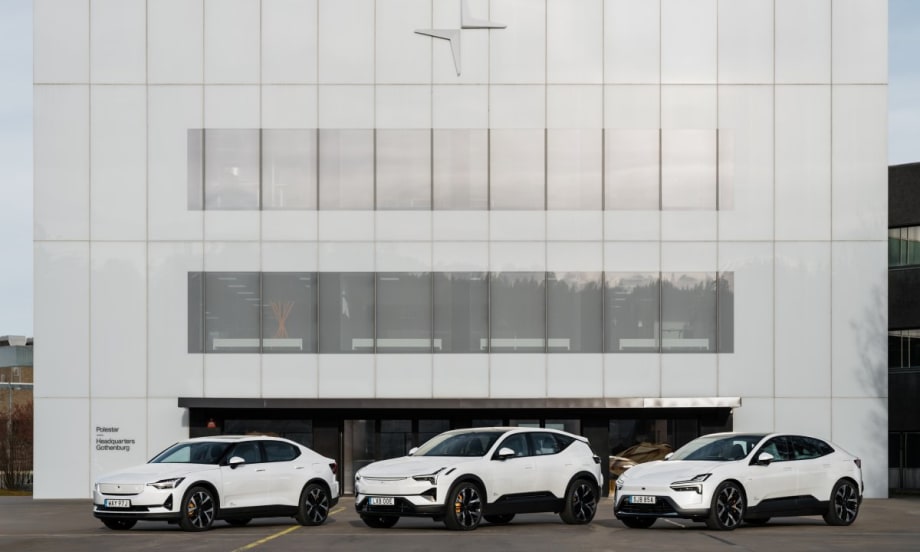
Polestar expects to gain commercial and operational momentum, further margin, fixed costs, and working capital improvements in 2026 onwards, with a positive free cash flow after investments expected in 2027.
Photo: Polestar
4 min to read
Polestar recently presented an updated strategy as the company starts its next chapter, with significant changes being made to improve operational, commercial, and financial performance.
The updated business plan targets a compound annual retail sales volume growth of 30-35% for 2025 to 2027 and a positive adjusted EBITDA in 2025.
“We expect 2025 to be the strongest year in Polestar’s history,” Polestar CEO Michael Lohscheller said.
Polestar expects to gain commercial and operational momentum, further margin, fixed costs, and working capital improvements in 2026 onwards, with a positive free cash flow after investments expected in 2027.
“We are building on the strong Polestar brand with design and performance at its core. But significant changes are needed to make this well-respected progressive brand a successful and viable business,” Lohscheller said.
The company aims to accelerate retail expansion and commercial transformation while adjusting future model lineups and significantly reducing its cost base.
“Geely will continue to support Polestar’s development and strategy implementation, including working with Polestar to secure additional equity and debt funding,” Daniel Donghui Li, Geely Holding Group CEO and Polestar board member, said.
Polestar 5 to Arrive in 2025, Polestar 7 to be produced in Europe
After the global success of the Polestar 2 and the ramp-up of deliveries of Polestar 3 and Polestar 4, the second half of 2025 will see the planned start of sales of the Polestar 5.
The Polestar 5 is a four-seat grand tourer based on Polestar’s in-house developed bonded-aluminum platform. It will also be the first Polestar to use 800-Volt technology.
Polestar also announced that the Polestar 7 will be a premium compact SUV and is planned to be manufactured in Europe, with production already in place in the USA, South Korea, and China.
Over time, from Polestar 7 onwards, the company will gradually move from a multi-platform approach to one single architecture, reducing complexity, costs, and investments.
“It is incredibly exciting to bring Polestar’s design ethos to a new segment. Polestar 7 will be everything our customers expect from us, both in terms of design and performance,” Philipp Römers, Polestar’s head of design, said.
Polestar’s Active Sales Model and Commercial Expansion
Polestar is accelerating its shift to an active selling model, with new retail partners and more retail spaces.
Together with its partners, Polestar plans to expand from 70 to 130 and from 36 to 57 retail spaces in Europe and North America. The established direct-to-consumer online sales channel will remain, giving customers and commercial fleets a choice in how they want to buy a Polestar.
The changes being made to Polestar’s commercial operations are already seeing an impact, with a 5.3% increase in retail sales in Q4 2024 and a 37.2% increase in order intake in Q4 2024 compared to the same quarter last year. The Polestar 3 and 4 represent 56% of order intake in Q4 2024.
Polestar’s new market expansion will focus on France, with sales starting in 2025. Additional expansion across Eastern Europe, Asia, and Latin America is planned from 2026 onwards.
Increasing Sales of CO2 credits and New Charging Offers
Moving forward, Polestar expects significantly increased revenue contribution from the sales of CO2 credits.
With traditional OEMs struggling to transition to electric vehicles, the demand for these credits is expected to increase to a three-digit million-dollar amount per year from 2025. Polestar has already created an EU CO2 pool with four OEMs for 2025.
Polestar is also launching Polestar Energy in several European markets. Through the service, customers can reduce their home charging costs by up to 30% using the Polestar Energy app. The more Polestar customers charge and support the grid through Polestar Energy, the more benefits they get.
The service will be launched in several additional markets during the second half of the year, with the launch of bidirectional charging capabilities in Polestar’s line-up making the offer even more attractive.
With Polestar Charge, European customers can access over 850,000 charging points, including Tesla Superchargers. In North America, customers can access over 17,800 Tesla Superchargers with a NACS adaptor.
Originally posted on Automotive Fleet
More Electric Vehicles

EV Charging Use Is Outpacing Infrastructure Growth
ChargePoint’s 2026 Charging Forward Report points to rising charger use, higher-powered charging, commercial vehicle electrification, and energy-management technology. Here’s what fleets should know.
Read More →
EV Realty Names Henrik Holland President as Charging Platform Expands
The former Prologis Mobility and Shell executive will help expand EV Realty’s truck charging business and move its power-first infrastructure model into autonomous vehicle depots and other fleet sectors.
Read More →
GreenPower Expands New Mexico EV Pilot With Larger Buses, V2G Testing
After logging more than 17,000 electric miles in the first year, New Mexico’s statewide pilot is moving into its second phase with larger vehicles, continued charging evaluations, and more.
Read More →
Can EV-as-a-Service Help Fleets Scale Electrification?
Sustainability Partners CEO Adam Cain explains how matching EVs, charging infrastructure, and duty cycles can help fleets scale electrification.
Read More →
How EV-as-a-Service Is Moving Fleets Beyond Pilots
Adam Cain, president and CEO of Sustainability Partners, explains how EV-as-a-service can help fleets scale deployments by addressing duty-cycle requirements and charging challenges.
Read More →
PowerFlex, The Mobility House Join Forces to Advance Fleet Electrification
Two EV charging providers are joining forces to deliver a broader portfolio of energy management and fleet electrification solutions.
Read More →
Ford Retools Louisville Plant for Fathom Electric Truck Production
Ford's $2 billion Louisville Assembly Plant overhaul introduces a three-part assembly process for the Fathom midsize electric truck, with production scheduled to begin in 2027.
Read More →
Merchants Fleet Reports 290M EV Miles as Fleets Navigate Changing Electrification Market
From millions in operating savings to hundreds of millions of EV miles, Merchants Fleet’s latest report reveals what’s working and what’s changing in fleet electrification.
Read More →
California District Commits to Electrify 25% of School Bus Fleet by 2028
One of the nation's largest school bus electrification projects to date demonstrates how grants, charging infrastructure, and public-private partnerships can help fleets transition to EVs at scale.
Read More →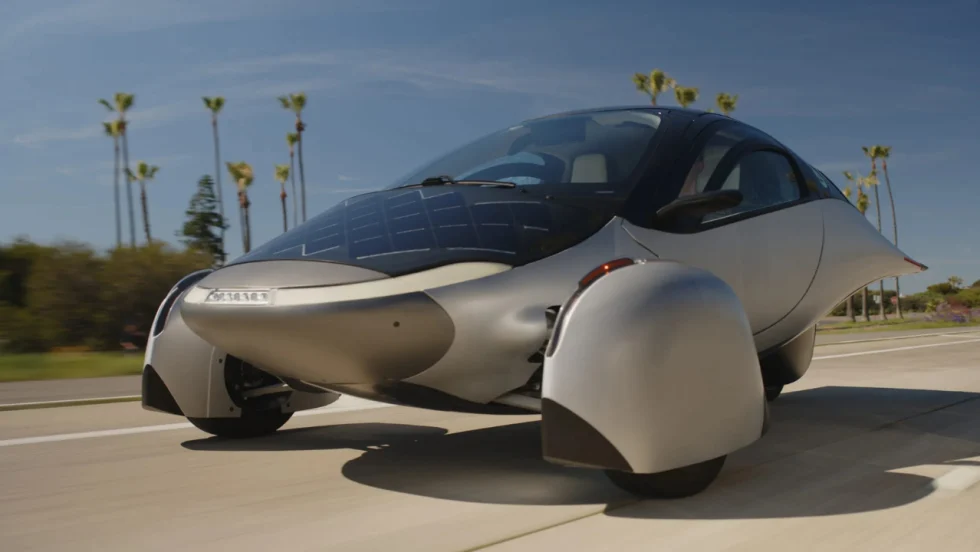
Aptera Orders Bodies and Chassis for Its First 40 Production Vehicles
Aptera Motors Corp. has issued purchase orders for the major structural components of its first 40 vehicles, and body and chassis components are expected to begin arriving in October.
Read More →