



Going Further on a Charge: DOE Funds Electrifying 7 Major Freight Corridors
NACFE: Updated Guidance on Electric Truck Charging Infrastructure
Charging infrastructure includes not only the chargers themselves, but the interrelated system of vehicles, duty cycles, chargers, and electric utilities.
June 6, 2023
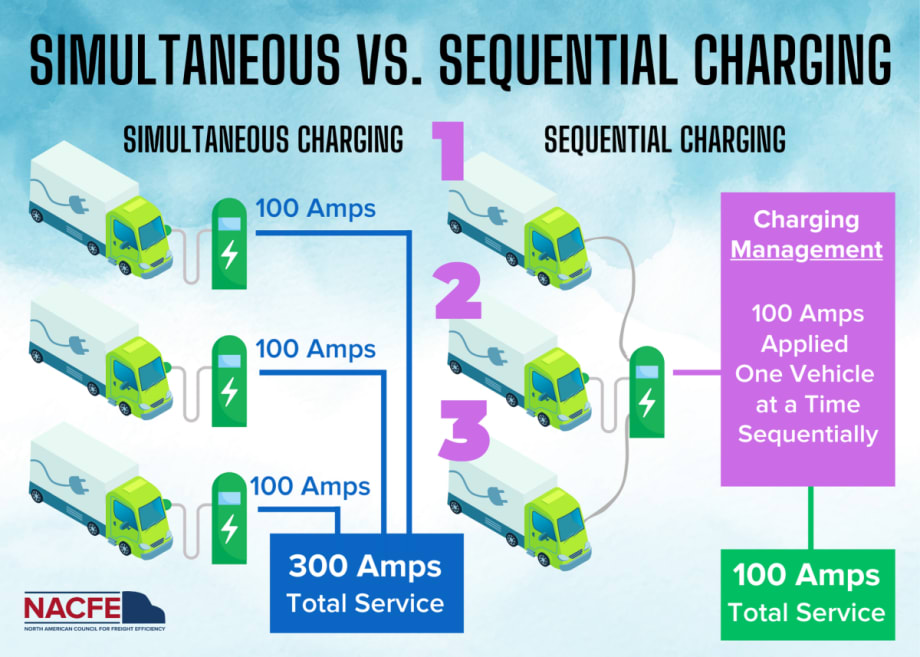
Fleets need to select a set of chargers to provide the electricity they need in a way that minimizes overall total cost of operation, including capital cost for the infrastructure, cost for electricity, any associated equipment, and maintenance and repair costs.
Photo: NACFE
4 min to read
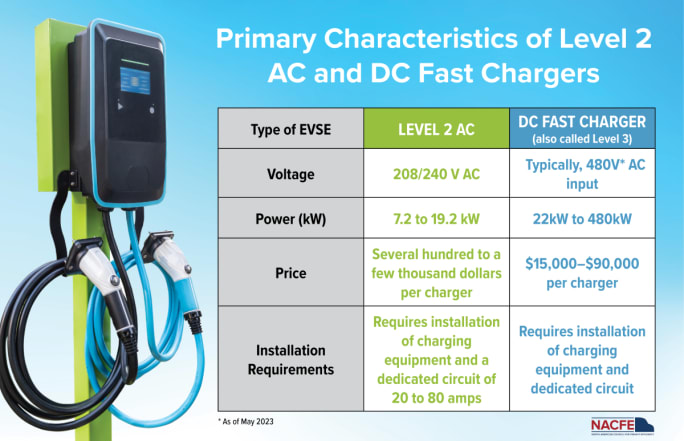
Fleets can choose from a variety of charger types to match chargers to their vehicle charging needs.
Photo: NACFE
On the eve of the first visit to one of the fleet depots participating in Run on Less – Electric DEPOT, the North American Council for Freight Efficiency (NACFE) and RMI have released a new Guidance Report, Charging Forward with Electric Trucks.
This is the second-generation report on charging infrastructure and coincides with the kickoff of this fall’s Run that will focus on the scaling of battery electric trucks. The report focuses on charging considerations for commercial battery electric vehicles currently in production for freight delivery.
Charging infrastructure includes not only the chargers themselves, but the interrelated system of vehicles, duty cycles, chargers, and electric utilities.
This report is based on a 2019 NACFE Report, Amping Up: Charging Infrastructure for Electric Trucks. Since then there has been an acceleration of the movement toward the electrification of commercial vehicles, which is what lead to the need for this new report.
Charging Forward with Electric Trucks
Charging electric trucks is a complex process that requires considering a variety of factors and the report provides and in-depth look at those factors.
“While there are a great many factors that impact the scaling of electric vehicles for hauling freight, careful planning and collaboration will help make the process go more smoothly,” says Mike Roeth, NACFE’s executive director. “The guidance in this report should give fleets confidence to move forward with adding more electric vehicles to their operations.”
Charging infrastructure is a combination of:
Hardware, including the number of charger plugs, their power levels, and the equipment to deliver that electricity, and
Rigorous management, generally via software, of overall electricity demand and cost to provide the necessary amount of charge so the trucks can do their jobs at the lowest cost.
An infographic, Steps to Implementing Charging Infrastructure, lays out 10 key steps that are needed for the successful implementation of an electric vehicle charging infrastructure.
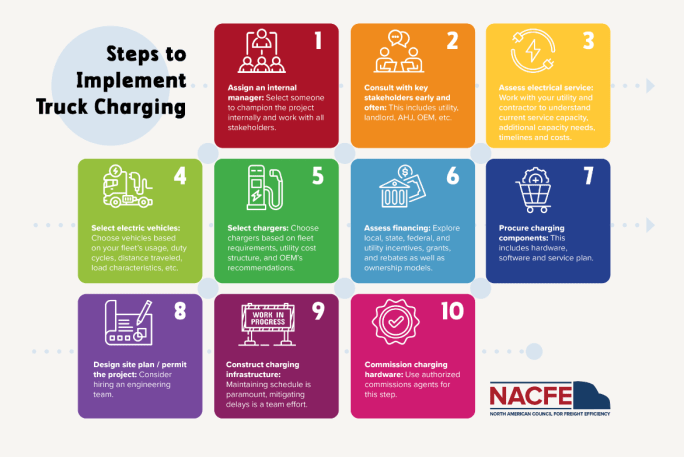
Creating and deploying an effective plan for fleet electrification requires considering many variables. While each project involves some bespoke engineering since each site and project is different, there are some common elements to successful infrastructure deployment.
Photo: NACFE
“This step-by-step guide allows fleets to see at a glance the factors they need to focus on as they add more battery-electric vehicles,” said Rob Graff, NACFE’s senior technical advisor. “We expect this to be an invaluable resource for fleets just as the Charging Procurement Roadmap from our first infrastructure report was.”
The study team developed six key conclusions.
Electric trucks and chargers must work together. Charging infrastructure is just one part of a system integrating your vehicle needs, electricity rate structure, and the timing and cost of bringing additional electricity to your site.
Your utility is a key partner. Electric trucks use a lot of power, probably more than you currently have available. It is essential that you meet in person with your utility as soon as you begin thinking about electric trucks, as they will be your partner in providing the power you need. Increasing power delivery to your facility can take time. Coordinate closely with your utility and modify your implementation schedule to assure you have power when you need it.
Use and design greatly affect charging cost. In general, spreading charging over the longest time and using lower charging power makes both the charging equipment and electricity costs lower and maximizes battery life. Design your charging strategy to make the best use of vehicles’ scheduled downtime.
The transition requires staff and attention. The transition to BEVs and associated charging infrastructure requires attention and expertise. You need to have a single point of contact with internal and external authority and to lead the project.
Consider other charging business models. You may wish to explore options other than owning and operating your own charging infrastructure as a stopgap or long-term model.These include Charging as a Service (CaaS) and Trucking as a Service (TaaS). CaaS provides a contracted service to provide all your charging, either on your site or at a nearby shared location.
Other key considerations. There are a host of other things to consider when it comes to EV infrastructure as well as additional developments to be aware of.
Grants, incentives, and subsidies are at an historic high offering a window of opportunity for fleet electrification.
If you do not own your facility, talk with your landlord early.
Microgrids are emerging from the shadows.
Reliability and interoperability of chargers must improve.
Training a skilled workforce to support and service BEVs and charging hardware is critically important.
Processes to improve electricity transmission/distribution infrastructure must be improved.
BEV makers must increase miles per kilowatt, reduce vehicle costs and weight, and increase payload and reliability.
Topics:Electric TrucksNACFEBattery-Electric Truckscharging infrastructureDC Fast ChargingElectric Vehicles
Originally posted on Work Truck Online
More Electric Vehicles
EV Charging Use Is Outpacing Infrastructure Growth
ChargePoint’s 2026 Charging Forward Report points to rising charger use, higher-powered charging, commercial vehicle electrification, and energy-management technology. Here’s what fleets should know.
Read More →
EV Realty Names Henrik Holland President as Charging Platform Expands
The former Prologis Mobility and Shell executive will help expand EV Realty’s truck charging business and move its power-first infrastructure model into autonomous vehicle depots and other fleet sectors.
Read More →
GreenPower Expands New Mexico EV Pilot With Larger Buses, V2G Testing
After logging more than 17,000 electric miles in the first year, New Mexico’s statewide pilot is moving into its second phase with larger vehicles, continued charging evaluations, and more.
Read More →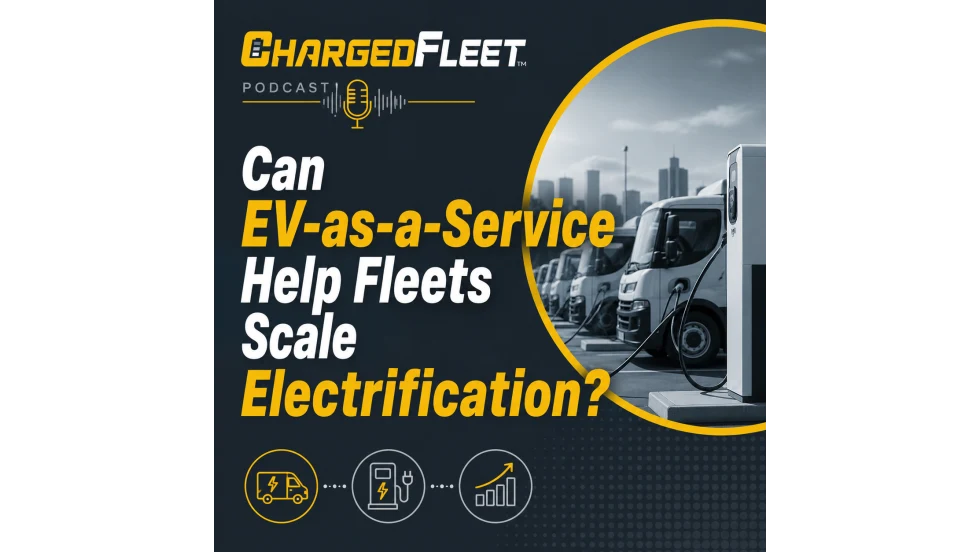
Can EV-as-a-Service Help Fleets Scale Electrification?
Sustainability Partners CEO Adam Cain explains how matching EVs, charging infrastructure, and duty cycles can help fleets scale electrification.
Read More →
How EV-as-a-Service Is Moving Fleets Beyond Pilots
Adam Cain, president and CEO of Sustainability Partners, explains how EV-as-a-service can help fleets scale deployments by addressing duty-cycle requirements and charging challenges.
Read More →
PowerFlex, The Mobility House Join Forces to Advance Fleet Electrification
Two EV charging providers are joining forces to deliver a broader portfolio of energy management and fleet electrification solutions.
Read More →
Ford Retools Louisville Plant for Fathom Electric Truck Production
Ford's $2 billion Louisville Assembly Plant overhaul introduces a three-part assembly process for the Fathom midsize electric truck, with production scheduled to begin in 2027.
Read More →
Merchants Fleet Reports 290M EV Miles as Fleets Navigate Changing Electrification Market
From millions in operating savings to hundreds of millions of EV miles, Merchants Fleet’s latest report reveals what’s working and what’s changing in fleet electrification.
Read More →
California District Commits to Electrify 25% of School Bus Fleet by 2028
One of the nation's largest school bus electrification projects to date demonstrates how grants, charging infrastructure, and public-private partnerships can help fleets transition to EVs at scale.
Read More →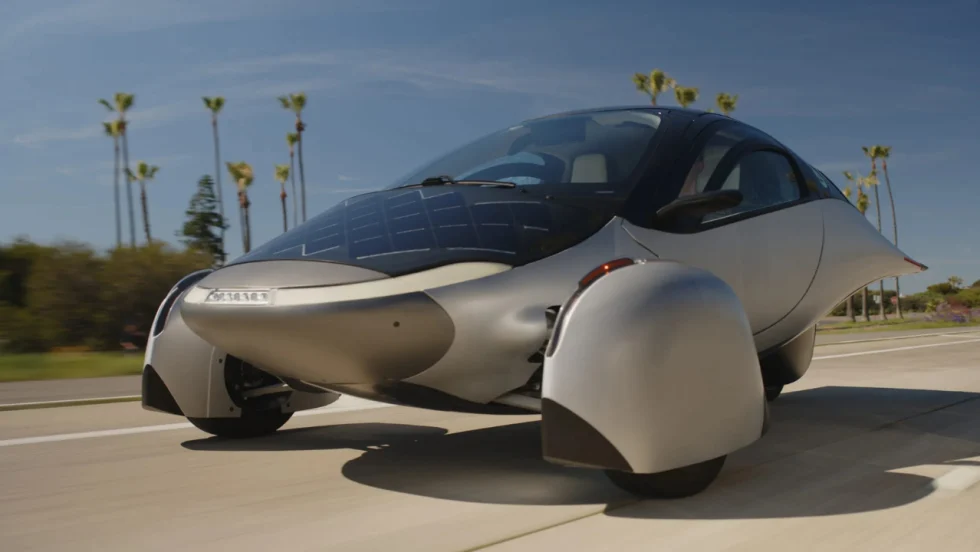
Aptera Orders Bodies and Chassis for Its First 40 Production Vehicles
Aptera Motors Corp. has issued purchase orders for the major structural components of its first 40 vehicles, and body and chassis components are expected to begin arriving in October.
Read More →