


Modular EV Truck Promises Simplicity, Lower Costs for Fleets & Consumers
Startup Slate debuts EV platform targeting $20K pricing, American manufacturing, and DIY personalization.
April 26, 2025

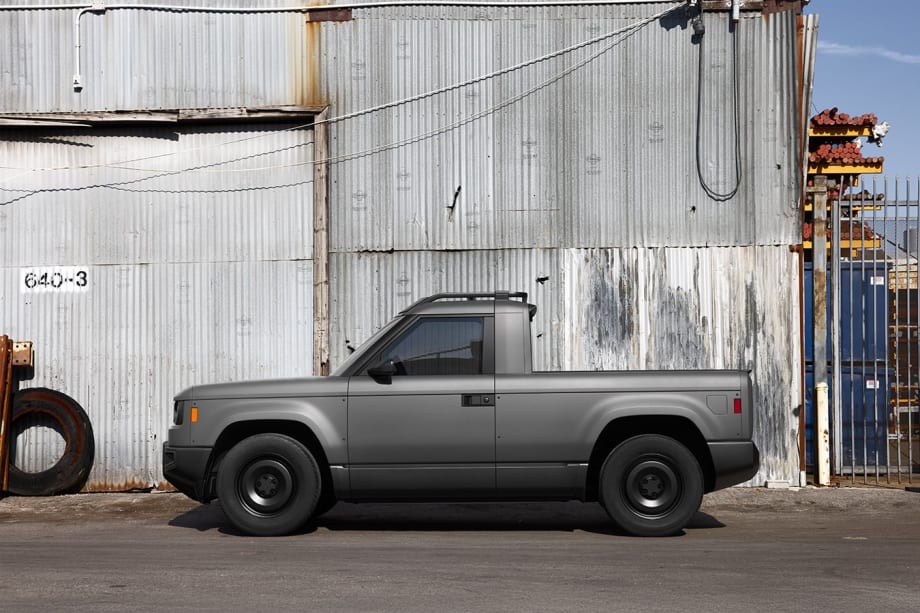
"The design is simple and deliberately straightforward," said head of design Tisha Johnson. "The Slate truck needed to be easy to get into, drive, and load compared to anything else in the market."
Photo: Slate
3 min to read
New U.S.-based EV manufacturer Slate unveiled its first vehicle — a minimalist, modular electric pickup — at a launch event on April 24, 2025, in Long Beach, Calif. Slate's approach emphasizes affordability, simple design, and user-driven customization, with production targeted to begin in the fourth quarter of 2026.
"We are building the affordable vehicle that has long been promised but never delivered," said Chris Barman, CEO of Slate, during the reveal. "Slate exists to put the power back into the hands of customers who have been denied this choice by the auto industry."
Designed for Customization & Utility
The Slate truck is a two-seat, compact electric pickup manufactured in a single factory configuration, with more than 100 available accessories. Buyers can customize the truck over time, including converting it into a five-seat SUV with a flat-pack accessory kit that adds a rear seat, roll cage, and airbags.
"The design is simple and deliberately straightforward," said head of design Tisha Johnson from the stage. "The Slate Truck needed to be easy to get into, drive, and load compared to anything else in the market."
The vehicle is deliberately simple, with crank windows, steel wheels, basic HVAC controls, a large front trunk (frunk), and a five-foot rear cargo bed with a 1,400-pound payload rating.
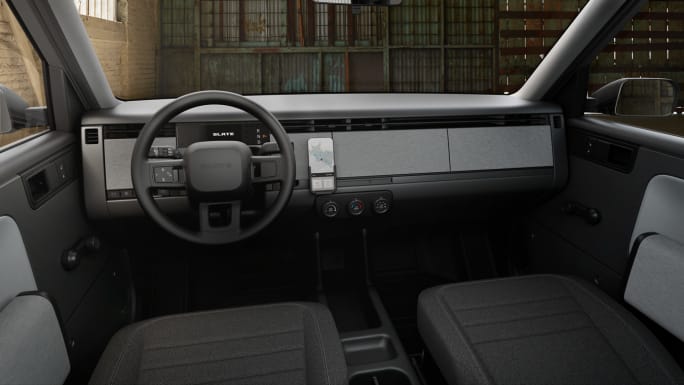
Rather than integrating a proprietary infotainment system, Slate opted for a universal phone mount to bring your own device.
Photo: Slate
Simplified Wrapping & Bring-Your-Own Tech
In a break from traditional automotive design, the truck was developed to be easily wrapped in vinyl, allowing buyers to change its appearance without repainting. Wrap kits are cut to fit and can be installed DIY or by certified installers.
Rather than integrating a proprietary infotainment system, Slate opted for a universal phone mount and USB power ports, letting drivers use their existing mobile devices for navigation and media.
Safety & Performance Targets
Slate’s engineering team said the truck is designed to achieve a U.S. NCAP five-star crash safety rating, with features including Active Emergency Braking, Forward Collision Warning, and a backup camera.
Powertrain specifications include:
52.7-kWh battery standard (150-mile target range)
84.3-kWh battery optional (240-mile target range)
150-kW rear-wheel drive motor (201 horsepower)
0-60 mph in approximately eight seconds
11-kW onboard AC charging and 120-kW DC fast charging
Early crash testing indicates the truck is meeting internal safety and durability targets.
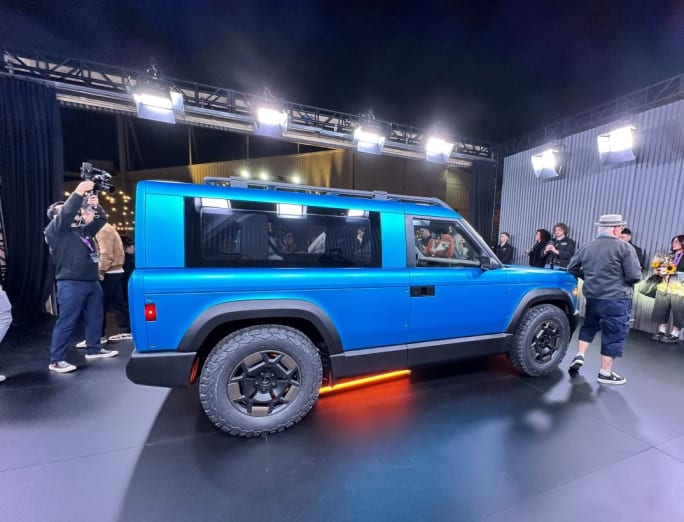
At the launch event, Slate converted the pickup into an SUV on stage in about an hour.
Photo: Chris Brown
Direct-to-Buyer Sales Model
Slate plans to manufacture the truck at a retooled factory in Indiana, with parts sourcing focused heavily within the U.S. Production is expected to begin in the fourth quarter of 2026.
The company will sell directly to users, with an online ordering platform and a network of third-party service providers for maintenance and installation support.
Slate projects a starting price below $20,000 after federal incentives, a notable contrast with today’s average new vehicle price of about $50,000. Vehicle reservations are now open via a $50 refundable deposit.
Slate’s leadership emphasized that the truck is designed to evolve with customer needs. Accessories — from simple decal kits to full SUV conversions — can be added at purchase or later.
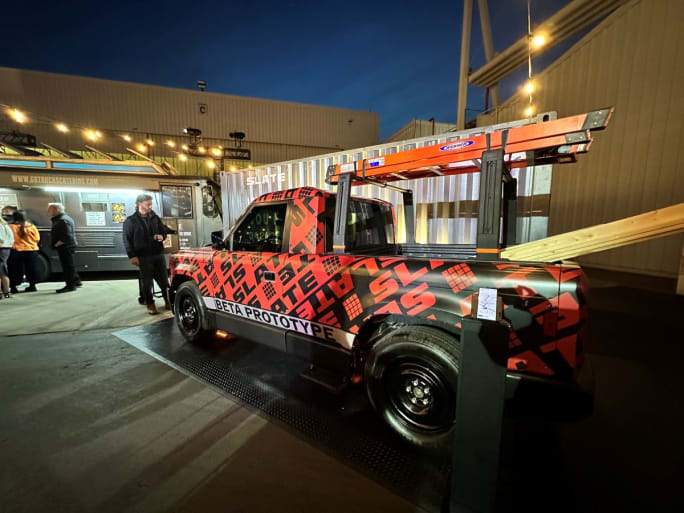
Slate is positioning the truck for fleet applications, particularly for government agencies and vocational fleets with short-range daily duty cycles.
Photo: Chris Brown
Targeting Government & Commercial Fleets
While Slate’s consumer focus was prominent during the launch, the company is also positioning the truck for fleet applications, particularly for government agencies and vocational fleets with short-range daily duty cycles.
The Slate Truck's modularity, low acquisition cost, and simplified maintenance needs may appeal to municipalities, utility services, and campus fleets.
The vehicle will be featured at the NAFA Institute & Expo (I&E) in Long Beach, California, from April 28 to 30.
Topics:Compact Pickupsproduct launchElectric TrucksCommercial Electric VehiclesElectric VehiclesOperations
Originally posted on Automotive Fleet
More Electric Vehicles
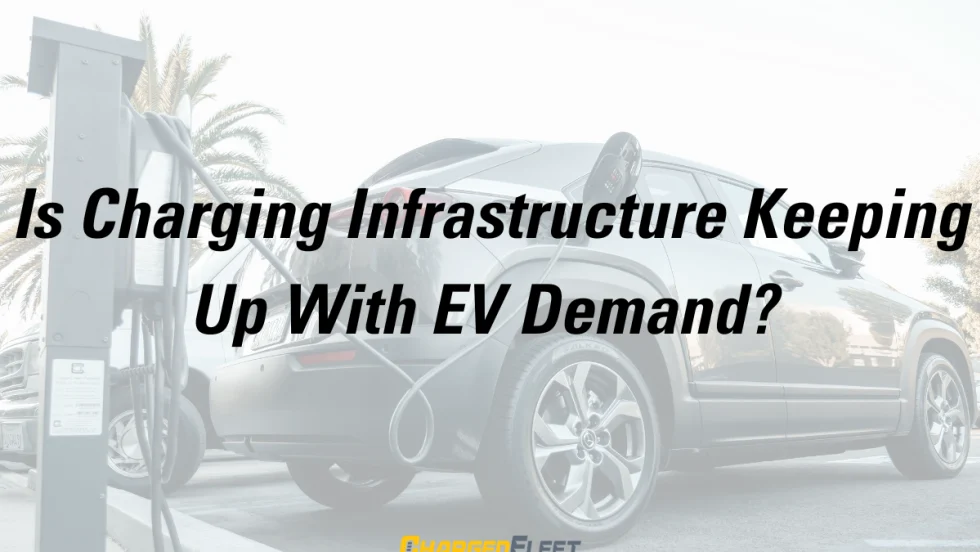
EV Charging Use Is Outpacing Infrastructure Growth
ChargePoint’s 2026 Charging Forward Report points to rising charger use, higher-powered charging, commercial vehicle electrification, and energy-management technology. Here’s what fleets should know.
Read More →
EV Realty Names Henrik Holland President as Charging Platform Expands
The former Prologis Mobility and Shell executive will help expand EV Realty’s truck charging business and move its power-first infrastructure model into autonomous vehicle depots and other fleet sectors.
Read More →
GreenPower Expands New Mexico EV Pilot With Larger Buses, V2G Testing
After logging more than 17,000 electric miles in the first year, New Mexico’s statewide pilot is moving into its second phase with larger vehicles, continued charging evaluations, and more.
Read More →
Can EV-as-a-Service Help Fleets Scale Electrification?
Sustainability Partners CEO Adam Cain explains how matching EVs, charging infrastructure, and duty cycles can help fleets scale electrification.
Read More →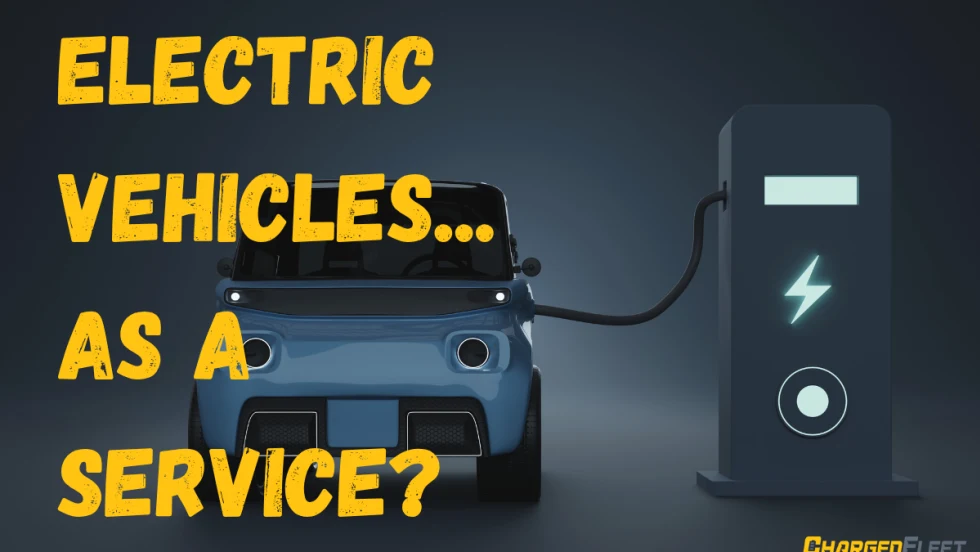
How EV-as-a-Service Is Moving Fleets Beyond Pilots
Adam Cain, president and CEO of Sustainability Partners, explains how EV-as-a-service can help fleets scale deployments by addressing duty-cycle requirements and charging challenges.
Read More →
PowerFlex, The Mobility House Join Forces to Advance Fleet Electrification
Two EV charging providers are joining forces to deliver a broader portfolio of energy management and fleet electrification solutions.
Read More →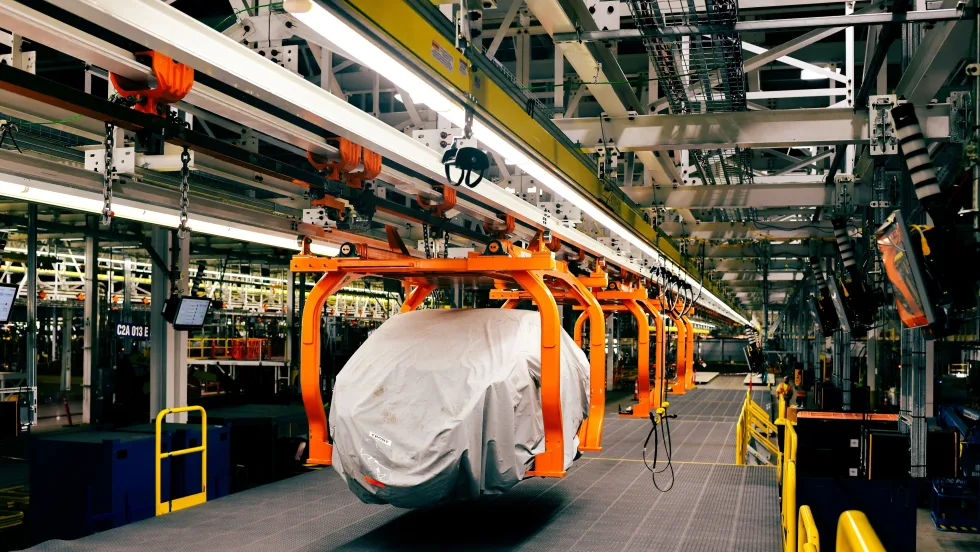
Ford Retools Louisville Plant for Fathom Electric Truck Production
Ford's $2 billion Louisville Assembly Plant overhaul introduces a three-part assembly process for the Fathom midsize electric truck, with production scheduled to begin in 2027.
Read More →
Merchants Fleet Reports 290M EV Miles as Fleets Navigate Changing Electrification Market
From millions in operating savings to hundreds of millions of EV miles, Merchants Fleet’s latest report reveals what’s working and what’s changing in fleet electrification.
Read More →
California District Commits to Electrify 25% of School Bus Fleet by 2028
One of the nation's largest school bus electrification projects to date demonstrates how grants, charging infrastructure, and public-private partnerships can help fleets transition to EVs at scale.
Read More →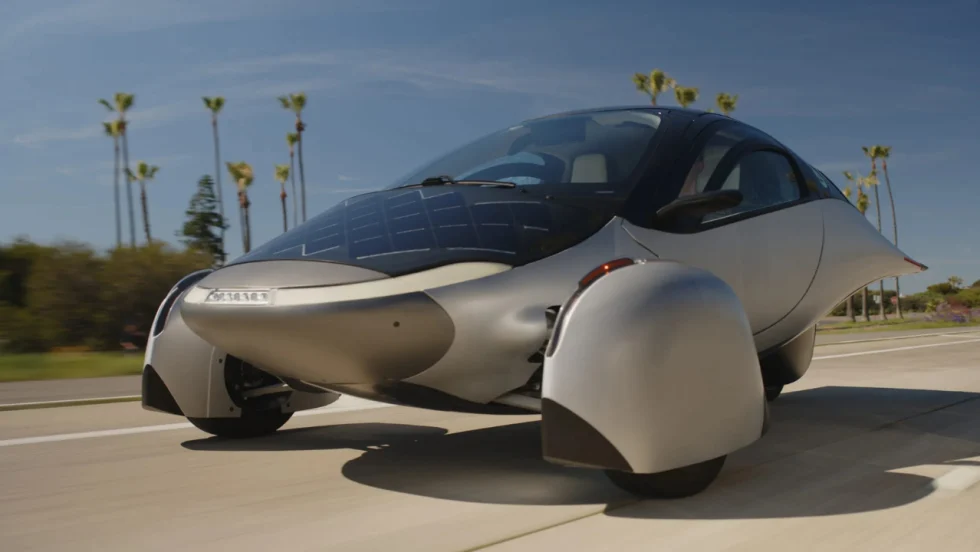
Aptera Orders Bodies and Chassis for Its First 40 Production Vehicles
Aptera Motors Corp. has issued purchase orders for the major structural components of its first 40 vehicles, and body and chassis components are expected to begin arriving in October.
Read More →