


Mercedes-Benz Vans Sets Course for Electric Future
Starting in 2026, all Mercedes-Benz Vans midsize and large vans will be electric-only based on the new modular architecture.

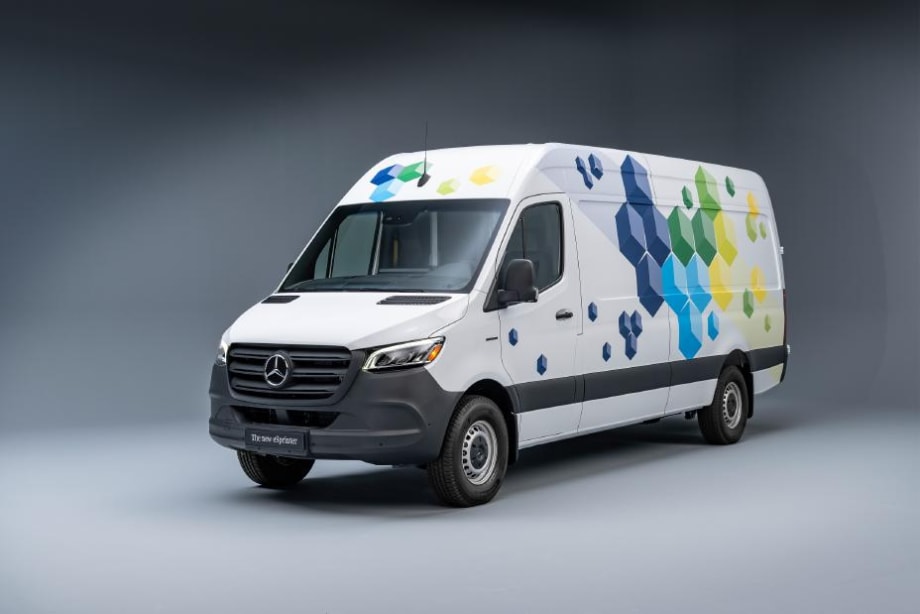
The plant in Ludwigsfelde, the second of two plants in Germany, will continue to produce Mercedes-Benz Sprinter and Mercedes-Benz eSprinter (pictured) and will shift to become a competence center for eVan customization.
Photo: Merceres-Benz Vans
Mercedes-Benz has announced that, starting in 2026, all newly developed vans will be based on a modular and scalable architecture called VAN.EA, which stands for Van Electric Architecture.
The purpose-built platform is designed for battery-electric vehicles and is part of the company’s commitment to an “electric-only” strategy. All future midsize and large vans, whether used for commercial or private purposes, will be built on this platform.
Mercedes-Benz Vans has stated that VAN.EA-based vehicles will focus on providing added value to customers, whether as a versatile premium all-rounder for commercial use or a luxury van for private use. By adopting a “one architecture” strategy, Mercedes-Benz Vans aims to reduce the complexity of its purpose-built EV product portfolio and achieve significant economies of scale.
The strategy also involves reducing the number of portfolio variants by over 50% compared to current vans with an internal combustion engine (ICE) while offering customers the same use cases.
“Starting in 2026, we will introduce our purpose-built EV architecture VAN.EA. This enables us to consolidate our midsize and large vans to only one architecture and significantly reduce the complexity of our product portfolio,” said Mathias Geisen, head of Mercedes-Benz Vans.
Detailing the New Van Architecture (VAN.EA)
With VAN.EA, Mercedes-Benz Vans focuses on vehicle efficiency and performance, including:
Aerodynamics.
Drivetrain.
Tires.
Chassis.
According to the van manufacturer, the goal is to achieve a high range with an optimal battery capacity directly related to vehicle weight and costs.
The three blocks of VAN.EA helps to achieve these targets:
The front block consists of the electric powertrain and the front axle. The block is the same in all VAN.EA variants and resembles an optimized common parts strategy. The differentiation relevant to the customer takes place in the two other areas.
The center block scales the vehicle length. This is also the placement of the standardized battery case, in which different capacities of high-voltage batteries are installed.
The rear module will be available in two versions: With an electric motor (along with one in the front) for the all-wheel-drive variants of VAN.EA and without an electric motor for the front-wheel drive variants.
Commercial vs. Private Luxury Van Model Options
Based on these three blocks, VAN.EA will provide a clear differentiation between privately and commercially used vans:
VAN.EA-P to reference its privately positioned vans in the midsize segment.
VAN.EA-C stands for premium commercial vans in the midsize and large segments.
The VAN.EA-C is the ideal base for customers who value functionality, range, payload, and cargo space. With its modular and scalable design, the architecture is tailored for different configurations and upfitter solutions: From courier, express, and parcel delivery (last-mile delivery) vehicles to ambulances or grocery vans, from municipal vans or box upfits to lifting platforms or recreational vehicles (RV), the options are numerous.
Digitizing Van Fleet Operations
And with MB.OS, Mercedes-Benz Vans will offer more digital extras for commercial customers, including access to third-party apps.
At market launch, SAE Level 2 automated driving will be available, and SAE Level 4 is planned to be realized by the end of the decade to address the business potential of driverless transportation.
“According to the ‘electric-only’ strategy, VAN.EA is developed from scratch as a purpose-built electric vehicle, fully leveraging the advantages of the new technology. Our target of more than 50% BEV share by 2030 goes hand in hand with a significant reduction in CO2 emissions across the entire lifecycle of new vans,” said Andreas Zygan, head of Mercedes-Benz Vans Development.
Today, Europe is already the strongest market for Mercedes-Benz vans, with a 60% share of total sales worldwide, but Mercedes-Benz Vans still aims to strengthen its position here.
In addition, growth potential is seen in the United States for premium commercial large vans. In the U.S., Mercedes-Benz Vans aims for more profitable and substantially increased sales by 2030 and a portfolio expansion by adding VAN.EA-based commercial vans to the lineup. Mercedes-Benz Vans also plans to offer VAN.EA-based private vans in a luxury positioning to cater to the expectations of its sophisticated customers more strongly. This will be the first time Mercedes-Benz Vans will offer a privately positioned midsize luxury van in the U.S.
Mercedes-Benz Vans will also expand the RV vans "built from factory” portfolio with a new model line of fully electric midsize and large camper vans based on VAN.EA2.
The worldwide courier, express, and parcel services (last-mile delivery) market anticipates an annual growth of 6-8% per year and is a strong driver for fully electric intra- and inter-urban mobility.
Mercedes-Benz Vans focuses on the upper price bands of the last-mile delivery industry, where it intends to offer a VAN.EA Last Mile Delivery-specific version "built from factory” for the first time.
Producing the New Era of Mercedes-Benz Vans
The production network Mercedes-Benz Vans is reorganizing the global production network with its first pure electric Light Commercial Vehicles (ACV) plant in Jawor, Poland. The production site for the VAN.EA-based large vans will be net carbon neutral - as all owned plants of Mercedes-Benz Vans.
For the first time, Mercedes-Benz Vans plans to cover 100% of the plant’s energy needs through renewable energy and aims for a combination of different renewable energy sources to cover the electricity and heat requirements.
These plants are expected to include electricity from maximized use of photovoltaics, wind power, and heat generation via air heat pumps, geothermal and solar thermal energy, and, if necessary, as a fallback in peak times, a small amount of biogas.
VAN.EA will be built in Düsseldorf, Germany. The plant in Ludwigsfelde, the second of two plants in Germany, will continue to produce Mercedes-Benz Sprinter and Mercedes-Benz eSprinter and will shift to become a competence center for eVan customization, including Recreational Vehicles. In addition to the eSprinter and the Sprinter vans with ICE drivetrains, the large cab chassis is based on VAN.EA.
Mercedes-Benz Vans will also build VAN.EA-based midsize vans in its plant in Vitoria, Spain.
Originally posted on Work Truck Online
More Electric Vehicles
EV Charging Use Is Outpacing Infrastructure Growth
ChargePoint’s 2026 Charging Forward Report points to rising charger use, higher-powered charging, commercial vehicle electrification, and energy-management technology. Here’s what fleets should know.
Read More →
EV Realty Names Henrik Holland President as Charging Platform Expands
The former Prologis Mobility and Shell executive will help expand EV Realty’s truck charging business and move its power-first infrastructure model into autonomous vehicle depots and other fleet sectors.
Read More →
GreenPower Expands New Mexico EV Pilot With Larger Buses, V2G Testing
After logging more than 17,000 electric miles in the first year, New Mexico’s statewide pilot is moving into its second phase with larger vehicles, continued charging evaluations, and more.
Read More →
Can EV-as-a-Service Help Fleets Scale Electrification?
Sustainability Partners CEO Adam Cain explains how matching EVs, charging infrastructure, and duty cycles can help fleets scale electrification.
Read More →
How EV-as-a-Service Is Moving Fleets Beyond Pilots
Adam Cain, president and CEO of Sustainability Partners, explains how EV-as-a-service can help fleets scale deployments by addressing duty-cycle requirements and charging challenges.
Read More →
PowerFlex, The Mobility House Join Forces to Advance Fleet Electrification
Two EV charging providers are joining forces to deliver a broader portfolio of energy management and fleet electrification solutions.
Read More →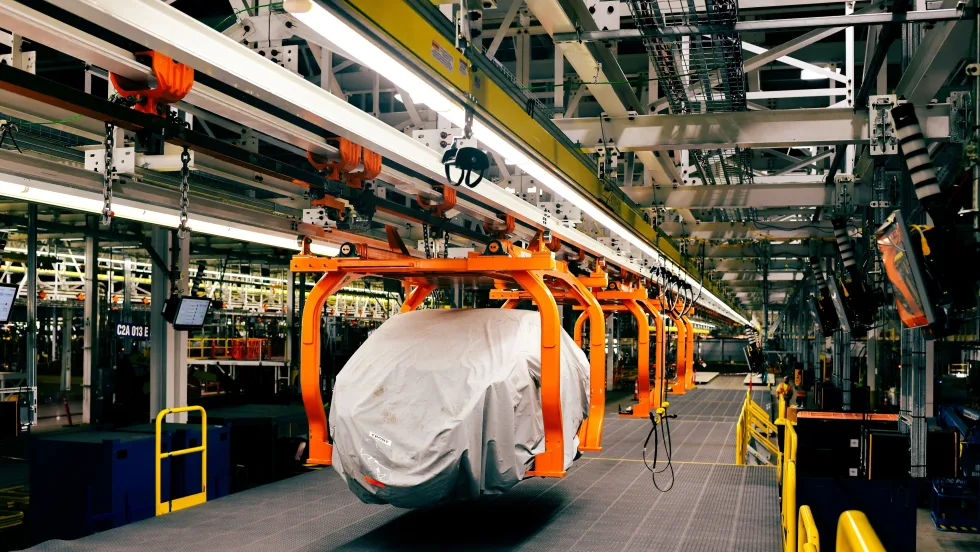
Ford Retools Louisville Plant for Fathom Electric Truck Production
Ford's $2 billion Louisville Assembly Plant overhaul introduces a three-part assembly process for the Fathom midsize electric truck, with production scheduled to begin in 2027.
Read More →
Merchants Fleet Reports 290M EV Miles as Fleets Navigate Changing Electrification Market
From millions in operating savings to hundreds of millions of EV miles, Merchants Fleet’s latest report reveals what’s working and what’s changing in fleet electrification.
Read More →
California District Commits to Electrify 25% of School Bus Fleet by 2028
One of the nation's largest school bus electrification projects to date demonstrates how grants, charging infrastructure, and public-private partnerships can help fleets transition to EVs at scale.
Read More →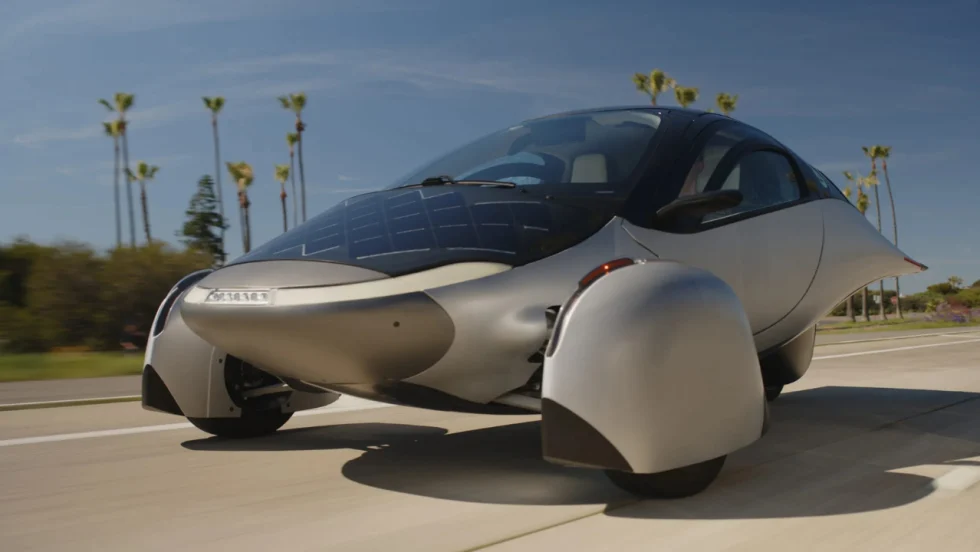
Aptera Orders Bodies and Chassis for Its First 40 Production Vehicles
Aptera Motors Corp. has issued purchase orders for the major structural components of its first 40 vehicles, and body and chassis components are expected to begin arriving in October.
Read More →