



Read More: Hyundai to Invest $7.4 Billion in the U.S. by 2025
Hyundai to Open First EV and Battery Manufacturing Plant in the U.S.
The new facility, a $5.54 billion investment, will break ground in early 2023 and is expected to begin commercial production in the first half of 2025 with an annual capacity of 300,000 units.
May 23, 2022

The signing ceremony was held in Bryan County, Georgia. Front row: (Left) Georgia Governor Brian P. Kemp, (right) Hyundai Motor Company president and CEO Jaehoon Chang.
Photo: Hyundai
3 min to read
Hyundai Motor Group announced in a statement it has entered into an agreement with the state of Georgia to build its first dedicated full electric vehicle and battery manufacturing facilities in the U.S.
The new EV plant and battery manufacturing facilities represent an investment of approximately $5.54 billion. The new facility will break ground in early 2023 and is expected to begin commercial production in the first half of 2025, with an annual capacity of 300,000 units.
The EV and battery manufacturing plant will be located in Bryan County, Georgia, with immediate access to I-95 and I-16 highways, making for easy access to 250 major metro areas. It is about 50 kilometers from the Port of Savannah with two Class I rail facilities on-site provided by Georgia Central Railway.
“The future of transportation is in the Peach State as we announce the largest project in our state’s history – delivering high-quality jobs on the leading edge of mobility to hardworking Georgians,” said Governor Kemp in the announcement. “Not only are we thrilled to welcome Hyundai to Georgia’s coastal region, but it’s incredible that within a year of Georgia’s investment in the Bryan County megasite, we are locating a world-class project here with a company with great Georgia history!”
“As one of the world’s most successful and advanced mobility leaders, we are incredibly proud to share our plan to open our first dedicated full EV and battery manufacturing facilities in the U.S.,” added Hyundai Motor Group executive chair Euisun Chung. “The U.S. has always held an important place in the group’s global strategy, and we are excited to partner with the state of Georgia to achieve our shared goal of electrified mobility and sustainability in the U.S.”
The EV plant investment comes as a part of the group’s 2021 announcement to invest $7.4 billion by 2025 to foster future mobility in the U.S., including production of EVs and offering smart mobility solutions. The company targets to sell 3.23 million full electric vehicles annually by 2030.
“We decided to build our first dedicated EV plant in the U.S. because America embraces change and drives innovation,” said Jaehoon Chang, president and CEO of Hyundai Motor Group. “This new EV plant is the future of our business, and It will help us meet the growing demands of our US customers who want leading edge design, safe, zero-emissions vehicles now and in the future.”
The group plans to implement advanced intelligent manufacturing technologies currently under test at the group’s innovation hub, the Hyundai Motor Group Innovation Center in Singapore. All processes including order collection, procurement, logistics, and production will be optimized utilizing AI and data. The manufacturing system will also help create a human-centered work environment with robots assisting human workers.
As part of the Hyundai's commitment to sustainability, the plant will mainly rely on renewable energy sources to power the facility and use emission-reduction technologies to meet the RE100 requirements.
Originally posted on Automotive Fleet
More Electric Vehicles
GreenPower Plans 50 Electric Shuttle Buses for Mexico
GreenPower plans to build 50 electric shuttle buses for Mexico using its EV Star Cab & Chassis platform, partnering with local body builders to expand its market reach.
Read More →
Who You Gonna Call? Rivian Turns Electric Vehicles Into Ghostbusters Rides
Rivian teams up with Sony Pictures for a Ghostbusters-inspired Halloween software update, complete with custom sounds, lighting effects, and a special Ecto-R1.
Read More →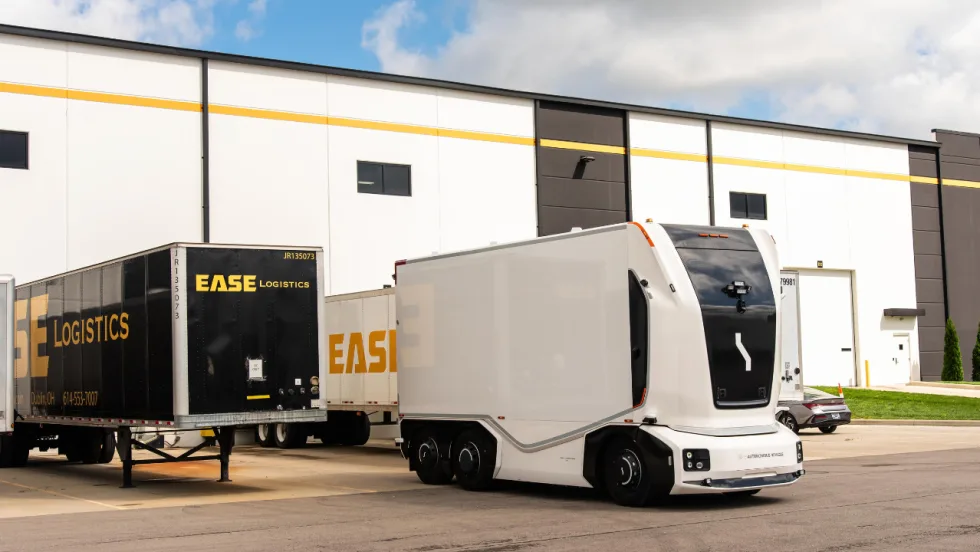
Einride Electric Driverless Trucks Begin Daily Freight Operations in Ohio
Two cabless electric trucks are now moving freight between EASE Logistics facilities, putting autonomous EV technology into daily commercial operations.
Read More →
FedEx Orders 2,000 Harbinger Electric Trucks in $300 Million Deal
The Class 5 and 6 electric trucks are planned for delivery by the end of 2027 and will be deployed in FedEx pickup and delivery operations across the U.S. and Canada.
Read More →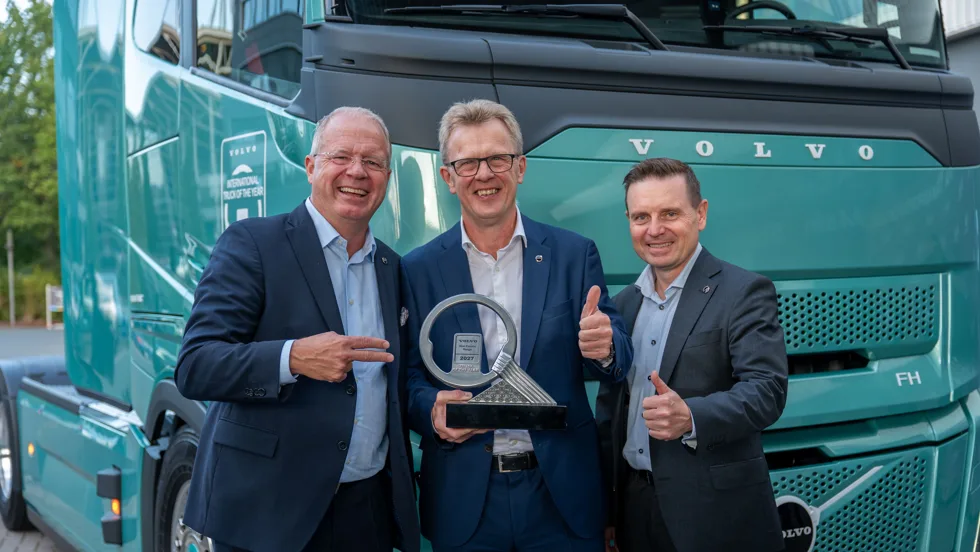
Volvo Trucks’ Electric Range Named International Truck of the Year 2027
The award recognizes Volvo’s global heavy-duty electric lineup, while more than 750 VNR Electric trucks have accumulated nearly 37 million miles in U.S. and Canadian fleet operations.
Read More →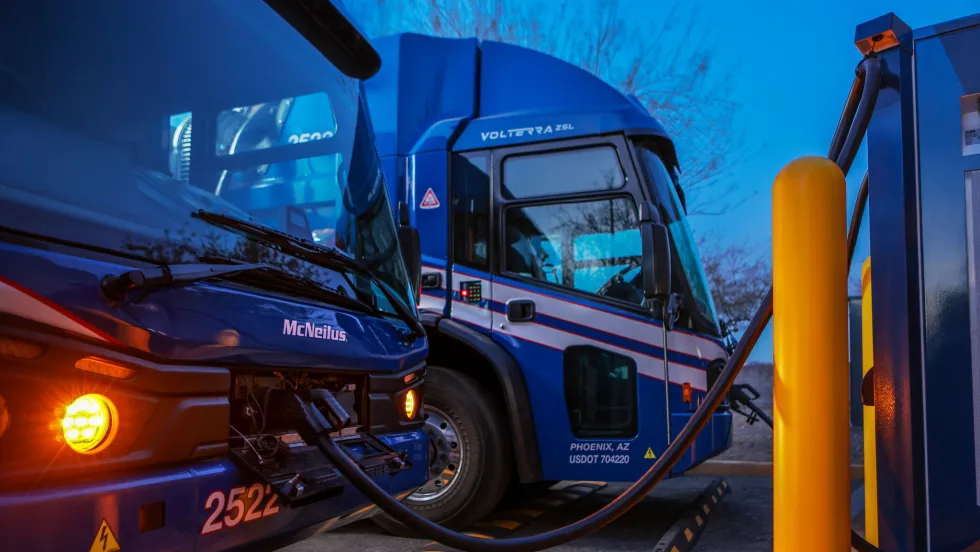
How Republic Services Decides Where Its Next Electric Trucks Can Go
With 250 electric collection trucks now in service, Republic Services is learning that scaling electrification depends less on proving the vehicle and more on whether each site can support what comes next.
Read More →
EV Charging Use Is Outpacing Infrastructure Growth
ChargePoint’s 2026 Charging Forward Report points to rising charger use, higher-powered charging, commercial vehicle electrification, and energy-management technology. Here’s what fleets should know.
Read More →
EV Realty Names Henrik Holland President as Charging Platform Expands
The former Prologis Mobility and Shell executive will help expand EV Realty’s truck charging business and move its power-first infrastructure model into autonomous vehicle depots and other fleet sectors.
Read More →
GreenPower Expands New Mexico EV Pilot With Larger Buses, V2G Testing
After logging more than 17,000 electric miles in the first year, New Mexico’s statewide pilot is moving into its second phase with larger vehicles, continued charging evaluations, and more.
Read More →
Can EV-as-a-Service Help Fleets Scale Electrification?
Sustainability Partners CEO Adam Cain explains how matching EVs, charging infrastructure, and duty cycles can help fleets scale electrification.
Read More →