


Related: VW Launches Electric Carsharing Brand with 1,500 e-Golfs
Ford, VW Partner on Autonomous Driving, High-Volume EV for Europe
Volkswagen will invest in Ford's Argo AI autonomous vehicle platform. Ford will use VW’s electric vehicle architecture to design and build at least one high-volume fully electric vehicle in Europe for European customers starting in 2023.
by Staff
July 12, 2019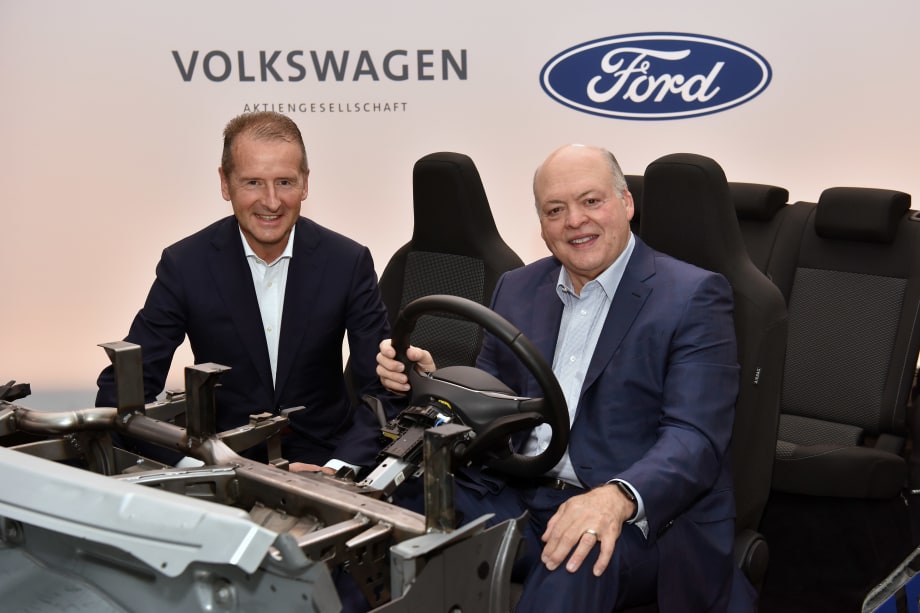
Volkswagen CEO Dr. Herbert Diess and Ford President and CEO Jim Hackett announced their companies are expanding their global alliance to include electric vehicles – and will collaborate with Argo AI to introduce autonomous vehicle technology in the U.S. and Europe.
Photo: Ford.
2 min to read
Ford Motor Co. and Volkswagen AG are expanding their global alliance to include electric vehicles and will collaborate with Argo AI to introduce autonomous vehicle technology in the U.S. and Europe, the companies have announced.
With Ford and Volkswagen, Argo AI's self-driving system is the first with commercial deployment plans for Europe and the U.S.
The global reach of the automakers will potentially make Argo AI's platform the largest geographic deployment of any autonomous driving technology to date. Volkswagen and Ford independently will integrate Argo AI's system into purpose-built vehicles.
Argo AI's focus will remain on delivering a SAE Level 4-capable system that will be applied for ride-hailing and goods delivery services in dense urban areas.
Ford will use Volkswagen’s Modular Electric Toolkit, a dedicated electric vehicle architecture.With plans to start releasing high-volume zero-emission vehicles in Europe beginning in 2023. The companies are also on track to deliver midsize pickup trucks for global customers, aiming to start in 2022, followed by commercial vans.
Volkswagen will invest $2.6 billion in Argo AI by committing $1 billion in funding and contributing its $1.6 billion Autonomous Intelligent Driving company, which includes more than 200 employees — most of whom have been developing self-driving technology for the Volkswagen Group.
As part of the transaction, Volkswagen also will purchase Argo AI shares from Ford for $500 million over three years. Ford will invest the remaining $600 million of its previously announced $1 billion cash commitment in Argo AI.
Argo AI plans to work closely with Ford and Volkswagen to provide the autonomous vehicle technology the automakers need to deliver fully integrated self-driving vehicles that can be manufactured at scale for safe, reliable and durable deployment in ride sharing and goods delivery services.
“The announcement between Ford and VW speaks to two main issues. One, we continue to head towards an autonomous future, and big and small companies alike are scrambling to be ready for this future. And two, as automotive becomes more and more complex, the necessity for partnerships and alliances is more important than ever, as one company cannot bankroll the development alone,” said Arkshay Anand, Kelley Blue Book executive analyst. “Partnerships will continue to ramp up in coming years, crossing boundaries most would not have envisioned even 10 years ago.”
“Ford and VW’s alliances collaborating on autonomous vehicles through Argo AI and electric vehicles makes sense. The financial investment into these technologies is immense, with no immediate payback on the horizon, and the engineering talent to develop these technologies is scarce and in high demand,” added Michelle Krebs, Autotrader executive analyst. “Combining forces not only means sharing resources but ultimately achieving scale and global reach that will advance the technologies faster.”
Originally posted on Automotive Fleet
More Electric Vehicles
EV Charging Use Is Outpacing Infrastructure Growth
ChargePoint’s 2026 Charging Forward Report points to rising charger use, higher-powered charging, commercial vehicle electrification, and energy-management technology. Here’s what fleets should know.
Read More →
EV Realty Names Henrik Holland President as Charging Platform Expands
The former Prologis Mobility and Shell executive will help expand EV Realty’s truck charging business and move its power-first infrastructure model into autonomous vehicle depots and other fleet sectors.
Read More →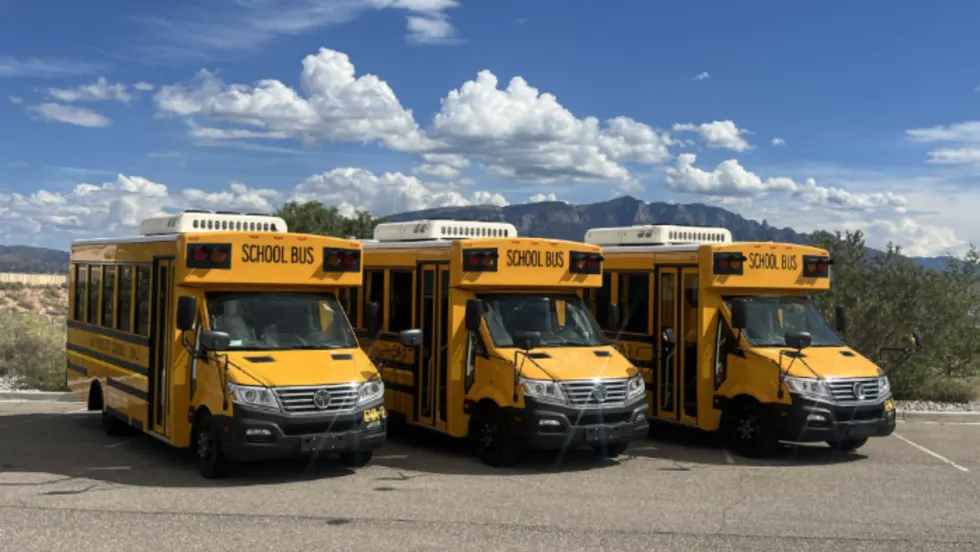
GreenPower Expands New Mexico EV Pilot With Larger Buses, V2G Testing
After logging more than 17,000 electric miles in the first year, New Mexico’s statewide pilot is moving into its second phase with larger vehicles, continued charging evaluations, and more.
Read More →
Can EV-as-a-Service Help Fleets Scale Electrification?
Sustainability Partners CEO Adam Cain explains how matching EVs, charging infrastructure, and duty cycles can help fleets scale electrification.
Read More →
How EV-as-a-Service Is Moving Fleets Beyond Pilots
Adam Cain, president and CEO of Sustainability Partners, explains how EV-as-a-service can help fleets scale deployments by addressing duty-cycle requirements and charging challenges.
Read More →
PowerFlex, The Mobility House Join Forces to Advance Fleet Electrification
Two EV charging providers are joining forces to deliver a broader portfolio of energy management and fleet electrification solutions.
Read More →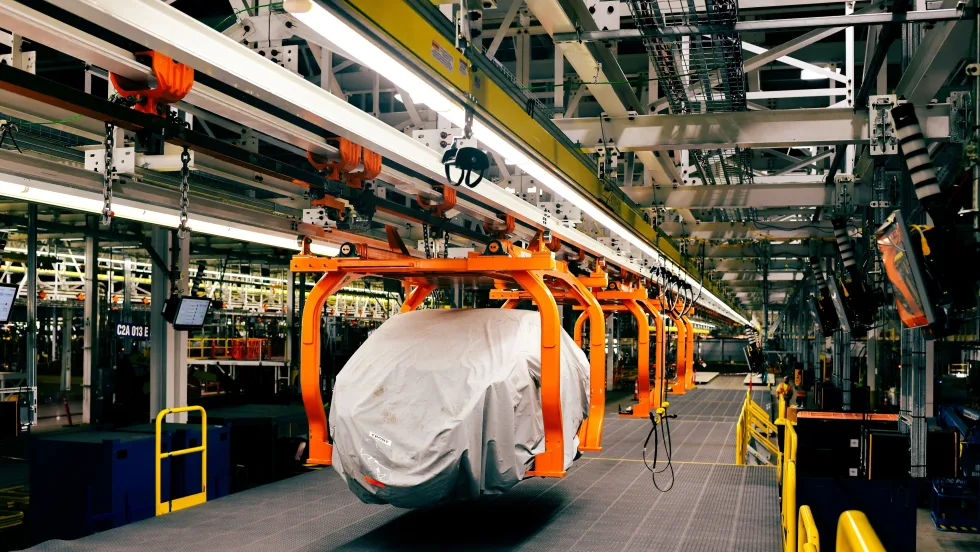
Ford Retools Louisville Plant for Fathom Electric Truck Production
Ford's $2 billion Louisville Assembly Plant overhaul introduces a three-part assembly process for the Fathom midsize electric truck, with production scheduled to begin in 2027.
Read More →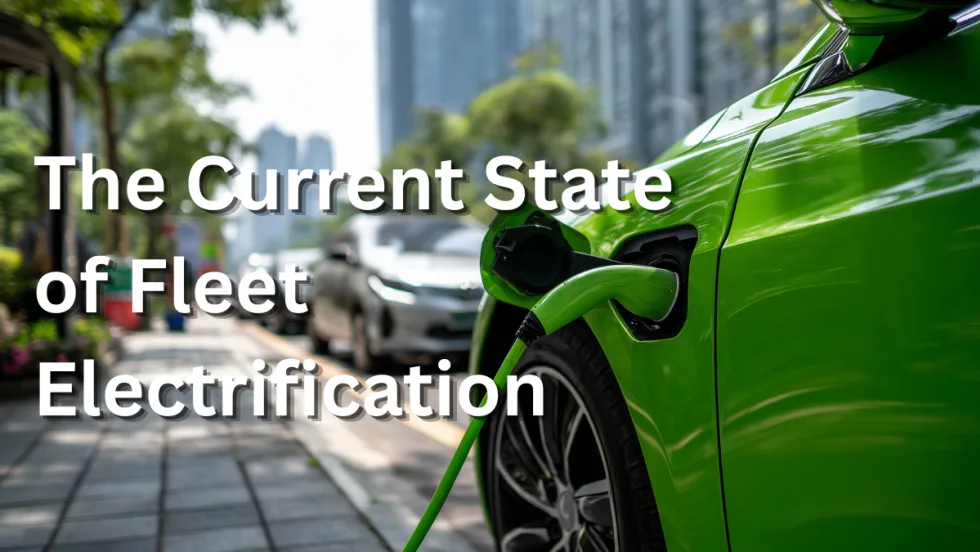
Merchants Fleet Reports 290M EV Miles as Fleets Navigate Changing Electrification Market
From millions in operating savings to hundreds of millions of EV miles, Merchants Fleet’s latest report reveals what’s working and what’s changing in fleet electrification.
Read More →
California District Commits to Electrify 25% of School Bus Fleet by 2028
One of the nation's largest school bus electrification projects to date demonstrates how grants, charging infrastructure, and public-private partnerships can help fleets transition to EVs at scale.
Read More →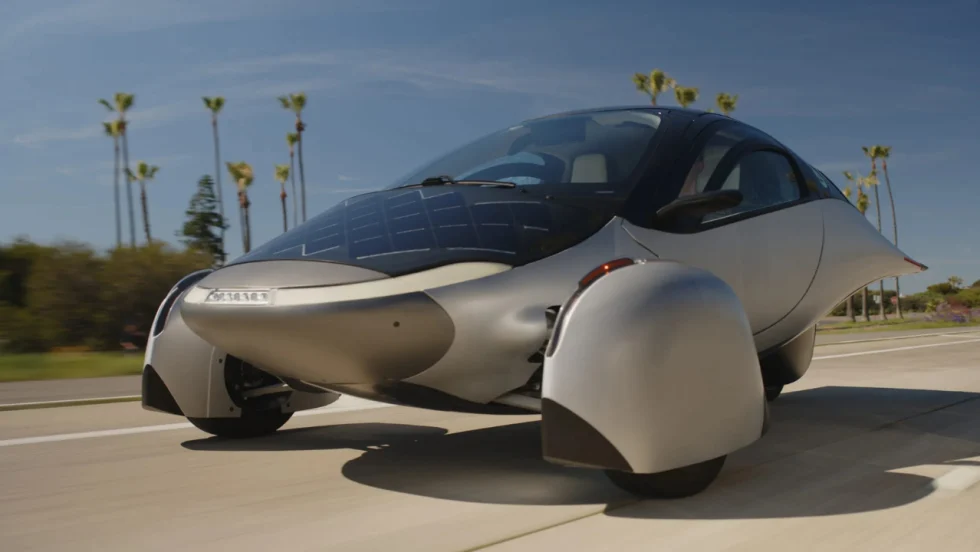
Aptera Orders Bodies and Chassis for Its First 40 Production Vehicles
Aptera Motors Corp. has issued purchase orders for the major structural components of its first 40 vehicles, and body and chassis components are expected to begin arriving in October.
Read More →