



Further Reading: Volkswagen Places Europcar at Center of New Mobility Strategy
Dataforce Study Indicates Electric is the Future of Mobility
Noting that the plans of vehicle manufacturers are an important indicator, the Dataforce study reported “almost all brands have already publicly communicated plans and indicated time periods from which they want to offer exclusively fully electric vehicles.”
July 19, 2022
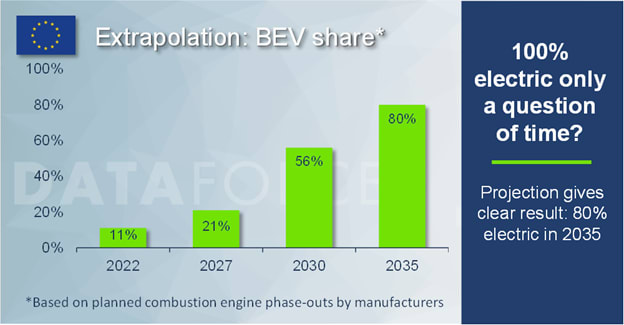
Based on data compiled from auto manufacturers, the study indicates three points in time at which a particularly large number of manufacturers want to exit the internal combustion engine market: 2027, 2030 and 2035. “For 2027, the extrapolation results in a BEV share of at least 21%. In 2030, the development is much faster with already 56% and in 2035 at least 80% will be reached,” the study reveals.
Photo: Dataforce
2 min to read
A new e-mobility study from automotive research firm Dataforce indicates the transportation future in Europe is electric, specifically battery electric vehicles (BEVs). One driving force is the EU plan to mandate only CO2-neutral new cars on the road beginning in 2035.
From January to May 2022, the share of fully electric vehicles in new registrations in 31 European countries, including the EU 28 nations, was 11.3%. The percentage was significantly higher in more progressive states, including the Netherlands (18%), Sweden (26.7 %) and the leader Norway (79.2%).
Noting that the plans of vehicle manufacturers are an important indicator, the Dataforce study reported “almost all brands have already publicly communicated plans and indicated time periods from which they want to offer exclusively fully electric vehicles.”
Other alternative power sources, such as e-fuels and hydrogen, “will hardly play a role in passenger cars, as available quantities are more likely to be needed for industrial purposes and large machines such as aircrafts,” according to the study.
Based on data compiled from auto manufacturers, the study indicates three points in time at which a particularly large number of manufacturers want to exit the internal combustion engine market: 2027, 2030 and 2035.
“For 2027, the extrapolation results in a BEV share of at least 21%. In 2030, the development is much faster with already 56% and in 2035 at least 80% will be reached,” the study reveals.
However, Dataforce notes, geopolitical influences can delay the BEV adoption. “For example, if the available quantities of lithium, cobalt and nickel needed for the construction of batteries are not available. A sufficient charging infrastructure must also be in place.”
Another factor favoring a purely electric future is the increasing number of new BEV-exclusive manufacturers entering the market, says Dataforce. While Tesla is the more prominent, Polestar and MG have been gaining market share. Other nascent e-car companies include Nio, Lucid, Xpeng, Rivian and some Asian companies. Together, the newcomers already account for a share of 18.7% of the total market.
The growing car subscription trend will also strengthen an electric future, the study reports. “Consumers use the flexible leasing offers to try out an electric car for themselves in everyday life. This allows them to minimize the risks of the new technology and to make up their own minds.”
Originally posted on Automotive Fleet
More Electric Vehicles
EV Charging Use Is Outpacing Infrastructure Growth
ChargePoint’s 2026 Charging Forward Report points to rising charger use, higher-powered charging, commercial vehicle electrification, and energy-management technology. Here’s what fleets should know.
Read More →
EV Realty Names Henrik Holland President as Charging Platform Expands
The former Prologis Mobility and Shell executive will help expand EV Realty’s truck charging business and move its power-first infrastructure model into autonomous vehicle depots and other fleet sectors.
Read More →
GreenPower Expands New Mexico EV Pilot With Larger Buses, V2G Testing
After logging more than 17,000 electric miles in the first year, New Mexico’s statewide pilot is moving into its second phase with larger vehicles, continued charging evaluations, and more.
Read More →
Can EV-as-a-Service Help Fleets Scale Electrification?
Sustainability Partners CEO Adam Cain explains how matching EVs, charging infrastructure, and duty cycles can help fleets scale electrification.
Read More →
How EV-as-a-Service Is Moving Fleets Beyond Pilots
Adam Cain, president and CEO of Sustainability Partners, explains how EV-as-a-service can help fleets scale deployments by addressing duty-cycle requirements and charging challenges.
Read More →
PowerFlex, The Mobility House Join Forces to Advance Fleet Electrification
Two EV charging providers are joining forces to deliver a broader portfolio of energy management and fleet electrification solutions.
Read More →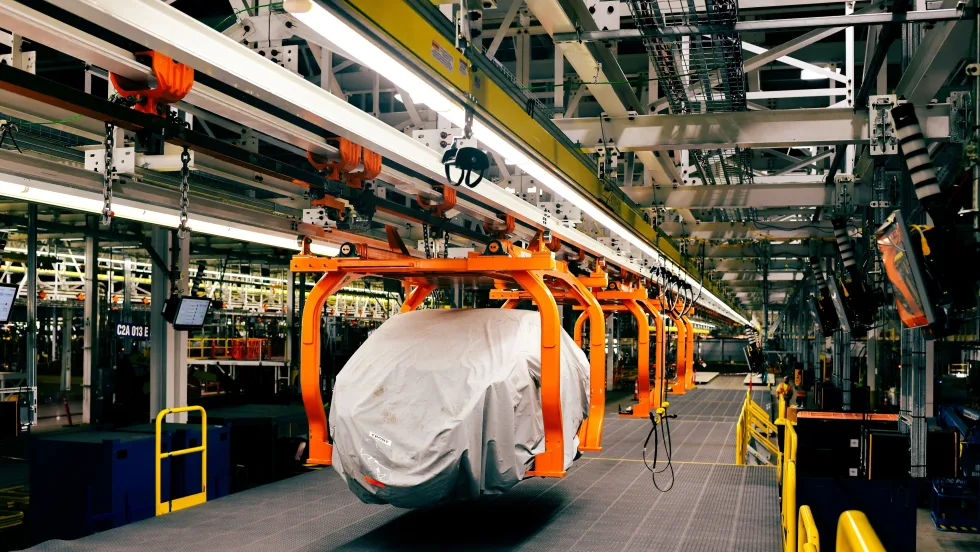
Ford Retools Louisville Plant for Fathom Electric Truck Production
Ford's $2 billion Louisville Assembly Plant overhaul introduces a three-part assembly process for the Fathom midsize electric truck, with production scheduled to begin in 2027.
Read More →
Merchants Fleet Reports 290M EV Miles as Fleets Navigate Changing Electrification Market
From millions in operating savings to hundreds of millions of EV miles, Merchants Fleet’s latest report reveals what’s working and what’s changing in fleet electrification.
Read More →
California District Commits to Electrify 25% of School Bus Fleet by 2028
One of the nation's largest school bus electrification projects to date demonstrates how grants, charging infrastructure, and public-private partnerships can help fleets transition to EVs at scale.
Read More →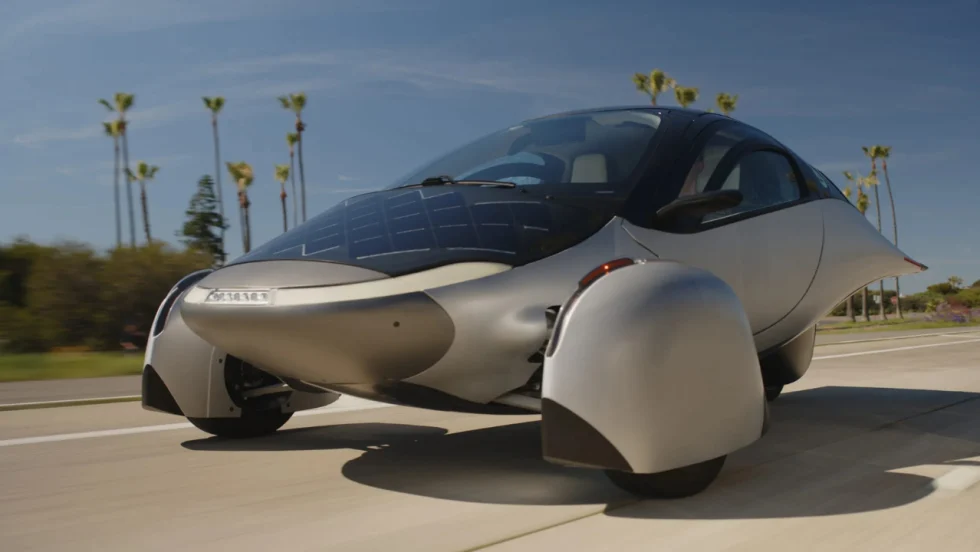
Aptera Orders Bodies and Chassis for Its First 40 Production Vehicles
Aptera Motors Corp. has issued purchase orders for the major structural components of its first 40 vehicles, and body and chassis components are expected to begin arriving in October.
Read More →