


2024 Hyundai Kona Overview
Customers can choose from electric and internal combustion powertrains, with the 2024 Kona on sale now at U.S. dealers and the Kona Electric to be available later this fall.

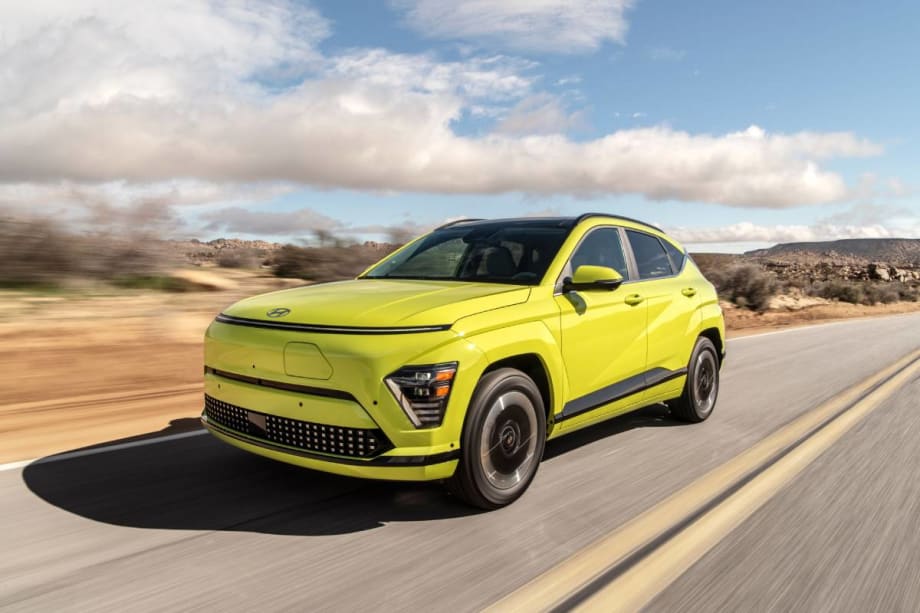
The all-new Kona is positioned as an all-electric variant that offers an electric range of 260 miles based on preliminary Hyundai internal estimates.
Photo: Hyundai
Hyundai unveiled its 2024 Kona SUV on Sept. 12. The all-new Kona is positioned as an all-electric variant that offers an electric range of 260 miles based on preliminary Hyundai internal estimates.
Customers can choose from electric and internal combustion powertrains, including a sporty N Line version. The 2024 Kona is on sale now at U.S. dealers and the Kona Electric will be available late fall.
Hyundai has developed the new Kona platform with an electrified powertrain first, in line with the company’s accelerated electrification strategy announcement that will bring 11 new Hyundai EVs to market globally by 2030.
“The all-new Kona and Kona Electric continue to build upon our extremely successful first-generation model, with outstanding efficiency, innovative technologies, distinctive styling, and comprehensive safety features,” said president and CEO of Hyundai Motor North America José Muñoz in a recent news release.
Among the upgrades are dual, 12.3-inch panoramic display screens, Digital Key 2 Touch, Over-the-Air (OTA) software updates, and a new infotainment system.
2024 Kona Electric Specifications
Kona Electric, equipped with the 64.8-kWh battery, is estimated to deliver up to 260 miles of range based on Hyundai’s preliminary internal testing.
This battery system is internally estimated to recharge from 10% to 80% in approximately 43 minutes with available 400V fast-charging capability, along with 150kW of power and 255 lb.-ft. of torque. The standard battery is estimated to provide approximately 197 miles of range based on preliminary internal tests.
The Kona internal combustion version length is now 171.3 in., 5.7 in. longer, with a wheelbase of 104.7 in., a 2.3 in. increase, and its overall width is 71.9 in., a full inch wider than its predecessor.
More Versatile Interior
As part of Kona’s new layout, the shift-by-wire gear selector has been relocated from the center console to a stalk behind the steering wheel, allowing more storage in the open console area.
The front seats are 30% slimmer to maximize rear passenger legroom and the second-row curveless bench seat also enhances available space. A two-stage latching system allows rear seat reclining.
The fully foldable second-row seat and rear compartment provide 25.5 cubic feet of rear cargo volume with rear seatbacks up and 63.7 cubic feet with seatbacks folded down, along with improved loading convenience.
EV-Specific Features
In addition to the pixelated seamless horizon lamp and pixel graphics, Kona Electric offers even more features for an improved customer experience. Available battery preconditioning ensures secure charging and power performance in colder temperatures. A new charging port door lamp helps ensure visibility at night.
Kona Electric also comes with forward “frunk” storage, active grille shutters, exterior Vehicle-to-Load (V2L) capability, i-PEDAL driving mode, and a smart regenerative system that adjusts regeneration according to real-time traffic conditions.
The new i-PEDAL enables a one-pedal driving mode that allows drivers to accelerate, decelerate, and stop using only the accelerator pedal when desired. The smart regenerative system automatically adjusts the levels of regenerative braking based on real-time data from forward traffic flow.
Efficient Internal Combustion Powertrains
Kona offers a choice of two gasoline powertrains.
A 2.0-liter 4-cylinder Atkinson engine produces an estimated 147 horsepower at 6,200 rpm and 132 lb.-ft. of torque at 4,500 rpm, paired with a Smartstream intelligent variable transmission (IVT) for maximum efficiency. The Atkinson cycle design maximizes the effective cylinder expansion ratio (compression stroke vs. power stroke) for greater efficiency.
N Line and Limited trims offer a 1.6-liter 4-cylinder direct-injected, turbocharged engine generating an estimated 190 horsepower at 6,000 rpm and 195 lb.-ft. of torque from 1,700-4,500 rpm for confident acceleration in city driving.
Peak torque delivery starts at only 1,700 rpm and holds through 4,500 rpm, for low-RPM responsiveness in everyday driving conditions. The Kona 1.6L turbo engine couples to an eight-speed automatic transmission for shifting and acceleration.
EPA Fuel Economy
SE (2.0L w/ISG) | SEL/SEL Conv. (2.0L) | N-Line/Limited (1.6T) | ||
Fuel Economy City/Highway/Combined | FWD | 29/34/31 | 28/35/31 | 26/32/28 |
AWD | 27/29/28 | 26/29/27 | 24/29/26 |
Connectivity with Over-the-Air Updates
OTA software updates will allow the owner to improve their Kona’s performance or experience new features using wireless communication.
OTA software updates can also be used for maps and multimedia software.
The latest version of Hyundai Digital Key, Digital Key 2 Touch allows owners to leave their car key at home and use compatible smartphones to lock, unlock, and start their vehicle. Digital Key 2 Touch also allows secure sharing of keys with up to three persons and can be revoked at the owner’s discretion.
Inside, dual 12.3-inch panoramic display screens are integrated into the audio-video navigation (AVN) system to give drivers a widescreen digital experience. While parking, a surround-view monitor (SVM) displays the vehicle from various driver-selectable viewpoints.
Driver and passengers alike have access to an eight-speaker Bose premium sound system, two USB-C chargers (including one with data support), and a 12V power outlet in the front, as well as two USB-C chargers in the rear and wireless device charging capability.
Kona also offers available Wi-Fi hotspot capability.
SmartSense Advanced Driver Assistance
The second-generation Kona is offered with the next level of Hyundai SmartSense advanced driver assistance system (ADAS) features not available on many small segment SUVs, providing elevated levels of safety and convenience.
Available remote smart parking assist (RSPA) aids drivers in getting in and out of parking spaces remotely. The press of the smart key button can move the vehicle forward or backward out of various parking scenarios. Blind-spot view monitor (BVM) can help when the driver makes a lane change by providing the driver with live video of the blind spot area in the instrument cluster.
Kona also offers additional safety features, such as enhanced forward collision-avoidance Assist (FCA), with junction turning support. It also offers highway driving assistance.
The Kona also offers other available SmartSense ADAS features, such as:
Blind-spot collision warning (BCW)
Intelligent speed limit assist (ISLA)
High beam assist (HBA)
Surround view monitor (SVM)
Rear cross-traffic collision-avoidance assist (RCCA)
Driver attention warning (DAW)
Rear occupant alert/safe exit warning
Parking collision avoidance assist-reverse
Kona also offers available driving convenience functions, such as smart cruise control (SCC), navigation-based smart cruise control (NSCC) with stop and go, parking distance warning (forward/side/reverse with contour warning), and remote start.
Originally posted on Automotive Fleet
More Electric Vehicles

EV Charging Use Is Outpacing Infrastructure Growth
ChargePoint’s 2026 Charging Forward Report points to rising charger use, higher-powered charging, commercial vehicle electrification, and energy-management technology. Here’s what fleets should know.
Read More →
EV Realty Names Henrik Holland President as Charging Platform Expands
The former Prologis Mobility and Shell executive will help expand EV Realty’s truck charging business and move its power-first infrastructure model into autonomous vehicle depots and other fleet sectors.
Read More →
GreenPower Expands New Mexico EV Pilot With Larger Buses, V2G Testing
After logging more than 17,000 electric miles in the first year, New Mexico’s statewide pilot is moving into its second phase with larger vehicles, continued charging evaluations, and more.
Read More →
Can EV-as-a-Service Help Fleets Scale Electrification?
Sustainability Partners CEO Adam Cain explains how matching EVs, charging infrastructure, and duty cycles can help fleets scale electrification.
Read More →
How EV-as-a-Service Is Moving Fleets Beyond Pilots
Adam Cain, president and CEO of Sustainability Partners, explains how EV-as-a-service can help fleets scale deployments by addressing duty-cycle requirements and charging challenges.
Read More →
PowerFlex, The Mobility House Join Forces to Advance Fleet Electrification
Two EV charging providers are joining forces to deliver a broader portfolio of energy management and fleet electrification solutions.
Read More →
Ford Retools Louisville Plant for Fathom Electric Truck Production
Ford's $2 billion Louisville Assembly Plant overhaul introduces a three-part assembly process for the Fathom midsize electric truck, with production scheduled to begin in 2027.
Read More →
Merchants Fleet Reports 290M EV Miles as Fleets Navigate Changing Electrification Market
From millions in operating savings to hundreds of millions of EV miles, Merchants Fleet’s latest report reveals what’s working and what’s changing in fleet electrification.
Read More →
California District Commits to Electrify 25% of School Bus Fleet by 2028
One of the nation's largest school bus electrification projects to date demonstrates how grants, charging infrastructure, and public-private partnerships can help fleets transition to EVs at scale.
Read More →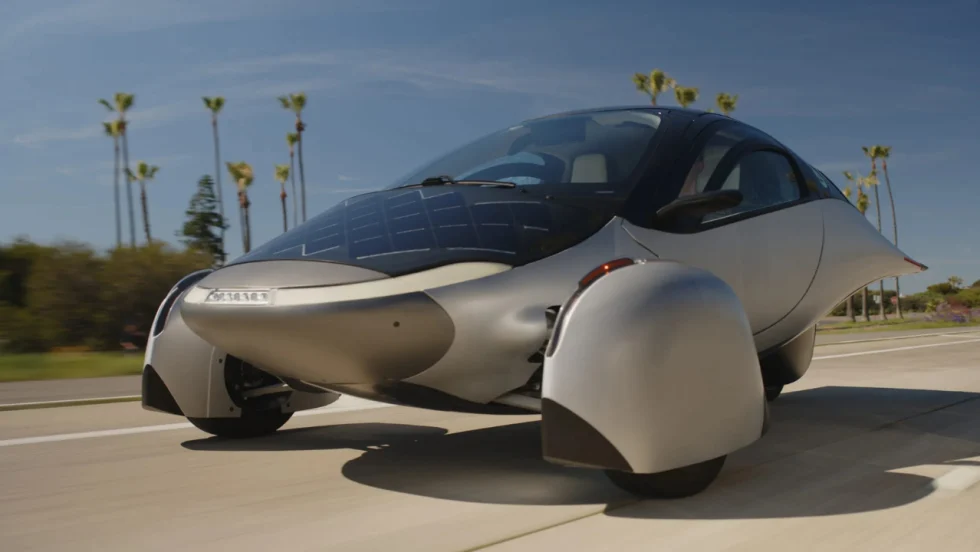
Aptera Orders Bodies and Chassis for Its First 40 Production Vehicles
Aptera Motors Corp. has issued purchase orders for the major structural components of its first 40 vehicles, and body and chassis components are expected to begin arriving in October.
Read More →