


The Impacts of COVID on Fleet Services & How to Manage Them
In the Coronavirus new normal, fleet managers need to keep a finger on the pulse of these emerging trends: take-home privileges; vehicle shortages and accident repairs; insurance adjusters; and massive mileage fluctuations.


Take-home priviliges and vehicle shortages are just a few of the emerging trends to keep track of in the new normal.
Getty Images
So much has changed since COVID-19 was declared a pandemic. Some of those changes are apparent, like quarantines, mask wearing, and a new-found appreciation for hand sanitizer. Others are more like aftershocks, unexpected changes rippling out as a result of the initial impacts. Unfortunately, fleets are not immune to the effects of COVID, which has had some major impacts on how fleet services must be managed — and sometimes in surprising ways.
Robert Martines, CEO, CCM Services, along with his management team, including Rich Tillotson, VP of Business Development, have been keeping a close eye on how the pandemic has affected fleets. Over the last year and a half in the COVID new normal, these are the four trends they’ve seen emerge and suggestions for managing them.
Trend No. 1: An Uptick in Take-Home Privileges
The Trend
With more people working from home to remain socially distant and limit COVID-19 exposure, many companies chose to move away from pool vehicles and expanded take-home privileges for company vehicles.
“A company vehicle is considered part of an employee’s working environment, therefore requiring employers to address health concerns with the sharing of vehicles by multiple drivers,” Tillotson said. “These expanded take home privileges have by their nature expanded the additional use by employee family members and residential partners.”
The Impact
While convenient for employees and their families, adding non-employee drivers can open up companies to additional liability. “The courts have found equal responsibility for the accident and injury caused by a company vehicle regardless of whether the driver was an employee or another non-employee driver,” Tillotson said.
What to Do
When family members are allowed to drive company vehicles, Martines suggests expanding the company’s driver safety efforts to those individuals. “CCM has found an uptick in clients’ requests to add and track the driving records of these additional drivers. Running an MVR on these family members has identified additional risk exposure for the employer leading to expanding the driver safety training and monitoring to these additional people,” he said.
Trend No. 2: Vehicle Shortages and an Increase in Accident Repairs
The Trend
Vehicle shortages are another difficulty fleets are facing in the age of COVID. The limited ability to acquire new units is causing fleets to hang on to older units longer and to make expensive repairs they may have not found worthwhile pre-pandemic. “Many clients are now approving repairs at a higher threshold than ever before,” Martines said. “There has been no formal change in actual cash value (ACV) as a percentage of repairs; however, the new norm is ‘Fix it. We can’t get a replacement!’ The need to retain a unit due to long replacement times has resulted in the repairing of a vehicle that might have been salvaged in the past.”
The Impact
Martines said the higher ACV thresholds have become a problem for the fleet industry. “A collision repair that may have been on a percentage-of-value threshold to determine a vehicle repair or a total loss is now a bit more complicated,” he said. “The new ACV calculation requires a very comprehensive and strong estimating effort, as supplements added to the original estimate can easily result in repair costs far exceeding the standard ACV.”
Unfortunately, body shops are facing COVID issues of their own, including personnel shortages, material shortages, and additional COVID-19 safety requirements. All these factors can add time to repairs, and that can mean increased costs for fleets. “These delays in the repair process have additional costs associated with them such as extended rental vehicle costs incurred while the company vehicle is under repair,” Martines explained.
What to Do
When calculating ACV amid a vehicle shortage, fleets must keep a watchful eye on their calculations, especially when unexpected costs for additional repairs and extended replacement rentals can be tacked on once the decision to repair a vehicle is made.
In addition to thinking holistically about ACV calculations, Martines said staying on top of each body shop repair will also help fleets avoid unnecessary rental costs.
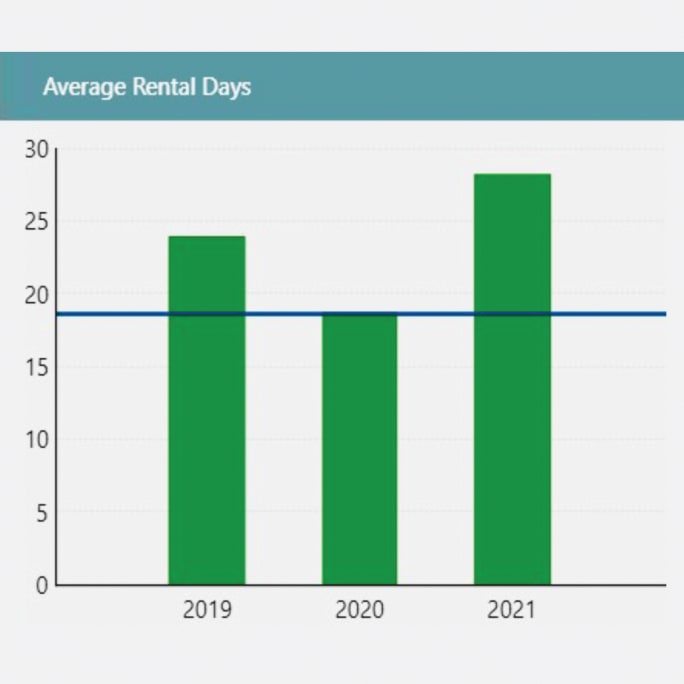
As more people become vaccinated against the coronavirus and fleets enter their second COVID winter, fleet managers should expect the average rental period to stay well above the 2020 mark—as drivers and companies become more comfortable in public and on the road, average rental periods may see a return to normal levels.
CCM Services
Trend No. 3: Missing in Action” Insurance Adjusters
The Trend
Like many non-essential workers, insurance adjusters for both the major and secondary insurance carriers are working from home to help control COVID exposures.
The Impact
Martines said the work-from-home environment has resulted in roadblocks for timely and fair insurance settlement negotiations. Adjusters are often difficult to reach, neglect to answer their phones, and don’t return calls. Likewise, files that were previously worked by multiple employees of the insurance carrier now fall to individual adjusters, whose resources and time limitations have taken a toll on claims settlement timelines. Because of this, Martines says the time it takes to get a fair settlement is stretching to 90 days or even more.
“In the past, efforts that were appearing to be moving slowly could often be escalated within the carrier claim structure, which allowed companies to go to a supervisor, manager, or director. That is rarely an option now as adjusters work more independently with no repercussions,” Martines said. “This has resulted in delays and inefficiencies such as all loss information including loss notice support, invoices, and other documents not following the file.”
In addition to difficulty getting a timely settlement, Martines said it’s also a struggle to get a fair settlement in the COVID environment.
“Some negotiations of settlements are being ignored entirely, especially higher cost repairs, as carriers simply want to wait out the process until costs begin to decline back to normal. They refuse to acknowledge higher costs due to COVID and simply offer what they deem is acceptable, which in many instances begin at 40 to 50 percent of actual costs,” Martines explained. “The lack of direct telephone contact and communications with the assigned adjuster are truly hindering fair and reasonable negotiations.”
What to Do
Since most insurers aren’t physically inspecting a damaged vehicle at the repair shop, capturing detailed photos of the damage becomes critical, as that’s what adjusters are working from. “It is imperative that the photos are not just four corners of the vehicle; they must show all of the damage. This can be done easily during the teardown and repair process,” Martines said. “Also, since parts price increases are becoming the norm, using the parts invoices versus the estimated prices will help validate actual costs. Finally, do not let the insurance adjuster default to used parts prices unless the parts are actually available at the time the parts are needed.”
If fleets find an adjuster’s treatment unfair, Martines says they shouldn’t give in without speaking to a supervisor. If that doesn’t work, fleets still have options. “One way to get attention is to report the insurance company to the insurance commission and file an ‘abuse of process’ claim against the adjuster,” he said. “These actions cause harm to the reputation of the insurance company as well as the adjuster, which can motivate them to conduct themselves more professionally.”
Trend No. 4: Mileage Fluctuations
The Trend
COVID has also had an impact on mileage — both increasing it in certain cases and decreasing it in others.
For example, before COVID, company drivers made frequent trips to visit customers and prospects. But now, phone calls and Zoom meetings have replaced in-person visits. As a result, some drivers simply aren’t racking up the miles like they used to. Delivery drivers faced the opposite problem, with the number of stops — and miles — per day increasing at unprecedented rates.
“In some company environments, the lack of travel has reduced or eliminated the need for a company vehicle, which saves the company money they did not project in their budgets. However, on the opposite end of this spectrum, is the workforce that must travel,” Martines said. “Due to safety and health-related COVID concerns, many companies have had to modify their internal practices, with some resorting to one driver to a vehicle while others had to either extend the hours of use of the vehicle for a second driver or had to acquire another vehicle to service their clients.”
The Impact
Fluctuations in mileage, whether less or more per vehicle, has an impact on maintenance.
For vehicles that previously relied on mileage as the marker for service, traveling fewer miles than usual can be problematic for maintenance schedules. For instance, routine maintenance like an oil change every 3,000 miles may not be appropriate if the vehicle is rarely driven.
On the other hand, when companies must extend a vehicle’s hours of use so essential workers can do their jobs, the additional mileage increases maintenance costs. “Add to this, with extended hours of use, some drivers are not able to perform every daily task, forcing them to be away from home and forcing the company to incur overnight hotel expenses,” Tillotson said.
The skyrocketing demand for deliveries amid COVID also resulted in a major mileage spike for delivery companies.
“Any business that is involved in delivery, whether home or business delivery, has experienced dramatic increases in daily mileage logs. These mileage changes have to be recognized and addressed in a vehicle maintenance program,” Martines said. “If the client does not address these changes, a variety of issues may arise that need to be contended with; along with routine maintenance, the company vehicles could be receiving unneeded preventative maintenance or ‘convenience repairs’ or upselling. Whether a delivery vehicle is getting unneeded maintenance or not receiving enough maintenance due to excess mileage, both scenarios result in higher maintenance costs for the employer.”
Poorly maintained vehicles can also increase a company’s liability risk: If an accident happens because of faulty brakes or bald tires, a company can be held liable for their negligence, the costs of which are much greater than any PM service.
What to Do
In order to keep maintenance costs in check amid mileage fluctuations, Tillotson aid fleets must monitor mileage and maintenance schedules closely. “The electronic issuing of PM notices must have a reasonability factor built into the software,” he said. “CCM has had this feature in our MainteNet program since its inception. The tracking of this new mileage usage by client vehicles must be utilized when authorizing a PM at a network vendor in order to provide the right maintenance at the right time.”
Originally posted on Automotive Fleet
More Operations

The EV Breakdown Nobody's Talking About: Why Most Electric Vehicle Roadside Calls Aren't Mechanical Failures
Here's why EV breakdowns are widely misunderstood.
Read More →
Xos White Paper Asserts LA Olympics Will Lack Enough EV Chargers
The commercial EV fleet company recommends some faster and more flexible remedies to relieve the anticipated shortfall.
Read More →
ChargePoint, Optimus Expand Fast-Charging Network Across Southeastern U.S.
ChargePoint will serve as the exclusive solutions provider, delivering hardware, software, and services to support Optimus’ growing charging network.
Read More →
Running A Profitable Electric Rental Fleet
How do you successfully operate an all-electric rental car fleet? Whether you manage a rental fleet or another commercial fleet, this conversation offers practical lessons on deploying, operating, and scaling electric vehicles.
Read More →
Registration Opens for 2026 Fleet Forward Conference
Held on the East Coast for the first time, the Washington, D.C.-area event features expert-led education, a new IIHS Crash Test Experience, and collocation with the NAFA’s Fleet Safety Symposium.
Read More →
Why Charging May Never Be As Easy As Filling Up Gas
A seamless charge depends on a string of independent companies getting it right together, every time. How can electric fleets navigate the challenges to create a successful charging plan?
Read More →
Slate Debuts Colorful, Unique EV Models
A recent media and client event, studded with electric vehicles dressed up on platforms, planted a new position for the manufacturer in the wider EV market. Fleets will find cost-saving advantages.
Read More →
Slate Electric SUV, Pickup Switchable Model Aims For Light-Duty Fleets
Everything about this EV is counterintuitive and understated, making it stand out from the crowd.
Read More →
Polestar Barred from U.S. Market Under Connected Vehicle Rule
The automaker loses its authorization to sell new vehicles in the U.S., starting with the 2027 model year. Polestar owners will retain access to the brand's service network.
Read More →
Uber, Nuro and Lucid Plan Houston Robotaxi Service in 2027
The tripartite venture brings out the combined advantages of electric vehicles, mobility, and autonomy into ground transportation.
Read More →