


Recent Insights into Electric Vehicle Sales and Owners
Market Snapshot: Who are EV buyers, what EV models are they purchasing, and where’s all the selling action?


Kirsten Von Busch, product marketing director at Experian, detailed the consumer behavior of EV buyers recently at the National Auto Auction Association Convention in Chicago.
Photo: Martin Romjue / Bobit
Despite the crosswinds now facing the electric vehicle sector, 2023 is shaping up to be one for the green vehicle record books.
It’s been a year of spiking interest in EVs and commercial activity across the U.S., and while still a small percentage of ground transportation, EVs show the potential of growing at a measured if not always meteoric pace.
An industry specialist with Experian recently presented an overview of the national EV market, signaling which new electric vehicles buyers prefer and will eventually end up downstream in the used vehicle markets.
EVs Gain Deeper Crust Slice of the U.S. Vehicle Fleet
As of today, there are a total of 286 million cars and light-duty trucks in the U.S. with 2.7 million of them electric vehicles or 1% of the total, said Kirsten Von Busch, product marketing director for Experian, during a session at the National Auto Auction Association convention held in late September in Chicago.
About 850,000 new EVs were registered in the 12 months before September, comprising about 7.5% of all new retail-purchased EV registrations. At the end of 2022, EV registrations were 6%, up from 5% in the spring of that year.
“A staggering number of EVs are entering the market,” Von Busch said. Luxury EVs comprise 77% of the market, and non-luxury EVs, 23%. Within the luxury EV market, Tesla holds the largest share at 82%.
When looking at all electrified vehicles, which include hybrids and PHEVs, new registrations are about 18% of the market. When factoring in electric taxis and rental vehicles, the total number of EV registrations exceeds 900,000.
From September 2022 to September 2023, used EV registrations reached 169,000, less than 1% of total used vehicle registrations, she said.
Stats & Facts About Electrification in the U.S.
Von Busch presented a slide show of stats providing deeper insights into the EV market:
New EV retail registrations by segment:
Cars: 29%
CUVs 22%
Pickups: 4%
SUVs .26%
Vans: .08%
Sports cars: 1.48%
The top new EV retail registrations by make and model are:
Tesla: 63.8%
Ford: 6.7%
Chevrolet: 4.6%
EV Models with 3%+ market share:
Tesla Model Y: 31.2%
Tesla Model 3: 25.4%
Ford Mustang Mach E: 5.2%
Tesla Model X: 4.3%
Tesla Model S: 4.1%
Chevrolet Bolt EUV: 3.2%
Hyundai IONIQ 5: 3.2%
EV Happening Hot Spots
As expected, California leads in new EV registrations, with highest concentrations in the Los Angeles and San Francisco Bay areas, followed by New York, Washington, D.C./Baltimore, Seattle and San Diego, Tampa and Orlando, Sacramento, Miami/Ft. Lauderdale, Chicago and Dallas, and Phoenix.
The fastest growing EV designated market areas (DMAs) based on five-year YOY growth:
Tucson, Arizona
Colorado Springs
Orlando, Florida
Oklahoma City
Las Vegas, Nevada
Reno, Nevada
Virginia Beach/Norfolk, Virginia
Cleveland, Ohio
San Antonio, Texas
Greensboro, North Carolina
This provides clues as to where EVs will be coming into downstream auctions in future years, Von Busch said.
In the non-luxury segment of EVs September to September, the following major automakers garnered these market shares:
Chevrolet: 24%
Ford 24%
VW: 16%
Hyundai 15%
Kia 9%
Among specific models, the Chevrolet Bolt EUV and Bolt get 23% market share, with the VW ID.4 at 16%; Ford Mustang Mach E, 16%; Ford F-150 Lightning pickup truck, 8%; and Nissan Leaf at 4%.
Non-luxury EV buyers are being found in places not readily assumed to be EV-friendly.
“The long-held myth about people not buying EVs in mountains and dry climates is not true,” Von Busch said, citing stats from Recurrent which tracks EV uptake in great depth and detail. “From a heat map perspective, climate affects range, but people in those areas are buying EVs. No one is debating that temperature has an impact on range.”
Who Are EV Buyers?
In sizing up characteristics of typical EV buyers, Von Busch pointed out:
85% of EV owners also own a gas vehicle in their households.
11% also have a hybrid vehicle.
4% of U.S. households run only EVs.
A higher percentage of Millennials (b.1982-1996) and Gen X (b.1965-1981) are buying EVs when compared to overall vehicles.
Fewer members of Gen Z (b.1997-2011), Baby Boomers (b.1946-1964), and Silent generation (b.1925-1945) are buying EVs as a percentage of total registrations.
Percentage breakdowns of new EVs bought by the generations in 2022:
Silent: 2.1%
Boomers: 20.6%
Gen. X: 37.5%
Millennials: 34.4%
Gen Z: 5%
Among EV buyers, the motives are shifting more from gaining the newest technology to advancing eco- and environmental preservation, Von Busch said.
More info from Experian Automotive Market Insights:EV Resource Center page which includes an EV Year in Review Infographic for 2022.
Originally posted on Automotive Fleet
More Electric Vehicles
EV Charging Use Is Outpacing Infrastructure Growth
ChargePoint’s 2026 Charging Forward Report points to rising charger use, higher-powered charging, commercial vehicle electrification, and energy-management technology. Here’s what fleets should know.
Read More →
EV Realty Names Henrik Holland President as Charging Platform Expands
The former Prologis Mobility and Shell executive will help expand EV Realty’s truck charging business and move its power-first infrastructure model into autonomous vehicle depots and other fleet sectors.
Read More →
GreenPower Expands New Mexico EV Pilot With Larger Buses, V2G Testing
After logging more than 17,000 electric miles in the first year, New Mexico’s statewide pilot is moving into its second phase with larger vehicles, continued charging evaluations, and more.
Read More →
Can EV-as-a-Service Help Fleets Scale Electrification?
Sustainability Partners CEO Adam Cain explains how matching EVs, charging infrastructure, and duty cycles can help fleets scale electrification.
Read More →
How EV-as-a-Service Is Moving Fleets Beyond Pilots
Adam Cain, president and CEO of Sustainability Partners, explains how EV-as-a-service can help fleets scale deployments by addressing duty-cycle requirements and charging challenges.
Read More →
PowerFlex, The Mobility House Join Forces to Advance Fleet Electrification
Two EV charging providers are joining forces to deliver a broader portfolio of energy management and fleet electrification solutions.
Read More →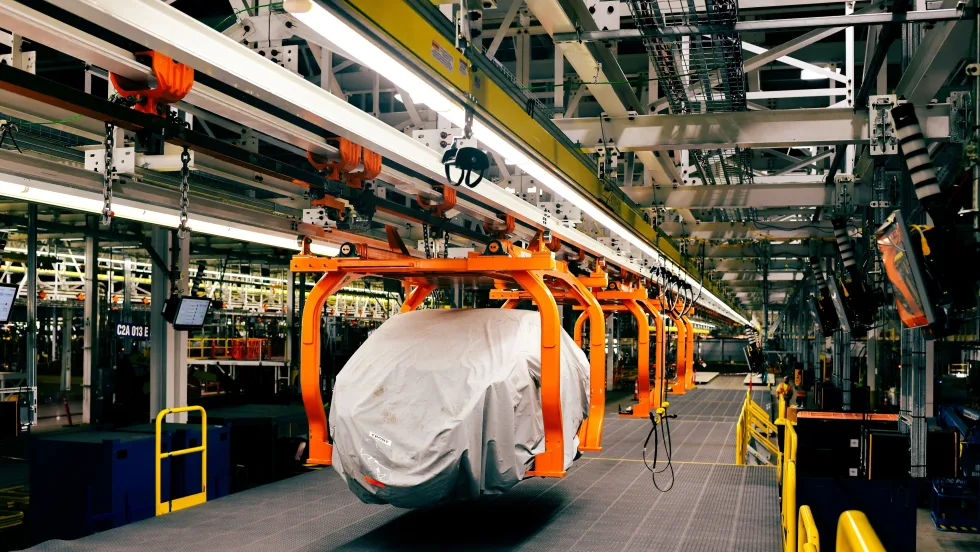
Ford Retools Louisville Plant for Fathom Electric Truck Production
Ford's $2 billion Louisville Assembly Plant overhaul introduces a three-part assembly process for the Fathom midsize electric truck, with production scheduled to begin in 2027.
Read More →
Merchants Fleet Reports 290M EV Miles as Fleets Navigate Changing Electrification Market
From millions in operating savings to hundreds of millions of EV miles, Merchants Fleet’s latest report reveals what’s working and what’s changing in fleet electrification.
Read More →
California District Commits to Electrify 25% of School Bus Fleet by 2028
One of the nation's largest school bus electrification projects to date demonstrates how grants, charging infrastructure, and public-private partnerships can help fleets transition to EVs at scale.
Read More →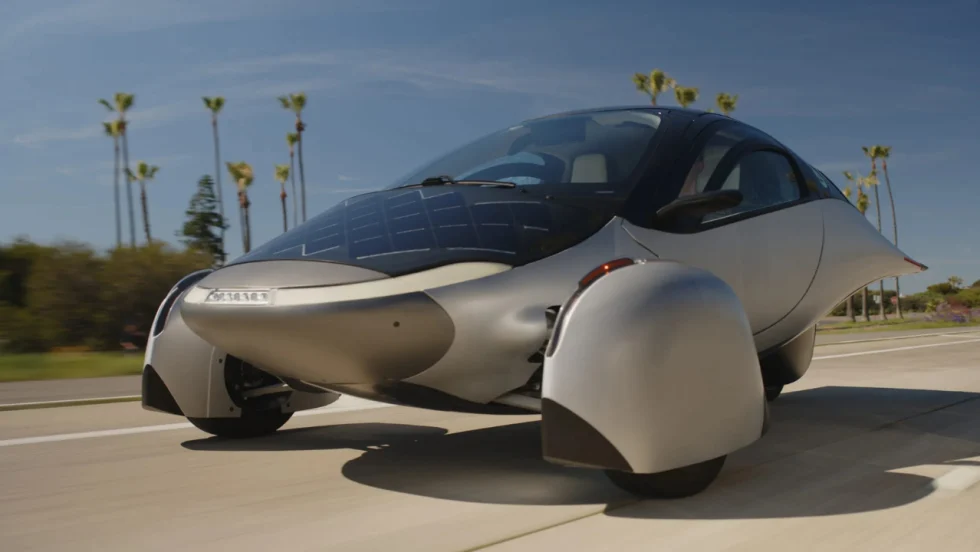
Aptera Orders Bodies and Chassis for Its First 40 Production Vehicles
Aptera Motors Corp. has issued purchase orders for the major structural components of its first 40 vehicles, and body and chassis components are expected to begin arriving in October.
Read More →