


LeasePlan Exec Talks Business Transformation, Mobility
With more than 1.7 million vehicles under management in 32 countries, LeasePlan can be used as a microcosm to identify emerging trends at multinational fleets, such as mobility management and vehicle electrification.


Berno Kleinherenbrink, LeasePlan Corp. N.V.'s senior vice president of commerce

Berno Kleinherenbrink, LeasePlan Corp. N.V.'s senior vice president of commerce
As a global fleet leasing company, LeasePlan has operations in Europe, Asia-Pacific, and the Americas. In the past, LeasePlan was managed as a multi-local organization, with LeasePlan’s overall corporate performance being the aggregate of its local business activities.
In the fourth quarter of 2016, LeasePlan implemented its “Power of One LeasePlan” strategy, which restructured the business into a fully integrated, centralized organization designed to leverage the strength of its entire organization across all countries.
In addition, in September 2017, LeasePlan became one of 10 founding members of the EV100, a global initiative of companies committed to accelerating the transition to electric vehicles (EVs) and making electric transport the new normal by 2030.
With more than 1.7 million vehicles under management in 32 countries, LeasePlan can be used as a microcosm to identify trends occurring at multinational fleets, in particular the emergence of mobility management, which has attracted much interest among European fleets.
To learn more about LeasePlan’s business transformation, its participation in the EV100 global initiative, and the future of mobility management, Automotive Fleet recently interviewed Berno Kleinherenbrink, senior vice president of commerce for LeasePlan Corporation N.V., at the Fleet Europe Forum Conference in Estoril, Portugal.
Below are interview excerpts:
Automotive Fleet: What do you see as the top trends among multinational fleets?
Kleinherenbrink: One trend we definitely see with international clients is a strong desire to lower their emissions footprint. The initial focus of footprint reduction was very much toward CO2. Now we are clearly seeing a trend to net-zero emission, namely, eliminating any form of emission. Today, this is definitely high on the agenda of quite a few of our multinational clients. Of course, this initiative is typically combined with a focus on reducing the total cost of ownership.
We are also seeing a desire to talk about a broader scope of mobility management, not only for cars and public transportation, but also to have a complete solution regarding travel.
AF: Any other trends you see besides those two?
Kleinherenbrink: Another thing we see happening is various international customers who want to offer a leasing solution to their employees, in which there’s an umbrella agreement we have with the customer. We do one-on-one contracts with their employees eligible for a car, but, now they want to extend this to their total employee base. They see its a benefit to offer to their staff.
AF: Would the contract be directly with that employee?
Kleinherenbrink: Yes, the contract would typically be directly with the employee.
AF: In the past year, LeasePlan has been implementing a transformation initiative looking to transform the entire company. How is it progressing? Are there any updates that can you provide?
Kleinherenbrink: The overall transformation initiative will occur over approximately three years. We are progressing thus far according to plan. In particular, some of the arrangements that we’ve made with some of our suppliers are noticeable to our customers and are in place. We’re quite happy about the progress thus far.
AF: What is the goal of the transformation?
Kleinherenbrink: In the past, LeasePlan used to be a multitude of companies in 32 individual countries. The goal of this transformation is to become one company. The program is called the “Power of One,” which means we’re creating products across all these countries, such as reporting for our customers, procurement on a global scale, and remarketing where we actually use all the learnings we have in each country. We spread that across the organization. The transformation is completely focused at becoming One LeasePlan.
AF: Will LeasePlan International continue to exist?
Kleinherenbrink: Yes, it will. LeasePlan International was almost like a first step to having a global approach. We have further intensified the way that we have global solutions for our customers, using global reporting and global invoicing. Recently we launched in Europe a single contract, a contract that can be signed and is applicable to a multitude of countries. There’s more work we’re doing in making it easier for our customers to work with us across borders.
AF: There’s been a lot of discussion in the industry about mobility management. What are you hearing from your customers about mobility management? Is this discussion being customer-driven?
Kleinherenbrink: It is definitely customer-driven. We have quite a few customers who have engaged us to talk about mobility management. It’s difficult to pinpoint what is meant by mobility management. In some cases, it’s related to a vehicle or fleet. In other cases, it has to do with a mobility budget that is made available to employees.
We’re currently trying to define with our customers what is the best solution. What role do we play in that particular solution to make that work? Mobility management is on top of the agenda of a large proportion of our customers, in particular international customers.
What the majority of the customers really want to have is they want to make sure things are easy for their employees, that the cost is well under control, that they have a good insight into what’s happening, and that there’s an optimal solution for mobility, whatever form of mobility that is.
AF: One form of mobility management is to provide employees with a mobility budget. How would you define a mobility budget? Is it where an employee gets a certain amount of money per month for mobility and it’s at their discretion on how to spend it?
Kleinherenbrink: There are multiple forms of mobility budgets that are available in the market today. I haven’t seen one that really works optimally because it’s pretty complex.
You have to deal with taxes and not only corporate taxes, but also personal taxes that are applicable. Then you also have the VAT (value-added tax) issues that come into question.
What typically happens in a mobility budget is that an employee gets a certain allowance.
The first question is it a pre-tax or after-tax allowance? Do you have somebody first pay the income tax on the allowance, and then have them settle with the mobility needs they have. But typically it’s an allowance. Against that allowance an employee is free to choose a mobility form that suits their needs and the company.
There’s also a certain image you want to have as a company in the way people use their mobility budget. You want to avoid presenting negative images when your staff visits customers. You don’t want one guy driving a Ferrari and another driving a totally beat up car because they want to save cost. There’s also a certain responsibility you have as a duty of care.
The answers to these questions are not that easy. But we are seeing various customers experimenting with different options.
AF: How is mobility management different than reimbursement?
Kleinherenbrink: In a sense, it is similar or at least overlapping into each other. I would say that mobility management in itself, if you do it well, is an arrangement with your staff defining the way you’d like employees to use their mobility budget. We don’t want you to go overboard on the means you use or underboard in terms of maybe trying to save too much money and benefit from the budget.
The mobility budget is intended to cover mobility expenses. And you want to facilitate that drivers, users can do it with a means that fits wherever they live or whatever they do in terms of a job. To optimize that is not that easy. But, to answer your question, yes, in a sense, it’s similar to reimbursement.
AF: If there’s money left over in the mobility budget, is that money retained by the employee or returned to the company?
Kleinherenbrink: Typically what we see it is retained on behalf of the employee. If it’s pre-tax money, the employee pays the taxation on it and keeps the balance. If it’s after-tax, it’s the employee’s money anyway.
AF: LeasePlan has a relationship with Uber. Could you explain how that relationship started, what it entails, and how it is progressing?
Kleinherenbrink: In one of our countries we supply Uber drivers with lease contracts.
These are typically self-employed drivers that drive on behalf of Uber. They use the Uber technology to drive their vehicle. LeasePlan has become a partner with Uber, whereby we provide the car, in most cases a second-hand car, using a contract that suits the driver. And we have a payment methodology that covers us, Uber, and also works for the driver. It’s as plain and simple as that.
This model has worked quite well. We’re rolling it out in various markets in Europe at this time. We believe that this is a new form of mobility, if you like, where you can, indeed, also function as a provider of that facility to Uber as an independent provider.
AF: In which markets are you providing this service?
Kleinherenbrink: We provide it in various markets in Europe at the moment. The main ones are France, Portugal, and the Netherlands. But we’re also looking into other markets to make it available there.
AF: How would you characterize today’s pan-European fleet marketplace? What is the state of the economy and the state of the marketplace?
Kleinherenbrink: The state of the economy I think is fairly good, if you read not only the projections that are made in The Economist magazine, they’re quite favorable for the time period to come. I think what Trump has done to taxes, whatever we think about it, has helped give another shot in the arm in terms of the economy. So I have an expectation that it will be okay for next year. The fleet market, as far as I can judge it, and reading also from some of the other independent reports, will also grow over the next year.
The market, however, is very competitive. There are lot of players, a lot of local players, and international players. We see OEMs being quite active in those markets, so it is a very competitive market environment.
AF: LeasePlan was also one of 10 founding members of the EV100 initiative. Could you explain why LeasePlan helped found the EV100 initiative and how you’re looking to implement with it?
Kleinherenbrink: We believe you have to do the right thing as a company. If we look at the field where we’re active, that means reducing our footprint or even going to a net-zero footprint. This is definitely high on our agenda. We believe it is not only good for our company, but good for society at large. That’s why we have made a bold statement in two ways. First of all, by being a founding member of that EV100 initiative, but second, we said let’s put our money where our mouth is. Let’s immediately start stepping up a change on our own fleet. That’s the fleet that our employees drive.
AF: Is it just the corporate HQ fleet or would it also include your employee fleets in other countries?
Kleinherenbrink: That is step two. We also have to deal with the practical implications, whether an alternative is available. It’s difficult to judge that in such a short time period. The fleet at our corporate offices is in The Netherlands. There are lot of facilities to drive electric, or hybrid, or you can even choose liquefied petrol gas which is already an improvement. That’s why we said that’s indeed the area where we can make a bold move. We’ve taken that step. We’ve said we don’t know yet exactly how we’re going to do it, but one thing for sure is that we want to take that first step.
AF: Have any of your clients also joined the EV100?
Kleinherenbrink: Yes, one of our clients is also a founding member of EV100.
AF: Where do you see LeasePlan five years from now?
Kleinherenbrink: We will definitely be working much more as one organization. By that time, we have been able to create the Power of One, and make it work.
Secondly, we’re also heavily investing in not only IT but in particular in digital solutions. What you will see five years from now is there will be an array of various digital solutions available on topics that we currently do not even know exactly what they will entail. We have invested in not only having these digital experts on board, but we’re also making sure they provide tangible solutions for our customers.
Originally posted on Automotive Fleet
More Vehicle Research
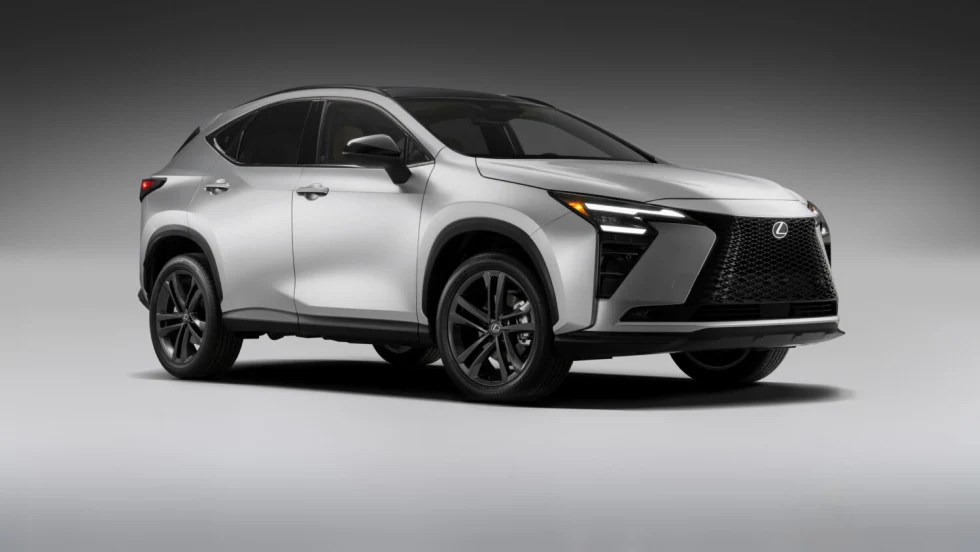
2027 Lexus NX Moves to Fully Electrified Lineup
For 2027, the NX moves to an entirely electrified lineup, with either hybrid or plug-in hybrid powertrains.
Read More →
2027 Mitsubishi Eclipse Sportback Named Green SUV of the Year
Green Car Journal recognized Mitsubishi’s new battery-electric crossover, which offers NACS compatibility and DC fast charging at up to 150 kW.
Read More →
Dave Carroll Named President of Ford Energy
Carroll succeeds Lisa Drake, who will remain with Ford through Dec. 31 to support the leadership transition.
Read More →
City of Long Beach Named No. 1 Green Fleet of 2026
NAFA's 2026 Green Fleet Awards recognized fleets for sustainability efforts spanning alternative fuels, technology, facilities, workplace culture and fleet operations.
Read More →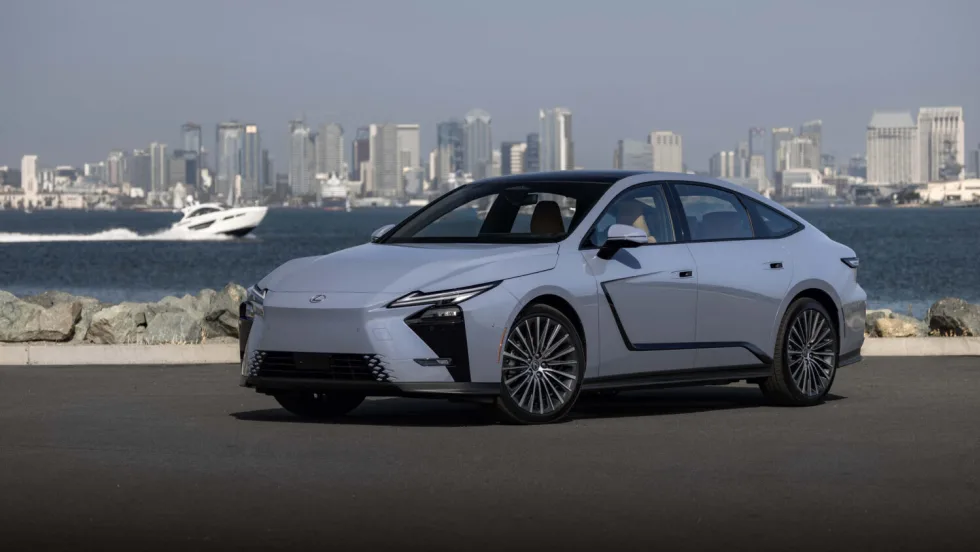
2027 Lexus ES Adds First Battery-Electric Models
The ES 350e and ES 500e join the hybrid ES lineup with up to 338 hp, an EPA-estimated 307 miles of range and standard NACS charging capability.
Read More →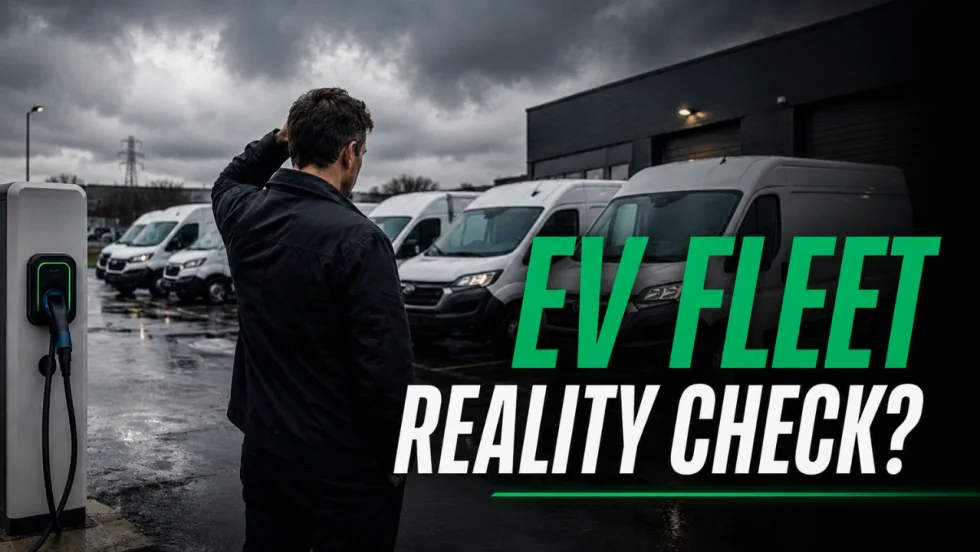
EV Fleet Reality Check: What Operators Wish They Knew Before Electrifying Their Work Vans
Electric work truck upfits bring new compatibility questions. Learn how parts availability, OEM guidance, power demands, and route planning can affect fleet performance.
Read More →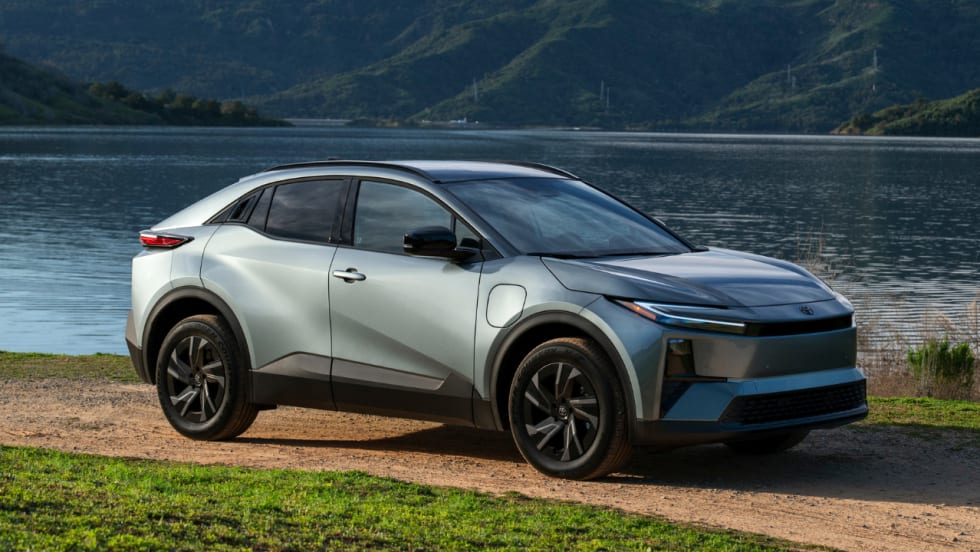
2027 Toyota C-HR Offers 287-Mile Range and Standard AWD
Toyota’s 2027 C-HR brings 287 miles of estimated range, standard all-wheel drive, and NACS fast-charging capability to the compact EV market. See what its mix of performance, cargo space, and everyday technology could offer business users.
Read More →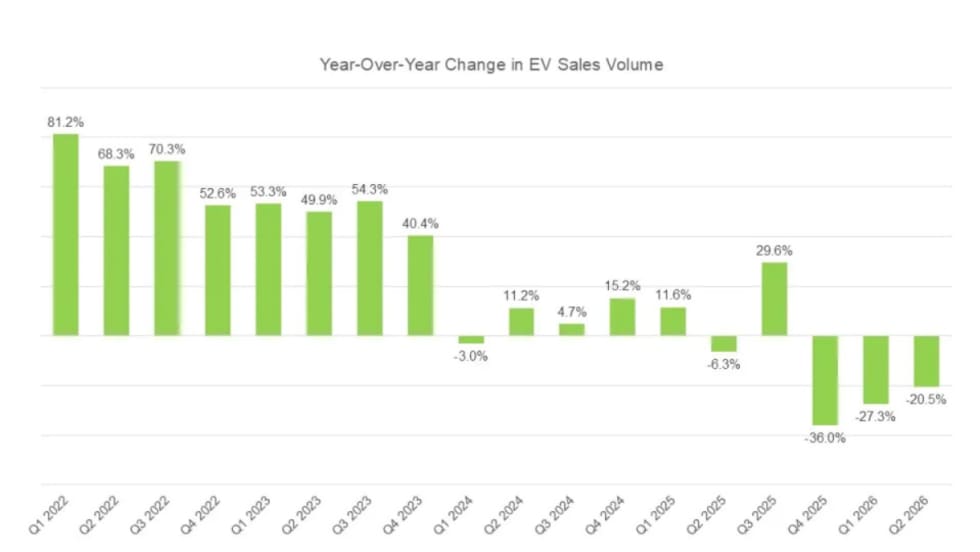
New Vehicle Models Stabilize Electrified Market In Q2
But more credit goes to hybrids than to all-electric vehicles, as more buyers look for fuel-efficient alternatives amid high gas prices.
Read More →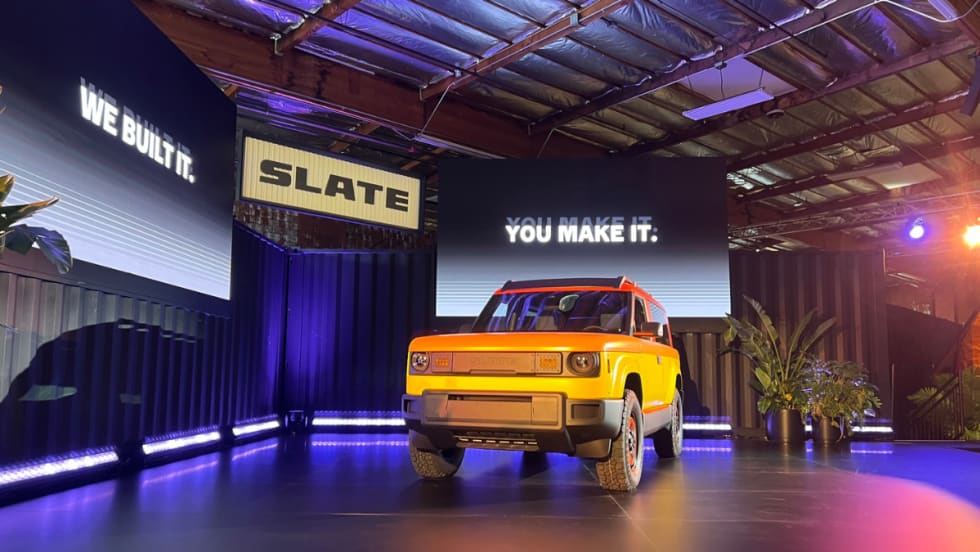
Slate Debuts Colorful, Unique EV Models
A recent media and client event, studded with electric vehicles dressed up on platforms, planted a new position for the manufacturer in the wider EV market. Fleets will find cost-saving advantages.
Read More →
Slate Electric SUV, Pickup Switchable Model Aims For Light-Duty Fleets
Everything about this EV is counterintuitive and understated, making it stand out from the crowd.
Read More →