



Related: Samsung SDI Takes Full Control of GM Battery JV as Indiana Plant Pivots to Energy Storage
Ford Retools Louisville Plant for Fathom Electric Truck Production
Ford's $2 billion Louisville Assembly Plant overhaul introduces a three-part assembly process for the Fathom midsize electric truck, with production scheduled to begin in 2027.
August 18, 2026
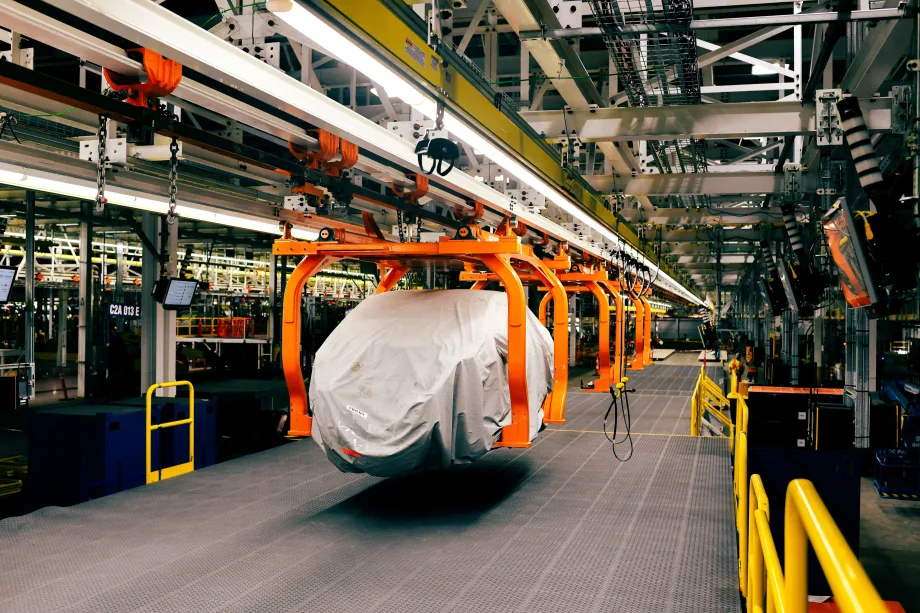
Ford is investing $2 billion to retool Louisville Assembly Plant for production of the Fathom midsize electric truck. The plant will use Ford's new Universal EV Production System when Fathom production begins in 2027.
Credit:
Ford
3 min to read
- Ford is investing $2 billion to revamp the Louisville Assembly Plant.
- The plant will implement a new three-part assembly process.
- Production of the Fathom midsize electric truck is set to begin in 2027.
*Summarized by AI
Ford is progressing with a $2 billion overhaul of its Louisville Assembly Plant in Kentucky as it prepares to build the Ford Fathom midsize electric truck using the automaker's new Universal EV Production System.
Ford shut down the plant in late 2025 and removed its existing production equipment. By February 2026, the facility had been cleared for installation of equipment designed around the new EV manufacturing process. Ford said prototype Fathom builds using production-qualified parts are scheduled to begin in the first quarter of 2027, with customer vehicles following later in the year.
The Louisville investment is part of a broader $5 billion investment by Ford in its Universal EV program. That includes Louisville Assembly Plant and BlueOval Battery Park Michigan, which will produce lithium iron phosphate batteries for vehicles based on the Universal EV Platform. Ford expects the investments to create or secure nearly 4,000 jobs across the two facilities.
Ford Changes the Traditional Assembly Line
Central to the Louisville overhaul is Ford's Universal EV Production System, which replaces a conventional linear assembly line with what the automaker calls an "assembly tree."
Instead of moving a largely assembled vehicle body down a single production line, the process divides the vehicle into three primary sections: the front, rear and structural battery. The battery section is assembled with components including the seats, center consoles and carpeting before the three sections are joined.
Large aluminum unicastings are used for the front and rear sections, replacing dozens of individual stamped and welded components. Because the sections can be assembled independently, multiple production operations can take place simultaneously before the vehicle is joined together.
Ford has said the combination of its Universal EV Platform and production system could allow portions of the assembly process to operate up to40% faster than the plant's previous process. Some of those time savings will be reinvested into additional automation and insourced operations, resulting in an expected net assembly-time improvement of about 15%.
Automation and Plant Technology
Louisville Assembly Plant will have Ford's highest level of final-assembly automation globally, according to the automaker.
The facility's final assembly operation includes approximately 17,000 feet of conveyor. Ford is also installing Wi-Fi 7 and private 5G infrastructure to support manufacturing systems, diagnostics and quality checks throughout the assembly process.
The redesigned manufacturing process also changes how employees interact with the vehicle during assembly. Ford previously said the system is designed to reduce reaching over the vehicle's fender by 84%. The Fathom's wiring harness is also more than 4,000 feet shorter and 22 pounds lighter than the harness used in Ford's first-generation electric SUV.
Louisville employees have been training on the production system at Ford's New Model Product Development Center in Michigan ahead of the 2027 launch.
Fathom to Launch New EV Platform
The Fathom will be the first vehicle produced on Ford's Universal EV Platform. The midsize electric pickup will seat five and include a truck bed and front trunk, as well as bidirectional power capability and available driver-assistance technology.
Ford has announced a starting MSRP of $28,350 for the Fathom with a standard-range battery. Pre-orders are scheduled to open in early 2027.
The automaker expects to begin producing Fathom prototypes with production-qualified parts during the first quarter of 2027 before customer production begins later in the year.
More Electric Vehicles

FedEx Orders 2,000 Harbinger Electric Trucks in $300 Million Deal
The Class 5 and 6 electric trucks are planned for delivery by the end of 2027 and will be deployed in FedEx pickup and delivery operations across the U.S. and Canada.
Read More →
Volvo Trucks’ Electric Range Named International Truck of the Year 2027
The award recognizes Volvo’s global heavy-duty electric lineup, while more than 750 VNR Electric trucks have accumulated nearly 37 million miles in U.S. and Canadian fleet operations.
Read More →
How Republic Services Decides Where Its Next Electric Trucks Can Go
With 250 electric collection trucks now in service, Republic Services is learning that scaling electrification depends less on proving the vehicle and more on whether each site can support what comes next.
Read More →
EV Charging Use Is Outpacing Infrastructure Growth
ChargePoint’s 2026 Charging Forward Report points to rising charger use, higher-powered charging, commercial vehicle electrification, and energy-management technology. Here’s what fleets should know.
Read More →
EV Realty Names Henrik Holland President as Charging Platform Expands
The former Prologis Mobility and Shell executive will help expand EV Realty’s truck charging business and move its power-first infrastructure model into autonomous vehicle depots and other fleet sectors.
Read More →
GreenPower Expands New Mexico EV Pilot With Larger Buses, V2G Testing
After logging more than 17,000 electric miles in the first year, New Mexico’s statewide pilot is moving into its second phase with larger vehicles, continued charging evaluations, and more.
Read More →
Can EV-as-a-Service Help Fleets Scale Electrification?
Sustainability Partners CEO Adam Cain explains how matching EVs, charging infrastructure, and duty cycles can help fleets scale electrification.
Read More →
How EV-as-a-Service Is Moving Fleets Beyond Pilots
Adam Cain, president and CEO of Sustainability Partners, explains how EV-as-a-service can help fleets scale deployments by addressing duty-cycle requirements and charging challenges.
Read More →
PowerFlex, The Mobility House Join Forces to Advance Fleet Electrification
Two EV charging providers are joining forces to deliver a broader portfolio of energy management and fleet electrification solutions.
Read More →
Merchants Fleet Reports 290M EV Miles as Fleets Navigate Changing Electrification Market
From millions in operating savings to hundreds of millions of EV miles, Merchants Fleet’s latest report reveals what’s working and what’s changing in fleet electrification.
Read More →