


Interested? Keep Going! Schneider Electric Launches Level 2 Home EV Charger With Integrated Load Management
How EV-as-a-Service Is Moving Fleets Beyond Pilots
Adam Cain, president and CEO of Sustainability Partners, explains how EV-as-a-service can help fleets scale deployments by addressing duty-cycle requirements and charging challenges.
by Nichole Osinski
September 1, 2026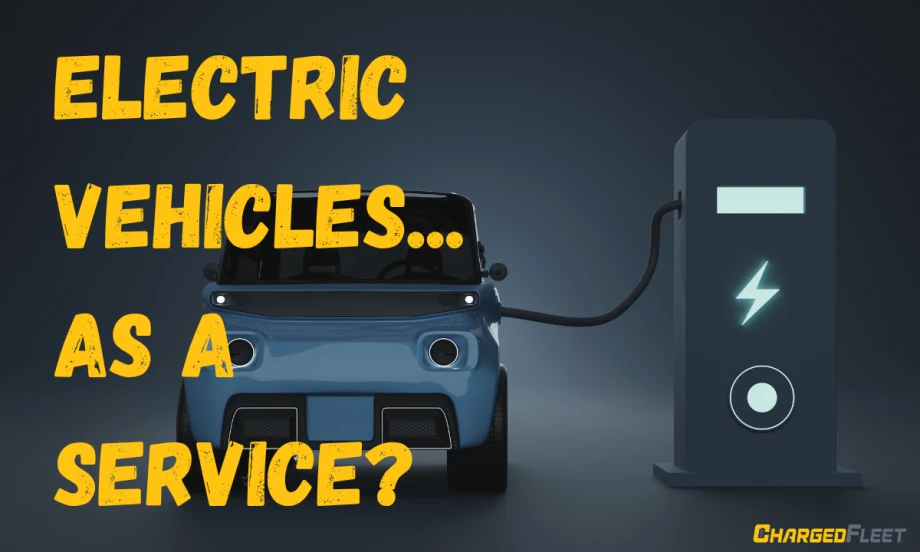
Electric vehicles as a service can go beyond providing the vehicle, combining EV access with charging infrastructure, power planning and support tailored to a fleet’s duty cycle.
Credit:
Automotive Fleet
5 min to read
- Adam Cain, president and CEO of Sustainability Partners, discusses the potential of EV-as-a-service to enhance fleet scalability.
- The service addresses critical fleet requirements such as duty-cycle needs and charging infrastructure challenges.
- This approach aims to move fleet operations beyond pilot stages by providing scalable solutions.
*Summarized by AI
When you think of electric vehicles as a service, what usually comes to mind? Is it simply another way to acquire EVs, or does the model change how fleets approach electrification?
EVaaS generally combines access to electric vehicles with the support needed to put them into service. How that works depends on the provider and the needs of the fleet.
During a recent conversation, Sustainability Partners CEO Adam Cain said EVaaS is beginning to move beyond small pilot programs as fleets take a broader look at what electrification requires. The vehicle is only one part of that decision. A workable deployment also depends on whether the duty cycle fits and the charging plan can support daily operations.
Moving Beyond Limited EVaaS Pilot Programs
Cain said state mandates and firm timelines are pushing some fleets beyond the small EV pilots that characterized earlier adoption.
“I would say the tide has changed…there was a time where it was just kind of feel-good pilot projects, but it is real now,” Cain said.
He pointed to Hawaii, where disruptions during the COVID-19 pandemic exposed the state’s reliance on imported oil and diesel. According to Cain, that experience contributed to a stronger push for self-sufficiency and an aggressive mandate to electrify the state’s government fleets.
Sustainability Partners now holds a state contract supporting that effort. Cain said the work covers the vehicles as well as the power and charging needed to operate them. The deployment has expanded to several types of equipment already being used in the field, including electric street sweepers.
Cain described New Mexico as another state moving toward a larger deployment under its own mandate. Sustainability Partners also holds a contract there to provide EVs and the charging infrastructure needed to support them.
The size of these deployments marks a change from earlier efforts that might have placed a single EV outside an office without a clear plan for its use. Cain said fleets now have access to electric options that can serve a wider range of operational roles. The company is also supporting airport electrification by installing charging infrastructure for ground-support equipment.
Still, the suggestion is not that adoption is occurring evenly across the country but rather that each region has different operating conditions and access to resources, with some states seeing a clear need to move forward, while others do not. However, where electrification aligns with those regional needs, fleets are beginning to pursue broader deployments.
Supporting a Fleet’s Duty Cycle
Determining whether an EV can support a fleet’s duty cycle begins with understanding how the vehicle will be used. Cain said Sustainability Partners works with fleet staff to review mileage and the amount of time available to charge between assignments.
That review can identify whether a vehicle has enough range for its expected work and whether it can be recharged before the next driver needs it.
“If we just got them a vehicle, we wouldn't be doing a service for them,” Cain said.
Once the vehicles are deployed, Cain said their technology can provide greater visibility into daily and monthly mileage. Fleets can use that information to identify underused vehicles and move them to areas where demand is higher. In some cases, he said agencies have found that they do not need as many vehicles as they previously thought.
“There's no more oil and transmission fluid. The maintenance side is much less, which is super helpful. You save a lot of money with that,” Cain said.
The usage data collected from the vehicles can also help inform the fleet’s longer-term plan.
Addressing Power Availability and Utility Delays
Adding EVs becomes more complicated when a fleet moves beyond one or two vehicles. Cain said the charging plan must account for the amount of power the vehicles will draw and whether the existing electrical system can support that demand.
“We're actually matching both the vehicle and the charging versus just, hey, I bought a car,” he said.
If the available power is insufficient, the fleet may need to coordinate with its utility or consider generating power on site. Cain said resolving those questions requires engineering work before chargers and vehicles can be deployed together.
Utility coordination can also affect how quickly a project moves forward. “People don't want to wait ten years to get it all figured out. That's the other thing, speed,” Cain said.
Sustainability Partners works with installation and manufacturing companies to coordinate that process. Cain said the company remains technology-agnostic when selecting equipment for a project.
Without a broader plan, fleets may add vehicles incrementally before realizing that the charging requirements have become difficult to manage. Cain said this challenge contributed to slower EV adoption when fleets were left to coordinate each part of the deployment separately.
He again pointed to Hawaii as an example of the combined approach. The state’s project accounts for its vehicles and the power needed to operate them, which Cain said has helped Hawaii move ahead of schedule on its climate initiatives.
Changing Vehicle Technology and Uncertain EV Residual Values
Vehicle technology can change faster than a fleet’s typical replacement cycle. Cain said Sustainability Partners’ EVaaS agreements are generally structured month to month, allowing a fleet to replace a vehicle when a newer model better meets its operational requirements.
Consider, for example, a fleet that needs greater ground clearance for off-road work. If a more suitable electric truck becomes available, Sustainability Partners can sell the existing vehicle and apply the proceeds toward its replacement. The company can also coordinate any required upfitting.
This process does not eliminate uncertainty surrounding EV residual values. Instead, it shifts responsibility for selling the vehicle and coordinating its replacement to the service provider.
Cain said the same structure can be used when a fleet needs to add new equipment to a vehicle already in service. He pointed to technology that alerts navigation systems when an emergency vehicle is stopped along the road. Under the service model, the provider can coordinate with the contractors needed to install that equipment.
The growth of EVaaS will depend on whether the model fits the application, according to Cain. Fleets with predictable usage may have a clearer path forward because charging can be planned around when vehicles return from their assignments.
Long-distance operations can present greater range and charging challenges. And, regardless of the fleet type, the decision needs to begin with the duty cycle rather than the availability of an electric vehicle.
“With EVs as a service, really the growth there is the application that’s right for it,” Cain said.
Subscribe to Our Newsletter
More Electric Vehicles

Who You Gonna Call? Rivian Turns Electric Vehicles Into Ghostbusters Rides
Rivian teams up with Sony Pictures for a Ghostbusters-inspired Halloween software update, complete with custom sounds, lighting effects, and a special Ecto-R1.
Read More →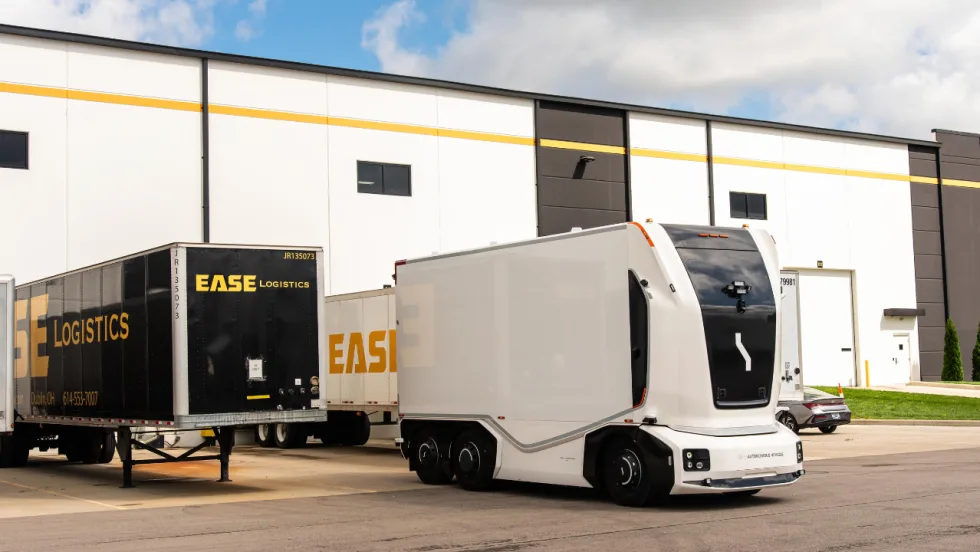
Einride Electric Driverless Trucks Begin Daily Freight Operations in Ohio
Two cabless electric trucks are now moving freight between EASE Logistics facilities, putting autonomous EV technology into daily commercial operations.
Read More →
FedEx Orders 2,000 Harbinger Electric Trucks in $300 Million Deal
The Class 5 and 6 electric trucks are planned for delivery by the end of 2027 and will be deployed in FedEx pickup and delivery operations across the U.S. and Canada.
Read More →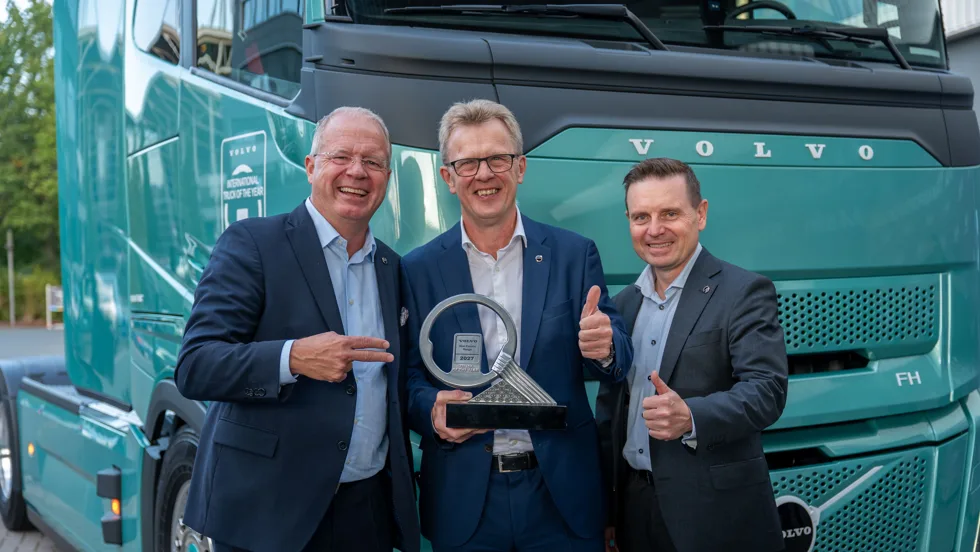
Volvo Trucks’ Electric Range Named International Truck of the Year 2027
The award recognizes Volvo’s global heavy-duty electric lineup, while more than 750 VNR Electric trucks have accumulated nearly 37 million miles in U.S. and Canadian fleet operations.
Read More →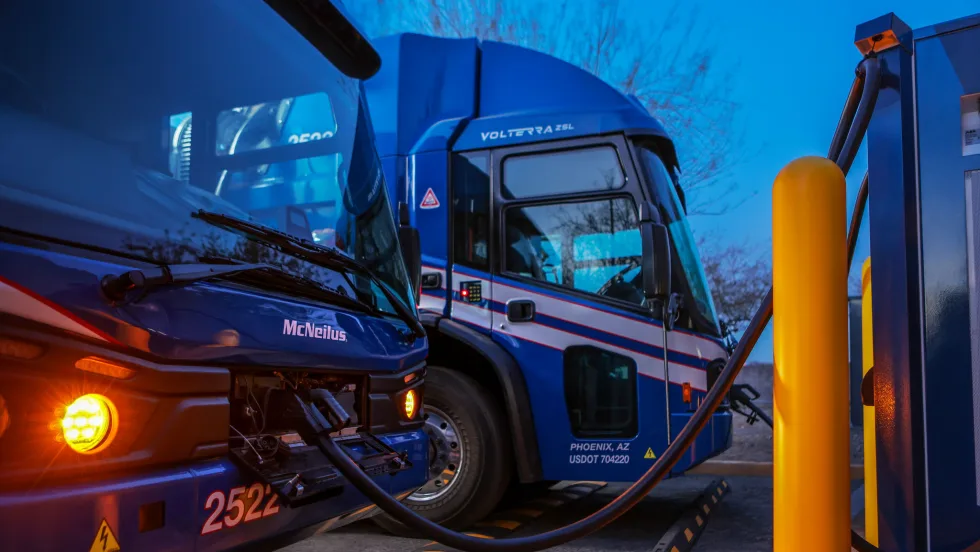
How Republic Services Decides Where Its Next Electric Trucks Can Go
With 250 electric collection trucks now in service, Republic Services is learning that scaling electrification depends less on proving the vehicle and more on whether each site can support what comes next.
Read More →
EV Charging Use Is Outpacing Infrastructure Growth
ChargePoint’s 2026 Charging Forward Report points to rising charger use, higher-powered charging, commercial vehicle electrification, and energy-management technology. Here’s what fleets should know.
Read More →
EV Realty Names Henrik Holland President as Charging Platform Expands
The former Prologis Mobility and Shell executive will help expand EV Realty’s truck charging business and move its power-first infrastructure model into autonomous vehicle depots and other fleet sectors.
Read More →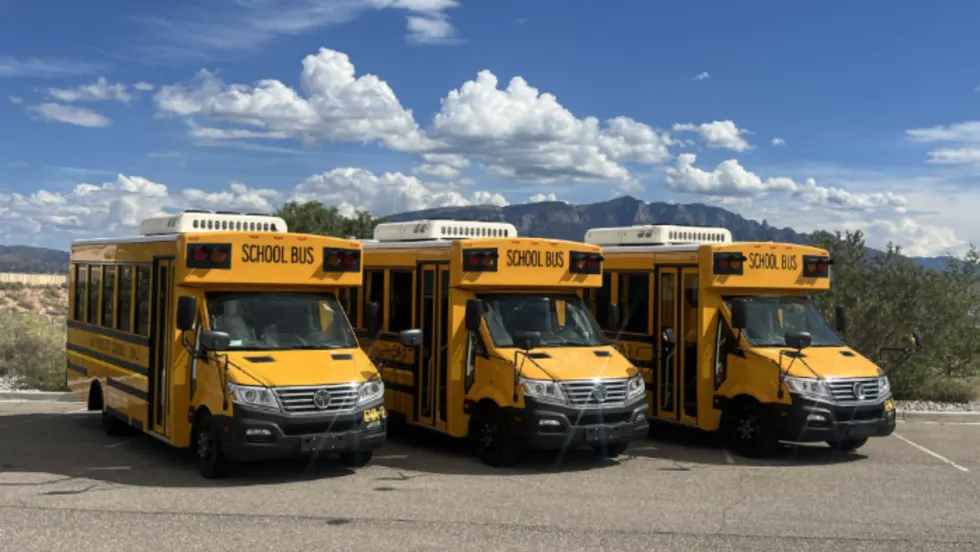
GreenPower Expands New Mexico EV Pilot With Larger Buses, V2G Testing
After logging more than 17,000 electric miles in the first year, New Mexico’s statewide pilot is moving into its second phase with larger vehicles, continued charging evaluations, and more.
Read More →
Can EV-as-a-Service Help Fleets Scale Electrification?
Sustainability Partners CEO Adam Cain explains how matching EVs, charging infrastructure, and duty cycles can help fleets scale electrification.
Read More →
PowerFlex, The Mobility House Join Forces to Advance Fleet Electrification
Two EV charging providers are joining forces to deliver a broader portfolio of energy management and fleet electrification solutions.
Read More →