


Related: PG&E's Fleet Electrification Efforts
How PG&E is Doing More with Data
Senior Director Michael Glover talks about how the utility company’s skilled mechanics, engineers and analysts are integrating asset management system, telematics and diagnostic tools to increase safety, compliance, and efficiencies.

Lexi Tucker・Former Senior Editor
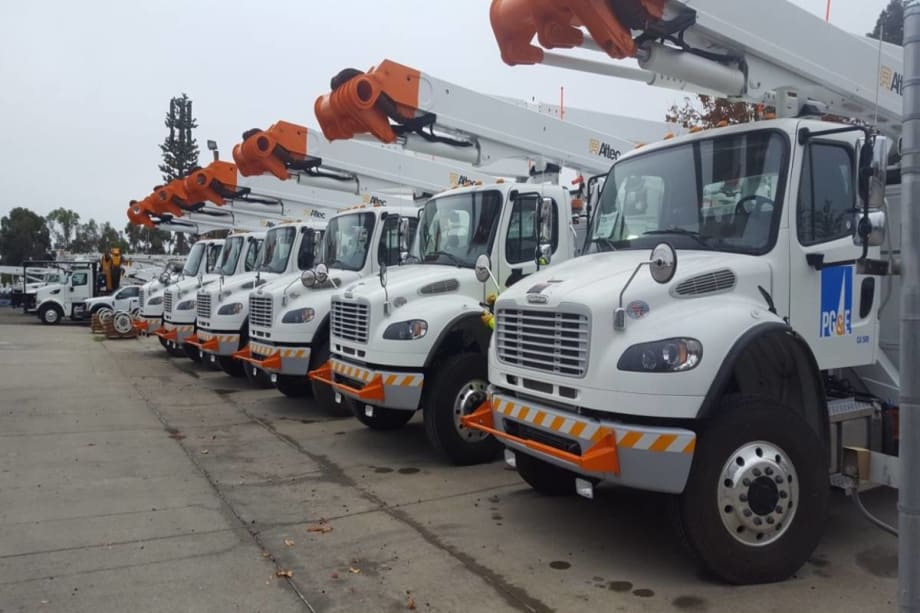
The company has 63 garages across the state of California.
Photo: PG&E
5 min to read
Technology has made managing fleets both easier and more complex at the same time. Michael Glover, senior director of Pacific Gas & Electric Company (PG&E) in San Francisco, discussed how his department has been able to unlock seemingly endless amounts of data collected from asset management and telematics systems and how his team is partnering together to adapt not only to new tech, but the pandemic and natural disasters as well.
Fleet Overview
Glover’s been with PG&E for 12 years, and has served in various roles supporting transportation services, from strategic planning to major initiatives and financial planning. After gradually progressing through the organization, he now is responsible for managing a team of over 400 who support day-to-day fleet operations, including field operations, engineering, compliance, fuel procurement and overseeing diagnostics, technical training, telematics, fleet vehicle procurement, and more.
PG&E collectively operates approximately 15,500+ assets within its Transportation Services Department. The fleet is comprised of Class 1 through Class 8 trucks and construction and off-road equipment.
Making Smart Use of Telematics
The use of telematics is vital to increasing employee and public safety. In-cab coaching, alerts, and reporting of hard acceleration, braking, and excessive speeding are several elements that are incorporated into PG&E’s Motor Vehicle Safety Program. In addition to this, the utility is now branching into asset tracking for off-road and construction equipment to reduce the amount of time locating equipment for maintenance purposes.
“When you’re operating in over 70,000 square miles of territory across the state of California, trucks transfer from one location to another overnight. Being able to find those vehicles with the click of a mouse is helping to reduce non-productive time spent trying to hunt assets down and increase productivity where it is best spent - on maintenance and repairs,” he said.
Being able to retrieve diagnostic trouble codes (DTC) from the telematics system is the next step in enabling mechanics to further improve efficiency when going on road calls to perform maintenance, as they will already have a feel for what the general area of the breakdown might be before leaving the shop.
Driving Decisions with Data

Michael Glover
Photo: PG&E
With the increased use of fleet management systems and telematics comes an overabundance of data. Glover said his team has pulled together a lot of this information using business intelligence/data platforms to make it more meaningful and actionable.
“We want our supervisors to be equipped to make the most informed decisions for their local teams, and our management team to make the best decisions on behalf of the entire department,” he explained.
Turning data into information that's easily digestible, his team has created greater visibility into PM, workload scheduling, and compliance by using business intelligence dashboarding tools to stay on top of and ahead of the game.
“We've always had this information, but you had to mine for it or be a system’s expert to access it. It's been a major success story with pairing our data scientists with fleet operations leaders to partner and develop solutions that can be used to create actionable results,” he said.
Using the underlying data collected via their fleet management system, Glover and his staff have been able to provide better operations, compliance, and financial visibility in real-time to monitor the health of their operations and have increased visibility into upcoming PMs, repairs, and campaigns. Supervisors also have better access to monitor their costs, and how much time is allocated to internal labor, contracts, parts, towing, accidents, and more.
“Generally, this kind of information would have been available once a month. Now, it's available and at our fingertips almost daily,” he said.
Searching for Highly-Skilled Mechanics
Mechanics and labor have been at a shortage across the industry, so the company has been focusing time and attention on recruiting efforts by building internal training programs. PG&E generally hires journeyman level mechanics due to the heavy concentration of specialty equipment that's somewhat unique to the utility industry, including a focus on airbrakes and hydraulics.
The company has also been expanding its diagnostics program. As trucks and other assets become more computer-driven, PG&E has seen the need for doubling down on support for enhancing knowledge of diagnostics.
“It's the use of OEM-level diagnostics, not just scanning tools,” he explained.
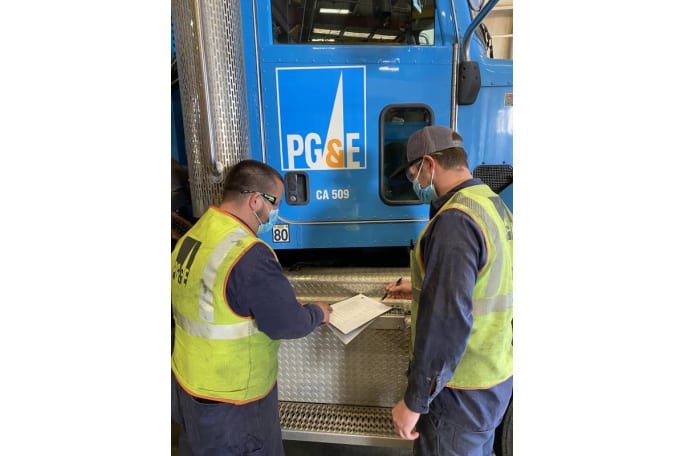
Glover said his field operations team is one of the strongest, most dedicated, talented and flexible teams one could work with.
Photo: PG&E
Adapting to COVID Challenges
Glover said his field operations team is one of the strongest, most dedicated, talented and flexible teams one could work with. When the pandemic hit in March 2020, the company adhered to state shelter-in-place guidelines for employees who were able to do so. Naturally, mechanics are field staff, so they didn’t get that luxury.
“They’ve been out there on the front lines since the pandemic started. They’ve endured anything and everything that can be thrown at them. We’ve had many people that have been impacted due to the pandemic and have been unable to work. We’ve had to juggle resources a lot to make that work. But the team consistently delivers and continues to put safety and compliance first. I couldn’t be more proud and thankful to them for that,” he said.
His team partnered with their Human Resources department to create a comprehensive process so when an employee is assessed as potentially having COVID-19, trucks are tagged as out of service. From there, the truck is commercially disinfected using a contract environmental company. They are also working on enhancing their vehicle cleaning pre-treatment process as an added layer of protection.
“The process has been challenging and is continually adapting, but we continue to make improvements based on real-time feedback from our front line and the changing environment,” he said.
Braving Environmental Challenges
On top of the pandemic, California saw intense wildfires in 2020. At one time during the August lightning complex fires, there were dozens of fires within its service territory, some in excess of 300,000+ acres each. His team stepped up to mobilize field operations to support PG&E field crews, coordinated mobile fuel services, and established a fleet of 30 mobile resource centers to support customers.
“We responded to support a record number of more micro-sites, staging areas, and base camps, based on the geographic footprint of the fires across the state, than we've had in recent memory,” he said.
Fortunately, the company has 63 garages across the state, so the team was able to mobilize and support those who were trying to restore gas and electricity for people who were impacted by the natural disaster.
Originally posted on Work Truck Online
Subscribe to Our Newsletter
More Electric Vehicles
EV Charging Use Is Outpacing Infrastructure Growth
ChargePoint’s 2026 Charging Forward Report points to rising charger use, higher-powered charging, commercial vehicle electrification, and energy-management technology. Here’s what fleets should know.
Read More →
EV Realty Names Henrik Holland President as Charging Platform Expands
The former Prologis Mobility and Shell executive will help expand EV Realty’s truck charging business and move its power-first infrastructure model into autonomous vehicle depots and other fleet sectors.
Read More →
GreenPower Expands New Mexico EV Pilot With Larger Buses, V2G Testing
After logging more than 17,000 electric miles in the first year, New Mexico’s statewide pilot is moving into its second phase with larger vehicles, continued charging evaluations, and more.
Read More →
Can EV-as-a-Service Help Fleets Scale Electrification?
Sustainability Partners CEO Adam Cain explains how matching EVs, charging infrastructure, and duty cycles can help fleets scale electrification.
Read More →
How EV-as-a-Service Is Moving Fleets Beyond Pilots
Adam Cain, president and CEO of Sustainability Partners, explains how EV-as-a-service can help fleets scale deployments by addressing duty-cycle requirements and charging challenges.
Read More →
PowerFlex, The Mobility House Join Forces to Advance Fleet Electrification
Two EV charging providers are joining forces to deliver a broader portfolio of energy management and fleet electrification solutions.
Read More →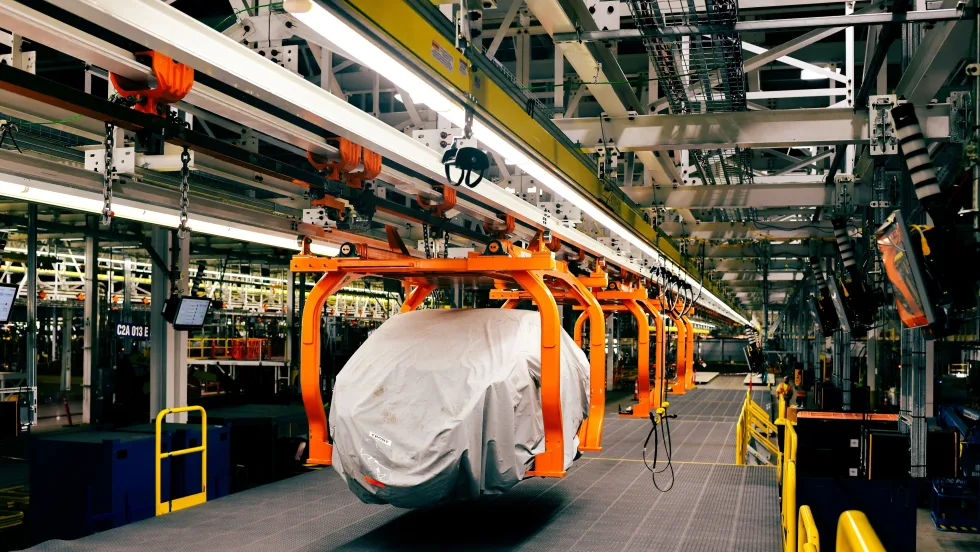
Ford Retools Louisville Plant for Fathom Electric Truck Production
Ford's $2 billion Louisville Assembly Plant overhaul introduces a three-part assembly process for the Fathom midsize electric truck, with production scheduled to begin in 2027.
Read More →
Merchants Fleet Reports 290M EV Miles as Fleets Navigate Changing Electrification Market
From millions in operating savings to hundreds of millions of EV miles, Merchants Fleet’s latest report reveals what’s working and what’s changing in fleet electrification.
Read More →
California District Commits to Electrify 25% of School Bus Fleet by 2028
One of the nation's largest school bus electrification projects to date demonstrates how grants, charging infrastructure, and public-private partnerships can help fleets transition to EVs at scale.
Read More →
Aptera Orders Bodies and Chassis for Its First 40 Production Vehicles
Aptera Motors Corp. has issued purchase orders for the major structural components of its first 40 vehicles, and body and chassis components are expected to begin arriving in October.
Read More →