


Fleet Managers Delve into What’s Working for Their Operations
A recent Fleet Forward event captured the present and future state of fleet operations as they race toward greener vehicles, incorporate more regulations, and try to save time and money.

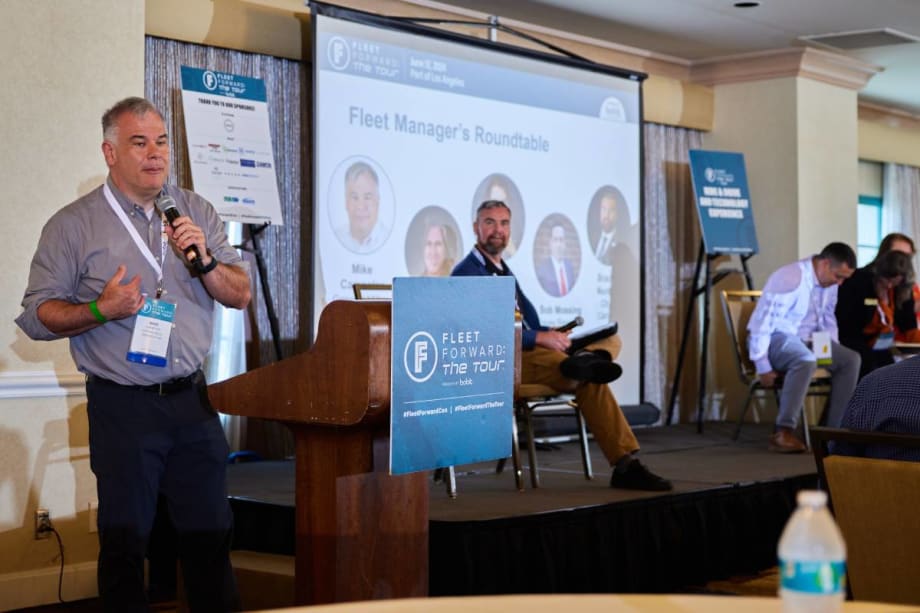
Mike Camnetar, fleet services manager at General Mills and president of the National Association of Fleet Administrators (NAFA), (L) led a fleet managers roundtable that included Bradley Northup, public works superintendent of fleet operations for the City of Carlsbad (center), during the Fleet Foward The Tour conference in Los Angeles on June 12, 2024.
Photo: Jerome Pantaleon
A fleet manager’s roundtable kicking off a fleet conference near the Port of Los Angeles detailed numerous best practices and insights for running fleets more efficiently and with an eye toward the constant technological and regulatory changes in operations.
Private and public sector fleet managers from around the Southern California region and beyond convened for a day of educational sessions and electric vehicle test drives during the Fleet Forward: The Tour event held at the Doubletree Hotel along the southern waterfront of Los Angeles.
Led by Mike Camnetar, fleet services manager at General Mills and board of directors president of the National Association of Fleet Administrators (NAFA), the panel included: Bradley Northup, public works superintendent of fleet operations for the City of Carlsbad, California; Bob Mossing, manager of fleet support and operations for the Davey Resource Group; Amy McAdams, fleet manager of Climate Pros; and Beth Cooley, director of fleet management for the state of Virginia.
The fleet managers parried insights and practices gleaned from recent operational challenges and approaches:
Smarter Management of Fleets
Right-size the ratio of internal combustion engine (ICE) vehicles to electric and other green vehicles based on fleet usage and deployments.
Reduce speeding, idling, and bad driver behaviors that waste energy.
Purchase cleaner vehicles that are more fuel efficient and possibly of a lower size category that can still handle a particular fleet role or duty cycle.
Identify underused vehicles and either redeploy or sell them. Establish detailed fleet vehicle replacement policies and aggressively cut unused vehicles since they are likely to yield surplus revenue for the operation from being sold off.
Amid accelerating regulations, understand the state and performance of a fleet and how well it’s operating to better inform a knowledge base for the best vehicle replacements.
Manage fleet on a unified technology system with a common dashboard. Integrate information into one database for all metrics and stats, such as tolls, fuel usage, maintenance schedules, violations, etc.
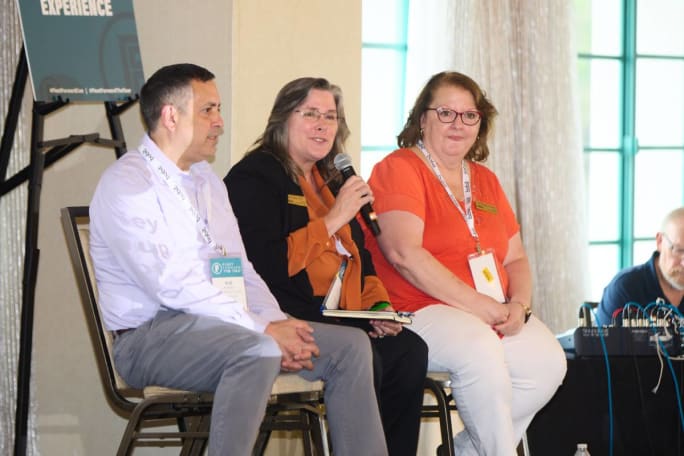
Roundtable participants Bob Mossing, manager of fleet support and operations for the Davey Resource Group; Beth Cooley, director of fleet management for the state of Virginia; and Amy McAdams, fleet manager of Climate Pros shared recent best practices from their fleet operations.
Photo: Jerome Pantaleon
Fleet Electrification and Sustainable Fleets
With California as the epicenter of fleet electrification, fleets are taking steps to reduce carbon emissions, whether under internal corporate mandates or the regulations issued by state and local governments.
Develop a climate action plan framework with specific policies and strategic plans for a fleet. Those should explain how to time vehicle replacements, assess the climate impacts of vehicles, give fleet managers the authority to choose vehicles, and consider hybrids as viable transitional vehicles to electric ones.
Assess the challenges of EV charging infrastructure, regulations, technician hiring and training, and the need for a unified approach to electrification within a fleet organization.
Create a clear process for identifying funding sources for EVs and infrastructure and establish procedures for pursuing grants, incentives, rebates, and funds. Fleet managers need to understand the details involved.
Look for temporary battery storage for an EV fleet as a backup to primary power sources. Every fleet must be able to continue operations in the event of a grid power failure.
Assemble a matrix of contacts for every aspect of fleet electrification, such as real estate, project leaders, engineers, utility officials, liaisons, etc. Build relationships and coordinate meetings and interactions to coordinate and communicate on electrification plans.
When centering and standardizing fleet electrification plans and fleet service packages, fleet operators should put together a team of internal stakeholders from past acquisitions who have experience with the process of vetting and acquiring vehicles. All stakeholders must “level set” at the start of an electrification project to encourage compromise, respect for different opinions, and open-mindedness to the unique needs of a fleet.
Fleet Staffing for the Long Term
To keep an operation stable and thriving, develop a succession plan for fleet managers who should be mentored and trained in management practices and leadership qualities.
Enable fleet technicians to get certifications and expand their repertoire of expertise. Learn the best practices and approaches to training and preparation programs.
Enlist help from the local fire department when training EV technicians and setting up safe maintenance routines for EVs.
Offer fleet staff paths for professional development and training for other positions. Make staff feel appreciated so they stay, and the operation can minimize turnover. Look for new technicians to train and teach. Treat staff like family, and through best safety practices, make sure they get home to their families.
Putting Fleet Safety First
Institute a rigorous and vigilant safety culture, possibly through a division with a full-time manager or leader who can establish standard operating procedures, safety programs, and telematics-based training and education.
Eliminate mobile phone use while driving. Consider having drivers put their phones into a lock box while driving where the phone can charge or set up tech-blocking of cell phone use inside vehicles. Most accidents are caused by distracted drivers dropping their phones or taking a call.
Telematics leads to success in a fleet operation. Use cameras in vehicles to document driving performance and ensure safety compliance.
Future Fleet Advances
Although autonomous vehicles are progressing on a longer timeline than expected, track the latest developments that could eventually yield a way for a vehicle to travel on its own to and from service centers saving time in a fleet operation.
Identify potential technology advancements, especially those funded by OEMs, that can lead to more fleet efficiencies. AI will enhance vehicle connectivity along with onboard tech amenities and functions.
Charging infrastructure will advance in numerous ways in coming years, drawing on out-of-box solutions and improving technologies such as wireless street charging and more solar power sources.
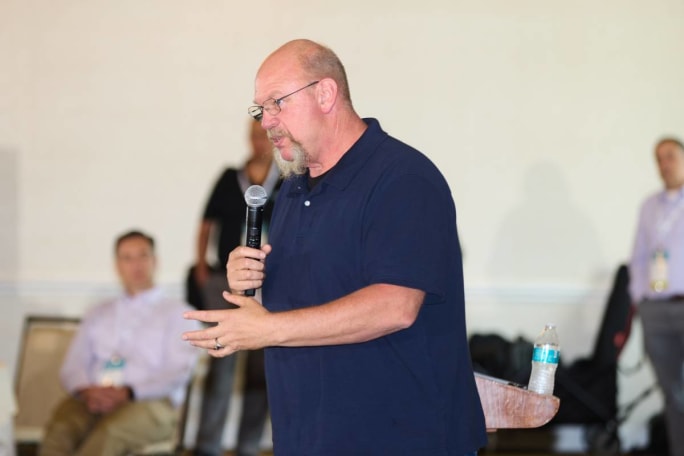
In a "From the Trenches" session at the FFTT conference, David Renschler, public works fleet division manager for the city of Fairfield and a consultant, walked through the real-life lessons he’s mastered from his 25 years of experience in fleet management, most notably in being a first-wave adopter of electric fleet vehicles.
Photo: Jerome Pantaleon
From the Trenches: Medium and Heavy-Duty EV Lessons Learned
As a follow-on to the fleet manager roundtable, another California fleet electrification expert, David Renschler, public works fleet division manager for the city of Fairfield and a consultant, walked through the real-life lessons he’s mastered from his 25 years of experience in fleet management, most notably in being a first-wave adopter of electric fleet vehicles.
Renschler explained how fleet electrification can be complicated but doable with an organized, informed, and measured approach based in mathematics. He outlined steps in three key areas:
Figuring out what vehicles to put into your fleet;
How much power you will need;
How to manage EV fleet charging.
First, do not talk to your local utility at the start, he advised. They will ask you how much power your fleet needs. If you don’t know, they can’t accurately supply power amounts, which means fleet managers must start gathering lots of data.
“You have to see how much fuel you will burn in how many kilowatt hours your vehicles will need,” Renschler said. Figure out what type of equipment you will put on the vehicles. All that data is needed before calculating how much electricity an electrified fleet will consume.
In choosing the right EVs to replace ICE vehicles, a fleet manager must get answers to the following questions:
What electric vehicle can do the same job as the ICE one?
What are the battery sizes on those models?
What's the efficiency?
What is the maximum the vehicle or piece of equipment will charge on a Level 2 versus a Level 3 charger?
Where does the EV stay at night and what is the dwell time?
Do you know if you have enough time to put energy back into the battery storage system and what type of charger is required?
How many kilowatts we're going to need every day?
Fleet managers should look at electricity as the new fuel, except the energy measurements vary greatly from those of liquid fuels, Renschler said. “EV math is something special.” It must factor in battery capacity and the proposed efficiency from the OEM. “Just like the EPA mileage, don't expect you're ever going to get what the OEM tells you,” he said. “So, you need to look at the efficiency and how many kilowatts you think you will need.”
As Renschler explained: Electric fleets also must include standby vehicles with fully charged batteries in case of temporary power interruptions. So, an operation needs an accurate schedule on which vehicles should charge closer to empty, and which ones should maintain a higher minimum or near-full charges. That depends on how vehicles are used, how far they travel in given days and/or duty cycles, and their average ranges on full charges.
Some EVs will require their own dedicated chargers, while others can access shared chargers. Fleet managers also must consider the roles and functions of crews using a fleet vehicle and whether their routines are a right match for shared or dedicated charging. Telematics can help fleet managers gather data and apply the results to charging decisions.
“We want to look at how many daily kilowatts are needed, and what the state of charge is at the end of the day. Then we can determine the type of charger and whether it's a Level 2 or Level 3, and can it be shared? Or does it have to be dedicated?”
Fleet operators need to find a balanced mix of Level 2 and Level 3 chargers because they must manage power loads given electricity and budget limits.
Another factor to consider is where to place chargers relative to the size of medium and heavy-duty fleet vehicles and the space they need to easily access the chargers for several hours at a time. Renschler asked:
Can the vehicle turn safely?
Is it accessible if the charger is in a parking garage?
How large is the fleet parking lot or yard?
Are the stalls and spaces long and wide enough?
What is the dwell time for various fleet vehicles based on duty cycles?
And before that, do you buy or lease the property for parking and charging?
Will the landlord allow you to upgrade the power or even install it if the property is leased?
A fleet operation trying to accommodate medium to heavy-duty EVs very likely will need more space for parking and charging than for ICE vehicles that pull up in fuel at a pump for minutes. EV charging equipment also may need fortified concrete surfaces and raised platforms. And if you can’t get more property, then a fleet operation may need to rearrange existing facilities and/or reallocate parking spaces.
Then there are the hidden “land mine” factors: Do EV parking and charging surfaces have metal flake concrete that can act as a magnet underneath EV battery and charging equipment, thereby creating a safety hazard? (Metal flake concrete was used in older buildings to strengthen the concrete).
Construction may take longer than expected so a fleet operation may need to consider temporary or mobile charging and battery sources if it acquires EVs before permanent charging stations are available.
Renschler advised fleet operations to overbuild their EV charging system by 20% because 20% of chargers are likely to be down for one reason or another at any given time.
“Make sure you're figuring that out and the replacement schedule for them. OEMs right now are looking at five to seven years. Are you ready to replace a $100,000 charger every five years? You might want to think about a replacement fund just like you have for your vehicles.”
Originally posted on Automotive Fleet
More Electric Vehicles
EV Charging Use Is Outpacing Infrastructure Growth
ChargePoint’s 2026 Charging Forward Report points to rising charger use, higher-powered charging, commercial vehicle electrification, and energy-management technology. Here’s what fleets should know.
Read More →
EV Realty Names Henrik Holland President as Charging Platform Expands
The former Prologis Mobility and Shell executive will help expand EV Realty’s truck charging business and move its power-first infrastructure model into autonomous vehicle depots and other fleet sectors.
Read More →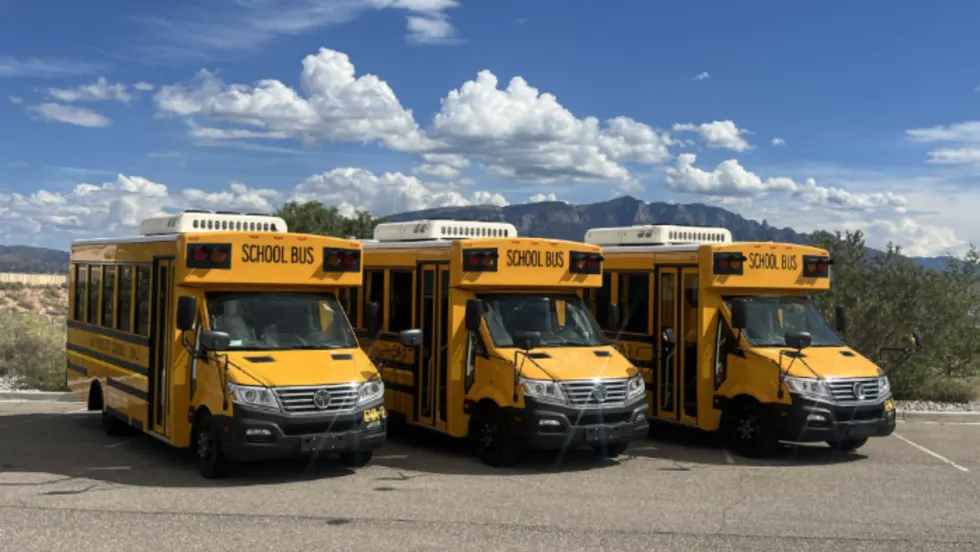
GreenPower Expands New Mexico EV Pilot With Larger Buses, V2G Testing
After logging more than 17,000 electric miles in the first year, New Mexico’s statewide pilot is moving into its second phase with larger vehicles, continued charging evaluations, and more.
Read More →
Can EV-as-a-Service Help Fleets Scale Electrification?
Sustainability Partners CEO Adam Cain explains how matching EVs, charging infrastructure, and duty cycles can help fleets scale electrification.
Read More →
How EV-as-a-Service Is Moving Fleets Beyond Pilots
Adam Cain, president and CEO of Sustainability Partners, explains how EV-as-a-service can help fleets scale deployments by addressing duty-cycle requirements and charging challenges.
Read More →
PowerFlex, The Mobility House Join Forces to Advance Fleet Electrification
Two EV charging providers are joining forces to deliver a broader portfolio of energy management and fleet electrification solutions.
Read More →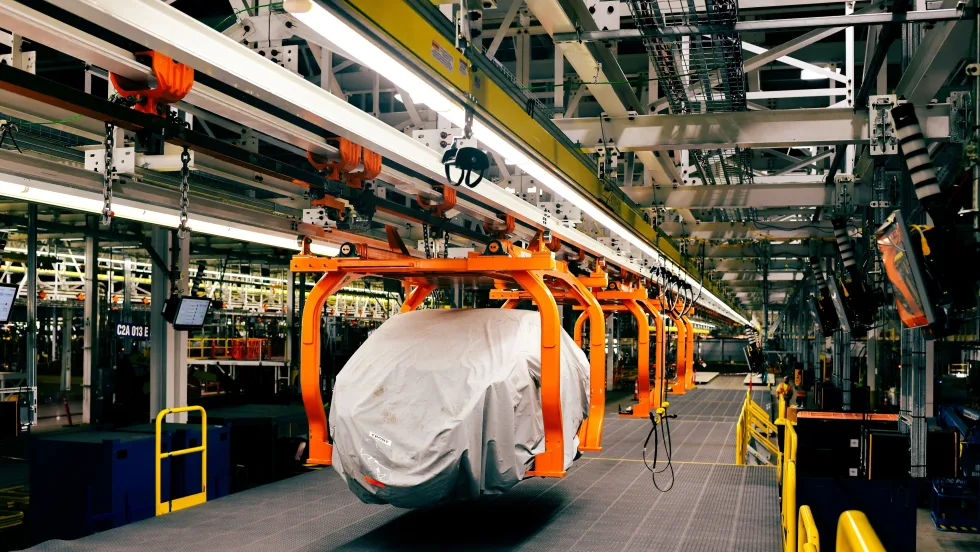
Ford Retools Louisville Plant for Fathom Electric Truck Production
Ford's $2 billion Louisville Assembly Plant overhaul introduces a three-part assembly process for the Fathom midsize electric truck, with production scheduled to begin in 2027.
Read More →
Merchants Fleet Reports 290M EV Miles as Fleets Navigate Changing Electrification Market
From millions in operating savings to hundreds of millions of EV miles, Merchants Fleet’s latest report reveals what’s working and what’s changing in fleet electrification.
Read More →
California District Commits to Electrify 25% of School Bus Fleet by 2028
One of the nation's largest school bus electrification projects to date demonstrates how grants, charging infrastructure, and public-private partnerships can help fleets transition to EVs at scale.
Read More →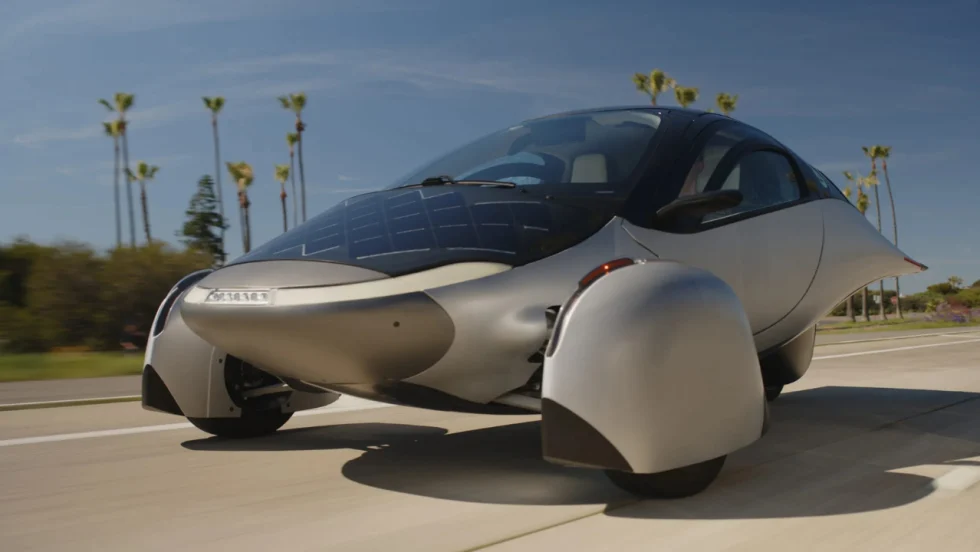
Aptera Orders Bodies and Chassis for Its First 40 Production Vehicles
Aptera Motors Corp. has issued purchase orders for the major structural components of its first 40 vehicles, and body and chassis components are expected to begin arriving in October.
Read More →