



Read More: Strategies to Navigate the New Fleet Normal
Catalysts & Barriers to Commercial Fleet EV Adoption
How can we know what EV models and products are for real, when these products will make it to market, and what business models will win? Follow the money.
April 10, 2023
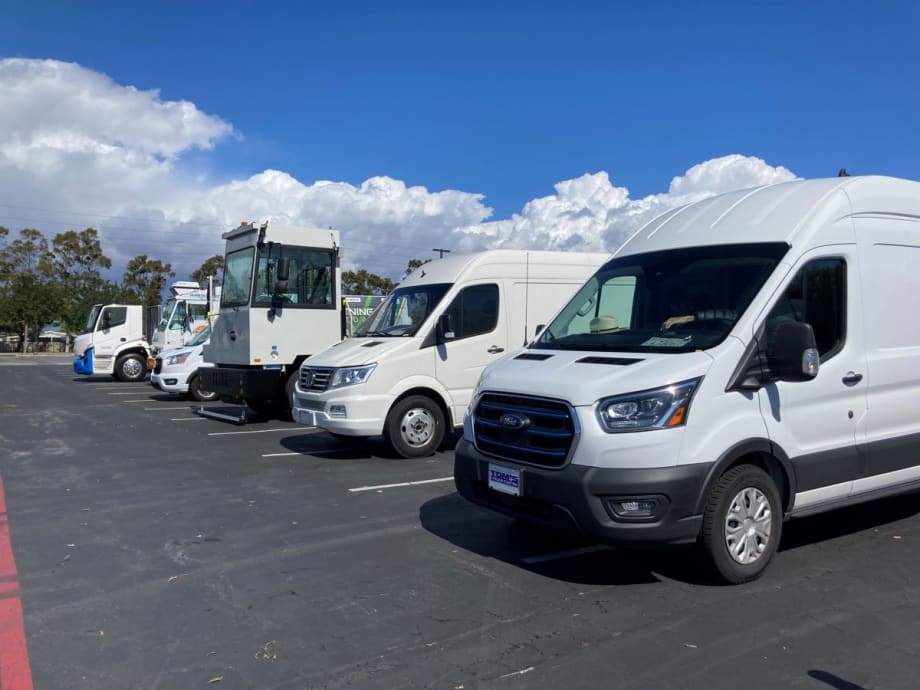
The expense to electrify a commercial vehicle and the expense to support the charging infrastructure are dramatically different than the consumer market, says John Critelli, director of corporate development, mobility solutions for MHCA.
Photo: Chris Brown
8 min to read
The evolution to electrification isn’t merely about switching to a new propulsion type. It also requires an evolution of how we provision vehicles and power them, in addition to a shift to new business models to help make EVs financially viable.
This is a complicated endeavor: In the before times, when an automaker, body manufacturer, upfitter, or Tier 1 supplier would tell the world they were producing a new vehicle or product, it was generally accepted that they’d make good on the stated timeframe for release — and that the vehicle or product was, in fact, market viable.
But that was then. The EV migration comes in the midst of continuing supply chain disruptions and an influx of new, untested manufacturers. To be sure, these new technologies and systems are advancing transportation faster than ever before. But how can we know what’s real, and when these products will make it to market? How do we know what business models will win?
Follow the money. Funding entities are choosing horses on the systems that will be the most efficient, return the most value, and meet the needs of commercial operators and fleets.
Mitsubishi HC Capital America (MHCA) is actively engaged with various financing solutions for commercial vehicle electrification. The commercial side has many more complexities than the consumer market of electric passenger cars, points out John Critelli, director of corporate development, mobility solutions for MHCA.
“The expense to electrify a commercial vehicle and the expense to support the charging infrastructure are dramatically different than the consumer market,” he says.
In the mix with these higher costs are other factors such as corporate sustainability and ESG goals, regulations and emissions targets, and rebates and incentives that are both driving innovation and delaying EV penetration.
Critelli dives deeper into MHCA’s key market factors driving commercial truck EV adoption, and those holding it back.
Electric Truck Share
With electric truck share, fleets can get into EVs on a fractional basis. Truck share is a form of traditional rental married with carsharing’s more streamlined process to access the vehicles. Truck share includes peer-to-peer platforms in which an operator can access an electric box truck or step van locally for a day, a month, or longer.
For EVs, truck share would be attractive to independent contractors for major package delivery companies, for instance.
“This type of commercial customer has credit constraints, so truck share is a significant attraction to them,” Critelli says, adding that after the busy holiday season the operator returns the truck without the worry of ownership and aftermarket residual value. “If they can make the accommodation on the charging side, the cost of entry becomes reasonable.”
“We are pursuing that market rather aggressively,” he adds. “We are planning several initiatives that include an EV rental pool capability. It helps the fleet, and it helps the OEMs deploy EVs into the market.”
EV-as-a-Service
The electrification process entails more than just the vehicle, it includes charging infrastructure, energy provision, and the expertise to manage all of it. This is where EV-as-a-Service (or Fleet-as-a-Service, Mobility-as-a-Service) models come in, which provides the trucks and access to charging for a single monthly payment.
MHCA is evaluating several options, including an SPE (Special Purpose Entity) that is created specifically for customers’ needs. “It just depends on the customer and what they're trying to achieve in the transformation between gas and diesel and EVs,” Critelli says.
EV Battery Financing
As batteries are the single most expensive component of an electric vehicle, new ways to manage their expense are emerging.
The industry is grappling with how long EV batteries will last. OEM battery warranties are running up to eight years, while early real-world assessments are showing that batteries could last longer. Services are evolving to measure battery health. Another opportunity is to repurpose the battery after its vehicle life in stationary applications, and then to monetize the recycling of it.
MHCA is exploring several possibilities as it relates to battery financing, “because they’re going to keep the electric vehicle for a longer time,” he says. “Customers are evaluating their choices when it comes to upgrading the old battery for a new one and how to structure the financing to allow that to happen.”
But this is still early stages. “I'm not seeing anyone step up to a true lease on a battery, like with a residual, only because it's so unproven,” Critelli says. “There's no history, behavioral trends or secondary market established yet.”
Battery decisions won’t always be around replacement: “There may be opportunities to have batteries refurbished at a much lower cost and be able to continue on with life in that vehicle,” he says.
Development of Electric Corridors
The federal infrastructure bill and the Inflation Reduction Act (IRA), with provisions for vehicle funding and massive infrastructure creation by sector, are two of the most important catalysts to EV adoption yet. “The buildout of electric corridors across the country should, theoretically, shorten the adoption scale,” Critelli says, though we’re waiting to see how the Department of Transportation defines these corridors.
For quicker adoption, the creation of these corridors must be combined with robust state rebates and incentives, he says.
Commercial Dealer EV Readiness
While Tesla’s sales model is focusing attention on a direct-to-buyer model for consumers, dealers play an increasingly crucial role in the commercial EV environment. A new major initiative is “dealer readiness.”
Commercial truck dealers have been going through a massive transformation in getting the charging infrastructure in place on the sales lot and service bays. “We want to enable the flow of EVs into the dealer channel and provide both inventory and retail finance solutions just as we do for the ICE vehicles,” Critelli says. “Having charging infrastructure in place at the dealer locations is essential to the flow of EVs into the market.”
MHCA provides floor planning and other forms of financing to about 2,500 dealers in the U.S. and is now providing financing to dealers for both charging infrastructure and vehicle inventory, which allows them to spread that cost, he says.
The infrastructure part includes more than just the equipment, it involves the connection to the utility and making sure there is enough power available at the dealership to support their charging needs.
“Some dealerships will incur significant expense, depending on where they're located,” he says, noting that California dealers are ahead of the game.
Dealers as Charging Infrastructure Resellers
If setting up charging infrastructure is phase one for dealers, phase two brings the question of whether dealers want to sell charging infrastructure or just make a referral to an EVSE (charging infrastructure) provider.
The latter is more comfortable for the dealership that wants to stick to selling trucks and take a fee for the referral. In the former, the dealer would be an EVSE reseller and could finance both the EVSE and the trucks in a single payment.
“We're seeing that both models have an opportunity,” Critelli says, referencing to MHCA’s work with Hino’s InclusEV program.
The nascent commercial EV industry is critically disconnected in the build schedule of the vehicles and the planning, installation, and connectivity of the infrastructure. By coordinating the trucks’ arrival and completion of the infrastructure, dealers could help fleets bring their electrification expense into balance.
But for now, “I think dealers are a little hesitant to get into bundling,” he says. “It's easier for them to make a referral. Having commercial truck dealers become a full-on reseller will happen over time. They’ll want to participate in the margins and look at this as a form of replacement income lost from the parts and maintenance associated with traditional ICE vehicles.”
Mobile Charging Solutions
The disparity between the arrival of the truck and the readiness of the infrastructure is also creating a market for mobile charging. In this scenario, an EVSE provider would drop a mobile charging unit at a dealer or a commercial fleet depot that would be available for a fee until the permanent infrastructure is installed.
As infrastructure builds out, mobile units would not be as necessary, but there are other ongoing needs such as events in areas where power isn’t available, first response during disasters, or temporary yet ongoing situations in which it doesn’t make sense to install permanent charging stations.
“It's not necessarily always a cost driven decision, but rather a multi-site accessibility decision,” Critelli says. “(A fleet) needs to have charging here Tuesday through Thursday and charging over there on weekends. For when pouring a concrete slab (for permanent infrastructure) is prohibitive for whatever reason, mobile charging could be an alternative.”
The Incentives Conundrum
Incentives and rebates offered by federal, state, and regional entities for vehicle deployment and infrastructure installation are essential for EV penetration and will be for years to come. Yet the patchwork of opportunities and the lack of coordination in their application and implementation is holding back the market, Critelli says.
Issues include:
Are federal incentives stackable with state rebates?
If the vehicles are leased, how will these benefits flow through to the user?
How to streamline the grant process to match the disbursement with the arrival of the trucks and infrastructure completion?
How to address state-by-state incentives that are producing high-adoption, mid-adoption, and low-adoption states, a particular challenge for fleets in multiple states?
“I am cautiously fearful about (these programs) going away, because they’re a pretty significant component to adoption,” he says.
Secret Sauce for New Electric OEMs
Regarding independent electric vehicle OEMs, Critelli sees three scenarios: Some will produce vehicles as independent entities, some will get consolidated or merge with others, “And others will fly into the sun. That is exactly what we're seeing right now.”
For these new OEMs, specifically those producing commercial EVs, “A lot of the emerging EV OEMs think they don't need the dealership channel, that they can be the next Tesla and sell through an online marketplace. And then they discover how difficult that is.”
What’s the secret sauce? “The dealer network, because they really understand truck applications and are best suited to match the new EVs to their customers,” he says.
The explosion of new, independent vehicle makers is one of the largest market disruptors in a generation. This produces meaningful change, but complicates the investment scenario. “We pick our partners carefully,” Critelli says. “We are a stable long term financing provider, and we want our partners to have the same long-term vision of success.”
Topics:EVsCommercial FleetsCommercial Electric VehiclesElectric TrucksEV batteriesEV ChargingElectric Vehicles
Originally posted on Automotive Fleet
Subscribe to Our Newsletter
More Electric Vehicles
EV Charging Use Is Outpacing Infrastructure Growth
ChargePoint’s 2026 Charging Forward Report points to rising charger use, higher-powered charging, commercial vehicle electrification, and energy-management technology. Here’s what fleets should know.
Read More →
EV Realty Names Henrik Holland President as Charging Platform Expands
The former Prologis Mobility and Shell executive will help expand EV Realty’s truck charging business and move its power-first infrastructure model into autonomous vehicle depots and other fleet sectors.
Read More →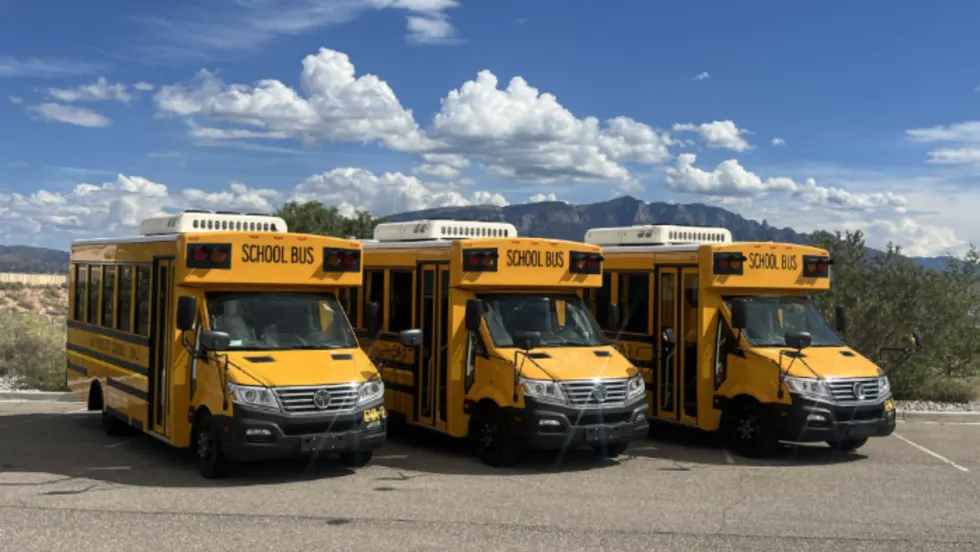
GreenPower Expands New Mexico EV Pilot With Larger Buses, V2G Testing
After logging more than 17,000 electric miles in the first year, New Mexico’s statewide pilot is moving into its second phase with larger vehicles, continued charging evaluations, and more.
Read More →
Can EV-as-a-Service Help Fleets Scale Electrification?
Sustainability Partners CEO Adam Cain explains how matching EVs, charging infrastructure, and duty cycles can help fleets scale electrification.
Read More →
How EV-as-a-Service Is Moving Fleets Beyond Pilots
Adam Cain, president and CEO of Sustainability Partners, explains how EV-as-a-service can help fleets scale deployments by addressing duty-cycle requirements and charging challenges.
Read More →
PowerFlex, The Mobility House Join Forces to Advance Fleet Electrification
Two EV charging providers are joining forces to deliver a broader portfolio of energy management and fleet electrification solutions.
Read More →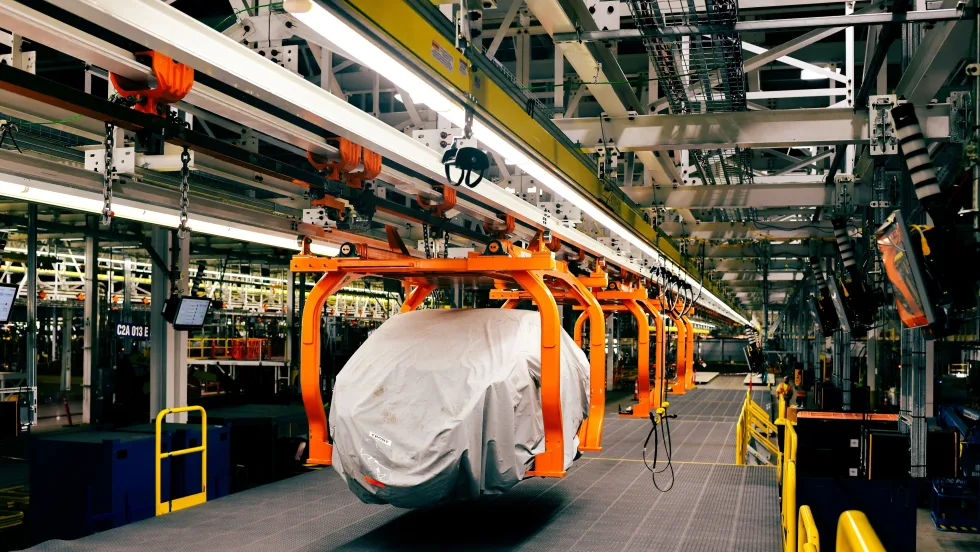
Ford Retools Louisville Plant for Fathom Electric Truck Production
Ford's $2 billion Louisville Assembly Plant overhaul introduces a three-part assembly process for the Fathom midsize electric truck, with production scheduled to begin in 2027.
Read More →
Merchants Fleet Reports 290M EV Miles as Fleets Navigate Changing Electrification Market
From millions in operating savings to hundreds of millions of EV miles, Merchants Fleet’s latest report reveals what’s working and what’s changing in fleet electrification.
Read More →
California District Commits to Electrify 25% of School Bus Fleet by 2028
One of the nation's largest school bus electrification projects to date demonstrates how grants, charging infrastructure, and public-private partnerships can help fleets transition to EVs at scale.
Read More →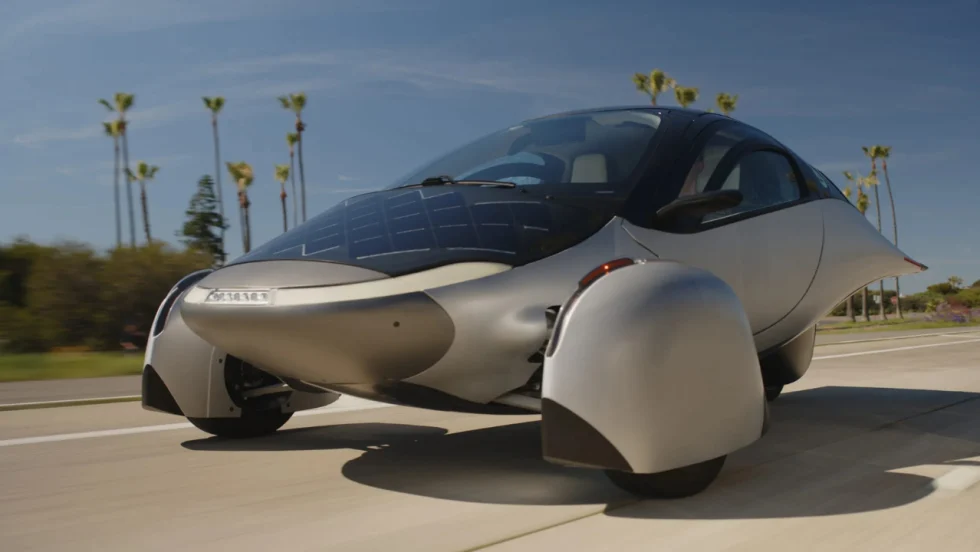
Aptera Orders Bodies and Chassis for Its First 40 Production Vehicles
Aptera Motors Corp. has issued purchase orders for the major structural components of its first 40 vehicles, and body and chassis components are expected to begin arriving in October.
Read More →