



Learn more: Reassessing Fleet Electrification After a Disruptive Year
6 Factors Affecting EV Fleet Adoption by State
This new research, compiled by Inspiration Mobility in conjunction with Automotive Fleet, shows the potential for EV growth by state. The research accounts for regulations, incentives, temperature impacts on range, fuel cost savings, and charging infrastructure availability.
October 10, 2024
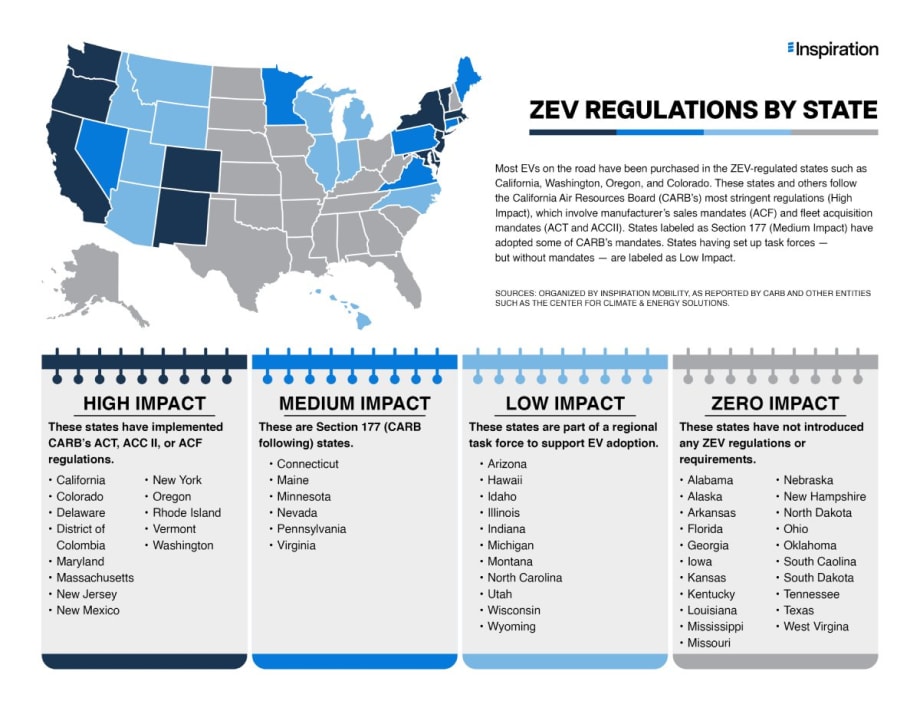
The regulatory environment is the biggest driver of EV adoption by state, particularly for commercial vehicles.
Source: Inspiration Mobility, CARB, other entities
2 min to read
In theory, electric vehicle adoption should start with an organization’s goal to reduce its carbon emissions. Yet many exterior factors propel or hinder these goals.
In conjunction with Automotive Fleet, Inspiration Mobility compiled and analyzed data for six such factors affecting EV adoption by state: regulations, registrations, climate impacts on range, fuel cost savings, incentives, and public charging availability and growth.
Taken in aggregate, these factors reveal growth patterns and rates of EV adoption.
Zero Emissions Regulations
Most EVs on the road have been purchased in the ZEV-regulated states such as California, Washington, Oregon, and Colorado.
These states and others follow the California Air Resources Board (CARB’s) most stringent regulations (High Impact), which involve manufacturer’s sales mandates (ACF) and fleet acquisition mandates (ACT and ACCII).
States labeled Section 177 (Medium Impact) have adopted some of CARB’s mandates. States having set up task forces — but without mandates — are labeled as Low Impact.
EV Registrations Per-Capita
Beyond California’s obvious lead in EV registrations per capita, states such as Hawaii and Arizona, which don’t rank high in any of the propelling factors for adoption — are nonetheless in the Top 10 of EV registrations.
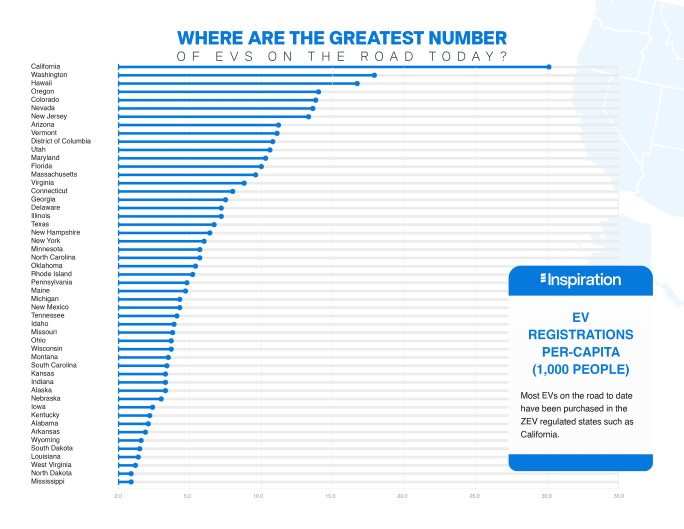
Source: Inspiration Mobility, U.S. Census, AFDC
Incentives & Rebates
Incentives are available in 24 states to help reduce the upfront cost of purchasing an EV or EV charging infrastructure, and seven additional states have programs that EVs would qualify for when replacing diesel trucks.
California is the only state offering all four sets of incentives. While every state offers at least one incentive type, only two states — Connecticut and Texas — offer incentives for three.
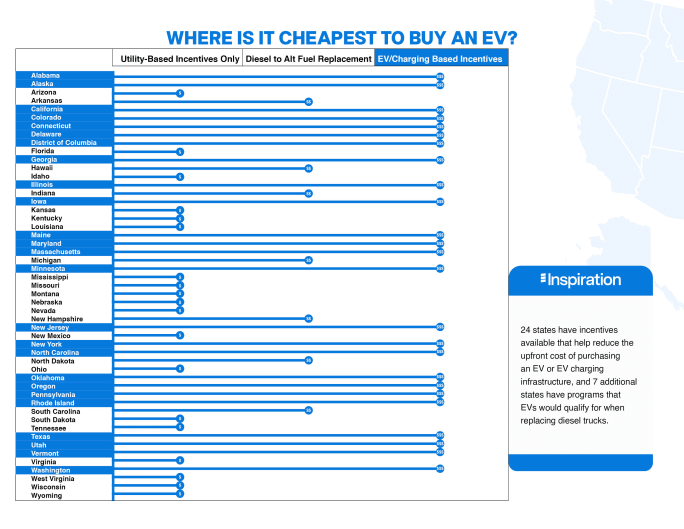
Source: Inspiration Mobility, AFDC
Climate Impacts to Range
This chart characterizes how temperature patterns impact effective EV range across states, with states given a climate range adjustment based on their average temperatures.
While impact on range varies by model and use case, EV data analysis shows that fleet vehicles can experience 24% to 42% range loss in freezing temperatures.
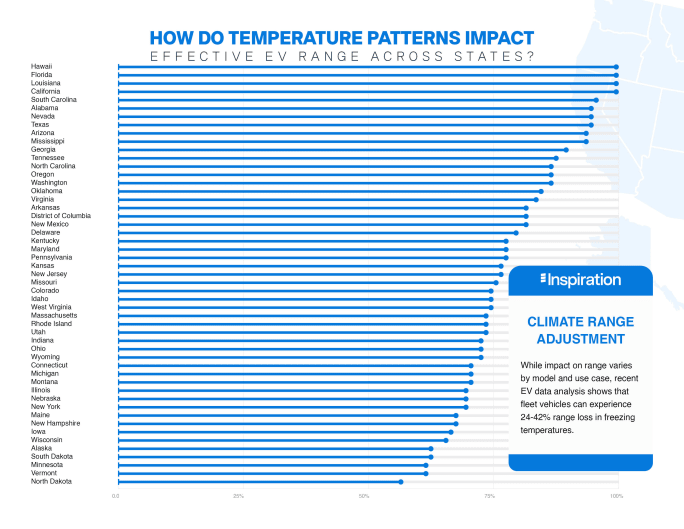
Source: Inspiration Mobility, Geotab, 2021 data; Ref Recurrent, 2024 data
EV Fuel Savings Per Mile Vs. Gas
In this calculation, the highest-ranked states aren’t necessarily the ones with the lowest electricity costs but the ones in which the gulf between gas prices and electricity prices is the greatest.
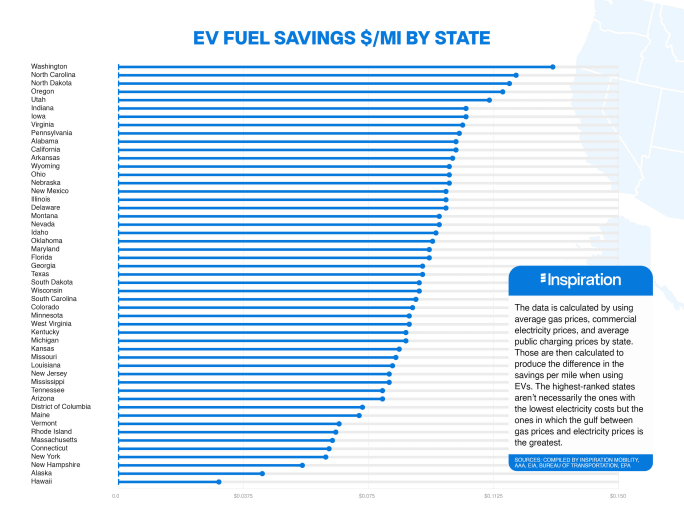
Source: Inspiration Mobility, AAA, EIA, Bureau of Transportation, EPA
Public Fast Charger Availability by State
While California leads the country with DCFC availability, four Midwest and Mountain West states are among those with the highest number of charging ports per person.
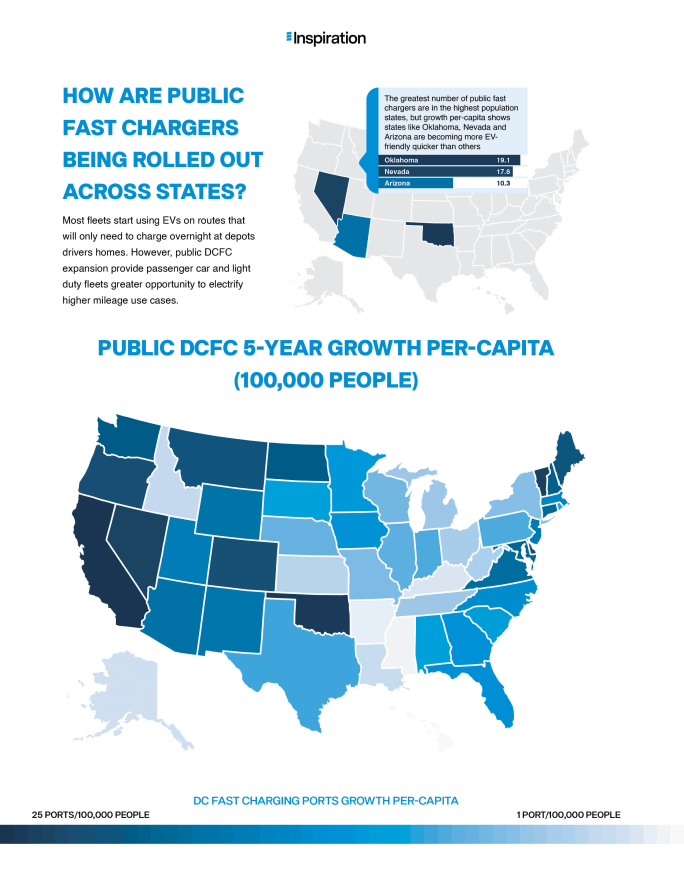
Source: Inspiration Mobility, AFDC, U.S. Census
Topics:Commercial Electric Vehiclesresearch and trendscharging infrastructureTCOFuel SavingsFleet ForwardelectrificationElectric Vehicles
Originally posted on Automotive Fleet
Subscribe to Our Newsletter
More Electric Vehicles
EV Charging Use Is Outpacing Infrastructure Growth
ChargePoint’s 2026 Charging Forward Report points to rising charger use, higher-powered charging, commercial vehicle electrification, and energy-management technology. Here’s what fleets should know.
Read More →
EV Realty Names Henrik Holland President as Charging Platform Expands
The former Prologis Mobility and Shell executive will help expand EV Realty’s truck charging business and move its power-first infrastructure model into autonomous vehicle depots and other fleet sectors.
Read More →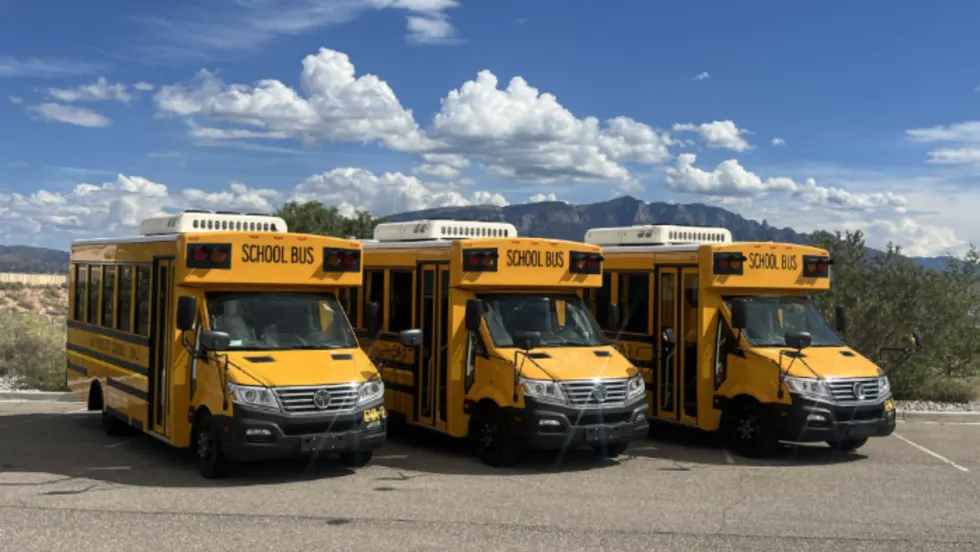
GreenPower Expands New Mexico EV Pilot With Larger Buses, V2G Testing
After logging more than 17,000 electric miles in the first year, New Mexico’s statewide pilot is moving into its second phase with larger vehicles, continued charging evaluations, and more.
Read More →
Can EV-as-a-Service Help Fleets Scale Electrification?
Sustainability Partners CEO Adam Cain explains how matching EVs, charging infrastructure, and duty cycles can help fleets scale electrification.
Read More →
How EV-as-a-Service Is Moving Fleets Beyond Pilots
Adam Cain, president and CEO of Sustainability Partners, explains how EV-as-a-service can help fleets scale deployments by addressing duty-cycle requirements and charging challenges.
Read More →
PowerFlex, The Mobility House Join Forces to Advance Fleet Electrification
Two EV charging providers are joining forces to deliver a broader portfolio of energy management and fleet electrification solutions.
Read More →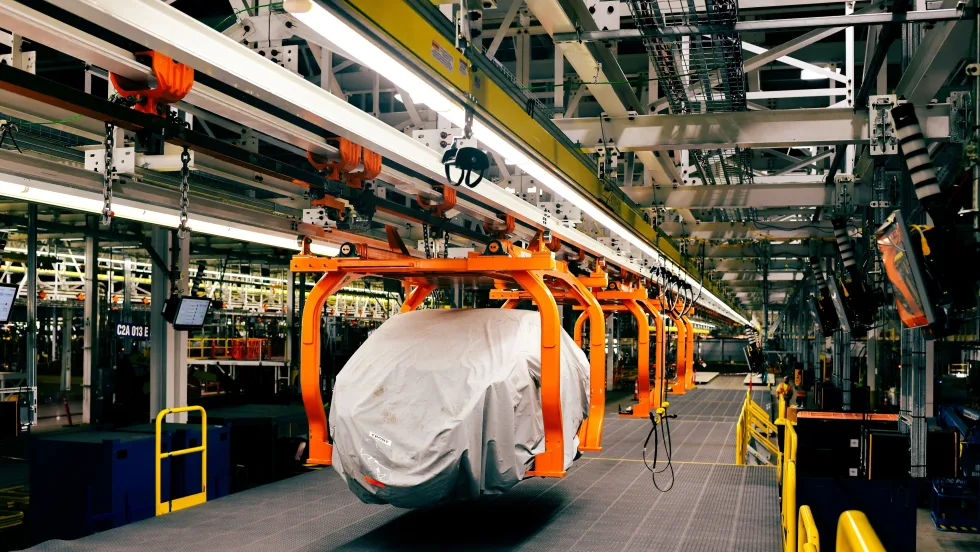
Ford Retools Louisville Plant for Fathom Electric Truck Production
Ford's $2 billion Louisville Assembly Plant overhaul introduces a three-part assembly process for the Fathom midsize electric truck, with production scheduled to begin in 2027.
Read More →
Merchants Fleet Reports 290M EV Miles as Fleets Navigate Changing Electrification Market
From millions in operating savings to hundreds of millions of EV miles, Merchants Fleet’s latest report reveals what’s working and what’s changing in fleet electrification.
Read More →
California District Commits to Electrify 25% of School Bus Fleet by 2028
One of the nation's largest school bus electrification projects to date demonstrates how grants, charging infrastructure, and public-private partnerships can help fleets transition to EVs at scale.
Read More →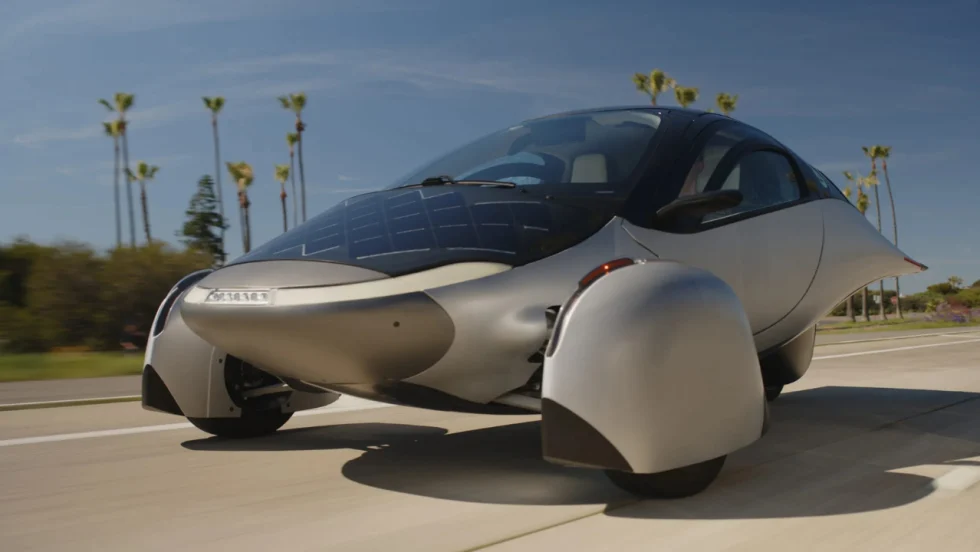
Aptera Orders Bodies and Chassis for Its First 40 Production Vehicles
Aptera Motors Corp. has issued purchase orders for the major structural components of its first 40 vehicles, and body and chassis components are expected to begin arriving in October.
Read More →