



Background Article: New Electric Delivery Van Overcomes Start-Up Challenges
Two Top ELMS Execs Resign Over Questionable Equity Stakes
The sudden shakeup at Electric Last Mile Solutions follows an investigative report into executive actions at the electric van maker that also determined its financial statements should be revised.
February 4, 2022

ELMS, a maker of electric last mile delivery vans, is evaluating the accounting and treatment of certain equity issuances to executive officers and is pursuing a revision of its financial statements, now deemed unreliable.
Photo: ELMS
3 min to read
Electric Last Mile Solutions, Inc. CEO and co-founder James Taylor and Executive Chairman of the Board Jason Luo resigned their positions Feb. 1 as an internal probe determined they were among executives who purchased equity in the company at substantial discounts to market value without obtaining an independent valuation, according to a company press release.
Taylor purchased equity in these transactions while Luo participated in these and other transactions and directly or indirectly purchased and sold equity in such transactions, the investigation determined.
On Nov. 25, 2021, the company’s board formed an independent special committee to examine certain sales of equity securities made by and to individuals associated with the company; the legal, disclosure and tax consequences of those transactions; and other issues that arose in connection those sales. The committee’s investigation found that the transactions occurred in November and December 2020, shortly before the company’s Dec.10, 2020 announcement of a definitive agreement for a business combination with Forum Merger III Corporation that eventually led to ELMS being publicly traded on the NASDAQ exchange.

ELMS CEO and co-founder James Taylor, who resigned his company positions on Feb. 1, 2022.
Photo: ELMS
In addition, on Jan. 26, 2022, on the basis of the special committee investigation, the board concluded that the ELMS' previously issued consolidated financial statements should be restated and, therefore, should no longer be relied upon. The financial statements in question cover the period as of Dec. 31, 2020, the period from Aug. 20, 2020 (inception) through Dec. 31, 2020, the six months ended June 30, and the nine months ended Sept. 30, 2021.
In connection with this conclusion, ELMS, together with its advisors, is evaluating the accounting and treatment of certain equity issuances to executive officers, the company stated in its release. Although the company cannot, at this time, estimate when it will file its restated financial statements for such periods, it is plans to complete the restatement, including an evaluation of the company’s financial statement reserves for tax payments and contingencies.
The Company expects to report on a preliminary, unaudited basis that it had about $132 million to 142 million in cash and cash equivalents, which includes $25 to 30 million in restricted cash, as of Dec. 31, 2021.
As of Friday, Feb. 4, ELMS shares were trading at $2.26, down 67% from $6.93 a share on Jan. 1. Year over year, the shares are down 82% from $12.50 per share on Feb. 4, 2021.
Replacing Taylor and Luo are Shauna McIntyre, a member of the ELMS Board of Directors, who has been appointed as Interim CEO and President, and Brian Krzanich, who has been appointed Non-Executive Chairman of the Board. Taylor and Luo have also resigned their board positions and will maintain consulting roles with the company to help ensure that ELMS delivers on its development and sales pipelines.
McIntyre most recently served as President of Ouster Automotive, following over 25 years working with automotive OEMs. Previously, she served as CEO of Sense Photonics, Inc., a 3D vision company building high-performance, mass manufacturable LiDAR solutions for next-generation transportation needs. Prior to that, she led Google's automotive services program, where she supported the release of certain Google products, including Google Maps, into automakers' new vehicle models. During her earlier years at Google she served as Chief of Staff for Google's consumer electronics division, which combines the best of Google AI, software, and hardware. McIntyre earlier led the U.S. New Mobility Practice for management consulting firm, Egon Zehnder, and was VP of Honeywell's Commercial Vehicle Turbocharger platform. She began her career at Ford, where she automated manufacturing plants overseas and led final assembly production, and later joined McKinsey & Company as a management consultant. Since 2019, she has served on the Board of Directors of Lithia Motors, one of the largest providers of personal transportation solutions in the U.S.
ELMS has emerged during the past year as a leading manufacturer of the Class 1 all-electric last-mile Urban Delivery Van and the Class 2-3 all-electric Urban Utility Vehicle. It builds the EVs at a former GM assembly plant in Indiana with body shells made in China.
More Electric Vehicles

EV Charging Use Is Outpacing Infrastructure Growth
ChargePoint’s 2026 Charging Forward Report points to rising charger use, higher-powered charging, commercial vehicle electrification, and energy-management technology. Here’s what fleets should know.
Read More →
EV Realty Names Henrik Holland President as Charging Platform Expands
The former Prologis Mobility and Shell executive will help expand EV Realty’s truck charging business and move its power-first infrastructure model into autonomous vehicle depots and other fleet sectors.
Read More →
GreenPower Expands New Mexico EV Pilot With Larger Buses, V2G Testing
After logging more than 17,000 electric miles in the first year, New Mexico’s statewide pilot is moving into its second phase with larger vehicles, continued charging evaluations, and more.
Read More →
Can EV-as-a-Service Help Fleets Scale Electrification?
Sustainability Partners CEO Adam Cain explains how matching EVs, charging infrastructure, and duty cycles can help fleets scale electrification.
Read More →
How EV-as-a-Service Is Moving Fleets Beyond Pilots
Adam Cain, president and CEO of Sustainability Partners, explains how EV-as-a-service can help fleets scale deployments by addressing duty-cycle requirements and charging challenges.
Read More →
PowerFlex, The Mobility House Join Forces to Advance Fleet Electrification
Two EV charging providers are joining forces to deliver a broader portfolio of energy management and fleet electrification solutions.
Read More →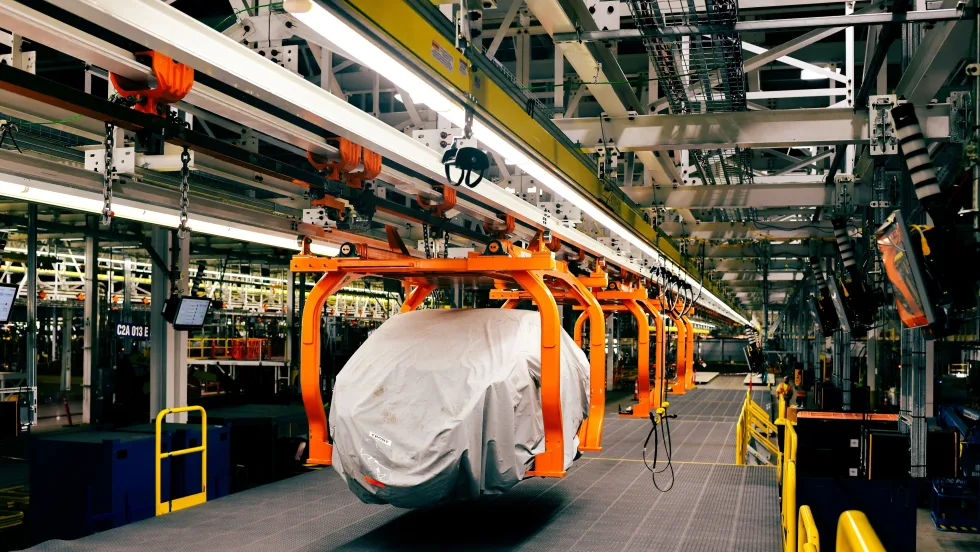
Ford Retools Louisville Plant for Fathom Electric Truck Production
Ford's $2 billion Louisville Assembly Plant overhaul introduces a three-part assembly process for the Fathom midsize electric truck, with production scheduled to begin in 2027.
Read More →
Merchants Fleet Reports 290M EV Miles as Fleets Navigate Changing Electrification Market
From millions in operating savings to hundreds of millions of EV miles, Merchants Fleet’s latest report reveals what’s working and what’s changing in fleet electrification.
Read More →
California District Commits to Electrify 25% of School Bus Fleet by 2028
One of the nation's largest school bus electrification projects to date demonstrates how grants, charging infrastructure, and public-private partnerships can help fleets transition to EVs at scale.
Read More →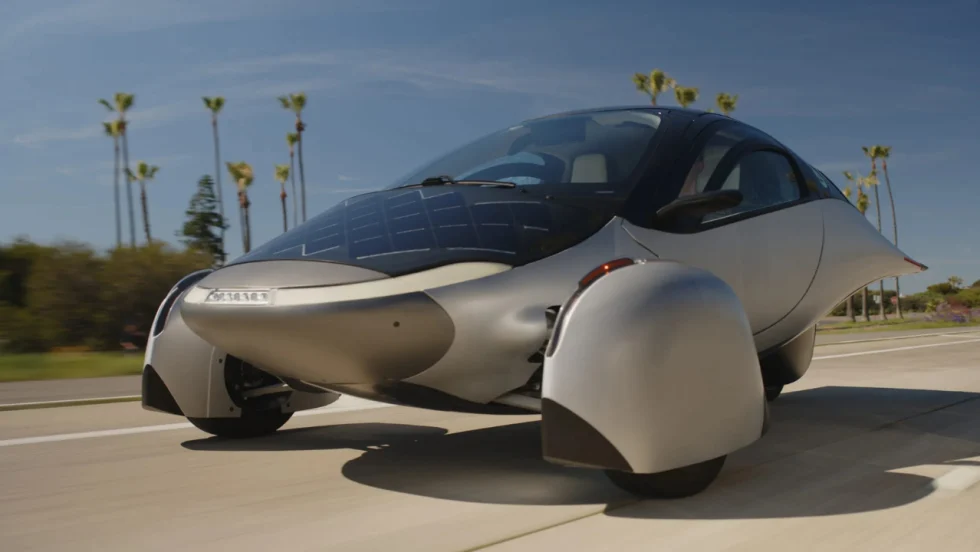
Aptera Orders Bodies and Chassis for Its First 40 Production Vehicles
Aptera Motors Corp. has issued purchase orders for the major structural components of its first 40 vehicles, and body and chassis components are expected to begin arriving in October.
Read More →