


Where is EV Range Anxiety Most Prevalent in Western Europe?
Understanding where public chargers are concentrated is a good indicator of where electric vehicle rentals have a better chance to grow.


Greece has the highest level of “range anxiety” for electric vehicle drivers. It has no fast chargers for EVs per 100 km of the Trans-European Transport Network.
Photo: Unsplash
Greece comes in first when it comes to the highest level of “range anxiety” facing drivers of electric vehicles in Western Europe, according to a study by StressFreeCarRental.com.
In this study, StressFreeCarRental.com looked at the prevalence of EV chargers on key routes in 13 European countries. Fewer available chargers for electric vehicles can mean an increase in anxiety as motorists have to explore less well-known roads to find charging points for their vehicle.
Greece has no fast CCS (combined charging system) chargers for EVs per 100 kilometers (km) of the Trans-European Transport Network (TEN-T), according to the latest available data. This means that drivers are more likely to be stranded if they run out of electricity on their journey.
The TEN-T is a planned network of roads, railways, airports, and water infrastructure in the European Union that generates improvements to primary road, railways, airports, and ports to provide integrated, long distance high-speed routes. The core network has a completion target of 2030.
“Our research explores the prevalence of CCS chargers on key routes in Western Europe along with the cost to power your electric vehicle against the price of petrol,” said a spokesperson for StressFreeCarRental.com. “There are some fascinating results which demonstrate which countries have more chargers on main routes and lower fuel and electric costs compared to others. It is a changing picture as economics and infrastructure evolves with time, but demonstrates the importance of planning your journey in advance, whether for business or pleasure.”
For the availability of CCS chargers, 2020 figures show Italy and Spain fair little better than Greece with just 2.3 chargers per 100 km in Italy and 2.4 chargers over the same distance in Spain. They are followed by Luxembourg with 2.5 chargers and Portugal with 2.9 chargers per 100 km, according to the study.
At the other end of the scale, motorists have access to an abundance of CCS chargers per 100 km in the U.K. with 19.7, followed by Holland with 17.2 and Germany with 14.4. These are the only three countries with CCS chargers available in double figures; Sweden takes fourth place with 8.4 chargers.
When looking at the cost of needing to power an EV, Germany has the most expensive price for charging EVs at 4.65 Euros to travel 100 km. Denmark comes in second at a cost of 4.35 euros to travel the same distance, followed by Belgium in third at 3.9 euros and the U.K. in fourth at 3.6 euros.
The Dutch may increasingly favor electric vehicles as their chosen mode of transport since the Netherlands has the most expensive petrol in Western Europe. Currently, it costs 18.65 euros to fill a tank to travel 100 km. Norway comes in second for most expensive petrol at a cost of 17.92 euros followed by Denmark in third at 16.8 euros.
In the study, Luxembourg had the cheapest petrol at 13.36 euros to travel 100 km, followed by Belgium at 13.84 euros and Spain at 14.16 euros. These figures are all on the basis that petrol vehicles need eight liters of petrol to travel 100 km.
Originally posted on Auto Rental News
More Electric Vehicles
EV Charging Use Is Outpacing Infrastructure Growth
ChargePoint’s 2026 Charging Forward Report points to rising charger use, higher-powered charging, commercial vehicle electrification, and energy-management technology. Here’s what fleets should know.
Read More →
EV Realty Names Henrik Holland President as Charging Platform Expands
The former Prologis Mobility and Shell executive will help expand EV Realty’s truck charging business and move its power-first infrastructure model into autonomous vehicle depots and other fleet sectors.
Read More →
GreenPower Expands New Mexico EV Pilot With Larger Buses, V2G Testing
After logging more than 17,000 electric miles in the first year, New Mexico’s statewide pilot is moving into its second phase with larger vehicles, continued charging evaluations, and more.
Read More →
Can EV-as-a-Service Help Fleets Scale Electrification?
Sustainability Partners CEO Adam Cain explains how matching EVs, charging infrastructure, and duty cycles can help fleets scale electrification.
Read More →
How EV-as-a-Service Is Moving Fleets Beyond Pilots
Adam Cain, president and CEO of Sustainability Partners, explains how EV-as-a-service can help fleets scale deployments by addressing duty-cycle requirements and charging challenges.
Read More →
PowerFlex, The Mobility House Join Forces to Advance Fleet Electrification
Two EV charging providers are joining forces to deliver a broader portfolio of energy management and fleet electrification solutions.
Read More →
Ford Retools Louisville Plant for Fathom Electric Truck Production
Ford's $2 billion Louisville Assembly Plant overhaul introduces a three-part assembly process for the Fathom midsize electric truck, with production scheduled to begin in 2027.
Read More →
Merchants Fleet Reports 290M EV Miles as Fleets Navigate Changing Electrification Market
From millions in operating savings to hundreds of millions of EV miles, Merchants Fleet’s latest report reveals what’s working and what’s changing in fleet electrification.
Read More →
California District Commits to Electrify 25% of School Bus Fleet by 2028
One of the nation's largest school bus electrification projects to date demonstrates how grants, charging infrastructure, and public-private partnerships can help fleets transition to EVs at scale.
Read More →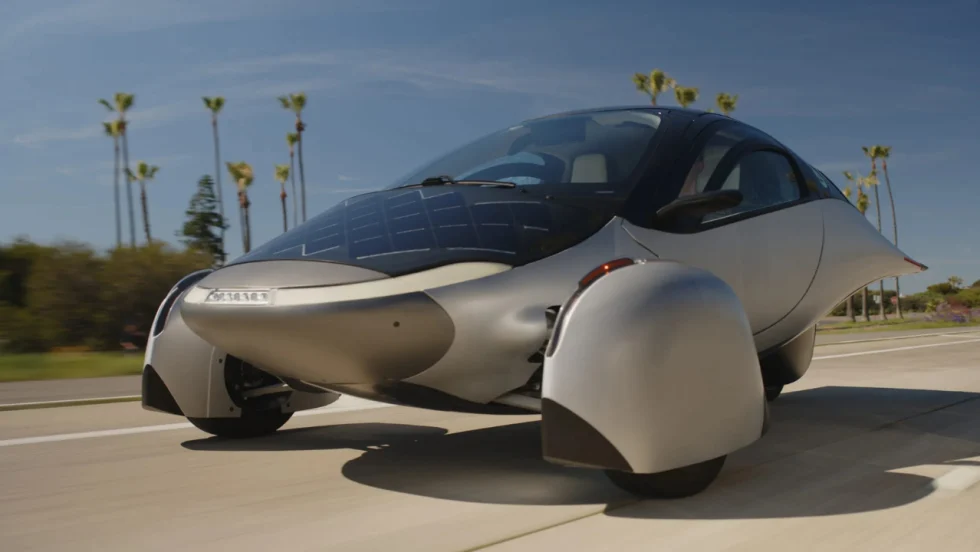
Aptera Orders Bodies and Chassis for Its First 40 Production Vehicles
Aptera Motors Corp. has issued purchase orders for the major structural components of its first 40 vehicles, and body and chassis components are expected to begin arriving in October.
Read More →