


Walmart Buys 4,500 Canoo Electric Delivery Vehicles
The vehicles will be used to deliver online orders in a sustainable way, which will contribute to Walmart's goal to achieve zero-emissions by 2040.


Walmart plans to purchase 4,500 Canoo Electric Delivery Vehicles to be used for last-mile deliveries in support of its growing eCommerce business.
Photo: Canoo
Walmart signed a deal with Canoo, a high-tech advanced mobility company, to purchase 4,500 all-electric delivery vehicles, beginning with the Lifestyle Delivery Vehicle (LDV). The agreement includes the option to purchase up to 10,000 units.
The vehicles will be used to for last-mile delivery for online orders done in a sustainable way, which will also contribute to Walmart's goal to achieve zero-emissions by 2040. While the LDV is expected to begin hitting the road in 2023, the companies plan to kick off advanced deliveries in the Dallas Fort Worth metroplex in the coming weeks to refine and finalize vehicle configuration.
What is the Canoo Lifestyle Delivery Vehicle (LDV)?
Canoo's fully electric Lifestyle Delivery Vehicle is an American-made commercial EV optimized for sustainable last-mile delivery. As with all Canoo vehicles, the LDV is built on a proprietary multi-purpose platform that integrates the motors, battery module and other critical driving components.
The LDV has a cabin optimized for last-mile delivery. Steer-by-wire technology reduces the number of moving parts and cabin intrusion, resulting in more usable interior space, better driver ergonomics, and a panoramic window to improve road visibility.
The LDV is engineered for high-frequency stop-and-go deliveries and speedy vehicle-to-door drop-off, including grocery and food/meal delivery. Its customized interior is designed for small package delivery, at competitive per-stop economics, according to the manufacturer.
The modular design and 120 cubic feet of cargo volume are adaptable to evolve with customer needs, which contributes to a decreasing per-unit investment over time.
"We are proud to have been selected by Walmart, one of the most sophisticated buyers in the world, to provide our high-tech, all-electric, American made Lifestyle Delivery Vehicle to add to their impressive logistics capabilities," said Tony Aquila, chairman and CEO of Canoo, in a release. "Our LDV has the turning radius of a small passenger vehicle on a parking friendly, compact footprint, yet the payload and cargo space of a commercial delivery vehicle. This is the winning algorithm to seriously compete in the last-mile delivery race, globally."
Expanding Walmart's Last-Mile Delivery Fleet
Canoo's electric vehicles will be driven by Walmart associates and used to deliver online orders, from groceries to general merchandise. There's also the potential to use the EVs for Walmart GoLocal, the retailer's delivery-as-a-service business.
"We're thrilled to continue diversifying our last-mile delivery fleet with Canoo's unique and sustainably focused all-electric technology which will provide our associates with safe, ergonomic delivery vehicles," said David Guggina, senior vice president of innovation and automation, Walmart U.S. "Today, the closest Walmart to customers is right in their pockets — it's the Walmart app. By continuing to expand our last-mile delivery fleet in a sustainable way, we're able to provide customers and Walmart+ members with even more access to same-day deliveries while keeping costs low."
In addition to dedicated fulfillment centers, Walmart uses 3,800 of its stores, which are located within 10 miles of 90% of the U.S. population, to fulfill online orders. The retailer does this using a combination of Walmart associates, independent contractors driving on the Spark Driver Network, third-party delivery service providers, and in some locations, autonomous vehicles and drones, to make deliveries. Walmart can reach 80% of the U.S. population with same-day delivery on a growing assortment of items.
Collaborating Close to Home
Canoo's agreement with Walmart builds on the company's existing commitments in the state of Arkansas. Last year Canoo announced it had selected Bentonville, Arkansas, as its headquarters and Pryor, Oklahoma as the site for its U.S. manufacturing, further establishing an EV ecosystem in the heartland.
"We're encouraged that by being located in close proximity to the Canoo headquarters, we have the advantage to collaborate and innovate in real-time, as well as the opportunity to aid in the creation of manufacturing and technology jobs here in our home state of Arkansas," added Guggina.
Canoo anticipates starting production of the Lifestyle Delivery Vehicles beginning in the fourth quarter of 2022.
Originally posted on Work Truck Online
More Electric Vehicles

EV Charging Use Is Outpacing Infrastructure Growth
ChargePoint’s 2026 Charging Forward Report points to rising charger use, higher-powered charging, commercial vehicle electrification, and energy-management technology. Here’s what fleets should know.
Read More →
EV Realty Names Henrik Holland President as Charging Platform Expands
The former Prologis Mobility and Shell executive will help expand EV Realty’s truck charging business and move its power-first infrastructure model into autonomous vehicle depots and other fleet sectors.
Read More →
GreenPower Expands New Mexico EV Pilot With Larger Buses, V2G Testing
After logging more than 17,000 electric miles in the first year, New Mexico’s statewide pilot is moving into its second phase with larger vehicles, continued charging evaluations, and more.
Read More →
Can EV-as-a-Service Help Fleets Scale Electrification?
Sustainability Partners CEO Adam Cain explains how matching EVs, charging infrastructure, and duty cycles can help fleets scale electrification.
Read More →
How EV-as-a-Service Is Moving Fleets Beyond Pilots
Adam Cain, president and CEO of Sustainability Partners, explains how EV-as-a-service can help fleets scale deployments by addressing duty-cycle requirements and charging challenges.
Read More →
PowerFlex, The Mobility House Join Forces to Advance Fleet Electrification
Two EV charging providers are joining forces to deliver a broader portfolio of energy management and fleet electrification solutions.
Read More →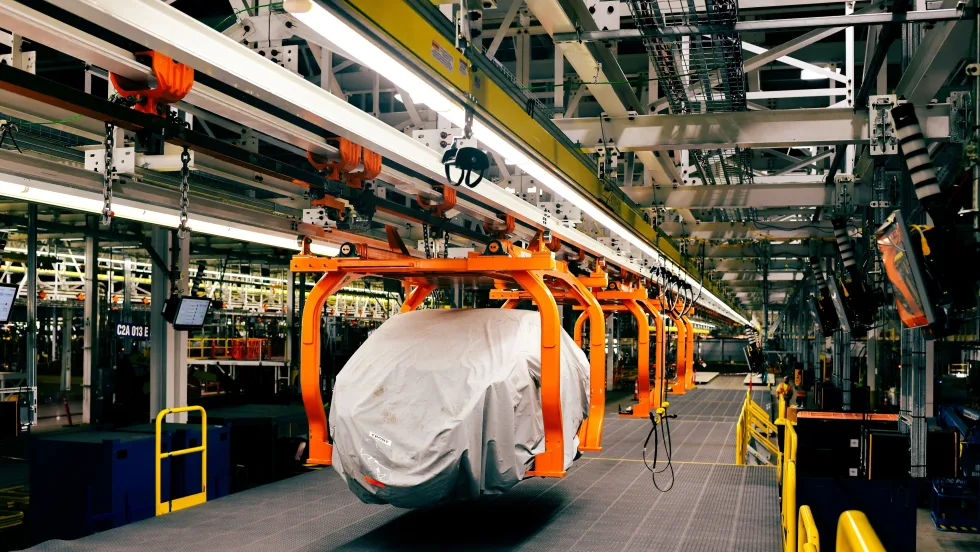
Ford Retools Louisville Plant for Fathom Electric Truck Production
Ford's $2 billion Louisville Assembly Plant overhaul introduces a three-part assembly process for the Fathom midsize electric truck, with production scheduled to begin in 2027.
Read More →
Merchants Fleet Reports 290M EV Miles as Fleets Navigate Changing Electrification Market
From millions in operating savings to hundreds of millions of EV miles, Merchants Fleet’s latest report reveals what’s working and what’s changing in fleet electrification.
Read More →
California District Commits to Electrify 25% of School Bus Fleet by 2028
One of the nation's largest school bus electrification projects to date demonstrates how grants, charging infrastructure, and public-private partnerships can help fleets transition to EVs at scale.
Read More →
Aptera Orders Bodies and Chassis for Its First 40 Production Vehicles
Aptera Motors Corp. has issued purchase orders for the major structural components of its first 40 vehicles, and body and chassis components are expected to begin arriving in October.
Read More →