


Study: How 2026's Gas Price Hikes Affect Different Vehicle Types
New data from iSeeCars reveals how rising fuel costs have affected different vehicle segments as gasoline prices climbed nearly 46% over the past four months.

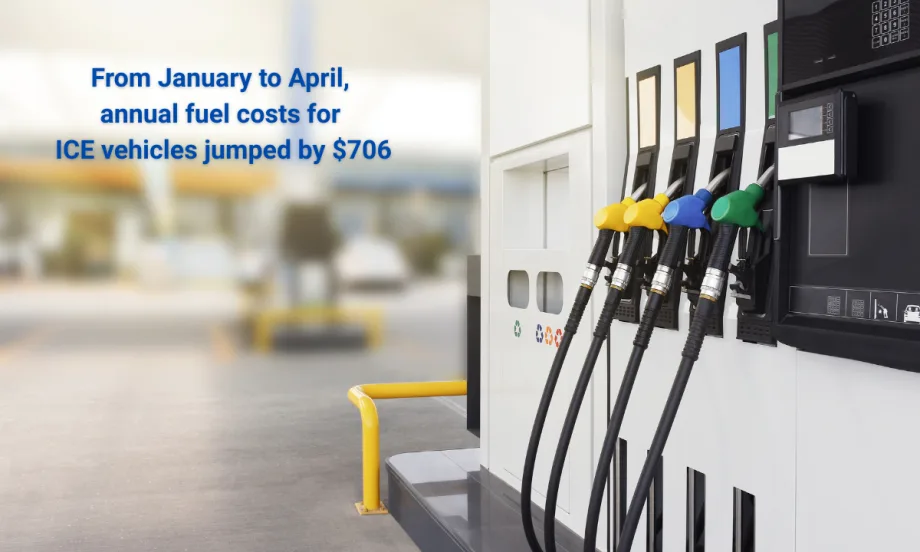
Annual fuel costs for internal combustion engine vehicles jumped an average of $706 over January to April, rising from $1,533 to $2,240.
Gasoline prices rose nearly 46% between January and April 2026, with fleet operators running larger conventional vehicles feeling a greater burden. An iSeeCars analysis of over 2.1m vehicles charted the cost spikes by vehicle types and models.
EVs and ICE Vehicles: A $695 Annual Fuel Cost Gap
According to iSeeCars’ analysis, annual fuel costs for internal combustion engine vehicles jumped an average of $706 over that four-month period, rising from $1,533 to $2,240. Electric vehicles, by contrast, saw annual energy costs increase just $11, from $714 to $725.
"Everyone knows fuel prices are up, but we wanted to evaluate the impact of rising energy costs on each of the major drivetrain categories," said iSeeCars Executive Analyst Karl Brauer in an announcement.
"You'd expect EV drivers to be largely shielded from the rise in fuel prices, and their $11 increase in annual fuel costs versus $706 for gasoline vehicles confirms it."
Hybrids Offer a Middle Ground
Conventional hybrids — which logged the most annual miles of any drivetrain category at nearly 14,700 miles per year — saw fuel costs rise $486, meaningfully less than their ICE counterparts.
Plug-in hybrids fared even better, absorbing a $291 increase, with models like the Toyota Prius Prime and Hyundai Ioniq PHEV among the least-affected gas-consuming vehicles in the study.
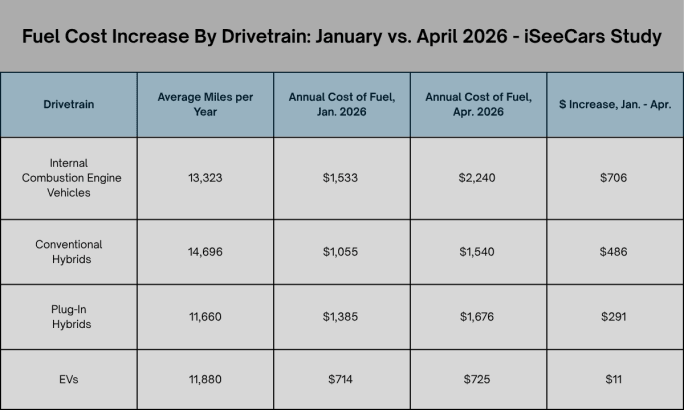
Conventional gasoline vehicles saw annual fuel costs rise by more than $700 on average since January, compared to just $11 for EVs.
Trucks, Minivans, and Large SUVs Absorb the Biggest Increases
Among conventional vehicle segments, the pain was, not surprisingly, concentrated at the larger, less fuel-efficient end of the spectrum. Minivans saw the steepest annual fuel cost increase at $1,139 — driven in large part by the segment's high average mileage of 19,292 miles per year, nearly 5,000 more than the next-highest segment.
Trucks weren't far behind, absorbing a $992 increase despite lower average annual mileage, due to their relatively poor fuel economy. SUVs rose $681, while passenger cars saw the smallest increase among ICE segments at $606.
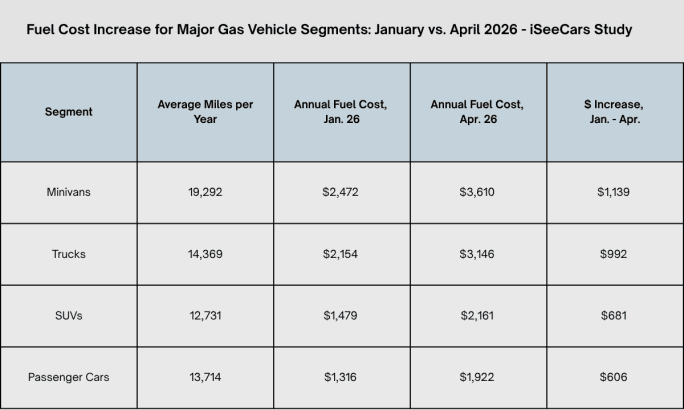
The Hardest-Hit Models: Large SUVs Dominate
At the individual model level, the vehicles with the largest increases in fuel cost are dominated by full-size, three-row SUVs. The Toyota Sequoia topped the list, with estimated annual fuel costs rising from $3,523 in January to $5,145 in April — a jump of $1,623.
The Chevrolet Suburban ($1,542) and Nissan Armada ($1,513) rounded out the top three, followed closely by the GMC Yukon XL and Chevrolet Tahoe.
"Large, three-row SUVs can accomplish nearly any task related to personal transportation," said Brauer. "Unfortunately, the high functionality of large SUVs combines with their less-than-stellar fuel efficiency to make their annual operating costs extremely volatile when fuel prices spike."
Visit here for more details on the study and methodology.
Originally posted on Automotive Fleet
More Electric Vehicles
EV Charging Use Is Outpacing Infrastructure Growth
ChargePoint’s 2026 Charging Forward Report points to rising charger use, higher-powered charging, commercial vehicle electrification, and energy-management technology. Here’s what fleets should know.
Read More →
EV Realty Names Henrik Holland President as Charging Platform Expands
The former Prologis Mobility and Shell executive will help expand EV Realty’s truck charging business and move its power-first infrastructure model into autonomous vehicle depots and other fleet sectors.
Read More →
GreenPower Expands New Mexico EV Pilot With Larger Buses, V2G Testing
After logging more than 17,000 electric miles in the first year, New Mexico’s statewide pilot is moving into its second phase with larger vehicles, continued charging evaluations, and more.
Read More →
Can EV-as-a-Service Help Fleets Scale Electrification?
Sustainability Partners CEO Adam Cain explains how matching EVs, charging infrastructure, and duty cycles can help fleets scale electrification.
Read More →
How EV-as-a-Service Is Moving Fleets Beyond Pilots
Adam Cain, president and CEO of Sustainability Partners, explains how EV-as-a-service can help fleets scale deployments by addressing duty-cycle requirements and charging challenges.
Read More →
PowerFlex, The Mobility House Join Forces to Advance Fleet Electrification
Two EV charging providers are joining forces to deliver a broader portfolio of energy management and fleet electrification solutions.
Read More →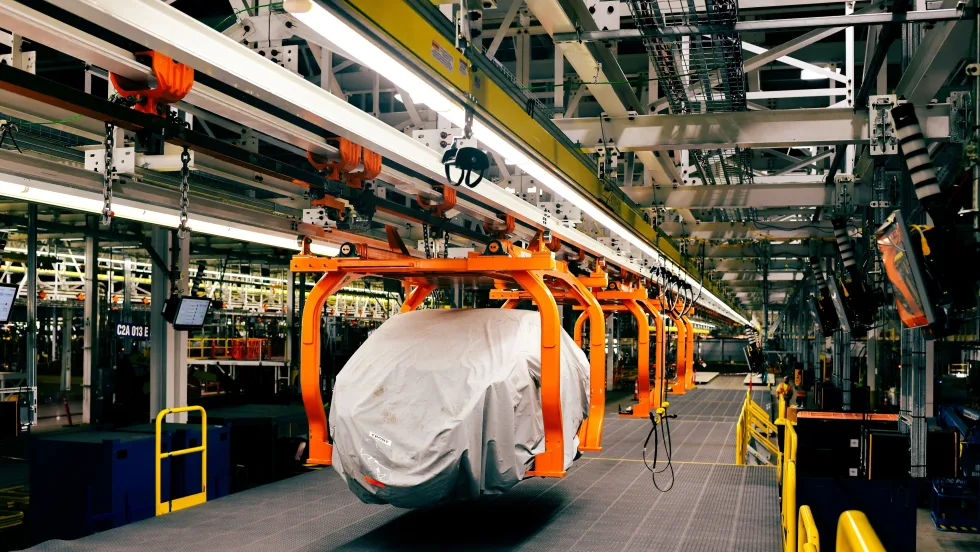
Ford Retools Louisville Plant for Fathom Electric Truck Production
Ford's $2 billion Louisville Assembly Plant overhaul introduces a three-part assembly process for the Fathom midsize electric truck, with production scheduled to begin in 2027.
Read More →
Merchants Fleet Reports 290M EV Miles as Fleets Navigate Changing Electrification Market
From millions in operating savings to hundreds of millions of EV miles, Merchants Fleet’s latest report reveals what’s working and what’s changing in fleet electrification.
Read More →
California District Commits to Electrify 25% of School Bus Fleet by 2028
One of the nation's largest school bus electrification projects to date demonstrates how grants, charging infrastructure, and public-private partnerships can help fleets transition to EVs at scale.
Read More →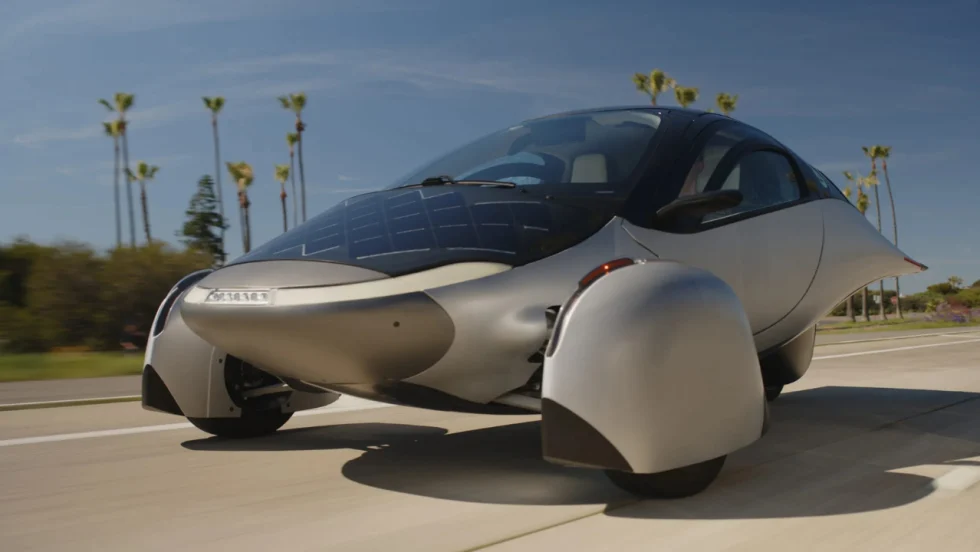
Aptera Orders Bodies and Chassis for Its First 40 Production Vehicles
Aptera Motors Corp. has issued purchase orders for the major structural components of its first 40 vehicles, and body and chassis components are expected to begin arriving in October.
Read More →