Charged Fleet Logo

How Fleet Managers Can Better Prepare For Electric Vehicles

A study finds managers underestimate the complexity of transitioning to EVs at scale and need to plan and prepare for it now.

by Charged Fleet Staff
February 8, 2021
How Fleet Managers Can Better Prepare For Electric Vehicles


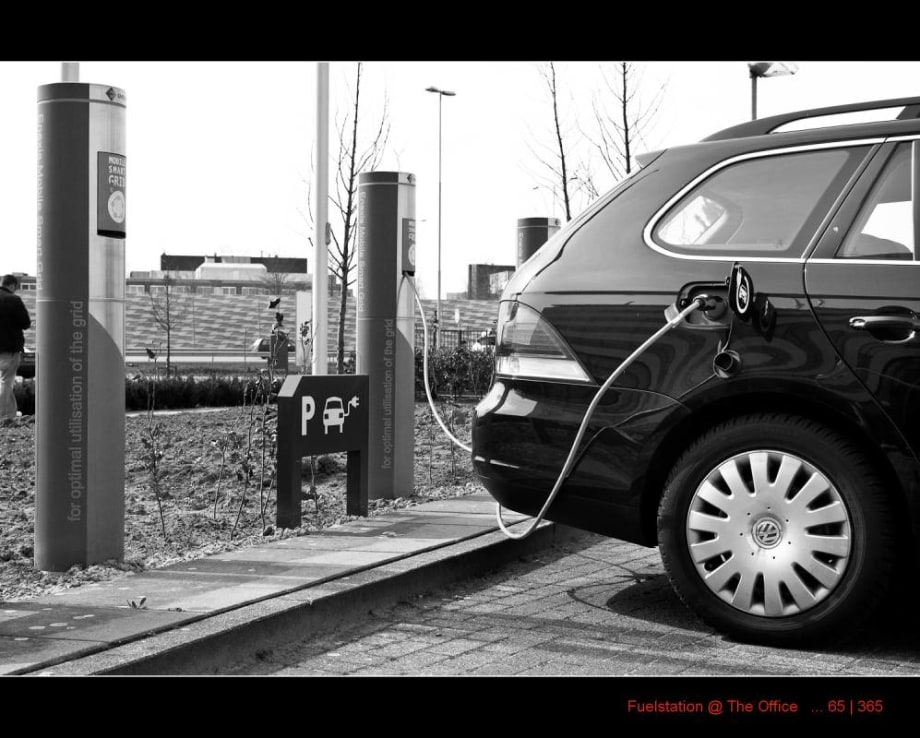
Photo: Flickr.com photo by Maarten Takens (CC BY-SA 2.0 license)

4 min to read


Steep Climb Ahead — How Fleet Managers Can Prepare for the Coming Wave of Electrified Vehicles offers a comprehensive assessment of how major US fleet managers are approaching the electrification of their fleets, according to a recent press release. It is based on RMI’s survey of 91 fleet managers operating large fleets, as well as 18 in-depth interviews conducted with fleet managers representing a cross-section of fleet types, including cities and states, utilities, universities, corporations, and delivery services. The report also explores the current landscape of electric vehicles and charging infrastructure, and identifies what will be required to scale up EV adoption.

“Electrifying fleets represents the biggest near-term opportunity to drive EV adoption with large buyers and cut transportation emissions,” said Britta Gross, the managing director of RMI’s Carbon Free Mobility program. “And the sheer size of these fleets can be leveraged to remove market barriers and drive down costs that are hampering electrification across all transportation sectors. In Steep Climb Ahead, our aim is to prepare these fleets for the challenges ahead, because their success is key to the widespread adoption of EVs.”

Ad Loading...

The survey found that most fleet managers expect to adopt electric models for the majority of their light-duty cars, trucks, and SUVs over the next decade. Most organizations have committed to reducing their carbon emissions by preferentially choosing EVs for new vehicle purchases where they are deemed to be suitable for a given use case and duty cycle. Light-duty passenger vehicles are ready for electrification now. Suitable electric models of pickup trucks and heavier vehicles will be available in the next two to five years.

However, few organizations are currently equipped to understand and account for the actual costs of owning and operating EVs, or to compare those costs accurately to their existing fleets of conventional internal combustion engine vehicles.

Although many fleets have already implemented pilot programs, electrifying a fleet at scale involves much more than just adding more EVs and chargers incrementally. For many organizations, it will mean restructuring their internal business processes, including procurement, accounting, long-term capital project planning, fiscal budgeting, operations, and more. It will also require a more extensive relationship with their local utilities, more proactive involvement with city and county officials, and a cohesive, integrated strategy across an organization, from the C-suite to individual organizational units.

Other key findings from the survey and interviews include:

  • Procuring EVs is the easy part of electrification. As fleets begin to operate more EVs, scaling up charging infrastructure to accommodate higher rates of charge from more expensive chargers in far more complex installations will quickly become the most significant organizational challenge.

  • Fleets must engage with their local utilities as early as possible, especially for charging infrastructure at large fleet depots, truck stops, and fleet yards with medium- and heavy-duty trucks. The power requirements of these vehicles can be substantial. Installation may require planning by both the utility and fleet operator years in advance.

  • Fleet managers may have unrealistic expectations about being able to use public chargers opportunistically or install only slow Level 2 chargers. At scale, many fleets will need to deploy direct current fast charging (DCFC), which is much more costly to build and operate.

  • At scale, managing the charging of vehicles around their duty cycles takes concerted effort and is not a trivial task. Fleet managers should expect to prepare detailed operational plans for building charging infrastructure and managing charging, or consider outsourcing this to “charging-as-a-service” providers.

  • Many organizations must also consider how to prepare for grid power disruptions. Depending on the fleet, backup power requirements could be very substantial, and installing the requisite capacity could be complex.

Ad Loading...

Ultimately, the RMI researchers find that fleet electrification will be worth the cost and effort. Done right, fleet electrification can result in significant cost savings for all fleet operators and across all vehicle classes, and be the primary pathway for organizations of all kinds and sizes to significantly reduce their carbon footprints and use energy more efficiently. Done badly, it can be a series of very costly errors. But avoiding electrification isn’t an option. Thanks to increasingly stringent restrictions on vehicle emissions, as well as the ongoing retooling of the global vehicle manufacturing industry to produce electric vehicles, electrification is coming to all fleets, whether they are ready for it or not.


About Rocky Mountain Institute

Rocky Mountain Institute (RMI) — an independent nonprofit founded in 1982—transforms global energy use to create a clean, prosperous, and secure low-carbon future. It engages businesses, communities, institutions, and entrepreneurs to accelerate the adoption of market-based solutions that cost-effectively shift from fossil fuels to efficiency and renewables. RMI has offices in Basalt and Boulder, Colorado; New York City; Oakland, California; Washington, D.C.; and Beijing.

More Operations

PG&E PowerHouse demo home in San Ramon with wall-mounted EV chargers, batteries, and electric systems, showcasing all-electric home technologies and energy management solutions.
Chargingby News/Media ReleaseApril 23, 2026

All Electric Test House Could Ease Path To EV Usage

An experimental model home shows how residential charging could enable electric fleet operations by allowing drivers to take EVs home.

Read More →
Lucid electric vehicle equipped with rooftop sensors parked outside a modern building, representing expanded partnership with Uber for future robotaxi deployment.

Lucid Receives New Investments As It Expands Uber Robotaxi Venture

Lucid and Uber partner to provide at least 35,000 vehicles, backed by new investments totaling $750 million to support the deployment of autonomous fleets.

Read More →
Dan Hilson and Martin Romjue photos on the title page.
Chargingby Martin RomjueApril 14, 2026

Software Speeds Up EV Fleet Charging

Learn about a new level of energy management that helps fleets control costs while maintaining service reliability. [VIDEO]

Read More →
Ad Loading...
Two business leaders in blue suits shake hands in front of a U.S. flag and balloons, symbolizing AVILOO’s leadership transition and expansion in the North American EV market.

Brett Lippel Named CEO of AVILOO North America

AVILOO recently appointed Brett Lippel as CEO of its North American operations with the intent to drive nationwide adoption of advanced battery-testing tech.

Read More →
Person charging an electric vehicle at a public EV charging station, holding the charging connector next to a parked electric car outdoors.
Chargingby News/Media ReleaseApril 8, 2026

ChargePoint, South Coast AQMD Reach 90+ EV Chargers Across Southern California

ChargePoint deployed more than 90 EV charging ports, adding new Level 2 infrastructure and management tools to support public and employee access to charging in Southern California.

Read More →
Charged Fleet Off Peak logo thumbnail with symbolic lightning bolt.
Electric Vehiclesby Martin RomjueApril 3, 2026

OEMS Expose Overdue EV Truths

Recent announcements from two automakers underscore a significant shift in the electric vehicle market, driven by EV losses and changing strategies. [VIDEO}

Read More →
Ad Loading...
Map of the United States showing EV cost savings per mile by state, with darker shading indicating higher savings based on fuel and maintenance costs.

New Tool Helps Calculate EV Savings As Gas Prices Surge

A new online calculator from Coltura estimates how much drivers can save by switching to an EV, using real-time local fuel and electricity costs.

Read More →
Two blue large box mobile chargers parked along a row of black Tesla EV sedans in a parking lot.
ChargingApril 1, 2026

Why Off-Grid Charging is Becoming an Operational Choice, Not a Last Resort

Off-grid charging assets have proven to be much more than stopgaps. Fleets can use those tools to hedge against grid delays, capacity bottlenecks, and other uncertainties.

Read More →
Interior view of a Rivian vehicle showing steering wheel and digital display screen with vehicle interface, representing autonomous technology development.
Suppliersby News/Media ReleaseMarch 27, 2026

Uber, Rivian Aim To Deploy 50,000 Self-Driving Robotaxis

Rivian and Uber plan to put the first 10,000 autonomous R2 robotaxis into service starting in 2028 and expand to multiple cities as part of a broader push.

Read More →
Ad Loading...
Graphic used with a report on electric and hybrid vehicle collision claims, highlighting industry trends in repair frequency, costs and parts usage as EV adoption grows.

EV Collision Claims Rise 14% In U.S. Despite Slower Sales

Mitchell’s latest EV Collision Insights report found repairable claims for electrified vehicles continued to rise in 2025, even as new BEV sales declined slightly in the U.S.

Read More →