


GM Reveals New EV Motors
The new motors will power Ultium-based EVs and were designed and developed in-house with GM propulsion software. They'll debut in the 2022 Hummer EV.

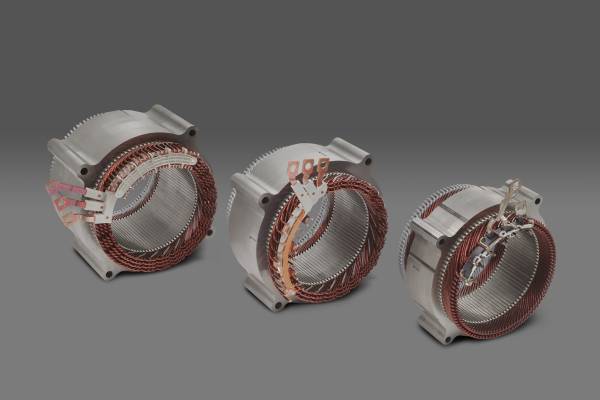
Photo: GM
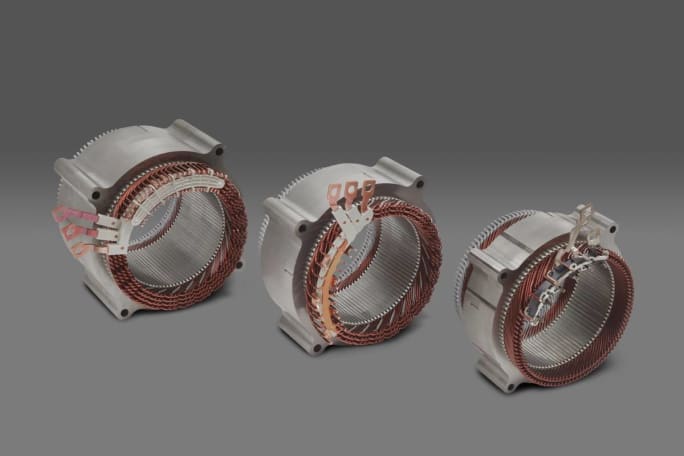
The motors that will power GM’s EVs were built as a scalable family, sharing design principles and similar tooling and manufacturing strategies. Pictured are the stators of all three motors.
Photo: GM
GM has unveiled its group of three all-new motors that will power its Ultium-based EVs. The news came on Sept. 21 and was announced at the 2021 Mackinac Policy Conference.
Designed by GM, the 180-kilowatt front-drive motor, 255-kW rear- and front-drive motor, and 62-kW all-wheel drive assist motor are part of Ultium Drive. All three motors were calibrated in-house for Ultium-based EV performance. The motors were built as a scalable family, sharing design principles as well as similar tooling and manufacturing strategies.
"Twenty years of electric drive system development and more than 100 years of high-volume vehicle engineering are helping GM pivot quickly from conventional vehicles to EVs,” General Motors President Mark Reuss said at the conference. "Our vertical integration in this space, encompassing both hardware and software, helps give us control over our own destiny and a significant competitive advantage."
The 180- and 255-kW units are permanent magnet motors designed with the aim of minimizing reliance on heavy rare earth materials while the 62-kW unit is an induction motor. All are expected to offer excellent torque and power density, enabling a wide spectrum of vehicle types, from performance cars to work trucks.
As many as three electric motors can be used in one EV – variations of the 2022 GMC Hummer EV will feature three separate 255-kW motors, yielding a GM-estimated output of 1,000 horsepower.
Ultium Drive Software Development
GM engineers have also developed the software for Ultium Drive’s motor controllers, which is key to serving the propulsion needs of various vehicle types with a minimal set of components. These engineers, based at GM’s Global Technical Center in Warren, Michigan, Global Propulsion Systems in Pontiac, Michigan; and Milford Proving Ground, are part of the nearly 11,000 GM product development team members currently working in software development. This number is projected to grow with software serving as a critical pillar of GM’s vision of an all-electric future.
The team used computer-assisted and virtual engineering to move quickly, safely and in a cost-effective manner while also improving vehicle controls. Artificial intelligence and machine learning helped determine the most efficient ways to distribute torque in three-motor systems, like in the GMC Hummer EV, allowing the off-road capable vehicle to also drive comfortably on surface streets.
The software behind GM's EV motors can be reused in many applications, providing fast go-to-market times as well as the foundation for future EV expansion, as these motors are versatile enough to provide the power needs for a complete lineup of vehicles.
GM also designed the software of key power electronics components – like the power inverter module or inverter, which converts DC voltage from the battery to AC voltage to power the motor. The Hummer EV’s 0-60 mph acceleration in a GM-estimated approximately three seconds – Watts to Freedom mode2 –is largely due to GM’s electric drive software expertise in addition to its key competencies in motor controls, power electronics, motor design, and development.
The inverter and other power electronics, like the accessory power module and onboard charging module, reside outside of the drive units on GM's current EVs. In Ultium-based vehicles, they will be integrated directly into Ultium Drive units, reducing cost and manufacturing complexity.
Some power electronics will have as much as 50% less mass and volume than today's GM equivalents, with as much as 25% more capability.
GM's all-new EV motors and integrated power electronics, contained within its Ultium Drive units, will debut on the 2022 GMC Hummer EV later this year.
Originally posted on Automotive Fleet
More Suppliers

Slate Debuts Colorful, Unique EV Models
A recent media and client event, studded with electric vehicles dressed up on platforms, planted a new position for the manufacturer in the wider EV market. Fleets will find cost-saving advantages.
Read More →
Slate Electric SUV, Pickup Switchable Model Aims For Light-Duty Fleets
Everything about this EV is counterintuitive and understated, making it stand out from the crowd.
Read More →
Polestar Barred from U.S. Market Under Connected Vehicle Rule
The automaker loses its authorization to sell new vehicles in the U.S., starting with the 2027 model year. Polestar owners will retain access to the brand's service network.
Read More →
Uber, Nuro and Lucid Plan Houston Robotaxi Service in 2027
The tripartite venture brings out the combined advantages of electric vehicles, mobility, and autonomy into ground transportation.
Read More →
Electrify America Opens EV Fast Charging Station in Southern California
The large-format depot features 20 hyper-fast chargers capable of delivering 350 kilowatts and is backed by a powerful battery energy storage system.
Read More →
Inspiration Mobility Acquires Key Electrada Assets
Inspiration Mobility Group has acquired select assets of Electrada, adding the fleet electrification provider's team, technology, and charging infrastructure development capabilities to its energy management business.
Read More →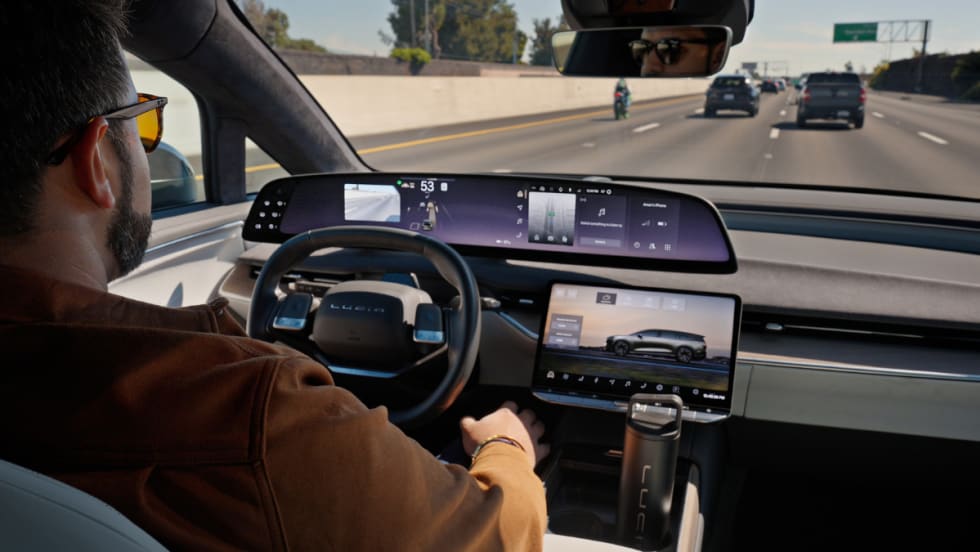
Lucid Adds Hands-Free Highway Driving, Software Updates To Gravity SUV
Hands-free drive assist makes highway driving more comfortable while keeping drivers attentive to the road.
Read More →
Harbinger Creates Hybrid-Electric Unmanned Vehicle Platform for Defense Use
The platform is based on the company's medium-duty plug-in hybrid chassis, which is also used in commercial vehicles.
Read More →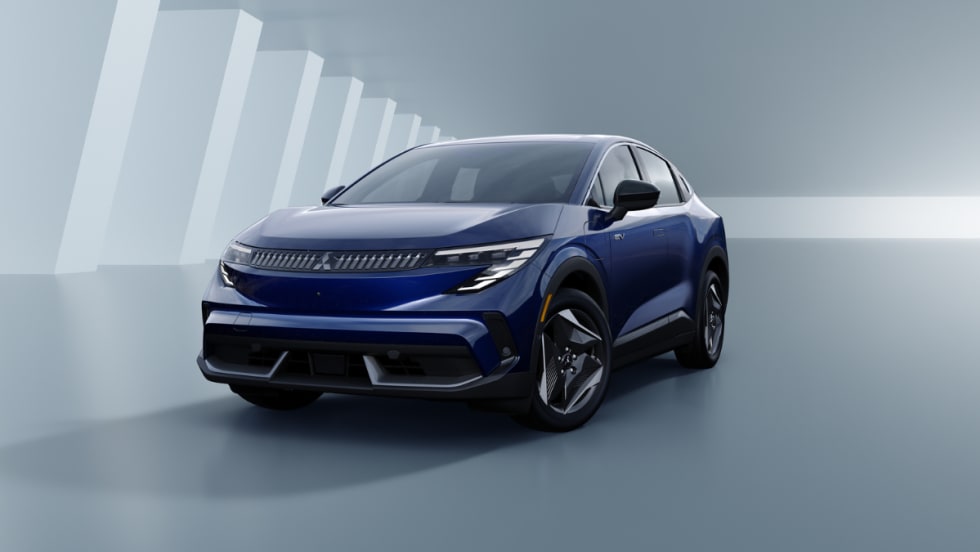
Mitsubishi To Debut All-Electric Eclipse Subcompact For North American Market
The 2027 Mitsubishi Eclipse Sportback is a small SUV that will go on sale by this fall.
Read More →
Stellantis To Build Smaller, Affordable EVs For European Market
Stellantis aims to expand access to urban EV mobility in Europe and address the decline in the smaller-vehicle segment.
Read More →