


What Is the Future of Electric Vehicles in Fleet?
With improvements in battery technology, public interest, and a better understanding of the vehicle technology, the future looks bright for electrified vehicles in fleet.

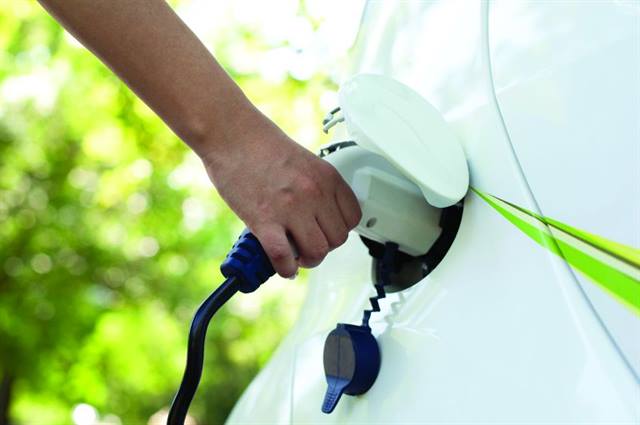
Perhaps no vehicle technology has captured the public’s imagination like the electric car. And, this goes for fleets as well, with companies such as FedEx, Frito-Lay, and Coca-Cola Refreshments in the process of testing or implementing the technology.
While there is still some technological and logistical issues facing fleets that want to go electric, there is one thing for certain, according to Jonna Hamilton, vice president of policy for the Washington, D.C.-based Electrification Coalition, fleets are increasingly adding electric vehicles to their product mix.
“Businesses are going to play a big part in the adoption of electric vehicles, and businesses are doing a lot to move the industry forward,” she said.
Barriers to Adoption
A white paper authored by the Electrification Coalition, a nonpartisan, not-for-profit group of business leaders committed to promoting policies and actions that facilitate the deployment of electric vehicles on a mass scale, noted that plug-in electric and battery-electric vehicles have seen exponentially increasing sales since 2011. In fact, according to data from www.hybridcars.com, June 2013 was the best sales month to date in the history of the nascent electric vehicle market.
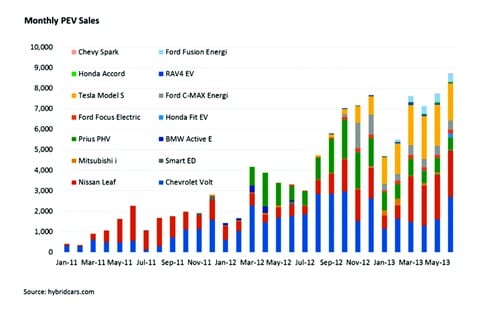
In less than two years, monthly plug-in electric vehicle (PEV) sales have increased from less than 1,000 per month to nearly 10,000, pointing to a healthy future.
However, for fleets operating medium- and heavy-duty vehicles, adoption hasn’t taken off as expected.
Hamilton said that part of the reason has to do with availability of the medium- and heavy-duty electric vehicles.
“A lot of the well-known OEMs in the fleet world are not making these vehicles,” she said. “So, if a fleet operator wants a medium- or heavy-duty electric vehicle, they have to go to a company that they don’t know as well, that they haven’t ordered from before, and they’re probably concerned about quality and reliability. And, I think that is an issue. Not that there is a problem with these smaller manufacturers; it’s a confidence issue.”
The other issue that is causing fleet managers, particularly of medium- and heavy-duty fleets, to pause is what Hamilton describes as the incremental cost of buying electric vehicles — that is the cost of battery technology.
“Incremental costs on some of these vehicles, because they need such large batteries, can be up to 100 percent,” Hamilton explained. “I do think the vehicle manufacturer issue is unique to the medium- and heavy-duty market, but I think the incremental cost is an issue for everybody. Cost is also going to be a problem for your local or municipal fleet that will want to buy or lease a Chevrolet Volt or a Nissan LEAF.”
This may be an issue now, but most likely won’t be in the future as battery technology becomes increasingly less expensive and lighter weight.
“As battery technology gets lighter and cheaper, which it will in the next decade or two, I think commercial and delivery applications will become easier for electric vehicles,” Hamilton noted. “In the meantime, long-haul and trash collection, for instance, are a really great fit for natural gas. In regards to the passenger, light-duty segment, I really do think that electricity is the best alternative fuel right now.”
[PAGEBREAK]
The cost of vehicle battery technology across the board has been falling with Hamilton predicting that it will be about $300 per kilowatt hour by 2020, a 50-percent drop from today’s industry average.
“That’s a significant drop,” Hamilton noted. “The incremental costs will be about half of what they are now, which will be great. We’re seeing technological advances and innovations, and some of the things we saw in the lab a few years ago are starting to make it into products on the market today. We’re also seeing increased energy density, and that’s the key to [making electric vehicles increasingly successful].”
Solving the Infrastructure Question
According to data in the Electrification Coalition white paper, “EV Market Outlook: State of the Plug-In Electric Vehicle Market,” as of June 30, 2013, there were 7,794 U.S. locations with charging stations available to the public.
Most of these (7,519) are Level II stations with a small number of direct current (DC) fast charge stations and Level I stations.
Since most fleets that are using electric vehicles are relying on passenger vehicles that drivers bring home at night, charging infrastructure for employees who live in single-family dwellings isn’t really an issue.
Where it does become an issue are for those drivers who live in dense urban areas, such as Los Angeles or New York City, and medium- and heavy-duty fleets that centrally garage vehicles at the end of the day.
Hamilton said a solution for apartment dwellers could be renting garage spots that have access to vehicle charging or use local DC fast-charging stations, which would limit battery recharging times to a few times a week, replicating a typical gasoline fill up schedule.
For medium- and heavy-duty fleets, the issue is a little more complicated.
“If you want to put a bunch of charging stations in one location, it could get expensive because you may have to upgrade the panel and the transformer,” Hamilton said. “And, if you’re at the end of the line, you may have to pay to upgrade that transformer and that can get pretty expensive in addition to the incremental costs of the vehicle.”
The Necessity of Subsidies
Because of the high incremental costs of acquiring an electric vehicle, government subsidies designed to offset the acquisition cost of the vehicle is a necessity, according to Hamilton.
“Since electric vehicles are competing against gasoline vehicles, which have been around for more than a century, it’s critical that there are subsidies,” Hamilton said.
OEMs can pass subsidies, which can cut incremental costs by as much as 50 percent, until they hit a 200,000-unit sales mark when they begin to be scaled back. Hamilton predicts that, by the time a majority of manufacturers hit these sales volumes, battery technology will have come down enough in price that it will match the subsidized price.
“As battery costs come down, I think the subsidies will be less and less important,” Hamilton said.
Approaching the Tipping Point?
The No. 1 question is: What’s the tipping point for broad implementation in commercial fleets? The answer cuts right to fleets’ bottom line.
“I think the real tipping point is when the total operating costs plus the capital costs balance out in three years or less,” Hamilton said. “I think, if you could get it to a three-year parity over the entire capital cost and operation costs, then you can easily make a business case for the vehicle.”
While Hamilton’s emphasis is on the future of electric transportation, she definitely sees it as one of many viable options open to today’s fleet managers.
“I see areas for broad implementation for electric vehicles, and I see strong areas for other alt fuels as well. I don’t think they’re mutually exclusive,” she said
Originally posted on Automotive Fleet
More Vehicle Research
2027 Lexus NX Moves to Fully Electrified Lineup
For 2027, the NX moves to an entirely electrified lineup, with either hybrid or plug-in hybrid powertrains.
Read More →
2027 Mitsubishi Eclipse Sportback Named Green SUV of the Year
Green Car Journal recognized Mitsubishi’s new battery-electric crossover, which offers NACS compatibility and DC fast charging at up to 150 kW.
Read More →
Dave Carroll Named President of Ford Energy
Carroll succeeds Lisa Drake, who will remain with Ford through Dec. 31 to support the leadership transition.
Read More →
City of Long Beach Named No. 1 Green Fleet of 2026
NAFA's 2026 Green Fleet Awards recognized fleets for sustainability efforts spanning alternative fuels, technology, facilities, workplace culture and fleet operations.
Read More →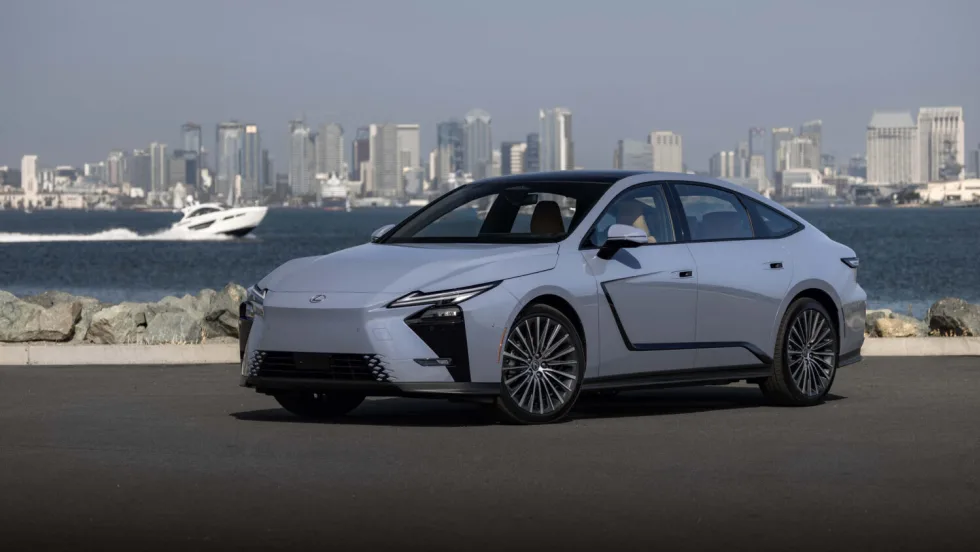
2027 Lexus ES Adds First Battery-Electric Models
The ES 350e and ES 500e join the hybrid ES lineup with up to 338 hp, an EPA-estimated 307 miles of range and standard NACS charging capability.
Read More →
EV Fleet Reality Check: What Operators Wish They Knew Before Electrifying Their Work Vans
Electric work truck upfits bring new compatibility questions. Learn how parts availability, OEM guidance, power demands, and route planning can affect fleet performance.
Read More →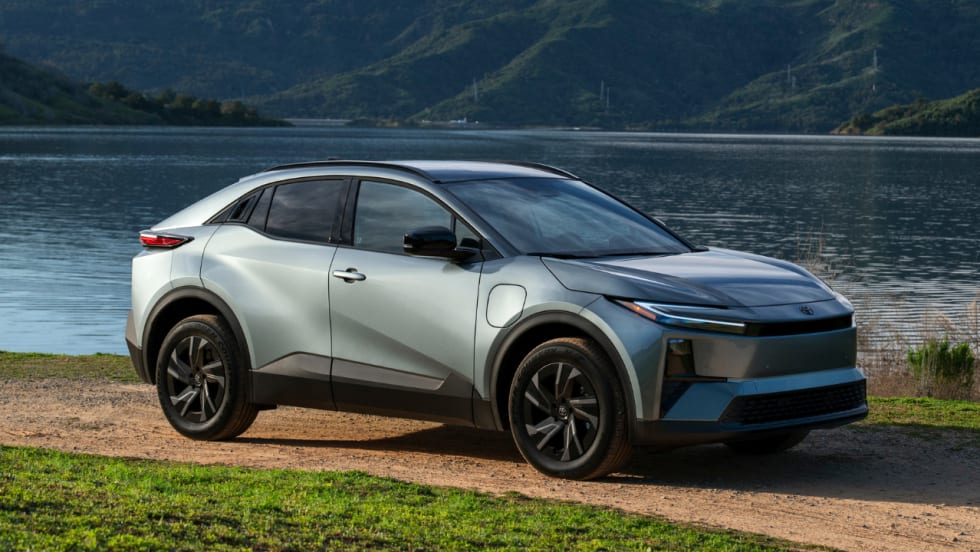
2027 Toyota C-HR Offers 287-Mile Range and Standard AWD
Toyota’s 2027 C-HR brings 287 miles of estimated range, standard all-wheel drive, and NACS fast-charging capability to the compact EV market. See what its mix of performance, cargo space, and everyday technology could offer business users.
Read More →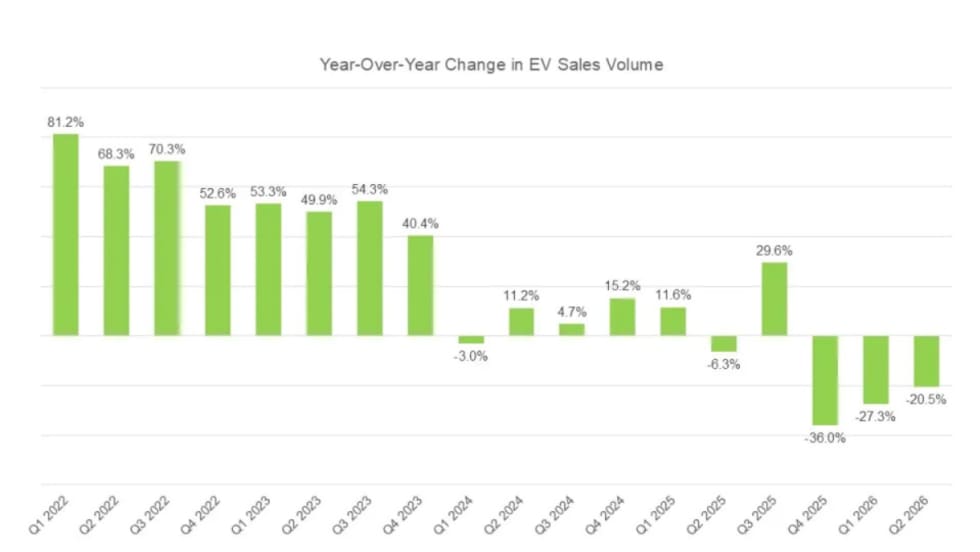
New Vehicle Models Stabilize Electrified Market In Q2
But more credit goes to hybrids than to all-electric vehicles, as more buyers look for fuel-efficient alternatives amid high gas prices.
Read More →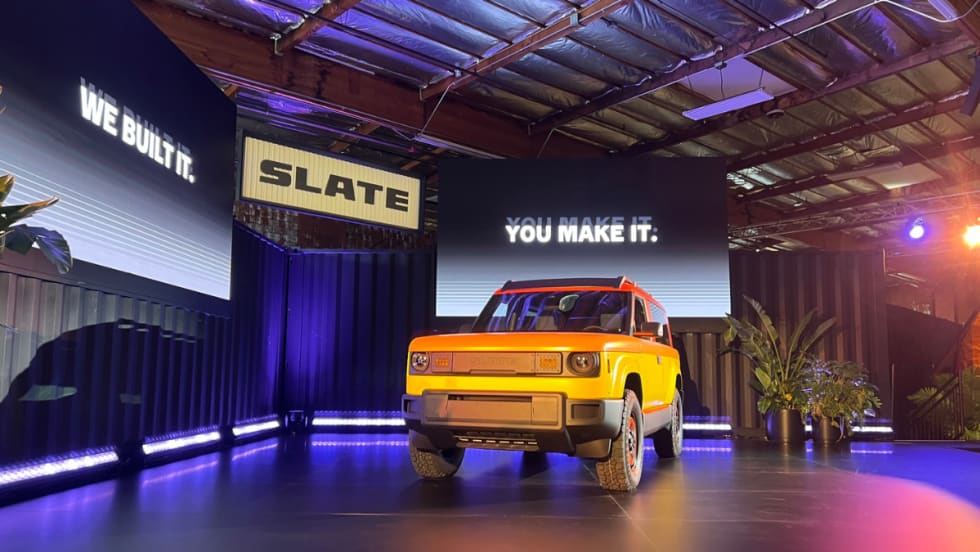
Slate Debuts Colorful, Unique EV Models
A recent media and client event, studded with electric vehicles dressed up on platforms, planted a new position for the manufacturer in the wider EV market. Fleets will find cost-saving advantages.
Read More →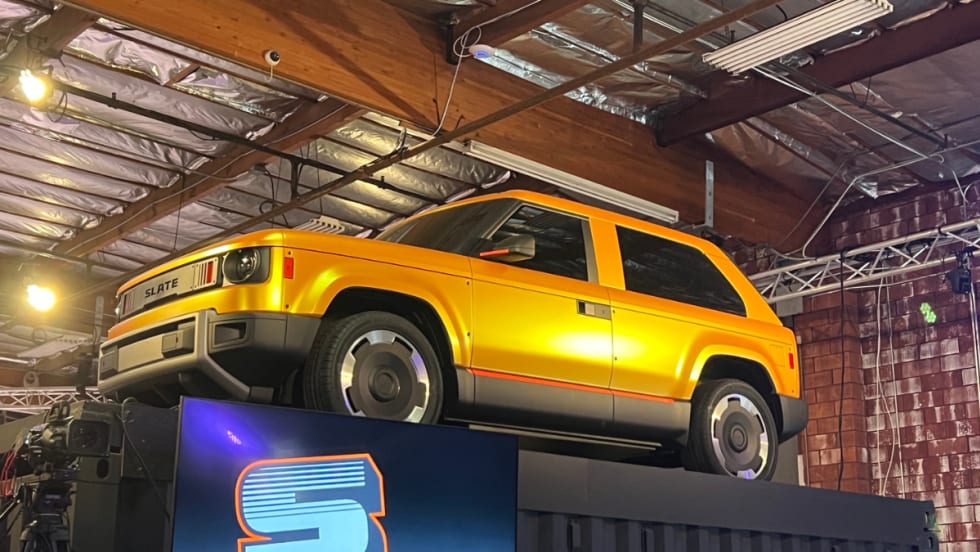
Slate Electric SUV, Pickup Switchable Model Aims For Light-Duty Fleets
Everything about this EV is counterintuitive and understated, making it stand out from the crowd.
Read More →