Uncertainty and Product Availability Constrain Fleet Sustainability Initiatives
Corporate sustainability initiatives continue to be strong, but this strategy is tempered by infrastructure constraints and the limited availability of low- or no-emission OEM-built vehicles capable of fulfilling varied fleet applications.
Corporate sustainability initiatives continue to be a strong trend at many companies, but this desire is tempered by the limited product availability of low- or no-emission vehicles that are capable of fulfilling a wide cross-section of fleet applications.
Automotive Fleet surveyed a wide cross-section of fleet managers and suppliers on the topic of fleet sustainability and here are some of the challenges and opportunities they cited.
Ad Loading...
“The internal combustion engine has historically been the most cost-effective engine, and with low fuel prices the total cost of ownership model is very strong,” said Tim Cengel, manager, manufacturer relations for Wheels. “Manufacturer incentives are also stronger on gasoline and diesel models in comparison to electric or hybrid. Much of this is due to a lack of demand for hybrid and electric vehicles causing the OEMs to produce limited quantities.”
At a Glance
There are six key factors that are driving fleet sustainability programs:
Stakeholder pressure.
Corporate social responsibility.
Difficulty in developing a long-term fleet acquisition strategy.
Limited green alternatives with medium- and heavy-duty trucks.
Limited charging infrastructure keeps range anxiety a concern.
Taking sustainability beyond the vehicle that incorporates fleet facilities.
What is catching the attention of many has been the onslaught of future product announcements from OEMs on increased hybrids and battery-electric vehicles (BEV), with several OEMs stating that every model in their product lineup will have either a hybrid or BEV counterpart.
In addition, a growing number of multinational companies have committed to become carbon neutral or go all electric in the next five to 10 years. Many U.S. fleets are being asked by their European-headquartered parent company to conform to corporate sustainability targets.
One example is the EV100 initiative, which is a global business initiative designed to fast-track the uptake of electric vehicles and infrastructure.
One fleet manager whose corporation has made a commitment to increase the number of EVs in fleet operation is struggling to meet corporate targets.
Ad Loading...
“It is a challenge to find an affordable means of introducing more electric and hybrid vehicles types into current fleet profile,” said the fleet manager who wished to remain anonymous.
One difficulty with a global sustainability program is to align governmental mandates with OEM product availability.
“There is a big lack of coordination between what a government makes mandatory and what manufacturers can actually produce,” said Ralf Wessel, manager global security, global fleet and corporate facilities at AGCO Corp. “Many countries seem to go their own way.”
Recent announcements by different automakers about future product plans indicate that there will be a wide availability of alternative-fuel powertrain options. “Manufacturers are moving their businesses to more ecological and more electric solutions so fleet managers (and their companies) will soon no longer be able to use the manufacturers lack of product as a rationale for fossil fuel vehicles anymore; and costs will climb. Product will be there and fleet will need to understand how to choose the right solution,” said Michael Bieger, global director of fleet for ADP.
Implementation of alt-fuel vehicles in nationally dispersed fleets will be challenging due to regional variances.
Ad Loading...
“If you get past the budget concerns, policy issues surface particularly if you are considering implementation of EVs,” said Sheri Hardesty, global fleet fleet leader at Jones Lang LaSalle (JLL).“We are entering uncharted territory. How do you charge employees for their personal consumption of electricity in their EV or reimburse them for charging at home or elsewhere? If your company is really progressive and implements workplace charging stations how do you allocate or align their usage?”
A sustainability program requires in-depth planning to meet the company’s long-term goals.
“As more efficient fleet vehicles are moving from the ‘far’ to the ‘near’ picture, are companies analyzing key variables, such as cost, productivity, and reputation, to make the best decision/strategy regarding sustainability?” asks Joe Stergios, strategy and business development manager for Enterprise Fleet Management. “And, to help them make those assessments, do their fleet management partners offer fleet emission reports and potential projections based on fleet models?”
The No. 1 stumbling block for fleets is uncertainty as to which alternative fuels will prevail and which will fade away. “The challenge is determining the best road to sustainability. This is a broad category, and encompasses a number of challenges for fleet managers. It goes beyond just making the right choices from a fleet perspective, but more than many other issues, challenges fleet managers to respond to executive inquiries, stay on top of latest technology, and separating the ‘want to have,” from the reasonable alternatives,” said Matt Betz, vice president of fleet channels for SambaSafety.
This concern was echoed by one fleet manager of a Fortune 50 company, who wished to remain anonymous. “We are not implementing long-term sustainability solutions because we need to allow for change in electrification and autonomous vehicle technology. There are financial risks to be ahead of the curve.”
Ad Loading...
Stakeholder Pressure
Many companies, especially those that are publicly held, are experiencing pressure from stakeholders to reduce CO2 emission and increase fuel economy standards for the company vehicles they operate.
“For those customers looking to reduce CO2 and increase fuel economy, moving to a hybrid vehicle may make sense,” said Cengel of Wheels. “We also have customers who are receiving pressure from stakeholders to begin offering all-electric vehicles in their fleets. All-electric vehicles bring additional cost and challenges with charging and infrastructure. Drivers that bring their vehicles home may also need expensive charging stations installed in their homes.”
Limited Green Alternatives with Medium- and Heavy-Duty Trucks
Many fleets operate a mix of light, medium-, and heavy-duty vehicles. The fleet as a whole is judged on its sustainability, but many products do not offer a “green” alternative.
“One challenge has been getting the OEMs to provide ‘green’ vehicles in medium/heavy duty range,” said Jim Bigelow, director, enterprise fleet for Cox Enterprises. “It is a challenge in getting them to understand that this lack of product availability is hindering us from meeting our ‘green’ goals.”
Corporate Social Responsibility
Fleet plays an important role in maintaining good corporate citizenship. Clearly aligning a fleet policy with the corporate sustainability strategy is a requirement. Governmental regulations, employee and client perceptions of a company’s attitude toward the environment are driving fleets to move quicker than the budgets or fleet policies are prepared for.
Ad Loading...
“Fleets must consider more eco-friendly vehicles when procuring new vehicles and incorporate reduced emissions and fuel consumption into the overall fleet strategy, but this requires alignment with policy and budget owners who may be less interested in sustainability,” said Hardesty of JLL. “If your company provides workplace charging to attract and retain progressive employees or to enhance a company’s image or gain points toward LEED certification, the facilities team may be responsible for the installation of the stations, but ultimately the fleet manager will need to deal with challenges of utilization.”
Sustainability Beyond the Vehicle
Fleets that operated in-house maintenance facilities are incorporating them into their corporate sustainability programs. One example is Cox Enterprises. “We are ‘greening’ all of our shops,” said Bigelow. “This includes all aspects of our fleet from ‘cradle to grave.’ For example, we are working with OEMs and upfitters to manufacture/build a ‘greener’ vehicle/upfit, which includes all components of the assembly.”
Long-Term Impact of Electric Vehicles
“Companies need to be prepared to look at the long-term benefits of electric vehicles instead of the upfront cost of the lease. EVs may cost more initially, but can turn out to be very beneficial to them — and the environment — in the long term. Only time will tell exactly how the EV landscape changes the industry, but companies need to be prepared for it regardless,” said Carolyn Edwards, SVP, client success for LeasePlan USA.
Difficulty in Developing a Long-Term Fleet Acquisition Strategy
“Clean air regulations and programs like the ZEV mandate that has migrated from California to nine other states are making it very difficult to build a long-term strategy for fleet acquisition. Not knowing for certain which states are going to require which propulsion systems or when they are going to require them is a real challenge, particularly for long-life vehicles,” said Dave Meisel, executive VP - operations for Quanta Services.
Many fleet managers cite uncertainty as to what is the best path to take and reluctance to making the wrong decision. “For example, what power choices (gasoline, diesel, propane, or CNG) do I spec for my fleet given the fact that when it is time to take the vehicle out of operation some or all those power choices may be out of favor and will be like trying to sell a ‘horse and buggy,’ ” said Ed Burke, general manager at VIP Truck Center in Livonia, Mich.
Ad Loading...
All fleet managers say that alternative-fuel vehicle selection is very difficult, even as more alternative-fuel vehicles are offered every year. The reason for the difficulty is that the entry price points are still higher than the gasoline comparable model. “The company wants fleet to demonstrate a favorable ROI of alternative-fuel vehicles, when comparing them to their gasoline comparable. This is very difficult to do with the premium entry-level price charged for alternative-fuel vehicle, which creates a price gap between the two,” said another fleet manager who wished to be unnamed.
Limited Charging Infrastructure Keeps Range Anxiety Alive
“The fueling infrastructure for electric, natural gas and hydrogen based propulsion systems are not expanding at the pace of the current vehicle sales, even though some states are mandating these new fuel types. It’s just a matter of time before this becomes a big problem,” said Meisel of Quanta Services.
This concern was echoed by another fleet manager. “Electric vehicles are becoming more common but the infrastructure and range anxiety make it difficult for fleets,” said one fleet manager who wished to be anonymous.
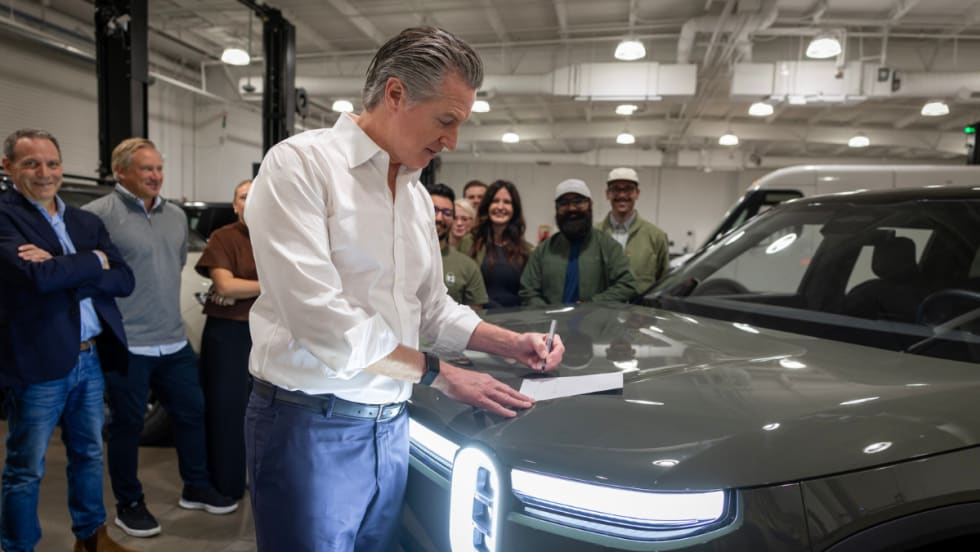
That instant rebate is the centerpiece of a broader $600 million package Governor Newsom signed into law, keeping California active in the global clean transportation race.
Recent announcements from two automakers underscore a significant shift in the electric vehicle market, driven by EV losses and changing strategies. [VIDEO}
Season 2 Episode 1 of The Off-Peak premieres as the electric vehicle market no longer benefits from federal tax credits that expired at the end of Q3 2024. What does this mean for the future appeal of EVs?
The EV industry entered a new more nuanced phase defined by realities and practical outcomes after a few years of grand visions, media hype, and bold investments.
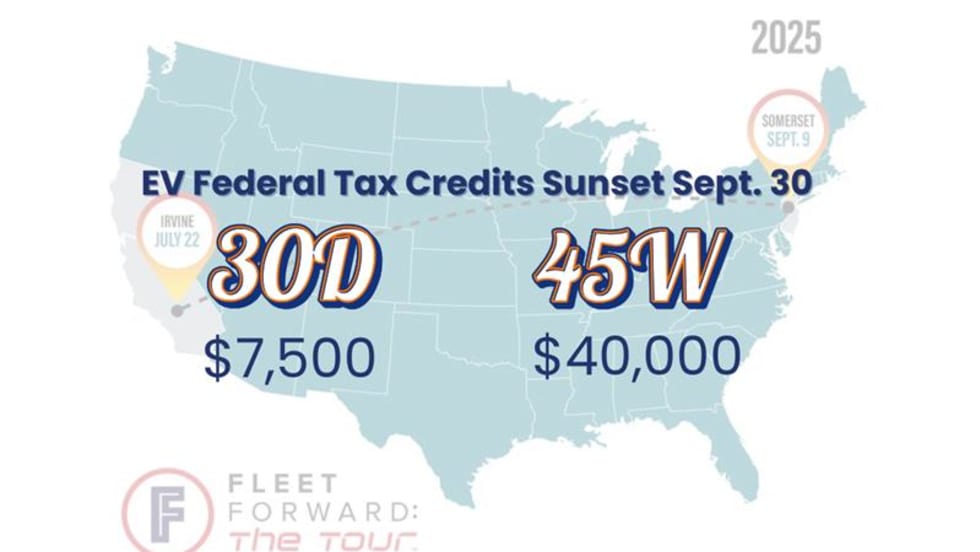
Fleet managers in the Northeast will have a timely opportunity to take action on electric vehicle purchases at the upcoming Fleet Forward Tour stop in Somerset, NJ, on Sept. 9.
Speakers and experts at Fleet Forward: The Tour shared hands-on, hard-won insights on how fleet operations are handling tariffs, EV charging, rules and regs, and safety issues.