



Learn More: Managing EV Battery Health for Greater Uptime
True Costs and Hidden Considerations of Maintaining EVs
Electric vehicles can save on fleet maintenance over ICE vehicles. But the electronic complexities of EVs need to be considered when formulating an EV fleet maintenance program.
February 28, 2023
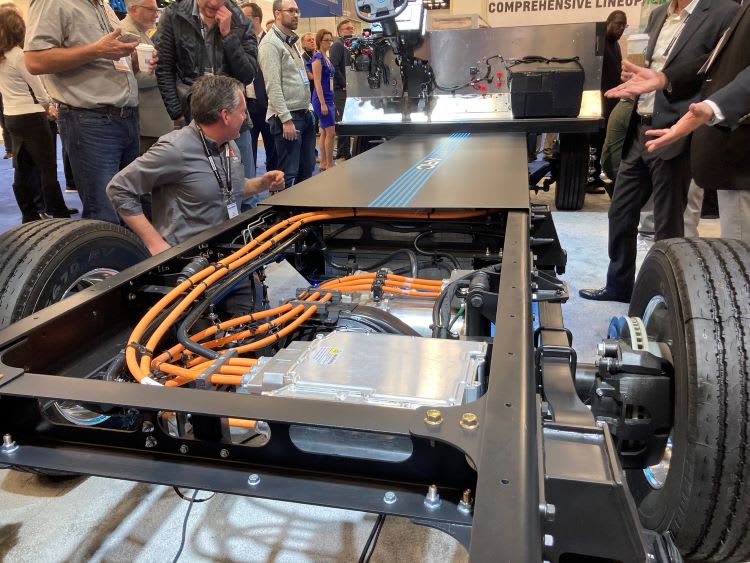
EVs contain a significantly higher number of electronic control modules that have wiring, sensors, and connectors. How will these components fare in the real world of ice, mud, and salt on the road?
Photo: Chris Brown
8 min to read
If you’re considering fleeting EVs, you’ve no doubt been told that they can save considerable expense on maintenance compared to ICE vehicles — by as much as 30% to 40%, or more. Does this assumption hold up in the real world?
As EVs are still relatively new, especially in fleets, there isn’t yet an aggregate of empirical data to confidently measure actual percentage of savings. However, we’ll break down the mechanical differences and components of EVs to explore costs directionally, which will give you a better understanding of how to budget and plan for maintenance when you start fleeting EVs.
Scheduled Maintenance for EVs
The EV maintenance cost analysis centers on EVs having fewer moving parts than an ICE vehicle. Without transmissions or engines, EVs operate on a battery and an electric motor to turn the wheels. As such, they don't need radiators, fuel injectors, spark plugs, oxygen sensors, gas tanks, exhaust systems, or valve trains.
Also, due to regenerative braking caused by the electric motor slowing down the vehicle, EV brakes don't need to be changed as often. This not only mitigates wear part expense but would also elongate the schedule to replace the brake fluid.
With EVs, “Preventive maintenance checks and services will become quicker to perform and intervals will be able to be extended,” says Kevin Clark, senior vice president of shop operations for Cox Automotive Mobility. “For instance, fleets will no longer need to schedule their PM intervals around engine oil life. For that matter, and likely obvious to point out, the technicians will no longer need to complete an oil and filter change.”
However, EV tires will cost more, as the added weight and extra torque of an EV will cause greater and quicker tire wear. Tire rotation intervals will be more frequent.
Aside from the noted maintenance differences, you’ll still need to maintain EVs’ and ICE vehicles’ common componentry, such as the HVAC system, 12v battery, wiper blades, headlights, taillights, and interior bulbs. Of course, refer to the owner’s manual for your specific EV model for the recommended scheduled maintenance.
The U.S. Office Of Energy Efficiency and Renewable Energy (EERE) has data in a diagram that compares scheduled maintenance costs by component and wear part for light-duty ICE vehicles, battery-electric vehicles (BEVs), hybrid-electric vehicles (HEVs), and plug-in hybrid-electric vehicles (PHEVs).
The diagram calculates scheduled maintenance costs for ICE vehicles at an average of 10.1 cents per mile, while EVs average 6.1 cents per mile. At least on paper, the savings of 39.6% corresponds to the general assumption range.
Let’s now compare a light-duty ICE vehicle and an EV that equally travel 20,000 miles per year in a typical fleet scenario. Using EERE’s figures, the annual service and repair costs for the ICE vehicle come out to $2,020. The EV’s yearly cost would be $1,220, equaling a savings of $800 per year for the EV.
This equation doesn’t factor in the benefits from greater uptime and more productive hours for your revenue-generating assets. However, the calculations also don’t consider that EVs — “computers on wheels” — are far more complex than their ICE counterparts.
EV Battery Maintenance
A primary added complexity is found in the high-voltage battery, the most expensive component of an EV. John Ellis, EV fleet consultant and former truck fleet owner, highlights the importance of battery maintenance.
Ellis points out that OEM warranties on EV batteries gives fleets peace of mind. As one example, Ford warranties the high-voltage battery on its EV models against excessive capacity loss for eight years or 100,000 miles. For EVs in Class 4-6, the battery warranties average four to six years.
Gradual battery capacity loss is expected and is considered normal wear and tear. Yet under the warranty period, there are levels of capacity loss considered excessive, provided the battery was not damaged due to improper care or vehicle storage. In Ford’s case, if an EV-certified Ford dealer determines that the battery capacity is less than 70% of the battery’s beginning-of-life capacity or less than 65% for vehicles in cutaway or chassis cab configuration, the owner may have a warranty claim.
Ford states that scheduled maintenance for a Ford E-Transit will be 40% less than a gas-powered Transit over eight years and 100,000 miles — though that doesn’t consider the unknown of costs outside of the battery warranty period.
As a rough benchmark, a study published in 2020 by telematics provider Geotab found that the average fail rate of an EV battery in a fleet is 1.5% in the first five years and 2.5% in the first 10 years.
According to Ellis, post-warranty battery health diagnostics will determine if the battery can be remanufactured. In that case, the repair cost would average about 40% of the cost of a new battery.
If the battery is unrepairable, it can be sold into a second life at around 30% of its original value, depending on its health. Or it can be recycled for its precious metals — lithium, cobalt, and nickel — with an estimated recoupment of 15% of asset value.
More EV Complexities
Bob Brauer, chief commercial officer of Amerit Fleet Solutions, concurs that elimination of fossil-based lubricants will result in substantial savings. But he digs deeper into electronic complexities of EVs that need to be considered in an EV fleet maintenance program.
ECMs: EVs contain a significantly higher number of electronic control modules that have wiring, sensors, and connectors. How will these components fare in the real world of ice, mud, and salt on the road?
Coolant: Another area to consider is the amount of coolant required to keep all the electronic components warm in winter and cool in summer, he says. In some cases, larger equipment can require over 30 gallons of coolant, which will need to be checked or replaced at periodic intervals by trained technicians.
AC systems: In EVs the air conditioning systems are much more robust than in ICE vehicles, which is needed to maintain the temperature of electronic component temperatures. The same AC and air compressor systems will require periodic replacement of lubricants.
Tires: “Tire costs are likely to be more than double on EVs, until tire OEMs figure out how to handle the increased torque that EVs have,” Brauer says. “Recently, we have seen fleets replacing tires every 10,000 miles, as compared to 40,000 to 50,000 miles on an ICE vehicle.”
Tooling: For fleets running their own maintenance shops, specialized tooling will be another new cost, Brauer says.
For example, there is a wide range of required tools for just replacing the battery, ranging from specialized lifts and carriers to electronic tools to balance battery cells. “Budgeting for these new tools is a factor all fleet managers will have to manage as they adopt EVs,” he says.
Real-World Tesla Maintenance Feedback
Jason Kennedy can attest to EV’s lower maintenance costs firsthand. He has been renting EVs — only Teslas — since 2018 through his company Gateway Auto Holdings, Inc. in Los Angeles. His older units are pushing 70,000 to 90,000 miles yet haven’t experienced typical heavy-use issues that come with ICE vehicles, such as worn ball joints and suspension system problems.
Foregoing lube, oil, and filter changes is driving real savings on routine maintenance, and just as important is the reduction in out-of-service time. In terms of fluids, “I add washer fluid, that’s it,” Kennedy says.
Kennedy does confirm higher tire expense, particularly on his rear-wheel drive Tesla models. He estimates he’s paying 50% more for tires than if he were running ICE vehicles. As such, maintaining air pressure in EV tires is even more important. His brilliant idea for Tesla and other public charging providers: Why not put an air compressor next to the public chargers?
Kennedy has realized other savings on his EVs over ICE vehicles.
Since 2018, he has needed to complete only one brake job, on a Model X that had 86,000 miles. However, that one repair was more expensive than it would’ve been for a comparable ICE vehicle. While brake jobs can cost about $600 for an average passenger vehicle, the Tesla job cost $2,500. One factor is that Tesla mechanics won’t “turn” rotors — machine them to remove brake material to prevent warping — instead they require that they’re replaced.
The fact that EVs are “computers on wheels” creates side benefits that enhance the user experience. For a $1,600 surcharge, Kennedy updated the computers and displays on his 2016 Model S and Model X units. That seems expensive; however, the user interface was upgraded to 2022 standards with 4G technology and the latest apps such as Netflix and Tik Tok. While that was a hardware replacement, over-the-air updates will fix other issues and upgrade systems without downtime.
When ICE vehicles hit certain mileage bands, it makes sense to consider de-fleeting them as average maintenance costs spike. With EVs, these constraints are minimized. Kennedy expects to run his Teslas longer. Though if the market is right, he’ll sell to maximize on depreciation.
TCO Bottom Line
Battery maintenance is evolving as a discipline and has come a long way since Geotab’s study. With better technology and increased use of EVs in fleets, we’ll be keen to see if those percentages improve or worsen.
Maintenance costs are just one component, though an important one, in the total cost of ownership (TCO) equation for EVs. “In my experience, I've seen maintenance and repair be over 30% of the cost of operating a fleet, and even more as they age,” says Ellis.
Savings on energy versus diesel or gas, increased uptime, and new tax credits under the Inflation Reduction Act will also contribute to savings. “The EV transition may be a very significant relief to a fleet operation's bottom line and grow more substantial as the EV vehicle ages,” he says. “Only time will tell for certain.”
Originally posted on Automotive Fleet
Subscribe to Our Newsletter
More Electric Vehicles
EV Charging Use Is Outpacing Infrastructure Growth
ChargePoint’s 2026 Charging Forward Report points to rising charger use, higher-powered charging, commercial vehicle electrification, and energy-management technology. Here’s what fleets should know.
Read More →
EV Realty Names Henrik Holland President as Charging Platform Expands
The former Prologis Mobility and Shell executive will help expand EV Realty’s truck charging business and move its power-first infrastructure model into autonomous vehicle depots and other fleet sectors.
Read More →
GreenPower Expands New Mexico EV Pilot With Larger Buses, V2G Testing
After logging more than 17,000 electric miles in the first year, New Mexico’s statewide pilot is moving into its second phase with larger vehicles, continued charging evaluations, and more.
Read More →
Can EV-as-a-Service Help Fleets Scale Electrification?
Sustainability Partners CEO Adam Cain explains how matching EVs, charging infrastructure, and duty cycles can help fleets scale electrification.
Read More →
How EV-as-a-Service Is Moving Fleets Beyond Pilots
Adam Cain, president and CEO of Sustainability Partners, explains how EV-as-a-service can help fleets scale deployments by addressing duty-cycle requirements and charging challenges.
Read More →
PowerFlex, The Mobility House Join Forces to Advance Fleet Electrification
Two EV charging providers are joining forces to deliver a broader portfolio of energy management and fleet electrification solutions.
Read More →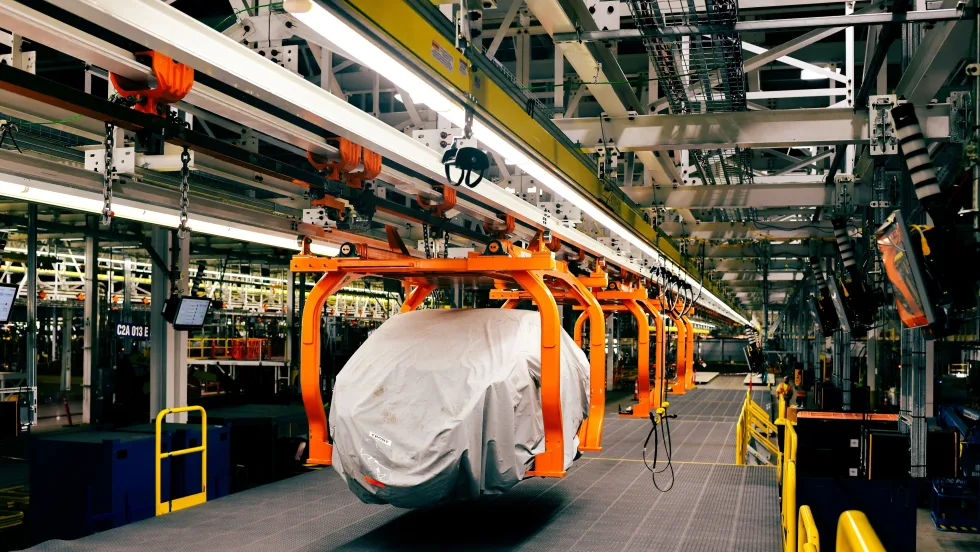
Ford Retools Louisville Plant for Fathom Electric Truck Production
Ford's $2 billion Louisville Assembly Plant overhaul introduces a three-part assembly process for the Fathom midsize electric truck, with production scheduled to begin in 2027.
Read More →
Merchants Fleet Reports 290M EV Miles as Fleets Navigate Changing Electrification Market
From millions in operating savings to hundreds of millions of EV miles, Merchants Fleet’s latest report reveals what’s working and what’s changing in fleet electrification.
Read More →
California District Commits to Electrify 25% of School Bus Fleet by 2028
One of the nation's largest school bus electrification projects to date demonstrates how grants, charging infrastructure, and public-private partnerships can help fleets transition to EVs at scale.
Read More →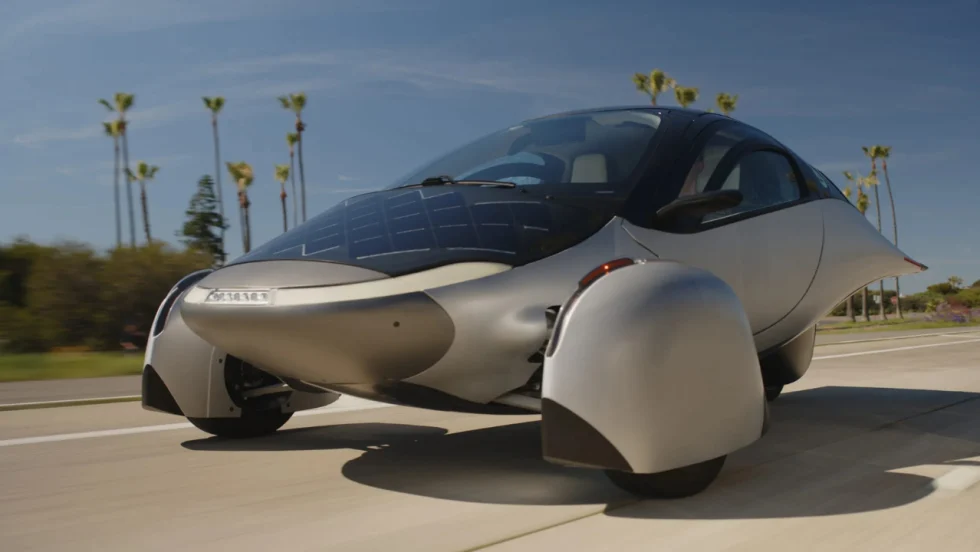
Aptera Orders Bodies and Chassis for Its First 40 Production Vehicles
Aptera Motors Corp. has issued purchase orders for the major structural components of its first 40 vehicles, and body and chassis components are expected to begin arriving in October.
Read More →