


Truck Telematics: Beyond Asset Tracking
Most fleet managers know telematics is great for asset tracking, but there are many other underutilized components of a telematics solution that could be saving fleet managers time and money.


While a telematics solution can produce a lot of data, it can also help integrate various systems for more streamlined information gathering and reporting. (Photo: Getty Images)

While a telematics solution can produce a lot of data, it can also help integrate various systems for more streamlined information gathering and reporting. (Photo: Getty Images)
Telematics solutions are more than simply asset tracking and there are many underutilized aspects of telematics solutions, which broadly fall into three main categories: the vehicle, driver, and data.
The Vehicle
Starting with the vehicle, fleet managers have been underutilizing the predictive analytics aspect of their solutions.
“The most important solution fleets should be considering right now is an advanced predictive analytics tool to help interpret the data telematics solutions return. At the end of the day, telematics solutions without data analytics to assist in trending, predicting, and engaging will result in outcomes that have very minimal impact on how a fleet operates. Impacting the budget and the bottom line without these tools is even more challenging. Aggregating telematics data with vehicle lifecycle data, operational data, and historical business data opens up tremendous opportunities to find operational efficiencies,” said Tony Candeloro, vice president, Product Development and CIS for ARI.
The fuel management aspect of telematics programs is also being underutilized.
“Fuel management is the No. 1 opportunity for fleet managers today, which is a combination of driver behaviors that may need adjustment. Correcting this behavior before fuel prices climb is important to mitigate the impact to future fleet costs. Additionally, vehicle idling adds wear-and-tear to the engine that doesn’t show up on the odometer, which is another important aspect of monitoring vehicle idling and potentially avoiding a downtime event,” said Bob Clark, manager of Commercial Motor Vehicle Compliance and Telematics for Wheels.
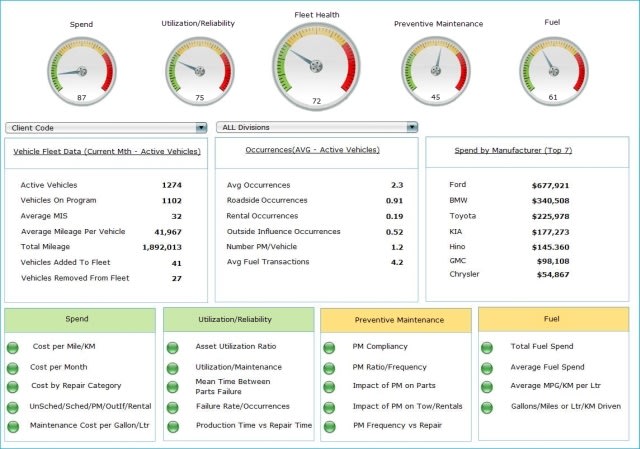
With instant fleet tracking and extensive analytic capabilities available at your fingertips, ARI can help you harness the data you already have to uncover efficiency gaps and problem areas, maximizing the power of your entire fleet. (Image: ARI)
Beyond vehicle wear-and-tear, telematics is useful for identifying fuel inefficiencies and further identifying training needs.
“Fuel is the second largest expense for fleets, only second to payroll. This can be especially problematic for vocational fleets as they carry large loads and frequently stop and go, burning massive amounts of fuel. Telematics can be used to track fuel inefficiencies and show vocational fleet managers where they should provide extra training for drivers to avoid these bad habits,” said Nathan Todd, director of product management at Teletrac Navman.
In addition, there is the underutilized maintenance aspect to telematics.
“All fleets have access to the check engine light information of a vehicle in any standard telematics program, but most do not utilize this data either through integration with their fleet management company or monitoring on their own. By responding quickly to this type of event, a fleet can prevent a vehicle from being stuck on the side of the road and/or reduce the severity of the costs associated with the necessary repair,” said Kimberly Clark, telematics leader for Element Fleet Management.
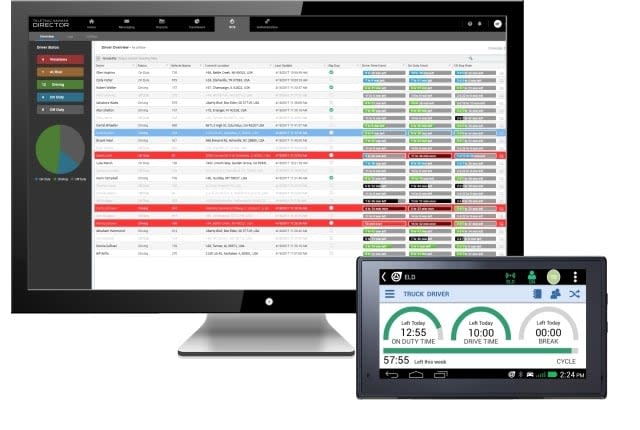
From cross-country trucking hauls to local construction projects, Teletrac Navman provides the data to stay on schedule, reduce costs, and put your team and vehicles to work every day. (Image: Teletrac Navman)
Beyond response to real-time needs, telematics can help with scheduled maintenance needs.
“Scheduling maintenance is another area that can produce cost savings within fleets. Through regular monitoring of assets, fleet managers can proactively schedule maintenance when it’s needed, allowing fleets to improve asset uptime and decrease associated costs,” said Scott Sutarik, associate VP, commercial vehicle services for Geotab.
Finally, telematics can be utilized for alerting fleet managers to maintenance, beyond scheduled needs.
“Tracking a maintenance schedule digitally is much more efficient than logging on paper, thanks to the incredible amount of data available in real time. This results in less vehicle downtime, a higher resale value, and fewer repair costs in the future. Telematics can also be used in this capacity to ensure vocational fleet owners are not over- or under-maintaining trucks and equipment, both of which incur unnecessary costs. Without using telematics to adhere to a maintenance schedule and alert when it is time to service a vehicle, vocational fleet owners often deal with bills worth hundreds of dollars — an unfortunate situation that, even more unfortunately, is easily preventable,” said Todd of Teletrac Navman.
According to said Dain Giesie, assistant vice president for Enterprise Fleet Management, knowing the actual odometer reading leads to improved execution of preventive maintenance.
“Telematics also enables fleets to predict maintenance failure even before it occurs — engine codes often appear before the driver notices a problem,” Giesie added.
Additionally, telematics can be utilized to increase vehicle utilization and streamline planning.
“Another area of focus is asset utilization, which is a vehicle productivity measure. Telematics can provide insight into how many vehicles are utilized on a daily basis and for how long, which can identify locations that have too many vehicles or those with not enough based on the business demand,” said Clark of Wheels.
Route optimization and planning can also benefit from telematics usage.
“The data gathered through Telematics can be used to optimize routes and dispatch schedule. This can help create many efficiencies throughout the day that saves time, work hours, and ultimately money,” said Dan Shive, vice president, Risk Management Services for LeasePlan USA.
Fleet managers may believe their routes are optimized based on years of use, but things change and telematics can help a fleet analyze if it is doing the best it can.
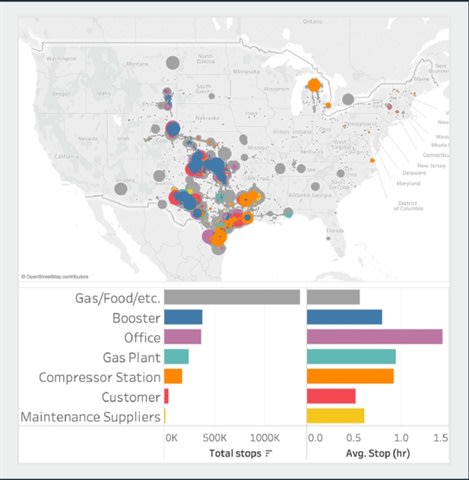
Our end-to-end approach starts with our expert truck telematics consultants, who partner with you to identify meaningful improvement metrics before recommending an optimal product solution. (Image: Element)
“Many fleets have internal methods for route planning, which range from fully manual to simple algorithms but they have typically had these systems in place for 10-plus years and have not evaluated and utilized the latest technology to better assist in both re-allocating and re-sequencing jobs to reduce overall mileage and increase the number of jobs/stops completed per day,” said Clark of Element.
The Driver
As for the driver, telematics has been severely underutilized in accident management and crash avoidance.
“For light-duty trucks and vans, automated crash detection and accident reconstruction systems enable fleet managers to fully automate key steps in the claims process and alleviate the business impact of vehicle accidents. New products coming to market provide fleet managers with an automated detailed analysis of a collision and predictive auto physical damage to expedite the claims process, accelerate the path for getting a damaged vehicle back into the field, and combat the potential for fraud. This allows fleet managers to know the moment their vehicle has been in an accident as well as extensive analysis for incident reports and can automatically provide a bill of materials report for repairs,” said Nikit Pandey, product manager at CalAmp.
To help increase driver safety and reduce accidents, telematics can be utilized to track and monitor driving behavior.
“Fleets see significant improvements in reducing inefficient or unsafe behaviors through proactive feedback systems. Drivers are able to understand what they are doing incorrectly or not within policy while driving in the moment, which helps a driver recognize both good and poor driving habits. Examples include in-cab buzzers/voice systems, mobile applications focused on gamification, and coaching drivers on behavior results,” said Clark of Element.
While tracking asset location is a crucial component of a telematics solution, experts agree that the safety of a fleet is largely dependent on driver performance.
“Fleets should ensure that monitoring tools are in place to track driver behavior like speeding, harsh braking, aggressive acceleration, and cell phone usage, which is a growing concern. This type of monitoring allows fleet managers to pinpoint which drivers are performing well and which need additional coaching or training,” said Will Yarbrough, sales manager at Fleetio.
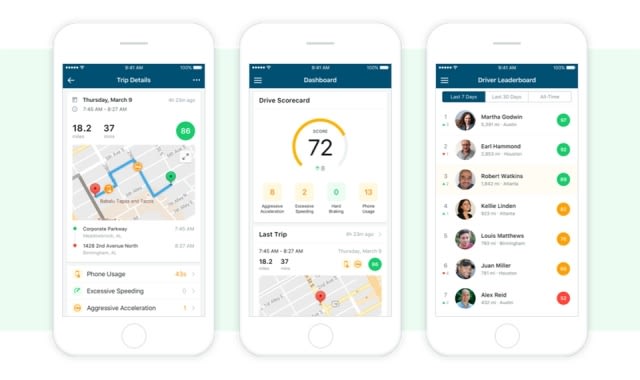
Fleets produce a lot of data, much of it siloed or offline. Fleetio aims to be the system of record for fleets, giving them a place to easily track everything. (Image: Fleetio)
Employee productivity is another key area that can be addressed through the integration of telematics data with other internal systems.
“This includes such systems as a CRM tool to manage customer visits by the salesforce to ensure they are spending appropriate amounts of time with the client based on the revenue potential,” said Clark of Wheels.
Beyond accident management and reduction efforts, real-time driver behavior feedback can play a crucial role in providing automated and timely coaching to drivers.
“This type of real-time notification can come in many different forms, from buzzers and audio notifications to visual dashboards on an in-cab tablet. Many forward-thinking fleets are taking that one step further and adding a gamification aspect to driver behavior and providing incentives for higher performing or better drivers across the fleet. Regardless of how it is implemented, what real-time driver feedback does is provide on-the-spot coaching to help improve overall driver safety,” said Pandey of CalAmp.
Sutarik of Geotab also recommended utilization of a gamificaion approach.
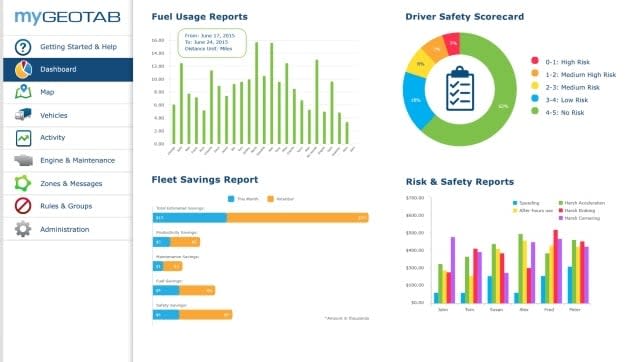
Geotab's solutions can help transform your fleet at a lower price point and starts tracking as soon as you begin driving as well as provides accident notification and detection. (Image: Geotab)
“Implementing gamification applications or scorecards to track driver behavior can help motivate drivers. Adding prizes or recognition creates an environment of healthy, friendly competition and further promotes safer driving, leading to an overall safer fleet,” Sutarik added.
Telematics also provides fleet managers with more overall control over in-vehicle technology use by drivers.
“We see many fleets putting in measures to combat distracted driving. Many fleet managers are moving towards automatically locking down certain connectivity aspects for tablets and smartphones given specific thresholds. For example, with connectivity between the telematics device and the in-cab tablet, the tablet can sense when the car is in motion and lock down certain features such as web searching and texting or only enable voice-initiated commands. This provides fleet managers with an added layer of protection knowing that their drivers have one less variable to be distracted by when on the road,” said Pandey of CalAmp.
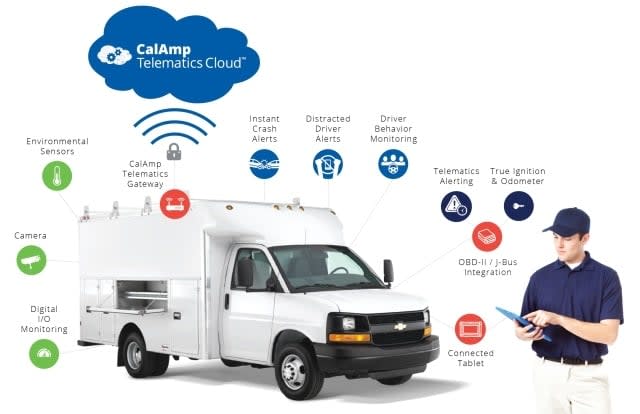
With a comprehensive suite of industrial-grade transportation solutions, CalAmp delivers all you need to manage jobs, drivers, vehicles, costs and high-value assets—from your desk or mobile device. And we make it easy. (Image: CalAmp)
Continuing with the connectivity thread, telematics also allows greater connectivity between drivers and dispatchers.
“On a jobsite, connectivity is the single most important aspect in driving business priorities. Many telematics solutions offer this through extensive integrations with other software providers to connect various tools and applications on one platform, within a single view. Not only does this give dispatchers, compliance officers, fleet managers, and maintenance service professionals a way to find greater efficiencies in vehicles and overall workflow, it also eliminates the need to manage multiple logins. Telematics solutions help vocational truck fleet managers connect and make sense of disparate sets of activity and data across different channels on a single interface, giving them a single view of a jobsite,” said Todd of Teletrac Navman.
The Data
When it comes to data, one of the biggest fleet manager complaints is data overload. Utilizing a telematics solution to centralize and maintain fleet data can help.
“The most effective business software allows for deep integration between systems, and fleet telematics software is no different. Since fleet management is comprised of so many moving parts, it’s vital for fleet data and information to be streamlined. Telematics software should automatically send crucial information such as GPS location, odometer readings, and vehicle alerts to fleet maintenance tools to keep asset and driver information up to date. This keeps everyone touching the fleet aware and accountable,” said Yarbrough of Fleetio.
Additionally, platform solutions are not being utilized.
“Too many fleets are still considering the telematics solution as a standalone application, as opposed to a part of a larger integrated solution for everything mobile in their operations (referred to as Mobile Resource Management - MRM). Vocational fleet managers need to seek a solution that has integrated planning, dispatching, mobile applications, electronic forms, and navigation with the telematics system in one platform. Due to the consolidation of the telematics industry, it is getting easier to choose one MRM provider that provides all necessary components,” said Kelly Frey, VP of Product Marketing for Telogis.
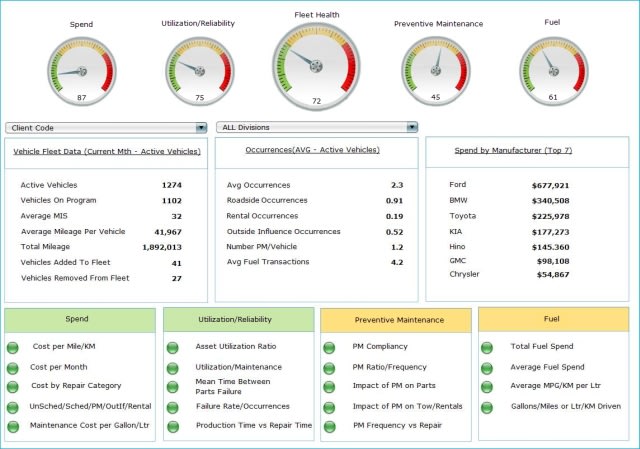
With instant fleet tracking and extensive analytic capabilities available at your fingertips, ARI can help you harness the data you already have to uncover efficiency gaps and problem areas, maximizing the power of your entire fleet. (Image: ARI)
In addition, telematics can help with data collection and paperwork related to regulatory compliance concerns.
“While there are many components of compliance, a key item we see as an area that leads to cost savings for vocational fleets is active power take-off (PTO) monitoring. By accounting for PTO usage versus driving, fleets can lower IFTA costs while improving asset utilization. It can also help flag unnecessary idle time or prolonged usage that can be better optimized to create a more efficient fleet,” said Sutarik of Geotab.
Telematics allows for easier reporting to federal (FMCSA) and state authorities on hours-of-service (HOS) and electronic logging device (ELD) mandates as well as daily vehicle inspection reports (DVIR).
“HOS, ELD, and DVIR regulations will be fully in place by 2018. Telematics makes it easy to capture and report these measurements. The IRS is starting to crack down on the accuracy of business versus personal mileage use. The only way to ensure accuracy is electronic capture by a telematics device,” said Giesie of Enterprise.
Additionally, many fleets are still not enabling the driver by leveraging the telematics devices with mobile applications to make their day more productive and safer.
“Applications such as an intuitive and telematics integrated electronic DVIR, which fills in the current odometer and automates the back-office reporting to maintenance and the compliance officer should a vehicle defect be found. The DVIR can be configured for each vehicle type, so they are sure to conduct a thorough inspection optimized for that particular vehicle. This makes it simpler to be compliant and ensures potential safety issues are identified, while reducing manual data entry and potential for errors or roadside compliance hassles,” said Frey of Telogis.
And, remember, regulatory mandate deadlines are fast approaching.
“Customers with ELD requirements are underutilizing this tool. They should care because that’s an FMCSA ruling that is effective December 2017. The clock is ticking and implementation, depending on the complexity of the organization, can take anywhere from three to six months,” said Shive of LeasePlan.
Originally posted on Work Truck Online
More Suppliers

Slate Debuts Colorful, Unique EV Models
A recent media and client event, studded with electric vehicles dressed up on platforms, planted a new position for the manufacturer in the wider EV market. Fleets will find cost-saving advantages.
Read More →
Slate Electric SUV, Pickup Switchable Model Aims For Light-Duty Fleets
Everything about this EV is counterintuitive and understated, making it stand out from the crowd.
Read More →
Polestar Barred from U.S. Market Under Connected Vehicle Rule
The automaker loses its authorization to sell new vehicles in the U.S., starting with the 2027 model year. Polestar owners will retain access to the brand's service network.
Read More →
Uber, Nuro and Lucid Plan Houston Robotaxi Service in 2027
The tripartite venture brings out the combined advantages of electric vehicles, mobility, and autonomy into ground transportation.
Read More →
Electrify America Opens EV Fast Charging Station in Southern California
The large-format depot features 20 hyper-fast chargers capable of delivering 350 kilowatts and is backed by a powerful battery energy storage system.
Read More →
Inspiration Mobility Acquires Key Electrada Assets
Inspiration Mobility Group has acquired select assets of Electrada, adding the fleet electrification provider's team, technology, and charging infrastructure development capabilities to its energy management business.
Read More →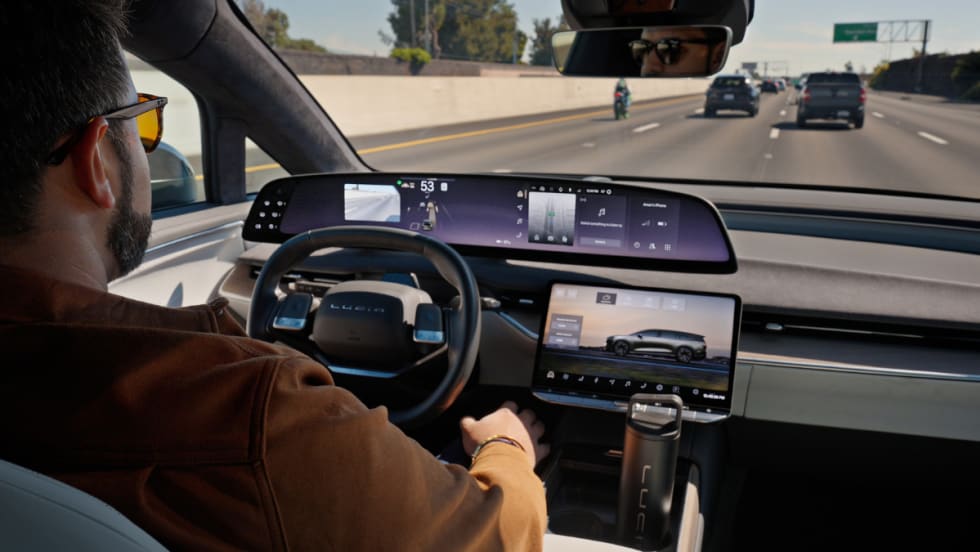
Lucid Adds Hands-Free Highway Driving, Software Updates To Gravity SUV
Hands-free drive assist makes highway driving more comfortable while keeping drivers attentive to the road.
Read More →
Harbinger Creates Hybrid-Electric Unmanned Vehicle Platform for Defense Use
The platform is based on the company's medium-duty plug-in hybrid chassis, which is also used in commercial vehicles.
Read More →
Mitsubishi To Debut All-Electric Eclipse Subcompact For North American Market
The 2027 Mitsubishi Eclipse Sportback is a small SUV that will go on sale by this fall.
Read More →
Stellantis To Build Smaller, Affordable EVs For European Market
Stellantis aims to expand access to urban EV mobility in Europe and address the decline in the smaller-vehicle segment.
Read More →