


The Future of EVs Is Less Predictable
Timelines for electric vehicle adoption remain uncertain as more challenges play into their evolution, an automotive expert says.


Electric vehicles, now the most hotly debated issue for the automotive remarketing industry, are going through a deceleration, said Steven Greenfield, the CEO of Automotive Ventures and an informal “futurist” for the vehicle remarketing industry. He spoke on Aug. 21 at the Automotive Remarketing Alliance’s annual Summer Roundtable conference near Dallas.
Photo: Martin Romjue / Bobit
Unlike in most previous waves of economic innovation, the U.S. does not appear to be leading the transition to electric vehicles, as consumers are either avoiding or delaying purchasing them and sales remain “choppy,” an automotive analyst and author told a conference of vehicle remarketers last month.
Electric vehicles, now the most hotly debated issue for the automotive remarketing industry, are going through a deceleration, said Steven, Greenfield, the CEO of Automotive Ventures and an informal “futurist” for the vehicle remarketing industry. He spoke on Aug. 21 at the Automotive Remarketing Alliance’s annual Summer Roundtable conference near Dallas.
“There are different markets around the world where penetration is accelerating forward, but in the U.S. for many reasons and despite a lot of top-down stimulus, we are finding that the early adopters have bought their EVs, and because of negative press, EV adoption among consumers has slowed down.”
In the U.S. market, demand for plug-in hybrids has strongly outpaced that of EVs. When looking at global EV sales, growth has been inconsistent, or “choppy,” Greenfield said. He predicted that electrified vehicles, including hybrids and plug-in hybrids, will reach 50% of the market in 2030. One quarter of Ford F-150 pick-up trucks, the most popular vehicle in the U.S., are hybrids.
“We're living through a downturn in terms of global electric vehicle demand,” Greenfield said. “I believe 50 years from now we'll look back at an internal combustion engine (ICE) vehicle like a rotary phone. Kids of the future will look back and say, ‘They were inefficient, they were polluting,’ etc.”
To close the gap, EVs will need more charging infrastructure. “With cars of the future, there'll be inductive charging whether you're driving or whether you're parking over a spot. We won't be plugging cars in. They'll automatically get charged, like putting your iPhone on an inductive cradle today.”
Greenfield foresees “two generations from now” a ground transportation world where EVs are automatically charged in short periods with ranges of 1,000 miles.
“Some of the headwinds we're facing today with resistance around range anxiety and charging infrastructure will change very quickly and be seamless to the consumer. EVs will supplant ICE vehicles.”
China May Lead the EV Future
Remarketers need to watch EV events in China, Greenfield advised. While the U.S. has dominated repeated waves of economic innovation since the Industrial Revolution, China has positioned itself to dominate the next major wave in clean energy, electric vehicles, and artificial intelligence.
“China can do this because they're top down. They call themselves a democracy, but they're not a democracy. They can play an entirely different game than we can in the U.S., where we vacillate between two parties every four to eight years. They can have a 100-year view on how they want to dominate certain industries.”
Fifteen years ago, China made a strategic bet about garnering EV inputs and battery producing capabilities such as mining, extraction, and production of minerals needed for EV lithium batteries, Greenfield said. China has nine of the top 10 battery producers worldwide.
“You can see what they've done over a 15- or 20-year period, driving predominant market share in many of these categories. This is not a good thing. And I struggle with what the right answer is.”
Greenfield referenced the question of whether the U.S. should levy tariffs on EV imports as China aggressively dominates the global market for EVs by moving its production into other tariff-free countries such as Brazil.
“I think that we can protect ourselves and isolate ourselves, but we're conceding the rest of the world to China and their cheap, high quality EVs at a time, ironically, that if we let them into our country, consumers in the U.S. would benefit from cheap, high quality EVs.”
That raises the question of whether U.S. automakers would consolidate to share research and development and factories to become more competitive, Greenfield said.
“We will see how this all plays out. But it would be easy for all of us to say China is a problem far away. We should all be staying abreast of China, especially as it takes more market share around EVs. I'm conflicted, because I don't know if erecting these big barriers to protect legacy automakers and union workers is the right thing to do. I think it's a temporary fix.”
Valuing Used EVs Poses Problems
Meanwhile, EVs have a depreciation challenge thanks to Tesla CEO Elon Musk cutting new model prices in 2022, which hurt EV owners and major fleet consignors like Hertz.
“When these rental car companies don't want to take any EVs into inventory because they worry about the portfolio value,” it hurts the overall market and transition to EVs, he said.
While this challenge will stabilize over time, the rapid advance of EV technologies bringing longer ranges and shorter charge times will disrupt the market in the near term.
“You're going to look at a three- or four-year old EV and the consumers might think it’s not attractive because of newer EVs with better charging properties and a longer range,” Greenfield said.
“Although innovation is the best thing to drive more adoption for EVs, I think it will continue to put negative pressure on used EVs.”
EVs Not Always a Maintenance Saver
One plus point of EVs is fewer repairs because of fewer moving parts. That means longer service intervals, he said. “At the same time, cars are getting much more complex with more technology in these vehicles overall.”
Repairs become more costly because of all the electronic equipment and sensors in vehicle parts that must be recalibrated.
Will the OEMs allow the Jiffy Lubes of the world and the independent repair shops to get access to the telematics data in these cars? Will it not matter anyway if the average technician will not have the skills or tools to work on these cars?
“You look under these cars and you don't even know where to start to work on them,” he said. “The specialized tools and skill sets needed will block any independent repair shop from having the sophistication to be able to work on these vehicles.”
Another factor is the higher cost of EVs in addition to more expense repairs, Greenfield said. “Electric cars are much more expensive on a per repair basis because of parts availability. We haven't yet figured out how to replace modules within batteries, so you have to replace the entire battery pack, and it can be 40% to 50% of the entire cost of a new vehicle.
OEMs are under intense pressure to save on vehicle production costs but haven’t planned out how those savings will affect the aftermarket in terms of repairability and the insurance rates EV owners will pay because the vehicles are becoming more sophisticated, he added.
While AI may be used to design new parts that will be lighter with more rigidity and flexibility, the uncertain costs likely will be higher. “The car itself will be an awesome technological feat, but trying to repair them will be almost impossible. This juxtaposition of trying to drive costs out of the production line has huge implications on repairability and insurance costs down the road.”
Greenfield cited CPI inflation statistics showing inflation rising at high levels for vehicle insurance, transportation services, and motor vehicle repair. “What's happening is car insurance in general is inflated, and for EVs, consumers are wrestling with their EV insurance being higher than for a comparable ICE vehicle.”
More Electric Vehicles
EV Charging Use Is Outpacing Infrastructure Growth
ChargePoint’s 2026 Charging Forward Report points to rising charger use, higher-powered charging, commercial vehicle electrification, and energy-management technology. Here’s what fleets should know.
Read More →
EV Realty Names Henrik Holland President as Charging Platform Expands
The former Prologis Mobility and Shell executive will help expand EV Realty’s truck charging business and move its power-first infrastructure model into autonomous vehicle depots and other fleet sectors.
Read More →
GreenPower Expands New Mexico EV Pilot With Larger Buses, V2G Testing
After logging more than 17,000 electric miles in the first year, New Mexico’s statewide pilot is moving into its second phase with larger vehicles, continued charging evaluations, and more.
Read More →
Can EV-as-a-Service Help Fleets Scale Electrification?
Sustainability Partners CEO Adam Cain explains how matching EVs, charging infrastructure, and duty cycles can help fleets scale electrification.
Read More →
How EV-as-a-Service Is Moving Fleets Beyond Pilots
Adam Cain, president and CEO of Sustainability Partners, explains how EV-as-a-service can help fleets scale deployments by addressing duty-cycle requirements and charging challenges.
Read More →
PowerFlex, The Mobility House Join Forces to Advance Fleet Electrification
Two EV charging providers are joining forces to deliver a broader portfolio of energy management and fleet electrification solutions.
Read More →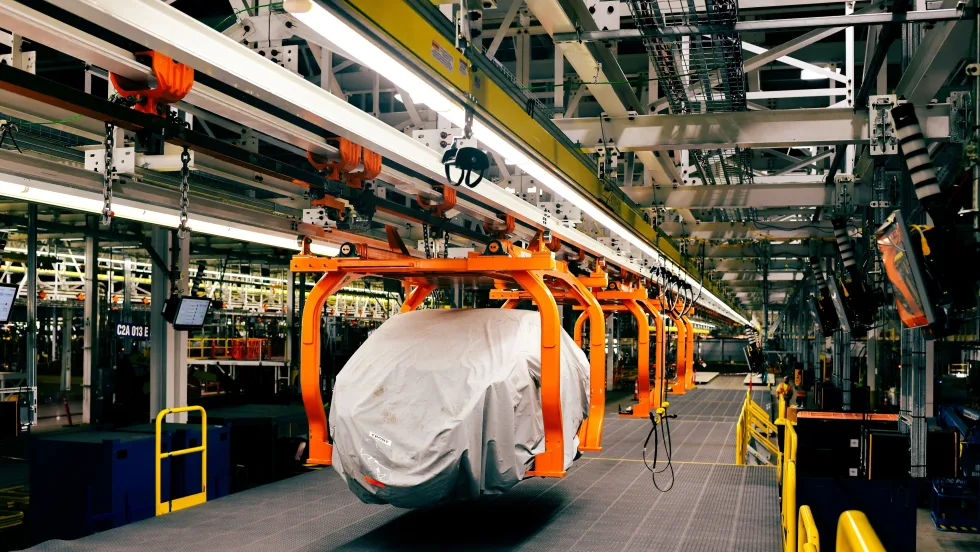
Ford Retools Louisville Plant for Fathom Electric Truck Production
Ford's $2 billion Louisville Assembly Plant overhaul introduces a three-part assembly process for the Fathom midsize electric truck, with production scheduled to begin in 2027.
Read More →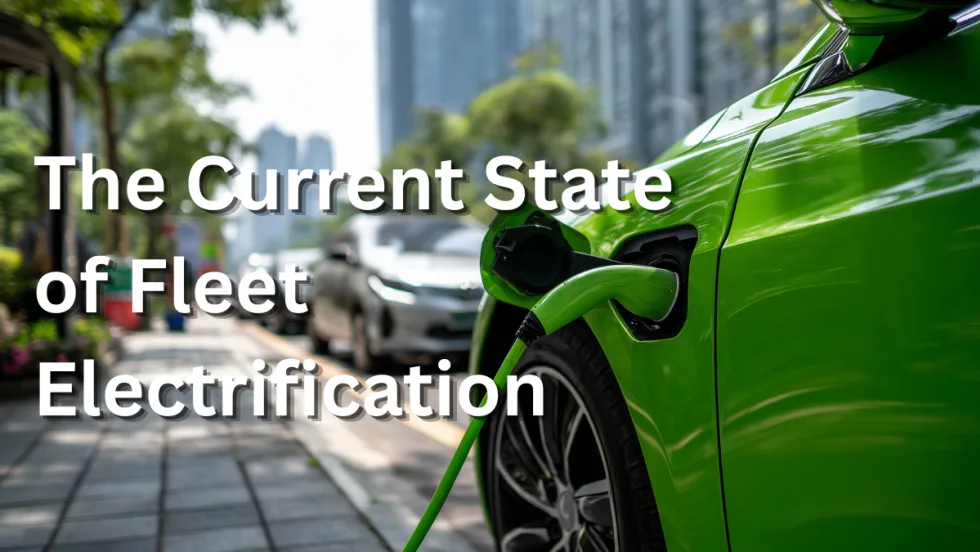
Merchants Fleet Reports 290M EV Miles as Fleets Navigate Changing Electrification Market
From millions in operating savings to hundreds of millions of EV miles, Merchants Fleet’s latest report reveals what’s working and what’s changing in fleet electrification.
Read More →
California District Commits to Electrify 25% of School Bus Fleet by 2028
One of the nation's largest school bus electrification projects to date demonstrates how grants, charging infrastructure, and public-private partnerships can help fleets transition to EVs at scale.
Read More →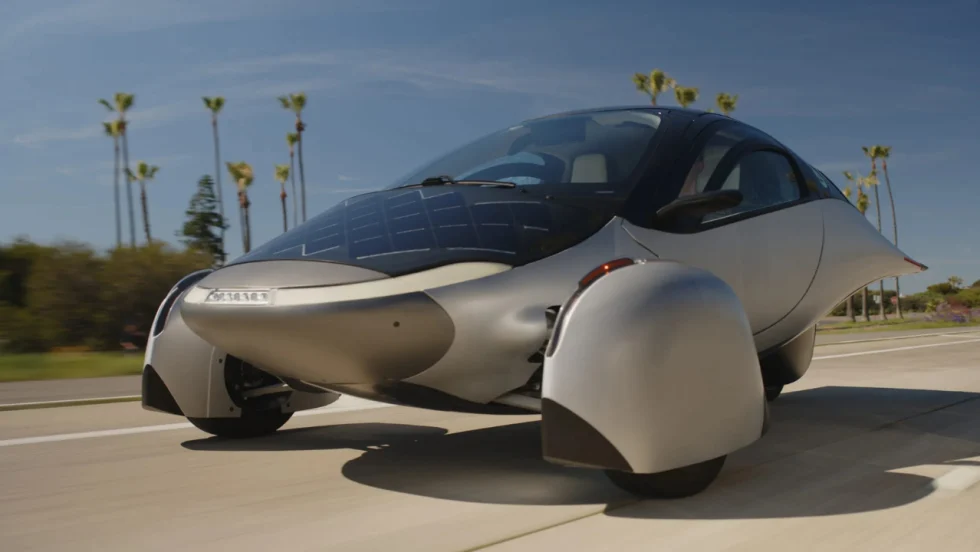
Aptera Orders Bodies and Chassis for Its First 40 Production Vehicles
Aptera Motors Corp. has issued purchase orders for the major structural components of its first 40 vehicles, and body and chassis components are expected to begin arriving in October.
Read More →