


Purolator Courier Goes 'Green' with New Electric Delivery Vehicle
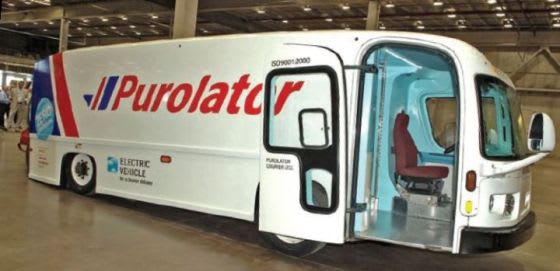
Urban package delivery routes usually include lots of stops and starts, but require relatively little long-range driving. Purolator Courier is developing the Quicksider EV, an electric green solution.

Contrary to popular belief, urban package delivery vehicles spend more time parked while making deliveries or doing pickups than they actually spend on the road. As it turns out, the average delivery vehicle only travels 23 miles a day. Purolator Courier’s new electric vehicle (EV), the Quicksider, fits this kind of driving.
While operating, Purolator’s Quicksider EV is a zero-emission vehicle. Emissions associated with charging its battery are expected to be fewer than 20 percent of those produced by a conventional diesel-powered, curbside delivery vehicle. The Quicksider EV will be tested and evaluated for performance on the streets of Toronto.
Preliminary design work on the Quicksider EV began at Toronto-based Unicell Limited in 2000. In 2003, Purolator joined the development team to provide key insights and recommendations to make the electric vehicle more effective for use in a courier environment.
After analyzing courier routes and terminal operations with Purolator drivers, managers, and engineers, Unicell enhanced its original designs with features to help maximize efficiency in delivery operations.
Drivetrain systems manufacturer ArvinMeritor joined the project team in 2004 to design and build the electric axle drivetrain, regenerative braking system, and system integration of motors, gears, and controls for a working prototype vehicle. The Transportation Development Centre of Transport Canada has also supported the project throughout its development.
High Features, Low Maintenance
The Purolator Quicksider EV combines several operation-enhancing features, including automatic doors, a tight turning radius, and a pneumatic suspension enabling the truck to kneel to curb level to unload packages. With its advanced electric drivetrain, the Quicksider EV is expected to require less maintenance than a conventional diesel-powered curbside delivery vehicle.
The 16-ft. fiberglass-bodied van is built on a stainless-steel chassis and uses a sodium nickel chloride battery that provides a 40-mile range and top speed of 65 mph. Cargo capacity is 10-percent more than a conventional 16-ft. step van. The electric motors in the powertrain deliver a combined 230 hp and are currently powered by a sodium nickel chloride battery pack. Another partner in the program, Electrovaya, is working on a lithium-ion battery pack for testing in the Quicksider EV.
With one-piece body aerodynamics, the van shows half the drag of conventional delivery vehicles, a feature that leads to greater mileage. In fact, during the testing, (traditionally performed by taking a vehicle up to 37 mph, placing it in neutral, and measuring the distance before it stops), officials had to double the length of the testing area to get results.
In addition to the Quicksider EVprototype, Purolator added 30 new hybrid-electric vehicles (HEVs) to its curbside delivery fleet across Canada, with 28 in Vancouver, one in Ottawa, and one in Montreal. The vehicles join Purolator’s national green fleet, which includes 19 HEVs and one fuel-cell hybrid electric vehicle, in service in Toronto since 2005. WT
Originally posted on Automotive Fleet
More Vehicle Research
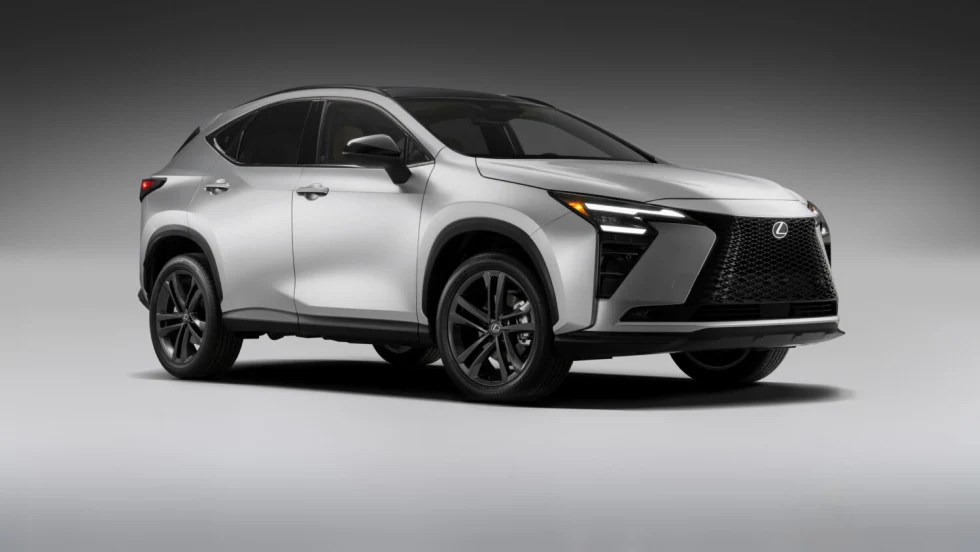
2027 Lexus NX Moves to Fully Electrified Lineup
For 2027, the NX moves to an entirely electrified lineup, with either hybrid or plug-in hybrid powertrains.
Read More →
2027 Mitsubishi Eclipse Sportback Named Green SUV of the Year
Green Car Journal recognized Mitsubishi’s new battery-electric crossover, which offers NACS compatibility and DC fast charging at up to 150 kW.
Read More →
Dave Carroll Named President of Ford Energy
Carroll succeeds Lisa Drake, who will remain with Ford through Dec. 31 to support the leadership transition.
Read More →
City of Long Beach Named No. 1 Green Fleet of 2026
NAFA's 2026 Green Fleet Awards recognized fleets for sustainability efforts spanning alternative fuels, technology, facilities, workplace culture and fleet operations.
Read More →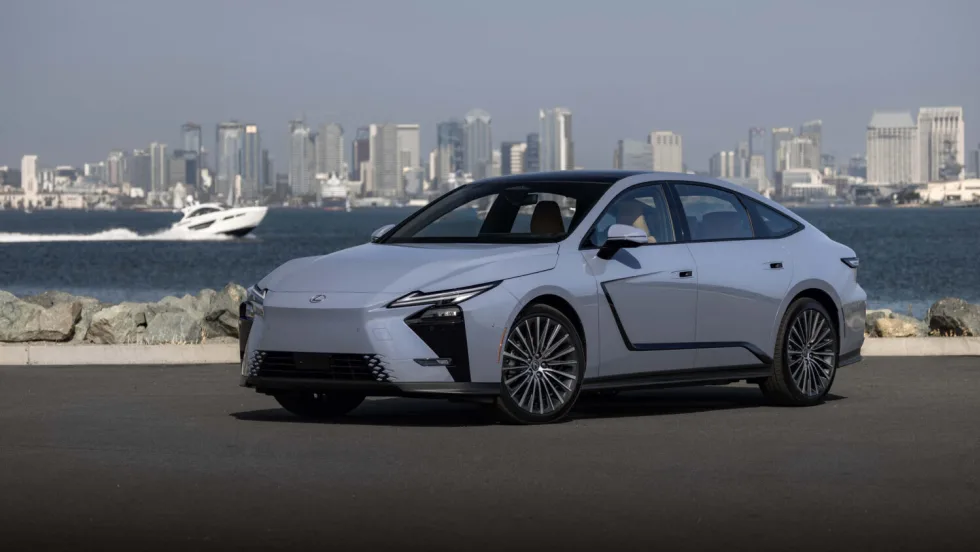
2027 Lexus ES Adds First Battery-Electric Models
The ES 350e and ES 500e join the hybrid ES lineup with up to 338 hp, an EPA-estimated 307 miles of range and standard NACS charging capability.
Read More →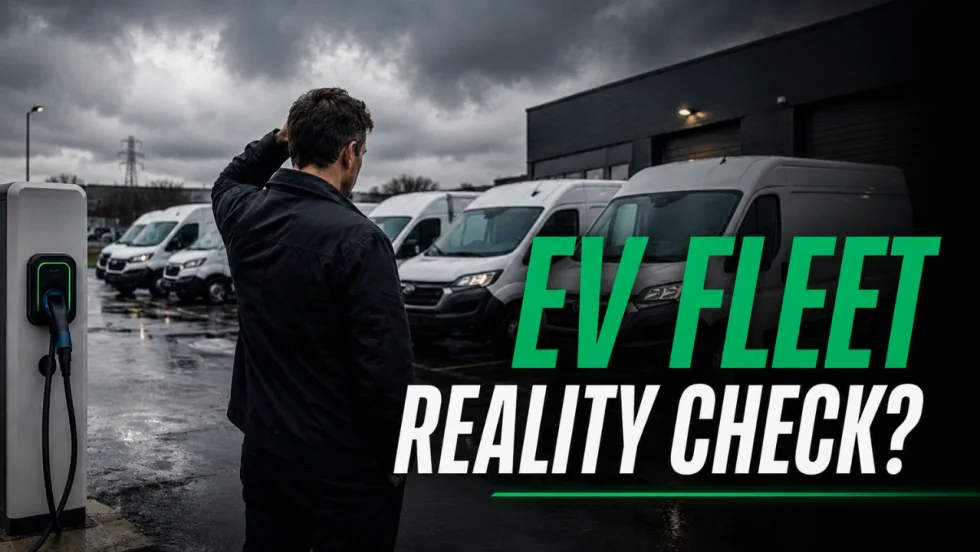
EV Fleet Reality Check: What Operators Wish They Knew Before Electrifying Their Work Vans
Electric work truck upfits bring new compatibility questions. Learn how parts availability, OEM guidance, power demands, and route planning can affect fleet performance.
Read More →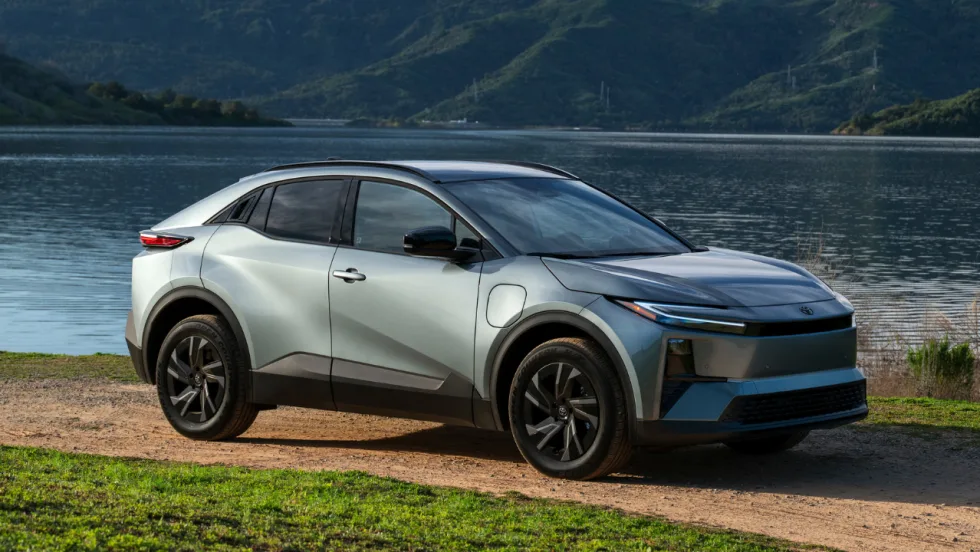
2027 Toyota C-HR Offers 287-Mile Range and Standard AWD
Toyota’s 2027 C-HR brings 287 miles of estimated range, standard all-wheel drive, and NACS fast-charging capability to the compact EV market. See what its mix of performance, cargo space, and everyday technology could offer business users.
Read More →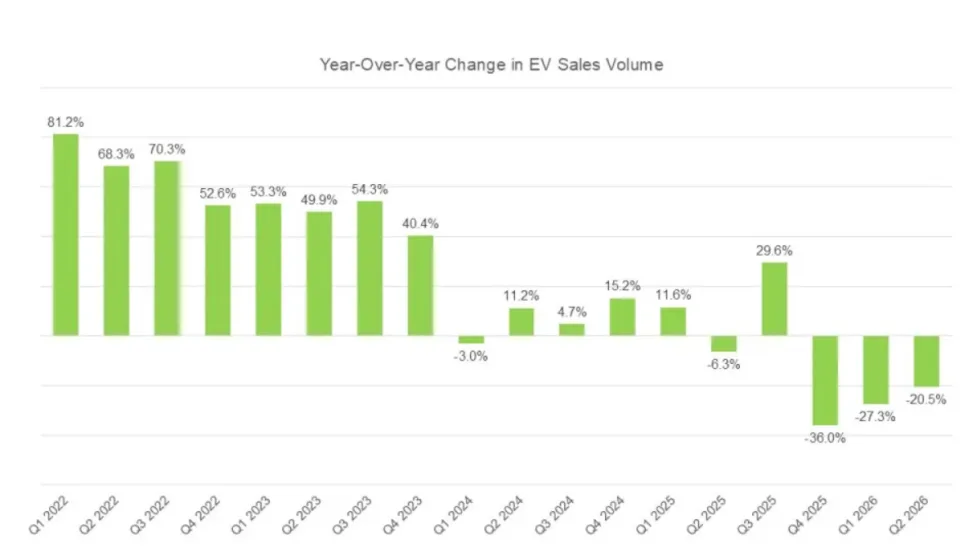
New Vehicle Models Stabilize Electrified Market In Q2
But more credit goes to hybrids than to all-electric vehicles, as more buyers look for fuel-efficient alternatives amid high gas prices.
Read More →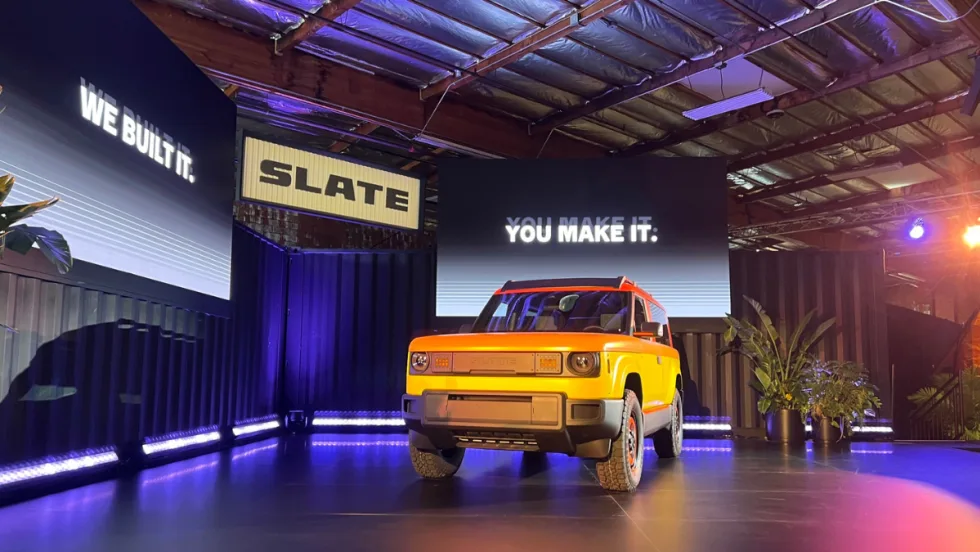
Slate Debuts Colorful, Unique EV Models
A recent media and client event, studded with electric vehicles dressed up on platforms, planted a new position for the manufacturer in the wider EV market. Fleets will find cost-saving advantages.
Read More →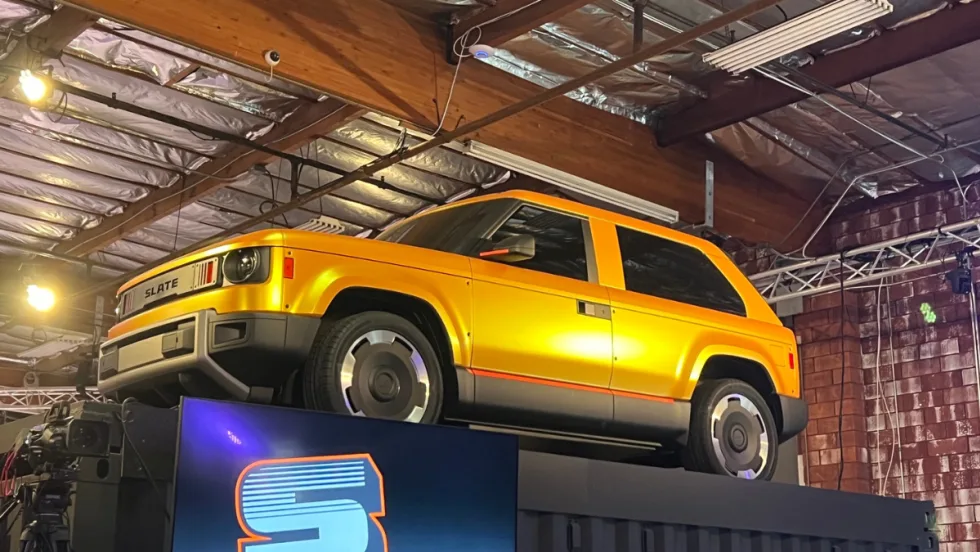
Slate Electric SUV, Pickup Switchable Model Aims For Light-Duty Fleets
Everything about this EV is counterintuitive and understated, making it stand out from the crowd.
Read More →