



Fleet Electrification Series
From the Frontlines of Electric Vehicle Fleet Transitions
A veteran fleet manager turned electric vehicle consultant has developed some first-hand, first-step insights working with larger fleets and auctions.
May 17, 2023
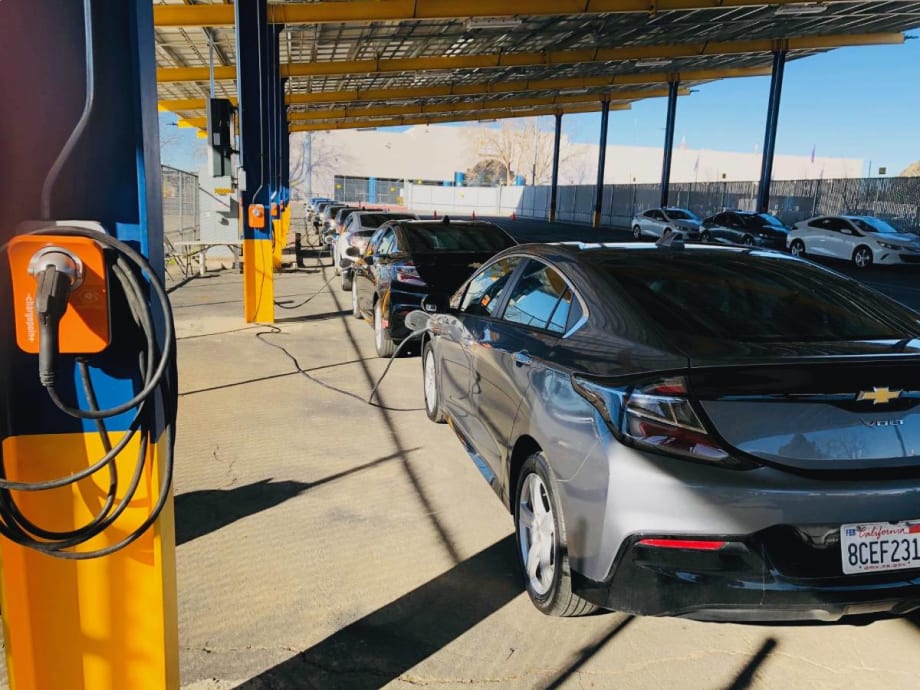
This Manheim auction operation in San Francisco has set up solar carport chargers to handle the stream of used electric vehicles hitting the wholesale automotive market.
Photo: Manheim
5 min to read
If there’s one area where fleet and auction operations could use plenty of information, it centers on how to start electrification, step-by-step.
In May 2022, Ford Pro released a survey done for them by PSB — a global research insights consultancy — in the U.S., United Kingdom, and Germany among 1,250 corporate fleet decision makers. It found about 75% of those surveyed feel pressured to adopt electric vehicles into their fleets, while 60% consider the transition to EVs to be a “headache,” and 50% note infrastructure as a top concern in making this transition.
Even a year later, widescale fleet electrification is still more of a vision than a plan. By now, most fleet managers know it’s not a matter of plug-in-and-go for electric vehicles, despite the initial hype and future hopes.
Electrification Starting Points
Fleet electrification needs direction, steps, and accurate information, as one EV consultant for fleet operations and auctions could attest.
“With so much electric vehicle activity, many people don’t know where to start and need help getting started in the process,” said James Cade, the founder of Fleet Asset & Maintenance Insights (FMI) in Polk City, Iowa.
Lately, Cade has been focusing on the electric vehicle space, working with fleets and auctions on key aspects of electrification, such as purchasing EVs, developing charging infrastructure, training fleet managers and technicians on EVs, and forming long-term strategies electric vehicle handling.
Cade recently started a position as electric vehicle consultant at America's Auto Auction locations in Austin, Texas, Columbus, Ohio, Lubbock, Texas, and Kansas City, Missouri. He also consults on EVs for Amerit Fleet Solutions.
Cade draws on his experience as vice president of fleet services for Ruan Transportation Management Systems and maintenance and leadership positions in other trucking and logistics companies. He spent most of his career in fleet management, including 25 years with Ryder, where he started as a technician and eventually became the vice president of maintenance for North American and European operations, managing large fleets.
He started introducing EVs to fleets about five years ago, helping them to adapt to the vehicles and get up to speed. He has learned 12 OEM training programs from different manufacturers, which helps him advise fleets on developing training programs.
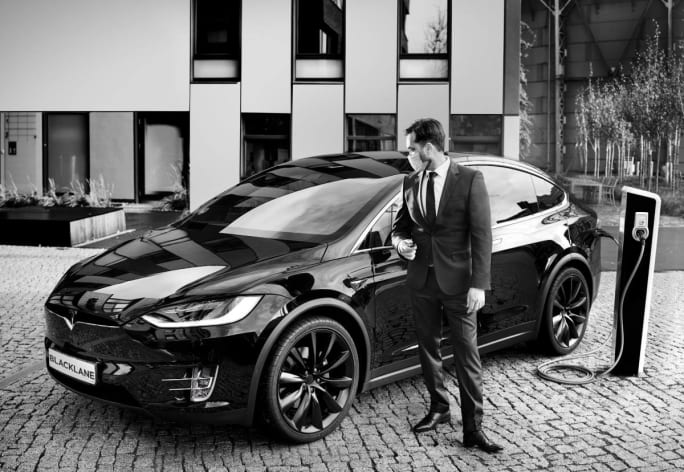
One first step toward fleet electrification is finding the right electric vehicle models that match specific fleet duty cycles and usages. In the case of the global luxury chauffeured service Blacklane, Tesla EVs proved to be the right model for its clientele.
Photo: Blacklane
Fleets Evaluate Electric Vehicle Options
Among FMCs, Cade has advised Amerit on the process of acquiring EVs. The steps to transition about 600 vehicles from gas or diesel models to electric models started three years ago. He also connected them with EV charging station providers.
“Some of their large fleet customers started asking them about recommendations for an ICE to EV transition,” Cade said. “We came up with a training program for their technicians and put a strong emphasis on safety and understanding high voltage.”
One of the key challenges fleets are facing is the lack of a readily available workforce to work on chargers when they fail. Amerit, for example, is training members of its workforce to troubleshoot the chargers, Cade said. “We can’t make electricians out of them or certify them, but they can focus on doing repair after installation and any diagnosis they need.”
Another goal is to find the right electric vehicle models matched to fleet duty cycles and usages, Cade said. Fleets must consider GVWR and payload capacities, given the weight of EV batteries.
Sometimes, a fleet operation will have to find models in higher vehicle class sizes to accommodate both GVWR and usage capacity. “Some fleets had to go up a rating to haul the [expected] payload and get the range they needed,” Cade said.
With mobile service units, fleet managers are aiming to find the “sweet spot” for electric versions, Cade said.
“They needed the ability to provide a driving range and the ability to provide all the power and tools that technicians would need to service a customer’s vehicle. Before EVs, they were using jar [air] compressors; now they are using more electric power to drive electric power tools. They must have the ability to provide enough power for eight to 10 hours of worktime for technicians.”
With AI now emerging in more predictive and generative forms, it could be applied to assessing the future durability and performance of a battery pack by reviewing the life and history of a vehicle, Cade said.
Auctions Must Update Procedures
Auctions face the challenge of expanding on their traditional operation model, where they take in a vehicle, refurbish it, and run it through a sales event.
“How do you charge the vehicles as their buyers are becoming more sophisticated in asking the right questions about battery health?” Cade asked. “Having a fully charged battery helps provide the buyer with a positive perception of the status of the battery pack. That determines most of the value of an EV. Quality revolves around status of the battery.”
Cade also connects auctions with local utilities to access rebates or grants for EV charging infrastructure.
One auction company with 40 locations is trying to figure out how to charge electric vehicles on their properties, Cade said.
“They were surprised when they reached out to me that used EVs are already starting to show up in the auctions. The overall percentage may still be small, but there are a fair number coming in.”
The auction group was trying to get by on Level 1 chargers, but that did not work efficiently since it took 2-3 days to charge and the volume of EVs was more than they could handle, Cade said. He helped them select faster Level 2 chargers to meet the demand.
Cade also is talking with companies about providing more assurances to buyers on battery reports, developing information on charging patterns, and documenting the operation of the vehicle over time.
“They’re trying to figure out how to provide those capabilities to the buyers with higher confidence behind the purchase price.”
Extending such confidence applies to the sellers, too, which are often large consignors, banks, and FMCs.
“The auctions want to maximize ROI for the customers who are bringing in the EVs and who are buying them,” Cade said.
Subscribe to Our Newsletter
More Electric Vehicles

EV Charging Use Is Outpacing Infrastructure Growth
ChargePoint’s 2026 Charging Forward Report points to rising charger use, higher-powered charging, commercial vehicle electrification, and energy-management technology. Here’s what fleets should know.
Read More →
EV Realty Names Henrik Holland President as Charging Platform Expands
The former Prologis Mobility and Shell executive will help expand EV Realty’s truck charging business and move its power-first infrastructure model into autonomous vehicle depots and other fleet sectors.
Read More →
GreenPower Expands New Mexico EV Pilot With Larger Buses, V2G Testing
After logging more than 17,000 electric miles in the first year, New Mexico’s statewide pilot is moving into its second phase with larger vehicles, continued charging evaluations, and more.
Read More →
Can EV-as-a-Service Help Fleets Scale Electrification?
Sustainability Partners CEO Adam Cain explains how matching EVs, charging infrastructure, and duty cycles can help fleets scale electrification.
Read More →
How EV-as-a-Service Is Moving Fleets Beyond Pilots
Adam Cain, president and CEO of Sustainability Partners, explains how EV-as-a-service can help fleets scale deployments by addressing duty-cycle requirements and charging challenges.
Read More →
PowerFlex, The Mobility House Join Forces to Advance Fleet Electrification
Two EV charging providers are joining forces to deliver a broader portfolio of energy management and fleet electrification solutions.
Read More →
Ford Retools Louisville Plant for Fathom Electric Truck Production
Ford's $2 billion Louisville Assembly Plant overhaul introduces a three-part assembly process for the Fathom midsize electric truck, with production scheduled to begin in 2027.
Read More →
Merchants Fleet Reports 290M EV Miles as Fleets Navigate Changing Electrification Market
From millions in operating savings to hundreds of millions of EV miles, Merchants Fleet’s latest report reveals what’s working and what’s changing in fleet electrification.
Read More →
California District Commits to Electrify 25% of School Bus Fleet by 2028
One of the nation's largest school bus electrification projects to date demonstrates how grants, charging infrastructure, and public-private partnerships can help fleets transition to EVs at scale.
Read More →
Aptera Orders Bodies and Chassis for Its First 40 Production Vehicles
Aptera Motors Corp. has issued purchase orders for the major structural components of its first 40 vehicles, and body and chassis components are expected to begin arriving in October.
Read More →