


Ford Test CNG Demos as Precursor to Full Production
Twenty-four utility companies in the U.S. and Canada are participating in Ford's three-year natural gas demonstration program. Fleets are using natural gas-powered Crown Victorias, Econolines, and F-Series pickups.
More than 40 Ford Crown Victorias, powered solely by compressed natural gas (CNG), are being used by 24 utility companies throughout the U.S. and Canada in three-year-long alternative-fuel fleet demonstration programs scheduled for completion in 1995.
At press time, Ford Motor Co. announced plans to develop an assembly-line version of 5,000 natural gas-powered Crown Victorias starting with the 1996-model year. Ten thousand CNG Crown Victorias are planned for the '97-model year.
The 24 utility companies participating in the demonstration programs determining how the CNG-powered vehicles perform under different conditions such as humidity, temperature variables, and atmospheric pressure.
Also, Ford will test 15 natural-gas-fueled F-600 medium-duty trucks powered by 7.0L V-8 engines with selected fleets during 1993.
In addition, Ford now offers regular-production propane-powered F-600s and F-700s.
Retrieval of On-Board Data
On-board computer systems on vehicles being used in the fleet demonstration programs will provide valuable information about natural gas vehicle performance - such as maximum driving range on a tank of CNG - according to Harvey Klein, manager of Ford's Alternative Fuels Engineering and Planning activity.
Since Ford's program only began in mid-1992, it is still too early to draw any definite conclusions from the on-board computer systems about vehicle performance. Klein says. Klein has been able to determine that a special fuel gauge will be needed, since standard fuel gauges have proven inadequate for accurately measuring CNG.
Periodically, users will drive the CNG-powered vehicles to designated service sites for data retrieval from on-board computer systems by Ford engineers. Ford anticipates that data from the demonstration vehicles will provide valuable information on natural gas technology in a wide range of climactic conditions and usage patterns. Along with this data, Ford will gather information on driver satisfaction, emissions, fuel economy, and system durability and reliability.
During the demonstration program period, Ford will maintain a telephone hotline for service advice to users of natural gas fuel systems. Ford also will provide on-site assistance in the event of vehicle difficulties experienced by program participants.
Ford's current demonstration program is similar to a program involving CNG-powered Ranger pickup trucks conducted from 1984 to 1989. The vehicles were driven more than one million miles and experienced virtually no operating difficulties, according to Ford. Results from the Ranger program helped Ford plan and design the current demonstration program vehicles.
The engines for the CNG-powered Crown Victorias have an increased compression ratio to take advantage of the high octane rating of natural gas for maximum power and economy. The CNG cars have a driving range of approximately 200 miles. A gasoline-powered Crown Victoria can usually travel 350 to 400 miles on a tank of fuel.
Four natural gas storage cylinders, located in the rear axle area and within the trunk, replace the gasoline tank. Approximately 30 to 35 percent of the trunk storage space has been lost to accommodate the natural gas tanks, Klein says.
Working with the Gas Industry
Ford has worked closely with natural gas industry associations and utility companies in developing the demonstration programs, Klein says. The natural gas industry, represented by the Gas Research Institute, as well as other association, has provided Ford with information in the development of natural gas vehicle technology.
The natural gas industry is currently in the process of building a fuel station network throughout the nation. Currently, there are approximately 600 natural gas fuel stations in the country - 300 retail stations and 300 in-house fleet fueling facilities. On average, three new natural gas fuel stations a week are being opened, Klein says.
California Fleets Ordering Taurus FFVs
Commercial fleets have ordered 2,000 flexible-fuel 1993 Ford Tauruses out of 2,500 units available for sale in California, according to Bob Aldrich, information officer for the California Energy Commission. The remaining 500 Tauruses will be available to government fleets and retail consumers within California. An additional 300 flexible-fuel 1993 Tauruses are available for sale in the United States and Canada.
The Taurus flexible-fuel vehicles (FFVs) can be run on gasoline or a combination of gasoline and methanol (up to 85 percent methanol).
Ford's success was achieved through the efforts of its national fleet sales representatives, Aldrich says. The Tauruses were placed primarily with large commercial fleets within California.
This is the first year FFVs have been available for mass ordering by all three domestic manufacturers, Aldrich says. Prior to this, flexible-fuel vehicles were available to fleets primarily through pilot programs like the ones sponsored by the California Energy Commission.
By increasing the size of the fuel tank to 20.7 gallons, the driving range of the Taurus FFV, when fueled with M85, is similar to a gasoline-powered Taurus. Other modifications include redesigned fuel system components, such as fuel pump lines, to improve reliability when run on the more corrosive M85.
A fuel sensor detects the percentage of methanol in the fuel and signals the on-board computer to adjust the fuel flow and spark timing accordingly. A cold start system allows the Taurus FFV to start in cold weather when fueled with the lower volatility M85. An electronic instrument panel, not available on other Taurus models, contains a fuel mixture gauge indicating the percentage of methanol in the fuel mixture being used and a driving distance to empty.
Ecostar to Test Ford's Electric Vehicle Program
Eighty electric-powered Ford Ecostar vans will be used for fleet evaluation purposes in the United States and Europe with deliveries starting in 1993. The Ecostar is based on the Escort van, a small, front-wheel-drive delivery van currently in production in Europe.
Among the fleets participating in the U.S. demonstration program are: Detroit Edison in Detroit, MI; Southern California Edison in Rosemead, CA; Allegheny Power System, headquartered in New York, NY; Commonwealth Edison of Chicago, IL; and the city of Chicago.
"Ecostars will be driven in real working environments in about 10 U.S. and European cities for several years before we will be satisfied enough to make electric vehicles generally available for sale," says John Wallace, director of Ford's Electric Vehicle Program. "We are not going to put Ford electric vehicle on public sale until they have undergone durability and operational testing, and we are certain they meet quality and customer-satisfaction standards."
The Ecostar is equipped with a single speed transaxle, electronic controls, and a sodium-sulfur battery. It is capable of speed up to 75 miles-per-hour and has a driving range of 100 miles. The Ecostar has a curb weight of 3,100 lbs. and a maximum cargo payload of approximately 900 lbs.
The Ecostar has an onboard charging system that can be connected to any 220 volt/30 amp or 110 volt/15 amp outlet for recharging. Full recharge time is approximately five hours for 220 volts and 18-20 hours for 110 volts.
A small auxiliary internal combustion engine that drives a battery-charging generator is available as an option for customers needing more range. This "hybrid-electric" version's driving range is approximately 250 miles.
Originally posted on Automotive Fleet
More Vehicle Research
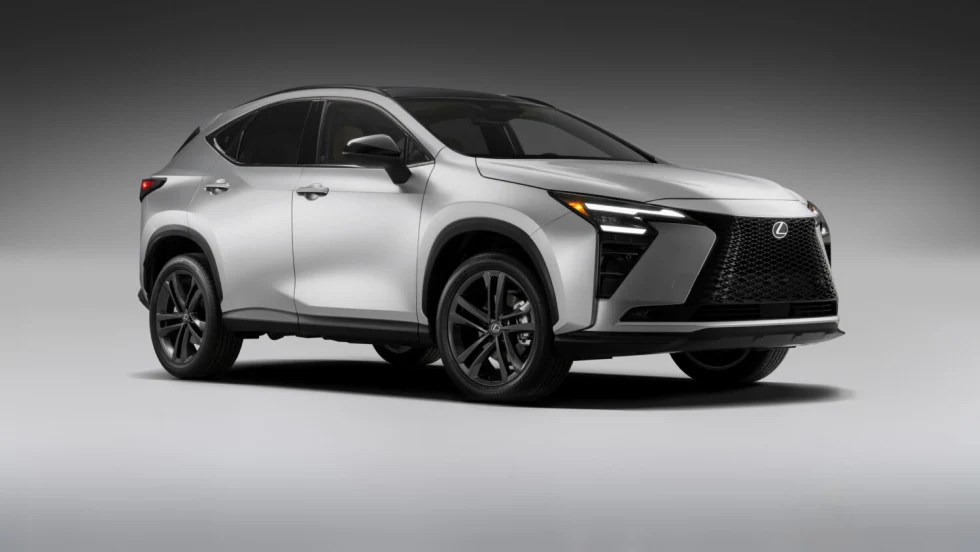
2027 Lexus NX Moves to Fully Electrified Lineup
For 2027, the NX moves to an entirely electrified lineup, with either hybrid or plug-in hybrid powertrains.
Read More →
2027 Mitsubishi Eclipse Sportback Named Green SUV of the Year
Green Car Journal recognized Mitsubishi’s new battery-electric crossover, which offers NACS compatibility and DC fast charging at up to 150 kW.
Read More →
Dave Carroll Named President of Ford Energy
Carroll succeeds Lisa Drake, who will remain with Ford through Dec. 31 to support the leadership transition.
Read More →
City of Long Beach Named No. 1 Green Fleet of 2026
NAFA's 2026 Green Fleet Awards recognized fleets for sustainability efforts spanning alternative fuels, technology, facilities, workplace culture and fleet operations.
Read More →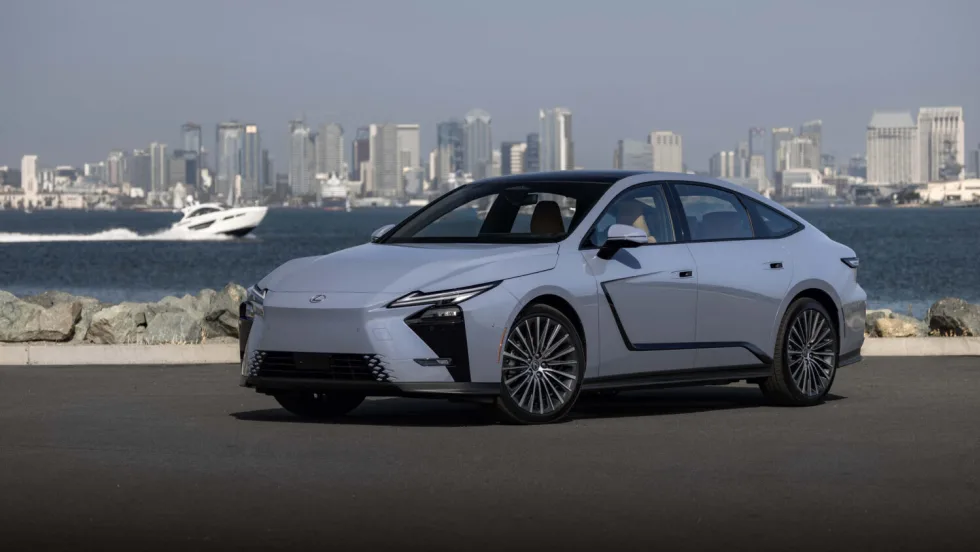
2027 Lexus ES Adds First Battery-Electric Models
The ES 350e and ES 500e join the hybrid ES lineup with up to 338 hp, an EPA-estimated 307 miles of range and standard NACS charging capability.
Read More →
EV Fleet Reality Check: What Operators Wish They Knew Before Electrifying Their Work Vans
Electric work truck upfits bring new compatibility questions. Learn how parts availability, OEM guidance, power demands, and route planning can affect fleet performance.
Read More →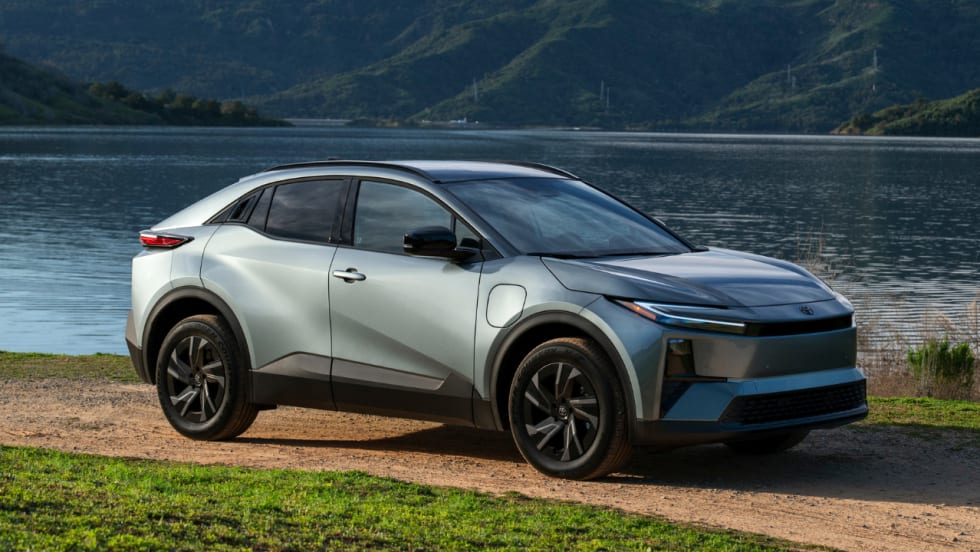
2027 Toyota C-HR Offers 287-Mile Range and Standard AWD
Toyota’s 2027 C-HR brings 287 miles of estimated range, standard all-wheel drive, and NACS fast-charging capability to the compact EV market. See what its mix of performance, cargo space, and everyday technology could offer business users.
Read More →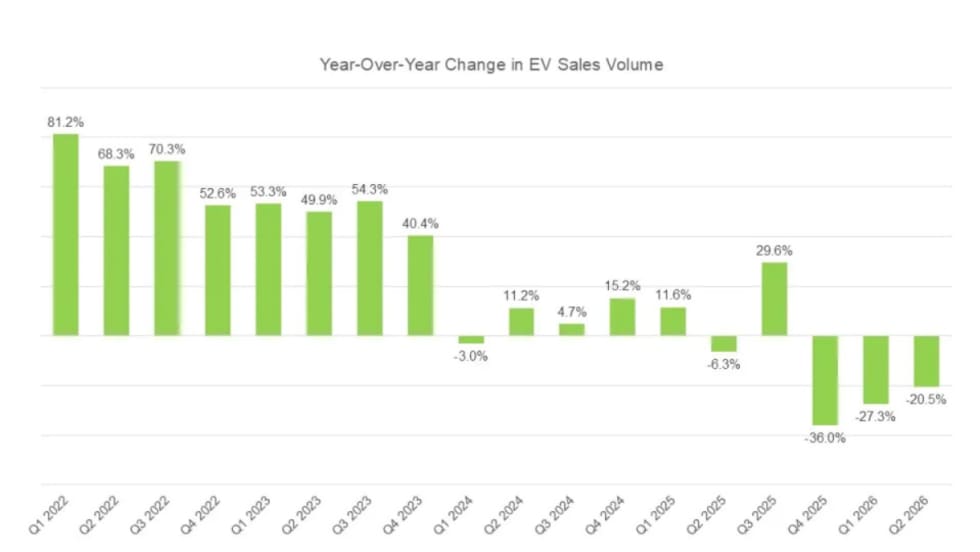
New Vehicle Models Stabilize Electrified Market In Q2
But more credit goes to hybrids than to all-electric vehicles, as more buyers look for fuel-efficient alternatives amid high gas prices.
Read More →
Slate Debuts Colorful, Unique EV Models
A recent media and client event, studded with electric vehicles dressed up on platforms, planted a new position for the manufacturer in the wider EV market. Fleets will find cost-saving advantages.
Read More →
Slate Electric SUV, Pickup Switchable Model Aims For Light-Duty Fleets
Everything about this EV is counterintuitive and understated, making it stand out from the crowd.
Read More →