


Chemical Exposure Warnings: New Rules for California Rental Car Operators
Under new rules for Proposition 65, California’s chemical warning right-to-know statute, warnings for exposures to chemicals from rental vehicles must now provide more specificity.
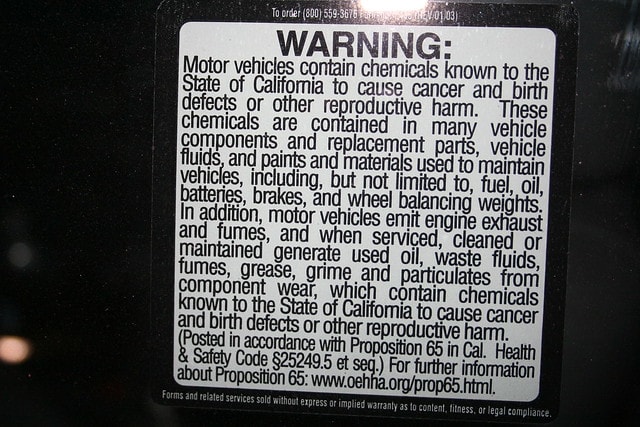
The proposed “warning content” regulation pertains to rental vehicles which, as defined under California Vehicle Code section 415, includes passenger vehicles, pickup trucks, commercial trucks, and cargo vans.
Photo via Michael Wyszomierski/Flickr.
New regulations regarding the application of California Safe Drinking Water and Toxic Enforcement Act of 1986 (known as “Proposition 65” or “Prop 65” for short) to rental car operations are in the works. Even though the new rules have not yet been formally adopted, car rental operators in California should consider updating their warning language notifications.
Ever since its adoption in 1986, businesses operating in California (including those located out of state) have struggled with how to comply with Prop 65 and its requirement to provide certain warnings based on possible exposure to a multitude of listed chemicals where the exposure would exceed a certain level. The new regulations provide some guidance and safe harbor options to rental car businesses.
This article will provide a brief overview of Prop 65; outline the new regulations; and provide some additional information regarding Prop 65 compliance.
Prop 65 Statutory Basics
Prop 65 is essentially California’s chemical warning right-to-know statute. It has two prongs: a discharge prohibition aimed at preventing chemicals from migrating to a source of drinking water, and a warning requirement for exposure to Prop 65 “listed” chemicals whether exposure would be above a “Safe Harbor” level.
Compliance with the Prop 65 warning requirement can be challenging for several reasons. First, there are over 950 listed carcinogens and reproductive toxicants (there were only 26 listed chemicals when the Prop 65 was adopted as a voter initiative in 1986). Second, the regulatory agency in charge of administering Prop 65 has only established Safe Harbor exposure levels for approximately one-third of the 950+ Prop 65 listed chemicals.
Thus, it is incumbent upon the individual company to develop the Safe Harbor level for those chemical exposures where the regulatory agency has yet to act — an endeavor that can be expensive and time-consuming. Further, it is up to each individual business to determine compliance with the warning requirement with respect to consumer product, occupational, or environmental exposure to a Prop 65 listed chemical.
Traditionally, the warning obligation was placed on every entity in the chain of distribution for consumer product exposures and on property owners, managers, and others for occupational and environmental exposures. Many companies took measures to post signs at facility locations that indicated the “presence” of unnamed “chemicals known to the State of California to be carcinogens or reproductive toxicants.”
Such generalized warnings are no longer deemed “safe harbor” in protecting a business from a potential enforcement action. Under the new “safe harbor” warning regulations that took effect on August 30, 2018 warnings must now provide more specificity.
Under California’s Civil Enforcer statute any citizen of California can pursue a Notice of Violation for an alleged Prop 65 violation. Civil penalties can be quite steep — up to $2,500 per day per violation and the attorney representing the civil enforcer can also collect attorney fees and costs. This has resulted in a plethora of lawsuits against large and small businesses operating in California alleging violations of Prop 65.
Exposure Warnings for Rental Operators
On March 8, the Office of Environmental Health Hazard Assessment proposed a tailored “safe harbor” warning for exposures to listed chemicals from rental vehicles. The new regulations, proposed under California Code of Regulations Title 27, Article 6, Sections 25607.36 and 25607.37, provide both specific content and methods of transmission for warnings associated with rental cars such that strict adherence would provide the business with a “safe harbor” from a Prop 65 enforcement action (with certain exceptions).
The proposed “warning content” regulation pertains to rental vehicles which, as defined under California Vehicle Code section 415, includes passenger vehicles, pickup trucks, commercial trucks, and cargo vans. The warning content allows for two options:
Option 1: WARNING: Operating a motor vehicle can expose you to chemicals including engine exhaust, carbon monoxide, phthalates, and lead, which are known to the State of California to cause cancer and birth defects or other reproductive harm. To minimize exposure, avoid breathing exhaust, do not idle the engine except as necessary, and assure adequate ventilation inside the car. For more information, click here.
Option 2: WARNING: Operating, servicing, and maintaining a passenger vehicle or off-road vehicle can expose you to chemicals such as engine exhaust, carbon monoxide, phthalates, and lead, that which are known to the State of California to cause cancer and birth defects or other reproductive harm. To minimize exposure, avoid breathing exhaust, do not idle the engine except as necessary, service your vehicle in a well-ventilated area and wear gloves or wash your hands frequently when servicing your vehicle. For more information, click here.
Warning Display Requirements
Regardless of the option chosen, the warning content must be in a type size no smaller than the largest type size used for other consumer information (i.e. warnings, instructions for use, etc.) and in no event should the warning be printed in smaller than six-point type.
The warning must be prominently displayed and provided to the renter prior to the renter’s use of the vehicle using one or more of the following methods: (1) on rental agreement or rental ticket jacket; (2) on a hang tag which is hung from the rearview mirror in the rental vehicle; (3) on a sign, in no smaller than 22-point type size, that is posted at the counter or similar area of the rental facility where rental transactions occur, where it will be likely to be seen, read, and understood by the renter during the process of renting the vehicle; (4) in an electronic rental contract; (5) in a confirmation email that is sent to the renter’s email address; or (6) through a clearly marked hyperlink using the word “WARNING” on the online reservation page, or by otherwise prominently displaying the warning to the renter prior to completing the on-line reservation.
An additional alternative option for transmission of the warning would be to have the warning printed in the owner’s manual for the vehicle, in no smaller than 12-point type enclosed in a box printed or affixed to the inside or outside of the front or back cover of the manual or on the first page of the text; and provided on a label attached to the front window on the driver’s side of the vehicle printed in a type size no smaller than the largest type size used for other consumer information affixed to the vehicle and in no event smaller than eight-point font size. If the vehicle does not have a driver’s side window, the warning may be provided on a hang tag which is hung from the rearview mirror. Absent a side or rearview mirror, the warning may be placed in another prominent location.
The warning must be provided prior to the renter’s use of the vehicle. Thus, although it is not required for the warning to be provided online if a customer is going through the rental process over the internet it may be advisable to include the warning with any online rental agreement to safeguard against an enforcement action.
Public comment on the proposed regulation closed on April 22. Once OEHHA submits the rulemaking package to the California Office of Administrative Law, the regulation may be approved within 30 days and then it could be adopted by mid-summer or the fall depending on when it might be approved.
More Warnings May be Warranted
Whereas the new “Safe Harbor” warning for vehicle rentals may cover a business with respect to the vehicle rental transaction, additional Prop 65 warnings may be warranted depending on certain business operations. For instance, if the vehicle rental facility has an underground parking structure, the corresponding “safe harbor” warnings for environmental chemical exposures in such enclosed structures must also be posted (see California Code of Regulations Title 27, Article 6, sections 25607.20 and 25607.21).
Additional warnings may also be necessary if the business maintains a designated outdoor smoking area (see California Code of Regulations Title 27, Article 6, sections 25607.28 and 25607.29).
Businesses should review their current warning policies and practices to evaluate the most effective and efficient method of transmitting any required Prop 65 warning. This may include assessment of not only the different avenues for customers to rent a vehicle from the facility but also any other contractual affiliation with other rental entities that may be associated with the primary company.
Historically, many business agreements contain warranty provisions that represent compliance with “all state, federal and local laws and regulations.” Arguably, that could include compliance with Prop 65’s warning requirements. Companies should be cautious with taking on such potential liability and should exercise due diligence in evaluating upstream and downstream Prop 65 compliance obligations.
Prop 65 Enforcement Actions can be expensive and disruptive. Car rental operators should take advantage of the new Safe Harbor regulations as soon as possible.
Ryan Landis, a lawyer in the LA office of Polsinelli, regularly consults with business on Prop 65 regulatory compliance and also defends companies named in Prop 65 enforcement actions. His email contact is rlandis@polsinelli.com.
Originally posted on Auto Rental News
More Legal/Legislative

California Governor Approves Instant ZEV Rebates For First-Time Buyers
That instant rebate is the centerpiece of a broader $600 million package Governor Newsom signed into law, keeping California active in the global clean transportation race.
Read More →
Used EVs Set Wholesale Sales Record In Q1
Rising gas prices may have boosted demand last month, as dealers pursued potential opportunities with more affordable used EVs.
Read More →
OEMS Expose Overdue EV Truths
Recent announcements from two automakers underscore a significant shift in the electric vehicle market, driven by EV losses and changing strategies. [VIDEO}
Read More →
The Freedom Era For Electric Vehicles
Season 2 Episode 1 of The Off-Peak premieres as the electric vehicle market no longer benefits from federal tax credits that expired at the end of Q3 2024. What does this mean for the future appeal of EVs?
Read More →
New Research Shows Renewed Potential And Tolerance For EVs
A new EV consumer survey finds partisan resistance is easing, but concerns around cost, incentives, and charging access still shape buyer interest.
Read More →
2025 Generated Big Headlines In The EV World
The EV industry entered a new more nuanced phase defined by realities and practical outcomes after a few years of grand visions, media hype, and bold investments.
Read More →
John Boesel Recognized at 2025 Fleet Forward Conference
Bobit recognized John Boesel, CEO of Calstart, who is retiring after over three decades of service.
Read More →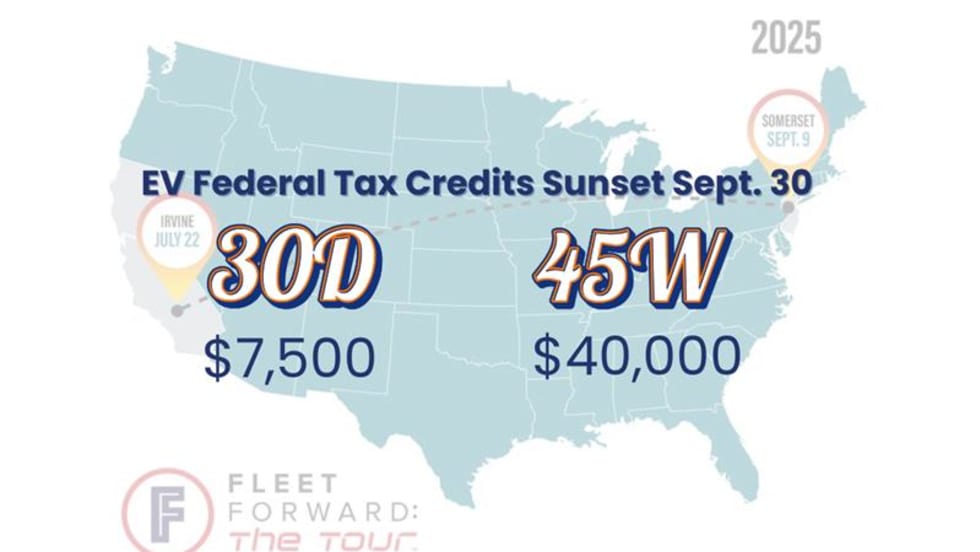
Final Push for Federal EV Incentives Highlighted at Fleet Forward Tour NJ Stop
Fleet managers in the Northeast will have a timely opportunity to take action on electric vehicle purchases at the upcoming Fleet Forward Tour stop in Somerset, NJ, on Sept. 9.
Read More →
Latest Hard Realities, Top Pressures For Electric Fleets
Speakers and experts at Fleet Forward: The Tour shared hands-on, hard-won insights on how fleet operations are handling tariffs, EV charging, rules and regs, and safety issues.
Read More →
Mobility 360 Panel to Define the Fleet Industry’s Next Tipping Point
At the 2025 Fleet Forward Conference, experts in capital, policy, and data will assess which trends are transforming fleet.
Read More →