


Can EVs Lose the Plug & Go Wireless?
The use of wireless charging is moving from toothbrushes and mobile phones to vehicles. How does a fleet lose the cord and plug and go wireless?

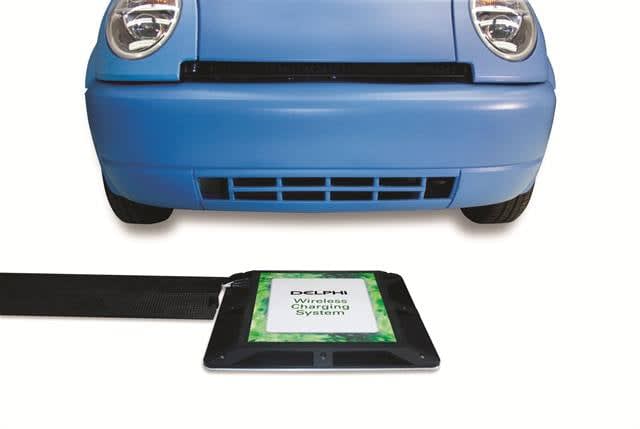
The Delphi wireless charging system involves no plugs or charging cords. Electric power flows upward from a power source resonator to a power capture resonator installed on a vehicle.
Fleets may be just getting used to the concept of plugging in their vehicles to “fuel up,” but there may be a new game changer: the ability to charge electric vehicles (EVs) wirelessly.
The concept isn’t new. In fact, it’s almost as old as the battery itself. According to Battery University, in 1831 English scientist and inventor of the electric motor,Michael Faraday discovered induction and stated that electromagnetic forces can travel through space.
In the late 1800s and early 1900s, Serbian electrical engineer Nikola Tesla began demonstrating wireless broadcasting and power transmission. Early experiments in Colorado Springs in 1899 led to the Wardenclyffe Tower in New York. One of the modern devices to use this technology is the electric toothbrush. More recently, the technology has moved to charge mobile phones.
So, it was almost 200 years ago that the concept of inductive power transfer was first proposed. According to Qualcomm, the technique was simple: a wire carrying an electric current produces a magnetic field around the wire (Ampere’s Law); a coil intersecting a magnetic field produces voltage in that coil (Faraday’s Law); so two loosely coupled coils can transfer power by passing a current through one of them and taking power from the voltage produced in the other.
When used for wireless EV charging, the system uses magnetic fields. For most systems currently being tested, energy is transferred from the transmitter in the parking pad and converted into an electrical current by the vehicle adapter.
Several companies are currently developing wireless EV charging technology, including Plugless Power (manufactured by Evatran), Delphi, and Qualcomm.
Why Go Wireless?
Wireless EV charging helps ensure vehicles are charged, without leaning on drivers to remember to plug the vehicle in. The system can start charging a vehicle once it drives over a special pad mounted on the ground. An additional benefit could be found through the use of this technology, coupled with a smart charging system, which charges vehicles during off-peak hours to help reduce electrical costs. Delphi’s wireless charging system can also help increase the fuel economy of plug-in hybrids by increasing the frequency of having a fully charged battery, according to the company.
One other benefit of utilizing a wireless charging system is deterring vandalism or the theft of charging equipment (e.g., cables due to the high value of copper) since the components are mounted directly to a device or stationary object.
Also, according to research shared by Qualcomm, conductive or cabled systems are not always ideal for EV charging. Rain, ice, snow, or extreme heat and cold present challenges with plugs and cables. Vehicles charged inductively only need to be parked over an inductive pad for charging to occur.
“At the core of clean urban mobility is a need to recharge EV batteries simply and conveniently, without the need for plug-in cables and associated street furniture,” said Anthony Thomson, PhD, VP, business development and marketing for Qualcomm. “Simplicity and minimum driver intervention are key features that win out time and time again in novel technology adoption and when these features are coupled with high power transfer efficiency, wireless charging offers an elegant and effortless solution.”
According to Delphi, its wireless charging system is engineered to provide a safe, robust, reliable, and quick charge. The Delphi system is hands-free, using a system to transfer energy via an oscillating magnetic field, which is safe for humans and animals. The magnetic field emitted will meet or exceed industry safety guidelines.
While each company’s system and components differ slightly, they typically include:
● An adapter or receiver that will be
attached to the vehicle.
● A pad mounted to the ground.
● A power station. [PAGEBREAK]
Testing Wireless Charging
The City of Sacramento, Calif., currently operates nine EVs, with several more planned for through its Fleet Car Share Electrification Demonstration program. According to Keith Leech, fleet manager for the City of Sacramento, the program is intended to familiarize and make the City’s customers comfortable with plug-in electric vehicles (PEVs).
“This will assist our customer departments in considering future PEV applications that will meet their operational needs, and encourage our employees to consider PEVs as a viable option when they are ready to buy or lease their next vehicle,” Leech said.
The City is currently testing wireless EV charging technology through the Evatran Apollo Trial program. The Apollo program is the world’s first wireless electric vehicle charging trial. Evatran has currently signed contracts with five high-profile commercial participants to outfit Nissan LEAF and Chevrolet Volt vehicles with pre-production Plugless Power Systems. The trial aims to drive electric vehicle adoption across the U.S.
The testing program is designed to help support the development, testing, and refinement of magnetic induction for EV charging in Sacramento’s City Hall motor pool, which will allow fleet drivers to avoid the repetitive process of physically plugging-in and unplugging vehicles on a daily basis.
“This demonstration project is intended to help promote the wide-scale adoption of EVs in the Sacramento region, which supports the City’s EV readiness to serve the public at large,” Leech explained.
Leech noted the simplicity and convenience for drivers, which will result in the vehicle automatically charging as soon as it is parked in its designated parking space. “This also eliminates the requirement for the driver of a motor pool car to remember to plug in after each use, which should greatly reduce the chances of renting out vehicles through our Invers Motor Pool reservation system that are not fully charged,” Leech said.
One challenge the City faces in utilizing the technology, according to Leech, is the current limitation of the chargers being able to serve only one vehicle that has been installed with its compatible vehicle charging adapter.
“The wireless charging technology will need to evolve so multiple vehicles in a fleet could be installed with the vehicle charging adapter and share fewer wireless charging stations located at the major City facilities located all around the city for wireless charging to be practical for many fleet applications,” Leech said.
Leech recommended fleets looking to test wireless charging contact and become involved with the Clean Cities Coalition.
“Fleet managers should also research and evaluate the fleet’s EV readiness,” he continued. “Consider a trial demonstration to evaluate ROI and confirm the potential benefits of wireless charging for certain applications, such as motor pools or return-to-base dispatch vehicles. In the end, we as a City are setting the example of reducing our carbon footprint,” Leech concluded.
Originally posted on Automotive Fleet
More Charging
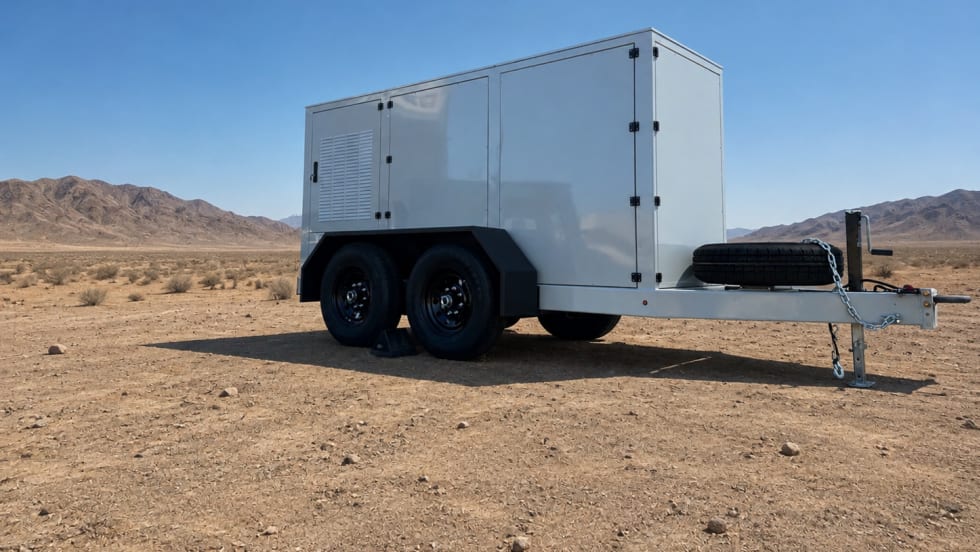
Xos Mobile Charging Hub Surpasses 1 GWh of Energy Delivered
As fleets electrify, charging capacity does not always arrive on the same timeline as the vehicles. Operating data from one Xos Hub shows how mobile, grid-independent charging can support vehicles when permanent infrastructure or utility upgrades aren't available.
Read More →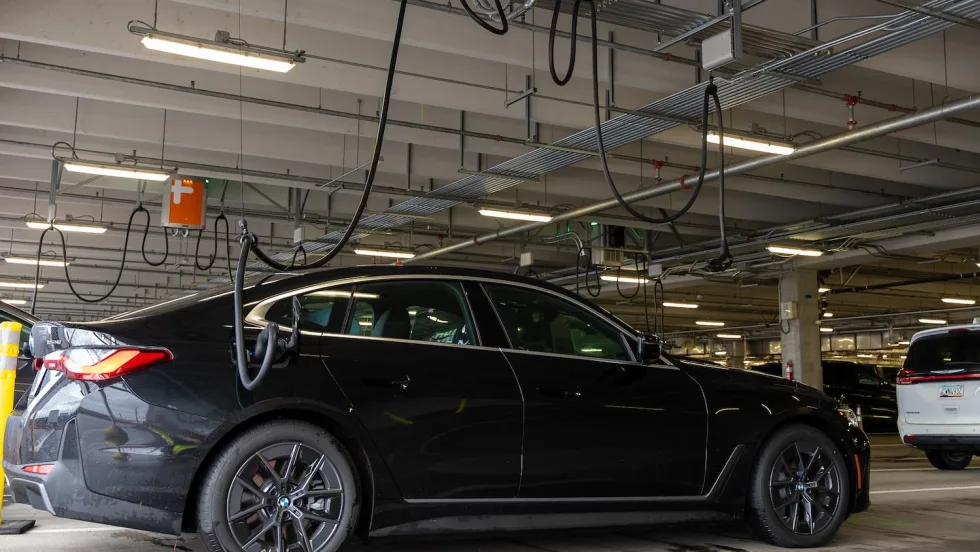
ChargePoint Adds Overhead EV Fast Charging at Portland International Airport
The installation can charge up to 20 rental vehicles simultaneously and uses overhead equipment to preserve ground-level space at the airport's Quick Turnaround Facility.
Read More →
Octopus Energy Launches Public EV Charging App in U.S.
Octopus Charge allows EV drivers to locate and access public charging stations through a single app, building on the company's Electroverse platform in Europe.
Read More →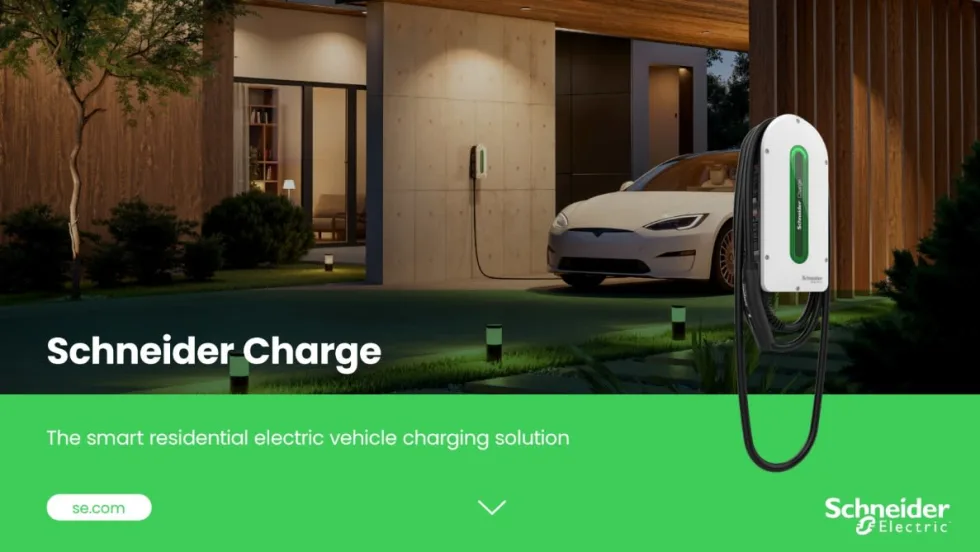
Schneider Electric Launches Level 2 Home EV Charger With Integrated Load Management
Schneider Charge uses integrated SmartAmp technology to adjust charging output based on household electrical demand and is available with NACS or J1772 connectors.
Read More →
Why EV Charging Reliability Is More Complicated Than It Looks
GridLink CEO Josh Silets explains what causes EV chargers to fail, why fleet operators often struggle to identify the source, and what questions they should ask charging vendors.
Read More →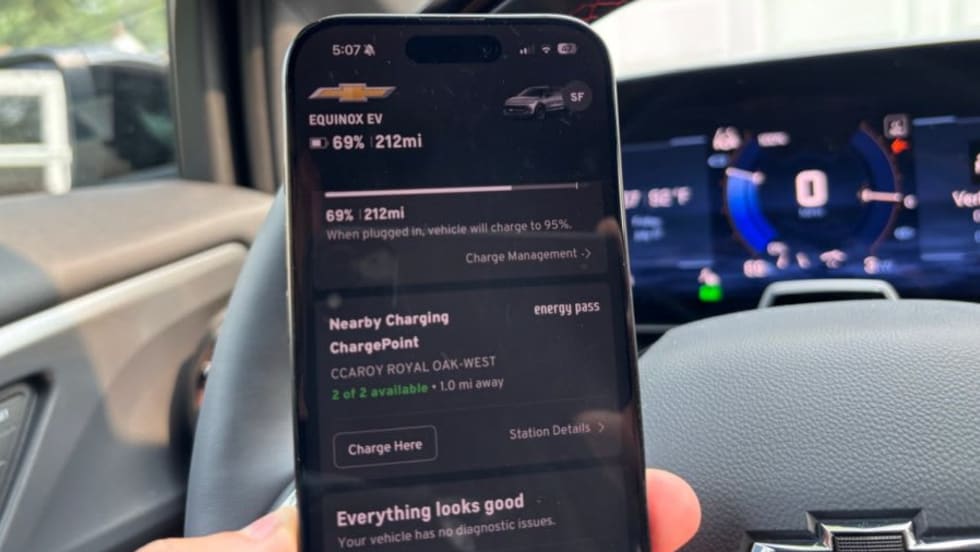
GM Adds ChargePoint Network to Energy Pass Platform
The integration gives GM EV drivers access to additional DC fast chargers and Level 2 stations through a single app while expanding the automaker's public charging ecosystem.
Read More →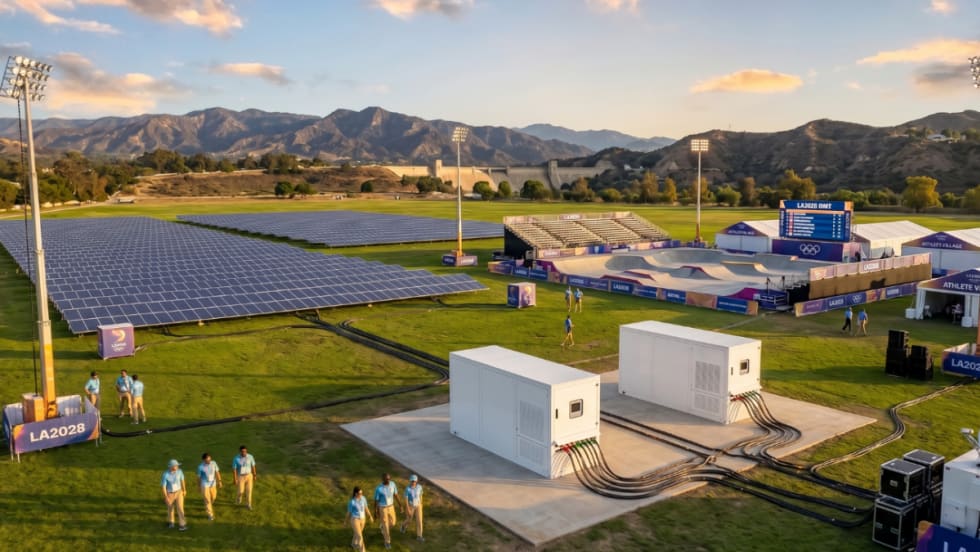
Xos White Paper Asserts LA Olympics Will Lack Enough EV Chargers
The commercial EV fleet company recommends some faster and more flexible remedies to relieve the anticipated shortfall.
Read More →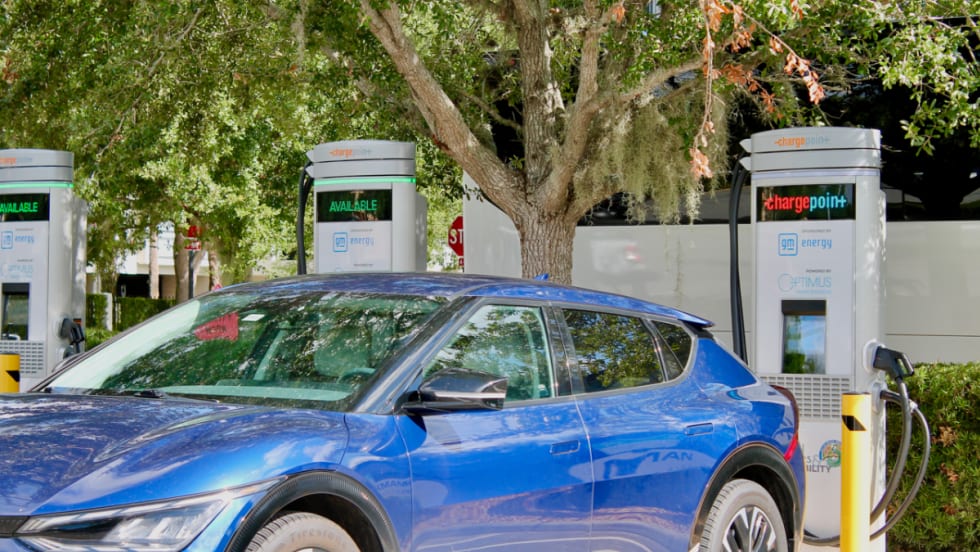
ChargePoint, Optimus Expand Fast-Charging Network Across Southeastern U.S.
ChargePoint will serve as the exclusive solutions provider, delivering hardware, software, and services to support Optimus’ growing charging network.
Read More →
Running A Profitable Electric Rental Fleet
How do you successfully operate an all-electric rental car fleet? Whether you manage a rental fleet or another commercial fleet, this conversation offers practical lessons on deploying, operating, and scaling electric vehicles.
Read More →
Why Charging May Never Be As Easy As Filling Up Gas
A seamless charge depends on a string of independent companies getting it right together, every time. How can electric fleets navigate the challenges to create a successful charging plan?
Read More →