


Cab Guard or Ladder Rack?
Type and size of equipment combined with intended application determines which solution is right for your truck.
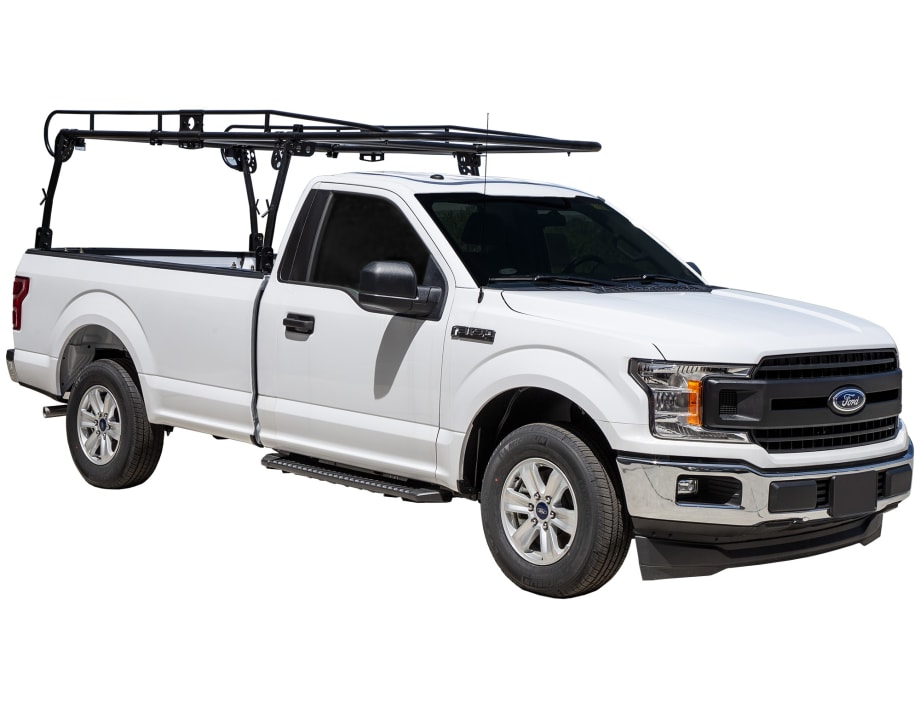
With long equipment or when more space is needed in the truck bed, a ladder rack may be the better choice.
Two options allow plumbing, landscaping, electrical contractors, and other vocational professionals to carry tools, materials, and equipment while protecting their truck beds from damage: cab guards and full ladder racks.
Which option they choose depends on the size of the materials they haul to job sites, the type of work they do, and the amount and type of equipment they must haul to each job site, says Dan Doerr, director of new product development for Buyers Products, a manufacturer of equipment for the work truck industry based in Mentor, Ohio.
Whether they choose a cab guard or a ladder rack, Doerr says contractors should look for equipment that can be easily installed and provide a universal fit for the truck models they operate.
Cab Guard for Less Equipment
Because a cab guard is a two-post frame mounted at the back of a cab, it resembles a football field goal. A cab guard allows contractors to haul long materials, ladders, and pipes securely without hanging them out the back of the truck bed.
Doerr says if contractors don’t have a lot of equipment to carry to each job site, a cab guard would be the better choice. Cab guards provide a mounting surface for a light bar, flood, or spot lights for greater forward visibility or more work area illumination in and around the truck.
Look for cab guards that:
Are constructed of durable steel and are powder-coated to prevent corrosion;
Allow you to mount lights and accessories without damaging your vehicle.
Ladder Rack for Longer Materials
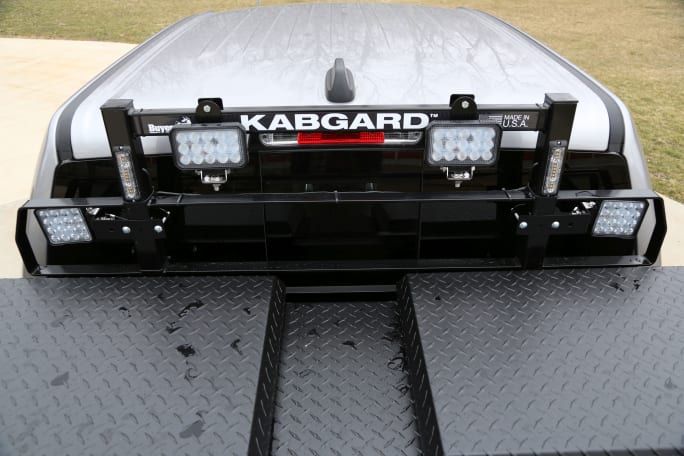
A cab guard is a good choice if contractors don’t have a lot of equipment to carry to each job site.
When building materials or ladders are too long to be transported safely using a cab guard, particularly on trucks with short beds, or when contractors need to free up space in the truck bed, a ladder rack may be the better choice, Doerr says.
Contractors should consider the following when choosing a ladder rack:
Can it be adjusted to fit beds as short as 5 ½ feet, such as those found on extended crew cabs?
Does the ladder rack have a removable rear crossbar to make it easier to load and haul tall items such as water heaters?
Is it secured to the truck bed using J-hooks or clamps so that contractors don’t have to drill holes into the bed to install it?
Are optional window protectors available to shield the back-cab window from damage should materials or equipment come loose during transportation?
What about secured storage options such as a PVC conduit carrier kit or a conduit carrier, which help secure high-value materials such as copper pipes and tubing or conduits?
How durable is the ladder rack? Look for lightweight racks that also feature corrosion resistance with a black powder coating and primer coat.
Can it carry loads up to 1,000 pounds securely to maximize space in the truck bed?
“While a truck ladder rack rated up to 1,000 pounds can free up a lot of space in the bed, contractors should always consult their owner’s manual or truck dealer about the truck’s gross vehicle weight and handling,” Doerr adds. “If there’s a trailer involved, the truck’s hauling capacity and stopping distance could be further impacted by how much the trailer and its load weigh.”
Originally posted on Work Truck Online
More Electric Vehicles

EV Charging Use Is Outpacing Infrastructure Growth
ChargePoint’s 2026 Charging Forward Report points to rising charger use, higher-powered charging, commercial vehicle electrification, and energy-management technology. Here’s what fleets should know.
Read More →
EV Realty Names Henrik Holland President as Charging Platform Expands
The former Prologis Mobility and Shell executive will help expand EV Realty’s truck charging business and move its power-first infrastructure model into autonomous vehicle depots and other fleet sectors.
Read More →
GreenPower Expands New Mexico EV Pilot With Larger Buses, V2G Testing
After logging more than 17,000 electric miles in the first year, New Mexico’s statewide pilot is moving into its second phase with larger vehicles, continued charging evaluations, and more.
Read More →
Can EV-as-a-Service Help Fleets Scale Electrification?
Sustainability Partners CEO Adam Cain explains how matching EVs, charging infrastructure, and duty cycles can help fleets scale electrification.
Read More →
How EV-as-a-Service Is Moving Fleets Beyond Pilots
Adam Cain, president and CEO of Sustainability Partners, explains how EV-as-a-service can help fleets scale deployments by addressing duty-cycle requirements and charging challenges.
Read More →
PowerFlex, The Mobility House Join Forces to Advance Fleet Electrification
Two EV charging providers are joining forces to deliver a broader portfolio of energy management and fleet electrification solutions.
Read More →
Ford Retools Louisville Plant for Fathom Electric Truck Production
Ford's $2 billion Louisville Assembly Plant overhaul introduces a three-part assembly process for the Fathom midsize electric truck, with production scheduled to begin in 2027.
Read More →
Merchants Fleet Reports 290M EV Miles as Fleets Navigate Changing Electrification Market
From millions in operating savings to hundreds of millions of EV miles, Merchants Fleet’s latest report reveals what’s working and what’s changing in fleet electrification.
Read More →
California District Commits to Electrify 25% of School Bus Fleet by 2028
One of the nation's largest school bus electrification projects to date demonstrates how grants, charging infrastructure, and public-private partnerships can help fleets transition to EVs at scale.
Read More →
Aptera Orders Bodies and Chassis for Its First 40 Production Vehicles
Aptera Motors Corp. has issued purchase orders for the major structural components of its first 40 vehicles, and body and chassis components are expected to begin arriving in October.
Read More →