


Report Highlights EV Growth, Public Charging Shortfalls
At 9.5% for 2023, EVs have reached their highest-ever sales penetration in the U.S. Yet an analysis by the Alliance for Automotive Innovation (AAI) shows the extreme disparity in the geographic distribution of EVs and charging infrastructure.

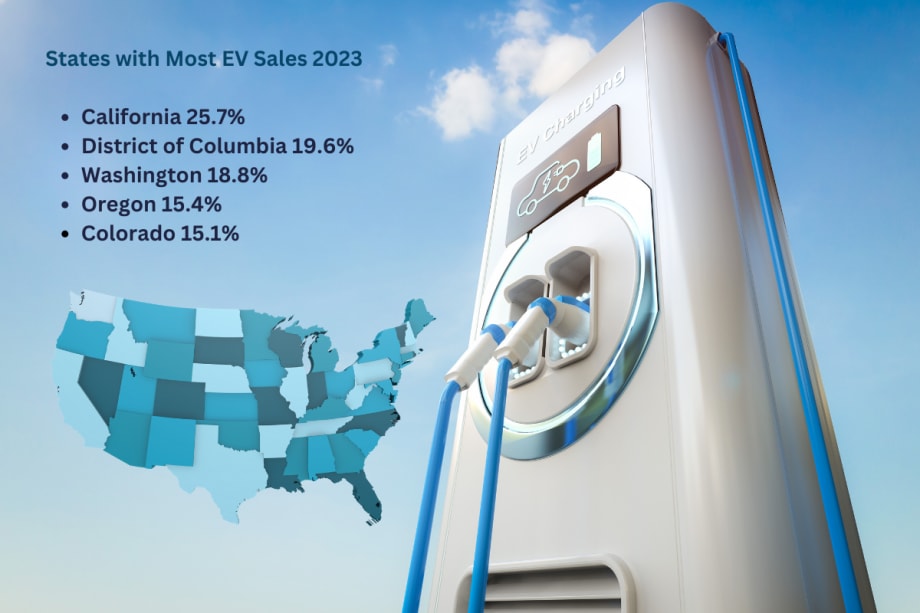
In 2023, 20% of all new charging ports were in California. However, 33% of new charging ports were located in just 1% of U.S. counties.
Photo: Canva/Automotive Fleet
Some 437 public chargers will need to be installed every day, for the next seven years — or nearly three chargers every 10 minutes through the end of 2030 — to adequately meet charging demand.
This is one of the findings from a state-by-state analysis of the U.S. electric vehicle market for the fourth quarter and full year 2023 released by the Alliance for Automotive Innovation.
The Get Connected Electric Vehicle Report summarizes EV sales and purchasing trends across all 50 states for the fourth quarter and full year of 2023.
EV Models, % Share of U.S. Total Sales
The report found that 114 EV models were available for sale in the U.S. in Q4 2023. That drove 10.2% of new light-duty vehicle sales in the fourth quarter, up from 10.1% in Q3 2023 and 8.5% in Q4 2022.
For the full year, EVs represent 9.5% of new light-duty vehicle sales, from 7% in 2022 and 4.3% in 2021. Some 377,000 EVs were sold in the U.S. in Q4 2023, a 34% increase over Q4 2022.
Public EV Charging Statistics
Not surprisingly, the report concludes that the installation of U.S. public chargers is not keeping up with current and projected EV sales. The AAI report has data to show the imbalance:
While EV sales increased 51% in 2023, the number of publicly available EV chargers increased only 27% year-over-year.
For the fourth quarter specifically, 377,383 EVs were registered in the U.S. in Q4 2023, but only 8,869 new public chargers were added — a ratio of 43 EVs for every new public port.
Overall, there are 4.3 million EVs on the road (1.5% of all light-duty vehicles in operation) and a total of 159,842 publicly available charging outlets in the U.S., for a ratio of 27 EVs for every public port.
To meet the National Renewable Energy Laboratory’s necessary infrastructure estimate for 2030, 1.2 million public chargers need to be installed by then. Put another way, 437 chargers will need to be installed every day, for the next 7 years — or nearly 3 chargers every 10 minutes — through the end of 2030.
Installed Charging Data by Geographic Area
The top 25 counties with the most public charging ports accounted for one-third of all available U.S. public chargers.
Of the more than 3,100 counties in the U.S., 31% had zero public charging ports at the end of 2023, compared to 39% in 2022. In 2023, 90 counties installed their first public charge.
In 2023, there were 33,023 new public EV chargers (22,591 Level 2 and 10,432 DC Fast) added.
12% of U.S. counties added zero new charging ports.
40% of U.S. counties added 10 or fewer charging ports.
33% of new charging ports were located in just 1% of U.S. counties.
20% of all new charging ports were in California.
States with Most EV Sales 2023
California 25.7%
District of Columbia 19.6%
Washington 18.8%
Oregon 15.4%
Colorado 15.1%
Originally posted on Automotive Fleet
More Electric Vehicles
EV Charging Use Is Outpacing Infrastructure Growth
ChargePoint’s 2026 Charging Forward Report points to rising charger use, higher-powered charging, commercial vehicle electrification, and energy-management technology. Here’s what fleets should know.
Read More →
EV Realty Names Henrik Holland President as Charging Platform Expands
The former Prologis Mobility and Shell executive will help expand EV Realty’s truck charging business and move its power-first infrastructure model into autonomous vehicle depots and other fleet sectors.
Read More →
GreenPower Expands New Mexico EV Pilot With Larger Buses, V2G Testing
After logging more than 17,000 electric miles in the first year, New Mexico’s statewide pilot is moving into its second phase with larger vehicles, continued charging evaluations, and more.
Read More →
Can EV-as-a-Service Help Fleets Scale Electrification?
Sustainability Partners CEO Adam Cain explains how matching EVs, charging infrastructure, and duty cycles can help fleets scale electrification.
Read More →
How EV-as-a-Service Is Moving Fleets Beyond Pilots
Adam Cain, president and CEO of Sustainability Partners, explains how EV-as-a-service can help fleets scale deployments by addressing duty-cycle requirements and charging challenges.
Read More →
PowerFlex, The Mobility House Join Forces to Advance Fleet Electrification
Two EV charging providers are joining forces to deliver a broader portfolio of energy management and fleet electrification solutions.
Read More →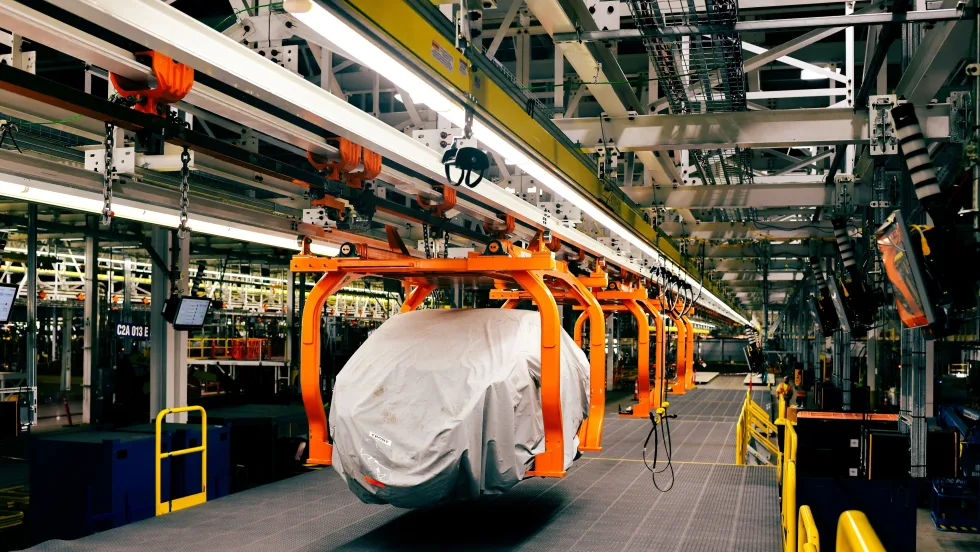
Ford Retools Louisville Plant for Fathom Electric Truck Production
Ford's $2 billion Louisville Assembly Plant overhaul introduces a three-part assembly process for the Fathom midsize electric truck, with production scheduled to begin in 2027.
Read More →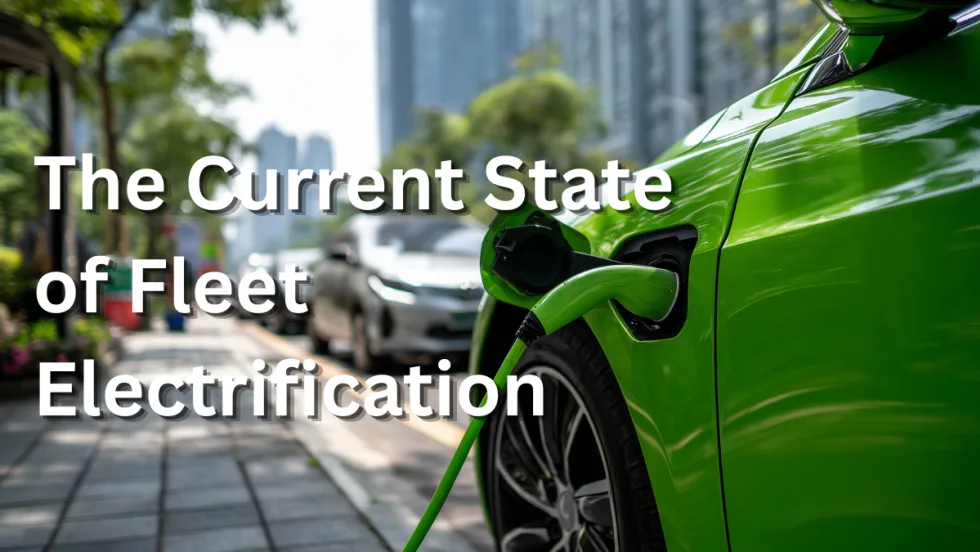
Merchants Fleet Reports 290M EV Miles as Fleets Navigate Changing Electrification Market
From millions in operating savings to hundreds of millions of EV miles, Merchants Fleet’s latest report reveals what’s working and what’s changing in fleet electrification.
Read More →
California District Commits to Electrify 25% of School Bus Fleet by 2028
One of the nation's largest school bus electrification projects to date demonstrates how grants, charging infrastructure, and public-private partnerships can help fleets transition to EVs at scale.
Read More →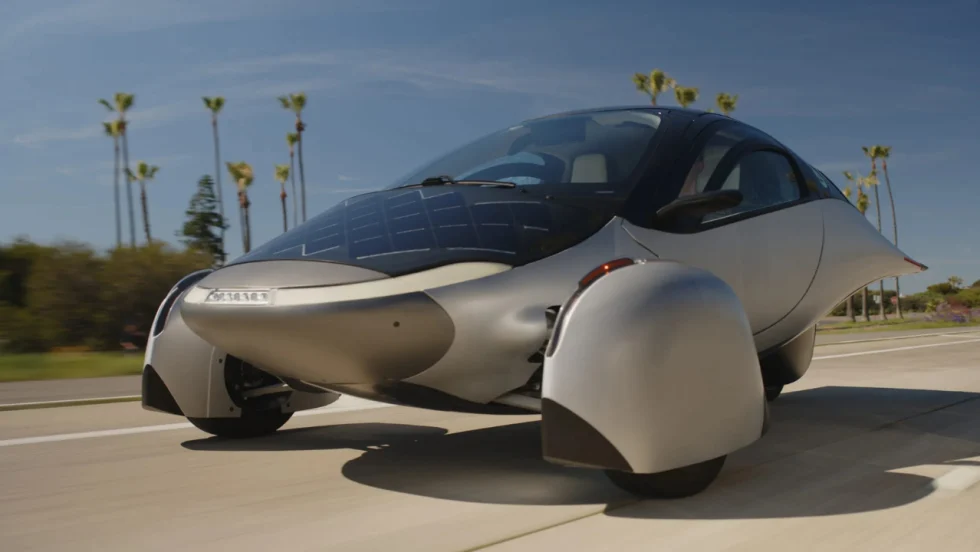
Aptera Orders Bodies and Chassis for Its First 40 Production Vehicles
Aptera Motors Corp. has issued purchase orders for the major structural components of its first 40 vehicles, and body and chassis components are expected to begin arriving in October.
Read More →