



FUN FACT: Ford F-Series has been America’s best-selling truck for 45 years in a row and is second only to the iPhone in revenue among all American consumer products, according to a 2020 study.
Ford Starts Production for F-150 Lightning
Ford F-150 Lightning trucks are now being built for customers across America.
April 26, 2022
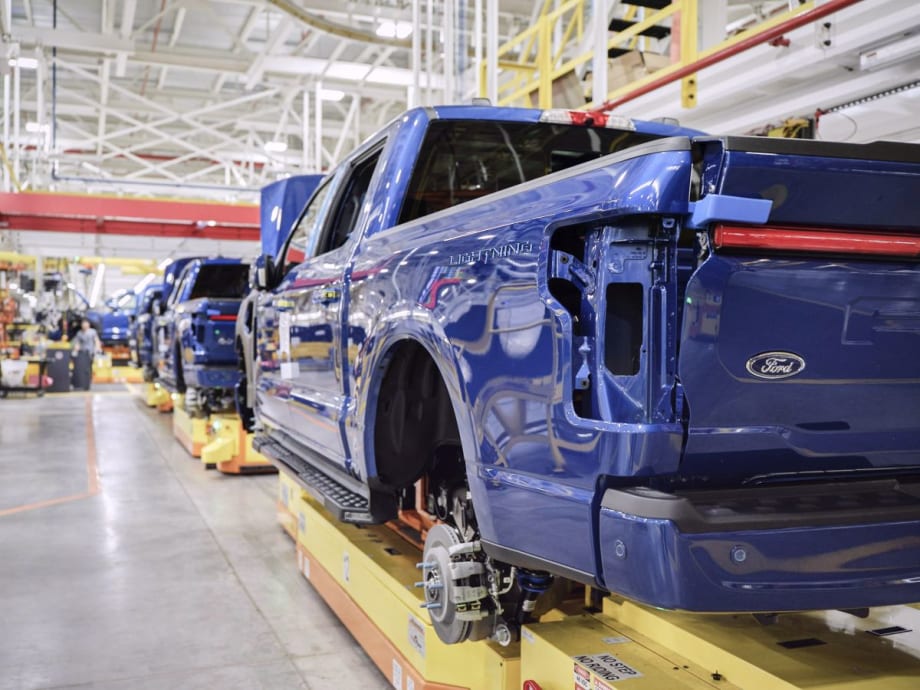
Full production of F-150 Lightning trucks begins at the high-tech Rouge Electric Vehicle Center within Ford’s historic Rouge Complex.
Photo: Ford
5 min to read
April 26, 2022 marks the launch of the all-new, electric F-150 Lightning pickup. Ford F-150 Lightning trucks are now being built for customers across America. The full-size electric pickup is now available now with a starting price less than $40,000 MSRP.
“Today we celebrate the Model T moment for the 21st Century at the Rouge Electric Vehicle Center,” said Ford Executive Chair Bill Ford. “The Rouge is where Ford perfected the moving assembly line, making it a fitting backdrop as we make history again. The stunning anticipation for F-150 Lightning is a credit to the work of our Ford engineers and designers, and the UAW team members who are building these trucks with pride.”
Ford has recieved 200,000 reservations for the F-150 Lightning and is expanding the Rouge Electric Vehicle Center to ramp up production to a planned annual run rate of 150,000 in 2023. The company has invested a total of $950 million and created 750 jobs at the Rouge Electric Vehicle Center.
F-150 Lightning Pro is the first electric F-Series truck purpose-built specifically for commercial customers. F-150 Lightning Pro is offered through Ford Pro, a one-stop shop for commercial and government customers with a range of conventional and electric vehicles and a full suite of software, charging, financing, services and support on Ford and non-Ford products. F-150 Lightning Pro is backed with turnkey solutions for commercial operations, and Ford predicts commercial customers’ cost savings will begin from day one.
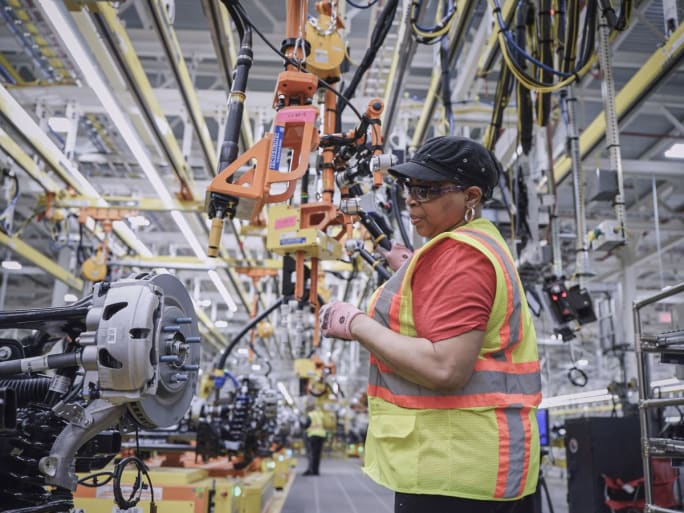
The Rouge Electric Vehicle Center is the first Ford plant without traditional in-floor conveyor lines and instead uses robotic Autonomous Guided Vehicles to move F-150 Lightning trucks from workstation to station in the plant.
Photo: Ford
Ford’s investment in Michigan for F-150 Lightning alone now totals more than $1 billion, with 1,700 recently created jobs spread among five Ford plants in the state, including Van Dyke Electric Powertrain Center, where Lightning electric motors and electric transaxles are assembled, and Rawsonville Components Plant, where Lightning batteries are assembled.
“America’s real transition to electric vehicles starts now,” said Ford President and CEO Jim Farley. “F-150 Lightning is just the beginning of our ambitions for growth and leadership in digital, electric vehicles. We continue to expand our EV manufacturing footprint across the U.S., including the start of site preparation at BlueOval City, which will enable us to meet the ever-increasing customer demand for our exciting EV line-up.”
Ford is on track to deliver more than 2 million electric vehicles annually by 2026, equal to about one-third of the company’s global volume, on the way to 50% by 2030.
The Lightning provides acceleration from zero to 60 mph in the mid-4 second range with the extended-range battery, a 10-kilowatt smart power plant on wheels, and software updates that will make it even better over time, F-150 Lightning is attracting new customers to Ford, according to the automaker.
It also has the most torque of any F-150 ever (at 775 lb.-ft.) and because it’s almost instantaneous, offers enhanced towing capability.
How Ford Got Here
Ford announced its intention to build the Rouge Electric Vehicle Center at its historic Rouge complex 19 months ago, in September 2020, and has since created an ultra-modern site leveraging more than 118 years of expertise in manufacturing at scale.
Ford remains the top automaker in America in terms of U.S. production, sales of U.S.-made vehicles and employment of hourly autoworkers.
“For UAW Ford members, the launch of the Lightning F-150 is an example that when electric vehicle expansion is done right, it can create good paying union jobs and opportunities,” said UAW President Ray Curry. “Today’s launch demonstrates that we can create a win-win for UAW families and communities as we build EV products for decades to come.”
The manufacturing technology in the Rouge Electric Vehicle Center is innovative -- it is the first Ford plant without traditional in-floor conveyor lines and instead uses robotic Autonomous Guided Vehicles to move F-150 Lightning trucks from workstation to station in the plant.
These Autonomous Guided Vehicles create more flexibility in the plant for additional production output, quality checks, and product customizations, among other benefits. And changes can be made quickly without the constraints of a typical line that requires the installation of floor chains, moving mats, conveyors, and overhead cranes. The plant also uses cobots, or collaborative robots, that work side-by-side with people without any safety cages needed. These cobots help with tasks that would be ergonomically challenging for employees, while also keeping employees safe.
The Rouge Electric Vehicle Center is also a zero-waste-to-landfill site, meaning none of the material generated as a by-product of the manufacturing process will go to landfills. The plant was built on the former Dearborn Assembly Plant site, using materials from the prior plant in the foundation.
Ford is committed to achieving carbon neutrality by 2050, and to using 100% local, renewable electricity in all of its manufacturing operations by 2035.
The full-size pickup also provides lockable storage to store 400 liters of cargo out of sight. This Mega Power Frunk doubles as a cooler – washable and drainable – with lighting to see in the dark. It also has 2.4 kW of exportable power. Combined with the power available from the 5.5-foot bed and cab, it brings the truck’s Pro Power Onboard total to up to 9.6 kW from 11 power points.
At home, F-150 Lightning, together with a home integration system, can power a house during an outage for three days and in time will be able to offer power back to the grid. It can charge other electric vehicles so no one is left stranded.
Ford offers F-150 Lightning owners an optional BlueCruise hands-free driving experience on more than 130,000 miles of prequalified divided highways across the U.S. and Canada. F-150 Lightning will stay up to date and constantly improve through over-the-air software updates, called Ford Power-Ups.
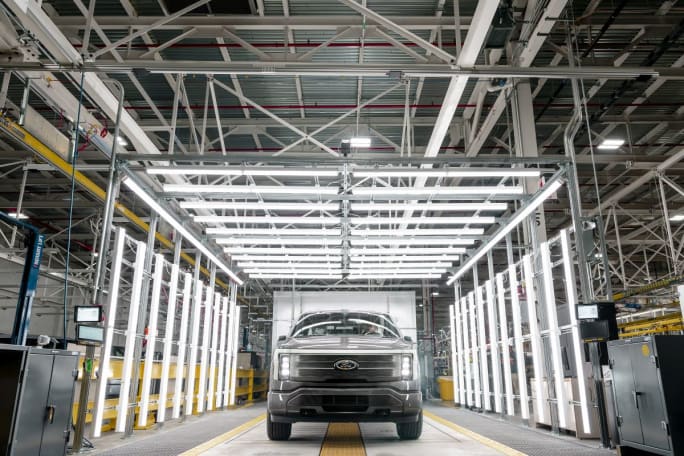
F-150 Lightning Pro is the first electric F-Series truck purpose-built specifically for commercial customers.
Photo: Ford
F-150 Lightning is a zero-emissions vehicle with as much as 320 EPA-estimated miles of range. Lightning customers have access to the BlueOval Charge Network, the largest public charging network in North America offered by automotive manufacturers.
Home charging is straightforward with installation partner Sunrun. Extended-range battery customers with an 80 amp Connected Charge Station Pro can get a full charge overnight on AC power with dual on-board chargers. Customers may also have the opportunity to install solar energy – enabling them to power both their home and charge their truck with clean, renewable energy.
Click here to learn more about the electric 2022 Ford F-150 Lightning pickup.
Originally posted on Work Truck Online
More Electric Vehicles

EV Realty Names Henrik Holland President as Charging Platform Expands
The former Prologis Mobility and Shell executive will help expand EV Realty’s truck charging business and move its power-first infrastructure model into autonomous vehicle depots and other fleet sectors.
Read More →
GreenPower Expands New Mexico EV Pilot With Larger Buses, V2G Testing
After logging more than 17,000 electric miles in the first year, New Mexico’s statewide pilot is moving into its second phase with larger vehicles, continued charging evaluations, and more.
Read More →
Can EV-as-a-Service Help Fleets Scale Electrification?
Sustainability Partners CEO Adam Cain explains how matching EVs, charging infrastructure, and duty cycles can help fleets scale electrification.
Read More →
How EV-as-a-Service Is Moving Fleets Beyond Pilots
Adam Cain, president and CEO of Sustainability Partners, explains how EV-as-a-service can help fleets scale deployments by addressing duty-cycle requirements and charging challenges.
Read More →
PowerFlex, The Mobility House Join Forces to Advance Fleet Electrification
Two EV charging providers are joining forces to deliver a broader portfolio of energy management and fleet electrification solutions.
Read More →
Ford Retools Louisville Plant for Fathom Electric Truck Production
Ford's $2 billion Louisville Assembly Plant overhaul introduces a three-part assembly process for the Fathom midsize electric truck, with production scheduled to begin in 2027.
Read More →
Merchants Fleet Reports 290M EV Miles as Fleets Navigate Changing Electrification Market
From millions in operating savings to hundreds of millions of EV miles, Merchants Fleet’s latest report reveals what’s working and what’s changing in fleet electrification.
Read More →
California District Commits to Electrify 25% of School Bus Fleet by 2028
One of the nation's largest school bus electrification projects to date demonstrates how grants, charging infrastructure, and public-private partnerships can help fleets transition to EVs at scale.
Read More →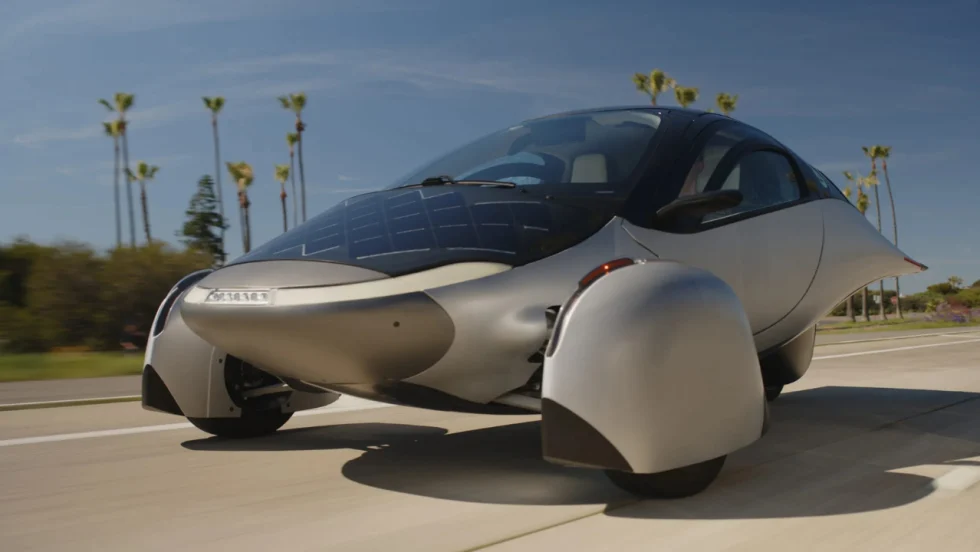
Aptera Orders Bodies and Chassis for Its First 40 Production Vehicles
Aptera Motors Corp. has issued purchase orders for the major structural components of its first 40 vehicles, and body and chassis components are expected to begin arriving in October.
Read More →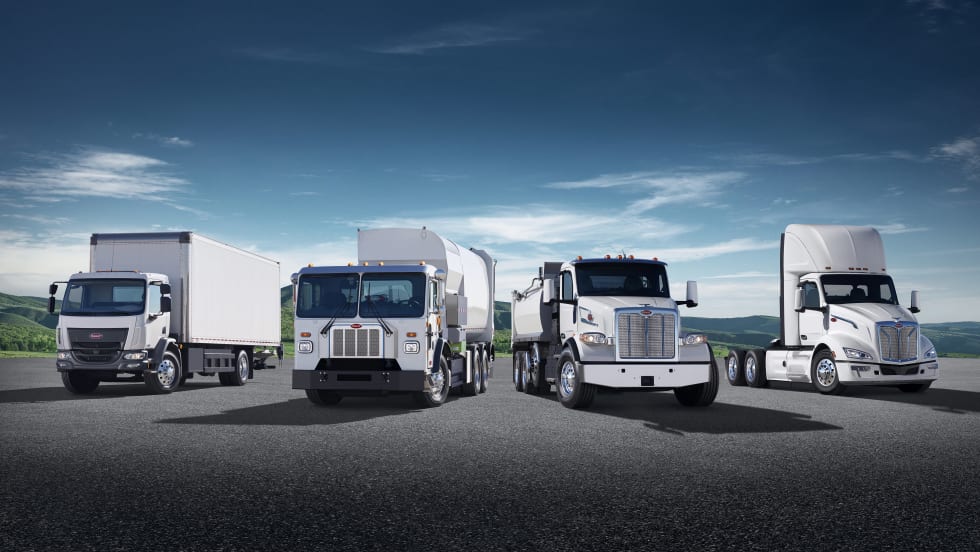
Peterbilt Expands Sourcewell Purchasing Agreement to Include Electric Trucks
The cooperative purchasing contract, now extended through July 2028, adds Peterbilt's battery-electric lineup for eligible government, education, nonprofit and tribal organizations.
Read More →