


Hyundai to Invest $7.4 Billion in the U.S. by 2025
Hyundai Motor and Kia plan to build American-made battery electric vehicles with Hyundai's U.S. facility beginning EV production in 2022.

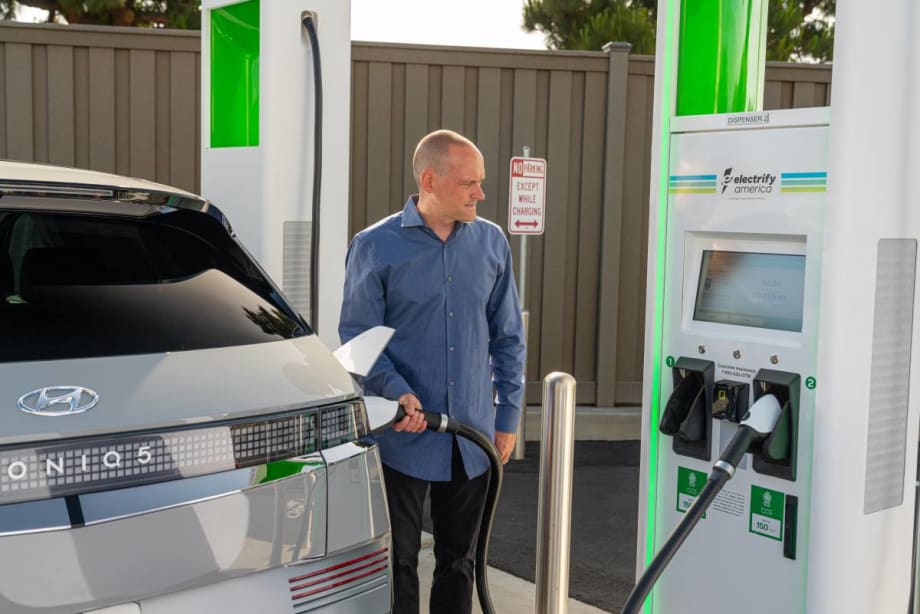
Hyundai and Kia will invest in growing its EV manufacturing footprint to scale production and satisfy U.S. market demands. Hyundai Motor will offer a suite of American-made electric vehicles to consumers starting next year.
Photo: Hyundai
Hyundai Motor Group (HMG), which includes Hyundai Motor Company and Kia Corporation, announced its plan May 13 to invest $7.4 billion in the U.S. by 2025 to produce future EVs, enhance production facilities and further its investments in smart mobility solutions, according to a press release.
With its investment, Hyundai aims to make its vehicles more competitive by prioritizing future mobility technologies, including electrification and hydrogen energy.
José Muñoz, Hyundai Motor Company’s Global Chief Operating Officer and President and CEO of Hyundai Motor North America said in the release, “This investment demonstrates our deep commitment to the U.S. market, our dealers and customers.”
Sean Yoon, President and CEO of Kia North America added, “One key element of Kia’s transformation is transitioning from internal combustion engine to electrification. With our strategic investment in the U.S. to produce EV models, we are making huge strides to lead the EV market and increase our contribution to the economies where we do business.”
Hyundai and Kia will invest in growing its EV manufacturing footprint to scale production and satisfy U.S. market demands. Hyundai Motor will offer a suite of American-made electric vehicles to U.S. consumers starting next year.
Hyundai and Kia will monitor the market conditions and U.S. government EV policy to finalize its plan to enhance its U.S. production facilities and gradually expand its local EV production.
Hyundai Motor Group will expand the U.S. hydrogen ecosystem in collaboration with local private and public partners
Hyundai Motor Group looks forward to working with the U.S. government and other business partners to expand the U.S. hydrogen energy ecosystem. It wants to foster a hydrogen society to create new business opportunities for a sustainable future.
Hyundai Motor Group signed a memorandum of understanding with the U.S. Department of Energy in February 2020 to cooperate in hydrogen fuel cell technology innovation and global expansion. This included the installation of a hydrogen refueling station and providing NEXO SUVs.
Later this year, Hyundai will proceed on a demonstration project to prepare for the commercialization of fuel cell electric trucks. Hyundai will also work with local partners to conduct a hydrogen refueling demonstration project for fuel cell electric trucks. and provide logistics between port and inland warehouses by using fuel cell electric trucks.
Hyundai has previously made an agreement with Cummins Inc., a U.S. based company which specializes in advanced powertrain, to accelerate deployment of fuel cell electric systems in the U.S. market.
HMG to Invest in UAM, Robotics and Autonomous Technologies
Hyundai Motor Group will launch a subsidiary in Washington, D.C. to spearhead the Group’s urban air mobility (UAM) businesses. The subsidiary will focus on creating a UAM ecosystem and improving the mobility experience.
Hyundai also will firmly establish its presence in the robotics field through Boston Dynamics. It announced last year that it agreed to acquire a controlling 80% interest in Boston Dynamics in a deal that values the mobile robot firm at $1.1 billion.
In addition, Hyundai Motor Group has created the joint venture, Motional, partnering with the U.S. mobility technology firm Aptiv. Focused on commercializing driverless technology, Motional has obtained the industry’s first driverless license in the state of Nevada and plans to commercialize robotaxi service in 2023 along with its partner Lyft. Motional has started testing Hyundai’s all-electric IONIQ 5 equipped with advanced autonomous driving technology on public roads.
Together, the Hyundai Motor Group and Motional will enhance its autonomous driving technology in preparation for Lyft’s robotaxi launch in 2023.
Related news: Hyndai, Canoo to Develop Platform for Electric Vehicles
More Electric Vehicles
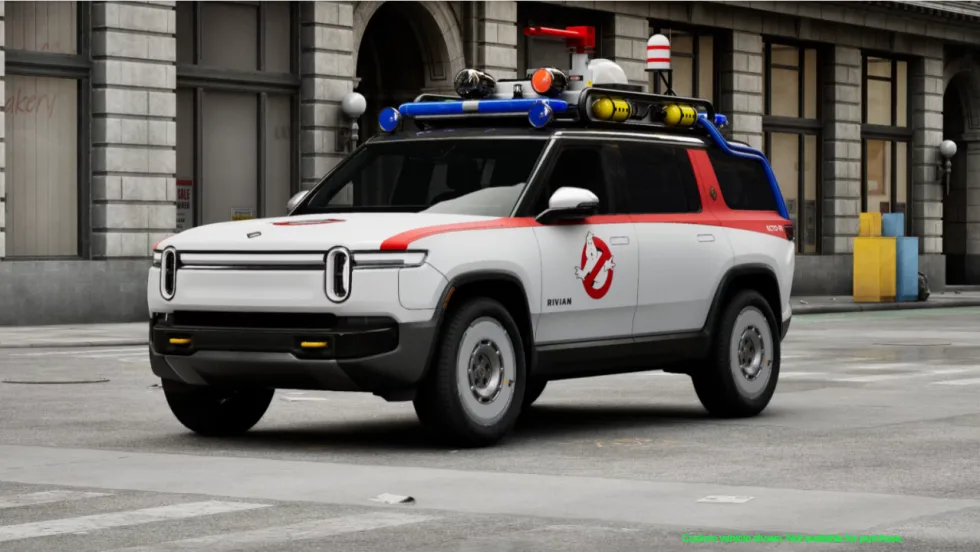
Who You Gonna Call? Rivian Turns Electric Vehicles Into Ghostbusters Rides
Rivian teams up with Sony Pictures for a Ghostbusters-inspired Halloween software update, complete with custom sounds, lighting effects, and a special Ecto-R1.
Read More →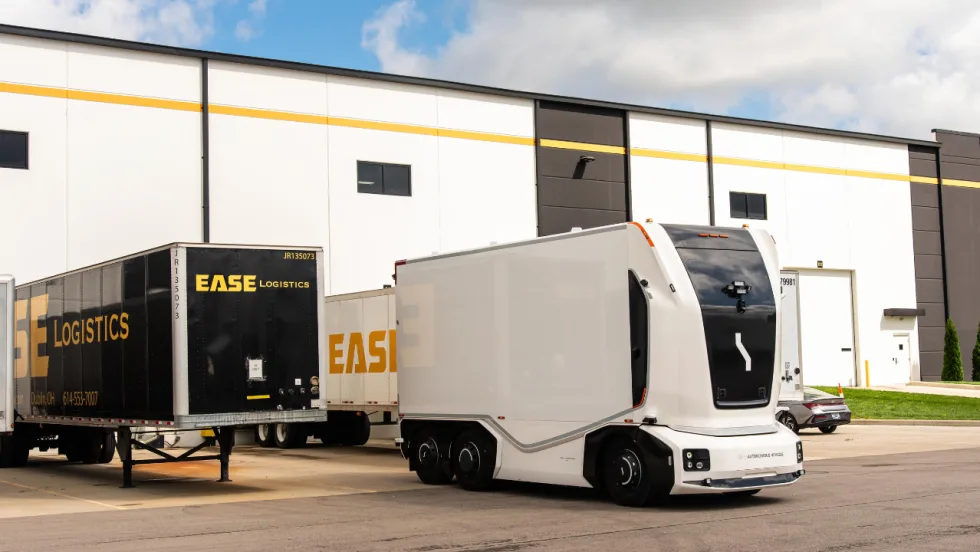
Einride Electric Driverless Trucks Begin Daily Freight Operations in Ohio
Two cabless electric trucks are now moving freight between EASE Logistics facilities, putting autonomous EV technology into daily commercial operations.
Read More →
FedEx Orders 2,000 Harbinger Electric Trucks in $300 Million Deal
The Class 5 and 6 electric trucks are planned for delivery by the end of 2027 and will be deployed in FedEx pickup and delivery operations across the U.S. and Canada.
Read More →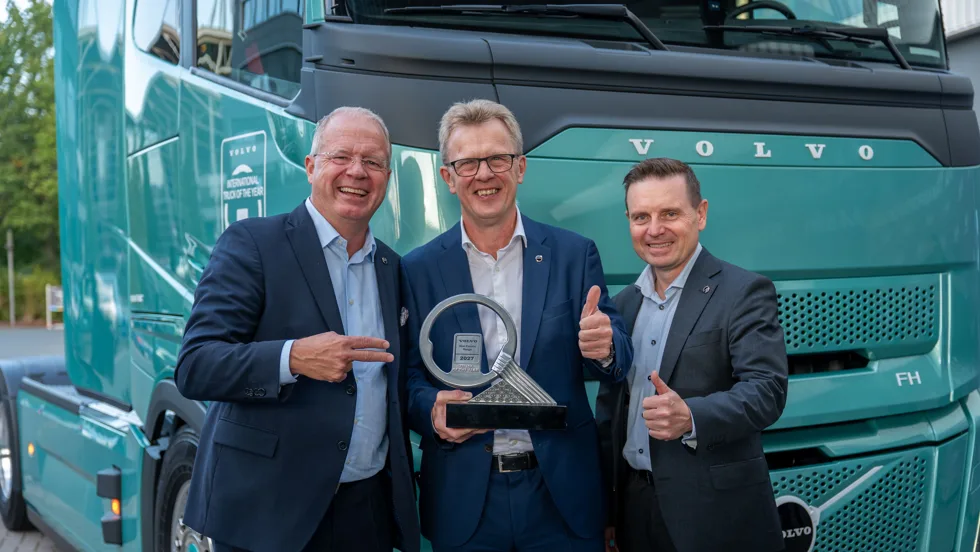
Volvo Trucks’ Electric Range Named International Truck of the Year 2027
The award recognizes Volvo’s global heavy-duty electric lineup, while more than 750 VNR Electric trucks have accumulated nearly 37 million miles in U.S. and Canadian fleet operations.
Read More →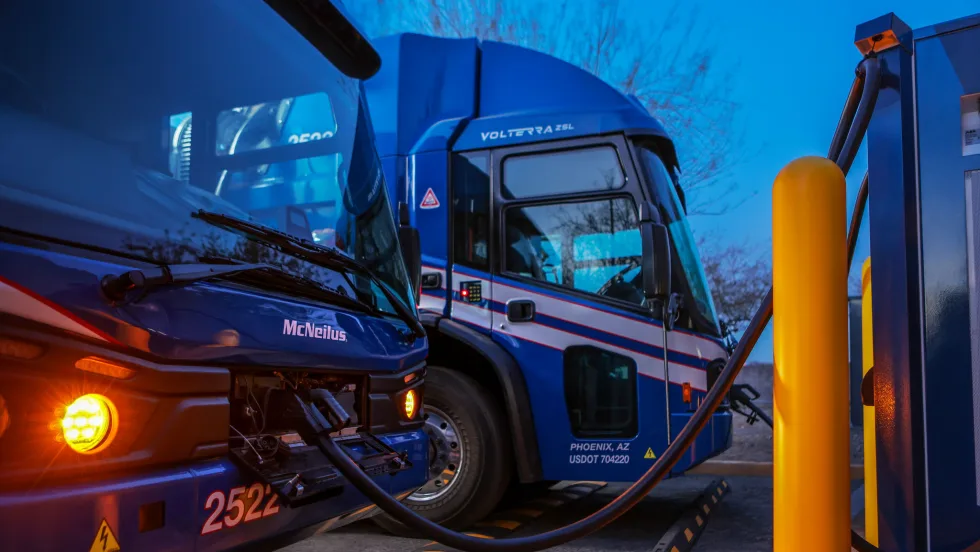
How Republic Services Decides Where Its Next Electric Trucks Can Go
With 250 electric collection trucks now in service, Republic Services is learning that scaling electrification depends less on proving the vehicle and more on whether each site can support what comes next.
Read More →
EV Charging Use Is Outpacing Infrastructure Growth
ChargePoint’s 2026 Charging Forward Report points to rising charger use, higher-powered charging, commercial vehicle electrification, and energy-management technology. Here’s what fleets should know.
Read More →
EV Realty Names Henrik Holland President as Charging Platform Expands
The former Prologis Mobility and Shell executive will help expand EV Realty’s truck charging business and move its power-first infrastructure model into autonomous vehicle depots and other fleet sectors.
Read More →
GreenPower Expands New Mexico EV Pilot With Larger Buses, V2G Testing
After logging more than 17,000 electric miles in the first year, New Mexico’s statewide pilot is moving into its second phase with larger vehicles, continued charging evaluations, and more.
Read More →
Can EV-as-a-Service Help Fleets Scale Electrification?
Sustainability Partners CEO Adam Cain explains how matching EVs, charging infrastructure, and duty cycles can help fleets scale electrification.
Read More →
How EV-as-a-Service Is Moving Fleets Beyond Pilots
Adam Cain, president and CEO of Sustainability Partners, explains how EV-as-a-service can help fleets scale deployments by addressing duty-cycle requirements and charging challenges.
Read More →