


Related: GM Acquires Stake in Nikola, Will Produce Badger Pickup
Nikola Hits Back at Hindenburg Report
While Nikola says it has working prototypes of the Nikola Tre battery-electric semi, it doesn’t deny that an early prototype of its hydrogen-electric powered semi-truck was not driving under its own power in a 2017 video.
by Staff
September 14, 2020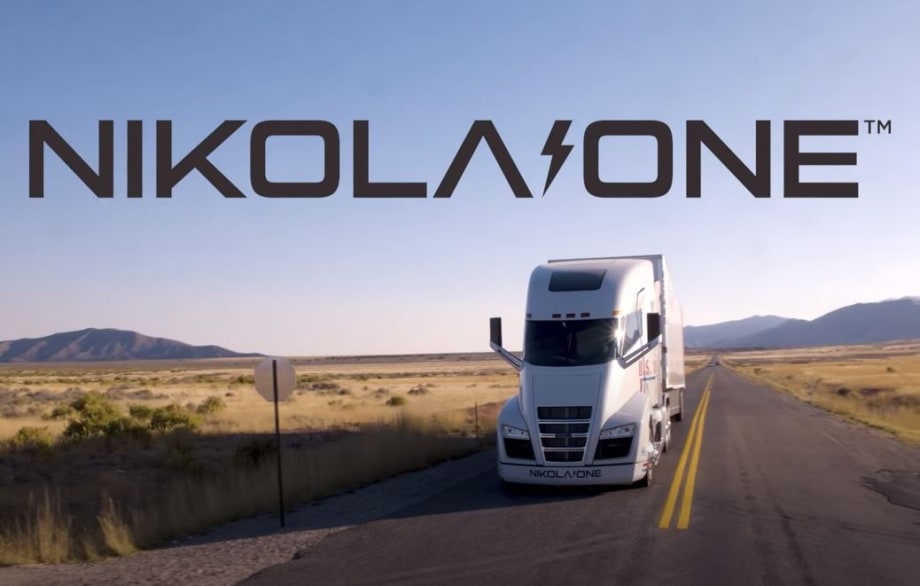
Nikola said at the time the video was made that investors “knew the technical capability of the Nikola One."
Screen grab via YouTube.
3 min to read
Nikola Corporation today issued a press statement commenting on a report published September 10 by Hindenburg Research, a short seller that accuses Nikola of fraud in its portrayal of its battery-electric and hydrogen fuel cell technology.
In the statement, Nikola asserted that the “opportunistic timing of the report” was designed to provide a false impression to investors and to “negatively manipulate the market to financially benefit short sellers, including Hindenburg itself.”
Nikola, which went public this June with a $26.3 billion evaluation, saw a more than 30% plunge in its stock price after the Hindenburg report. Nikola announced an agreement last week with General Motors in which GM will produce its Badger battery-electric pickup. Nikola said it is cooperating with the U.S. Securities and Exchange Commission (SEC) on these issues.
Regarding the specific Hindenburg accusations:
Nikola addressed development of the Nikola Tre battery-electric semi, created in collaboration with IVECO through a joint venture established in 2019 for the short-haul trucking sector.
The Hindenburg report cites a July 2020 podcast in which Nikola founder and CEO Trevor Milton said five of the trucks were “coming off the assembly line right now in Ulm Germany,” though a spokesperson for Bosch, the manufacturing partner building the trucks, confirmed this month that “they haven’t made any trucks yet,” according to Hindenburg.
Nikola said it still expects the Nikola Tre semi-truck to be ready for production and available to customers by the fourth quarter of 2021.
Bosch responded with a statement of its own: “Specific instances in the [Hindenburg] report quoting a Bosch employee were taken out of context” and “The employee spoke only about Bosch’s own plans for the IAA industry show and H2Haul project for the European Union.”
Nikola stated that the five trucks are currently being built and commissioned in Ulm, Germany, and are pre-production builds.

Photo courtesy of Nikola.
The Hindenburg report analyzes a video in which Milton claims that Nikola has developed proprietary inverter tech. The video shows an inverter with tape on it, which it claims hides the specs for an off-the-shelf inverter.
“At no time did Nikola state that the inverter on the prototype truck shown in the video was the Company’s or would be used in production,” Nikola responded.
“Nikola has been designing, engineering and working on its own inverters for quite some time. The Company does use third-party parts in prototype vehicles, some of which may be subsequently swapped out for its own parts in production. This is common practice among vehicle manufacturers and Nikola often blocks supplier names from the view of media and competitors.”
The Hindenburg report takes Nikola to task for overstating agreements with Anheuser Busch and Republic Services, when in fact those companies are not obligated to purchase any vehicles.
Nikola did not respond to the contracts themselves but stated that the Nikola Two hydrogen-electric powered semi-truck is expected to have a prototype delivered by the end of 2021 and a production version in the second half of 2023.
Nikola said the gearbox, batteries, inverters, suspension, brakes, steering, and other systems were all functional. However, Nikola said it decided to switch to development of Nikola Two, and that prototypes for the Two are self-propelled and have been “frequently demonstrated.”
Nikola does not dispute one of the report’s most explosive claims — that the Nikola One was in fact not driving under its own propulsion in the 2017 “Future of Transportation” video, filmed for a Phillips commercial.
Nikola said, “It was never described as ‘under its own propulsion’ or ‘powertrain driven.’”
Nikola said investors at the time “knew the technical capability of the Nikola One” at the time of their investment. “The fact is, Nikola has real working hydrogen fuel-cell powered semi-trucks,” according to the statement.
Originally posted on Automotive Fleet
More Electric Vehicles
EV Charging Use Is Outpacing Infrastructure Growth
ChargePoint’s 2026 Charging Forward Report points to rising charger use, higher-powered charging, commercial vehicle electrification, and energy-management technology. Here’s what fleets should know.
Read More →
EV Realty Names Henrik Holland President as Charging Platform Expands
The former Prologis Mobility and Shell executive will help expand EV Realty’s truck charging business and move its power-first infrastructure model into autonomous vehicle depots and other fleet sectors.
Read More →
GreenPower Expands New Mexico EV Pilot With Larger Buses, V2G Testing
After logging more than 17,000 electric miles in the first year, New Mexico’s statewide pilot is moving into its second phase with larger vehicles, continued charging evaluations, and more.
Read More →
Can EV-as-a-Service Help Fleets Scale Electrification?
Sustainability Partners CEO Adam Cain explains how matching EVs, charging infrastructure, and duty cycles can help fleets scale electrification.
Read More →
How EV-as-a-Service Is Moving Fleets Beyond Pilots
Adam Cain, president and CEO of Sustainability Partners, explains how EV-as-a-service can help fleets scale deployments by addressing duty-cycle requirements and charging challenges.
Read More →
PowerFlex, The Mobility House Join Forces to Advance Fleet Electrification
Two EV charging providers are joining forces to deliver a broader portfolio of energy management and fleet electrification solutions.
Read More →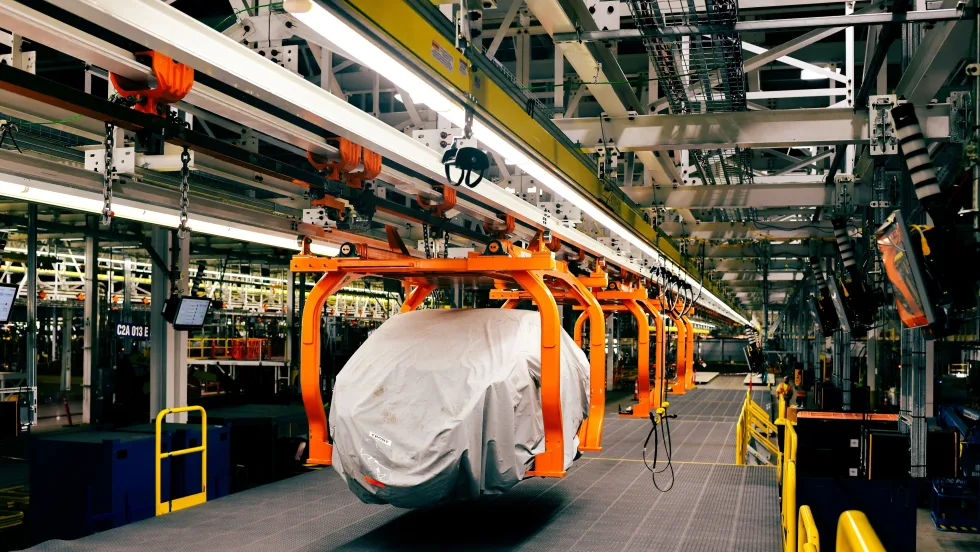
Ford Retools Louisville Plant for Fathom Electric Truck Production
Ford's $2 billion Louisville Assembly Plant overhaul introduces a three-part assembly process for the Fathom midsize electric truck, with production scheduled to begin in 2027.
Read More →
Merchants Fleet Reports 290M EV Miles as Fleets Navigate Changing Electrification Market
From millions in operating savings to hundreds of millions of EV miles, Merchants Fleet’s latest report reveals what’s working and what’s changing in fleet electrification.
Read More →
California District Commits to Electrify 25% of School Bus Fleet by 2028
One of the nation's largest school bus electrification projects to date demonstrates how grants, charging infrastructure, and public-private partnerships can help fleets transition to EVs at scale.
Read More →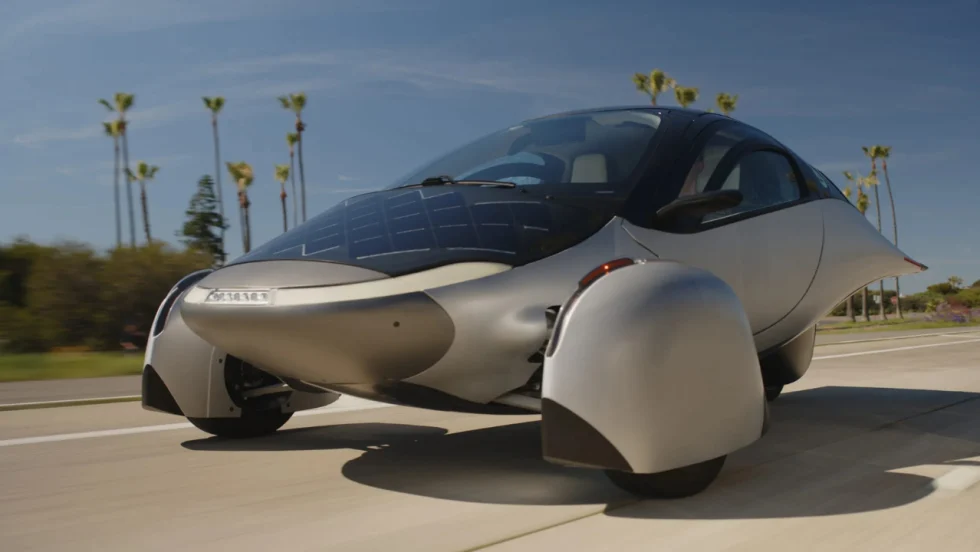
Aptera Orders Bodies and Chassis for Its First 40 Production Vehicles
Aptera Motors Corp. has issued purchase orders for the major structural components of its first 40 vehicles, and body and chassis components are expected to begin arriving in October.
Read More →