


Mercedes-Benz Debuts eSprinter in Germany
The new Mercedes-Benz eSprinter is intended to cover the broadest possible range of use in urban logistics
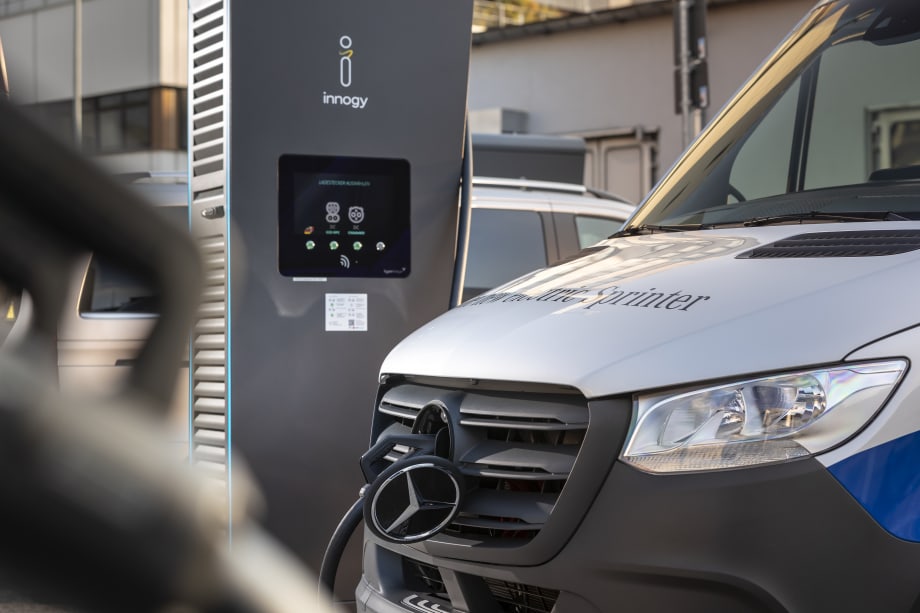
The van is also available to commercial customers who deliver goods locally emission-free, drive to the building site, or take care of maintenance work.
Photo courtesy Mercedes-Benz.
As the second commercial model after the eVito, the new Mercedes-Benz eSprinter was presented to the trade press in six large German cities Dec. 9-17. The vehicle is not yet available in the U.S.
The van is also available to commercial customers who deliver goods locally emission-free, drive to the building site, or take care of maintenance work.
The new Mercedes-Benz eSprinter is intended to cover the broadest possible range of use in urban logistics. Accordingly, it is initially being offered as a panel van and a permissible gross mass of 3,500 kilograms. Its maximum loading volume is 10.5 m3, the same as for the Sprinter with a combustion engine.
As with the entry-level diesel engine, the electric drive in the eSprinter drives the front wheels with an output of 85 kW and a torque figure of up to 295 newton metres. A flexible payload and battery concept moreover allow adaptation to individual needs for practical use.
The range with a utilisable battery capacity of 47 kWh (installed: 55 kWh) is 168 kilometres, with a maximum load of 891 kilograms. A second battery option takes into account other priorities in the use parameters: the configuration with a utilisable capacity of 35 kWh (installed: 41 kWh) allows a range of 115 kilometres. In turn, the maximum load rises to 1045 kilograms.
The integrated quick-charge function also ensures flexibility, thanks to which around 80% of the energy can be recharged within 30 minutes. The maximum speed can be configured to suit the task in hand: Maximum speed can be set at 80 km/h, 100 km/h or even as much as 120 km/h.
It is important to many vehicle fleets and fleet operators to carry out a precise analysis of feasibility, economy, and efficiency before switching to electric drives. Typical driving profiles, operating times, ranges as well as charge times are decisive parameters here — and require a holistic consideration. As part of its eDrive VANs strategy, Mercedes-Benz Vans has tried to establish an ecosystem for the individual mobility revolution. Significant points of the service include advice on the selection of the vehicle, support with new tools, and consideration of the overall running costs.
With its eVan Ready App and the eCost Calculator, Mercedes-Benz Vans has created tools that allow employers and drivers to use recordings of all journeys over a certain time period to find out whether an electric vehicle is suitable for their area of use.
Originally posted on Automotive Fleet
More Electric Vehicles
EV Charging Use Is Outpacing Infrastructure Growth
ChargePoint’s 2026 Charging Forward Report points to rising charger use, higher-powered charging, commercial vehicle electrification, and energy-management technology. Here’s what fleets should know.
Read More →
EV Realty Names Henrik Holland President as Charging Platform Expands
The former Prologis Mobility and Shell executive will help expand EV Realty’s truck charging business and move its power-first infrastructure model into autonomous vehicle depots and other fleet sectors.
Read More →
GreenPower Expands New Mexico EV Pilot With Larger Buses, V2G Testing
After logging more than 17,000 electric miles in the first year, New Mexico’s statewide pilot is moving into its second phase with larger vehicles, continued charging evaluations, and more.
Read More →
Can EV-as-a-Service Help Fleets Scale Electrification?
Sustainability Partners CEO Adam Cain explains how matching EVs, charging infrastructure, and duty cycles can help fleets scale electrification.
Read More →
How EV-as-a-Service Is Moving Fleets Beyond Pilots
Adam Cain, president and CEO of Sustainability Partners, explains how EV-as-a-service can help fleets scale deployments by addressing duty-cycle requirements and charging challenges.
Read More →
PowerFlex, The Mobility House Join Forces to Advance Fleet Electrification
Two EV charging providers are joining forces to deliver a broader portfolio of energy management and fleet electrification solutions.
Read More →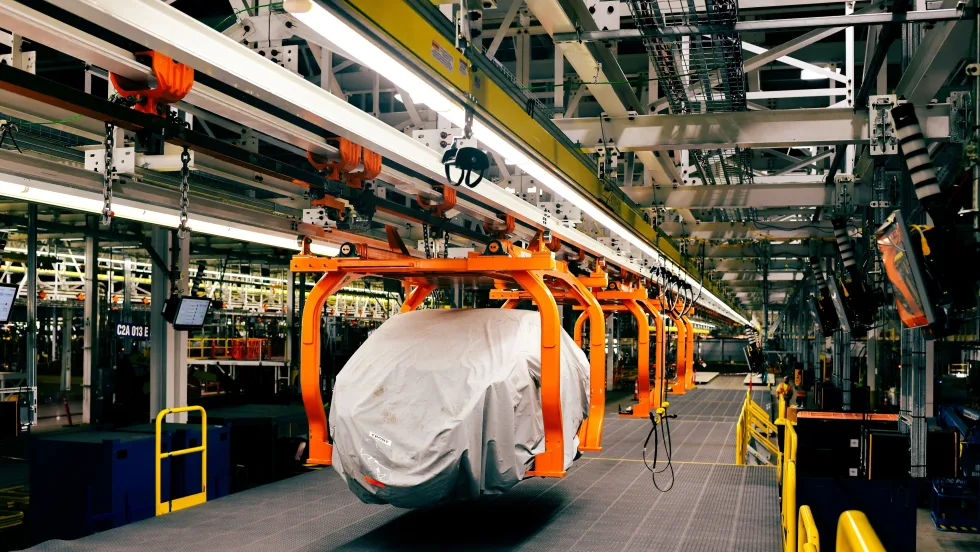
Ford Retools Louisville Plant for Fathom Electric Truck Production
Ford's $2 billion Louisville Assembly Plant overhaul introduces a three-part assembly process for the Fathom midsize electric truck, with production scheduled to begin in 2027.
Read More →
Merchants Fleet Reports 290M EV Miles as Fleets Navigate Changing Electrification Market
From millions in operating savings to hundreds of millions of EV miles, Merchants Fleet’s latest report reveals what’s working and what’s changing in fleet electrification.
Read More →
California District Commits to Electrify 25% of School Bus Fleet by 2028
One of the nation's largest school bus electrification projects to date demonstrates how grants, charging infrastructure, and public-private partnerships can help fleets transition to EVs at scale.
Read More →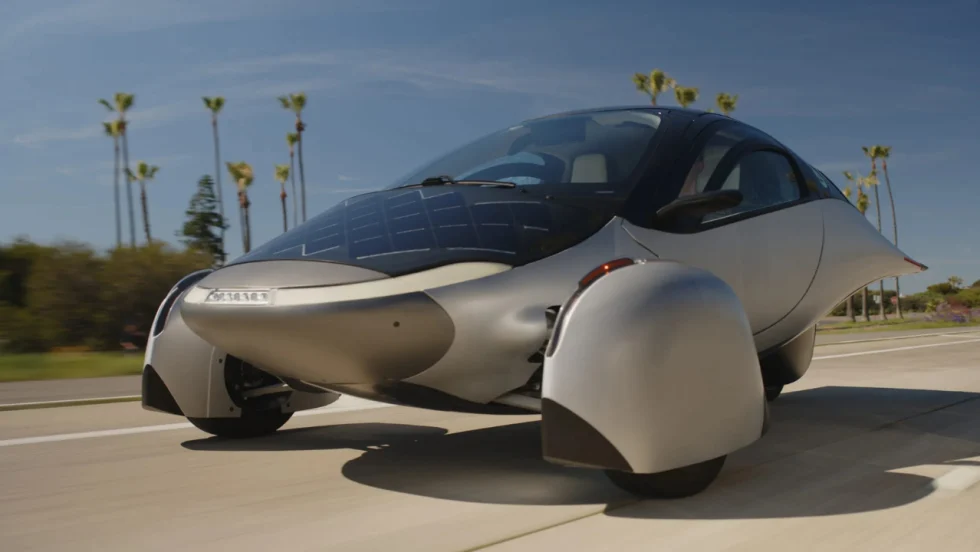
Aptera Orders Bodies and Chassis for Its First 40 Production Vehicles
Aptera Motors Corp. has issued purchase orders for the major structural components of its first 40 vehicles, and body and chassis components are expected to begin arriving in October.
Read More →