


Fleets Need To Adapt To A Swiftly Changing Environment As Brussels Bans Diesel Cars
Fleet operational requirements across Europe are becoming more complex, following the announcement by the Brussels Regional Government to ban diesel engines by 2030, ban petrol, hybrid and gas-fueled vehicles by 2035, with a target for carbon neutrality by 2050.

Brussels, Belgium
Credit: Pixaby
Fleet operational requirements across Europe are becoming more complex, following the announcement by the Brussels Regional Government to ban diesel engines by 2030, ban petrol, hybrid and gas-fuelled vehicles by 2035, with a target for carbon neutrality by 2050.
Announcing the internal combustion engine phase-out plan, the Brussels Government said the Bruxelles Environnement had undertaken several studies during 2020 which demonstrated that the planned improvement in air quality would prevent 100 to 110 premature deaths each year, reduce illnesses linked to NO2 exposure by 25% and save EUR100 to 350 million in health-related expenses. Projections also showed a reduction of between 65% to 75% in CO2 emissions.
It places Brussels as one of the more progressive cities tackling the impact of the polluting effects of internal combustion engines on local air quality and the impact on residents, along with London in the UK and Paris in France.
Making things more complicated for managing fleets is the lack of co-ordination on clean air policies across Europe. In the UK, the Government has a roadmap in place to ban diesel and petrol, cars by 2030, and all hybrids by 2035. The EU has yet to confirm plans for a ban although the European Commission’s proposed Euro 7 emission rules that encompass cars, vans, trucks and buses would amount to “a ban through the back door” it’s claimed.
Meanwhile, OEMs are setting their own targets with companies such as Mercedes-Benz saying it will eliminate virtually all combustion engines by the end of the decade; Opel/Vauxhall announcing it will become an electric-only brand in Europe by 2028; Audi planning to phase out combustion engines by 2033; while Renault says 90% of its vehicles will be battery electric models by 2030.
Meanwhile, data from the European Automobile Manufacturers’ Association (ACEA), paints a picture of a two-speed European charging network that could hamper fleet electrification policies.
The Association says that 70% of all EU charging stations are concentrated in just three Western European countries: the Netherlands (66,665), France (45,751) and Germany (44,538). Taken together these countries make up just 23% of the EU’s total surface area. By contrast, the other 30% of infrastructure is scattered throughout the remaining 77% of the region.
For example, Romania – which is approximately six times larger than the Netherlands – has only 493 charging points, equivalent to just 0.2% of the EU total.
ACEA said the two-speed infrastructure roll-out is developing along the dividing lines between richer EU member states in Western Europe and countries with a lower GDP in Eastern, Central and Southern Europe.
“Anyone who wants to buy an electric or fuel cell car depends on having reliable charging or refuelling infrastructure – whether that is at home, at work and on the road,” commented ACEA Director General, Eric-Mark Huitema. “The time has come for governments across Europe to pick up speed in the race to greener mobility.”
Top 5 European Countries With Most Chargers
1 Netherlands (66,665)
2 France (45,751)
3 Germany (44,538)
4 Italy (13,073)
5 Sweden (10,370)
Source: ACEA
In the UK, according to Zap-Map, there are nearly 25,000 chargers offering 42,619 connection points. The Society of Motor Manufacturers & Traders (SMMT) says it wants to see the installation of at least 2.3 million charging points by 2030 to enable the UK’s transition to electrification.
Originally posted on Automotive Fleet
More Legal/Legislative

California Governor Approves Instant ZEV Rebates For First-Time Buyers
That instant rebate is the centerpiece of a broader $600 million package Governor Newsom signed into law, keeping California active in the global clean transportation race.
Read More →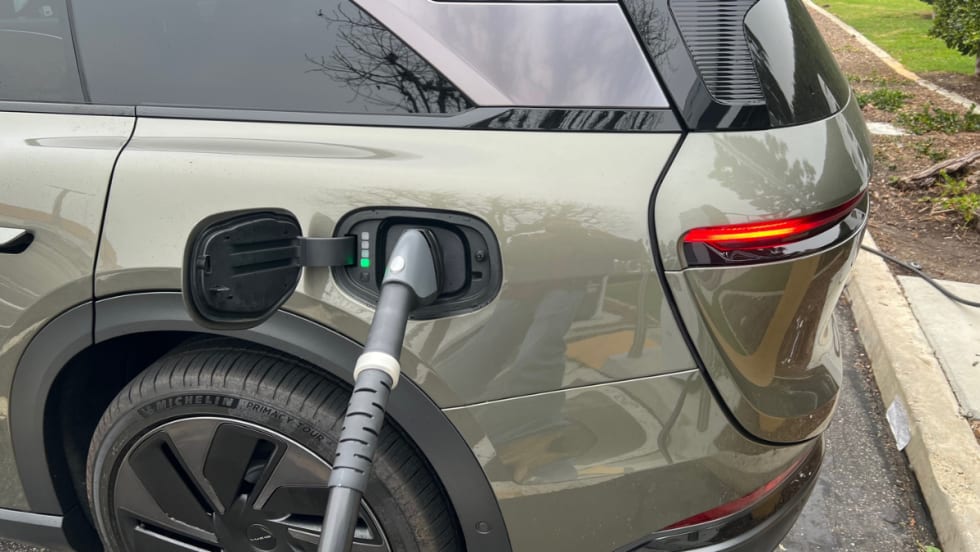
Used EVs Set Wholesale Sales Record In Q1
Rising gas prices may have boosted demand last month, as dealers pursued potential opportunities with more affordable used EVs.
Read More →
OEMS Expose Overdue EV Truths
Recent announcements from two automakers underscore a significant shift in the electric vehicle market, driven by EV losses and changing strategies. [VIDEO}
Read More →
The Freedom Era For Electric Vehicles
Season 2 Episode 1 of The Off-Peak premieres as the electric vehicle market no longer benefits from federal tax credits that expired at the end of Q3 2024. What does this mean for the future appeal of EVs?
Read More →
New Research Shows Renewed Potential And Tolerance For EVs
A new EV consumer survey finds partisan resistance is easing, but concerns around cost, incentives, and charging access still shape buyer interest.
Read More →
2025 Generated Big Headlines In The EV World
The EV industry entered a new more nuanced phase defined by realities and practical outcomes after a few years of grand visions, media hype, and bold investments.
Read More →
John Boesel Recognized at 2025 Fleet Forward Conference
Bobit recognized John Boesel, CEO of Calstart, who is retiring after over three decades of service.
Read More →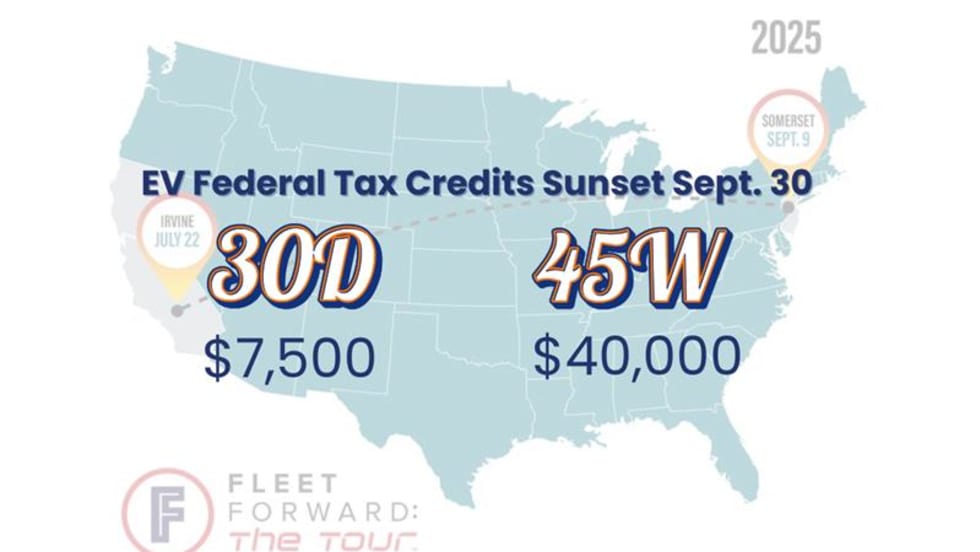
Final Push for Federal EV Incentives Highlighted at Fleet Forward Tour NJ Stop
Fleet managers in the Northeast will have a timely opportunity to take action on electric vehicle purchases at the upcoming Fleet Forward Tour stop in Somerset, NJ, on Sept. 9.
Read More →
Latest Hard Realities, Top Pressures For Electric Fleets
Speakers and experts at Fleet Forward: The Tour shared hands-on, hard-won insights on how fleet operations are handling tariffs, EV charging, rules and regs, and safety issues.
Read More →
Mobility 360 Panel to Define the Fleet Industry’s Next Tipping Point
At the 2025 Fleet Forward Conference, experts in capital, policy, and data will assess which trends are transforming fleet.
Read More →