


AFP Forms Kerbside Charging Group (KCG)
The newly formed collective will work with local governments to provide charging infrastructure in places where it is desperately needed.

GETTYIMAGES/Sushiman
To account for the inevitable adoption of electric vehicles (EVs) and available charging infrastructure in the United Kingdom (UK), the Association of Fleet Professionals (AFP) has formed a new collective: the Kerbside Charging Group (KCG).
According to the AFP, charging infrastructure is one of the “last stumbling blocks” to more widespread fleet EV adoption within the industry.
The KCG was formed to promote practical and effective on-the-ground answers to businesses adopting EVs in locations where charging stations were previously unavailable.
“Adequate curbside charging is vital to the corporate fleet sector being able to achieve its 2030 electrification objectives,” says Paul Hollick, AFP chair, “but many are hitting significant problems with those employees that do not have a home charging solution. This is especially the case for people who live in terraced streets or apartments.”
Though many providers manufacture curbside charging stations, they’re seldom available where fleets need them. Though the government has a program in place where funds are made available for chargers to be installed, it depends on local authorities—many of which are low on finances due to the global supply shortage and ongoing challenges posed by the pandemic.
The KCG will work with fleets, charging providers, and local authorities to ensure that charging is available wherever needed.
Vanguard members of KCG include David Fisher and Rod Hogg of Virgin Media; Denise Lane of Capita; Duncan Webb of ISS; Simon Gray of SSE; Julie Madoui and Claire Kershaw of Kier; Dale Eynon of DEFRA; Colin Hutt of Clarion Response; Olly Kunc of OpenReach; Lee Jackson of Marston Holdings; James Rooney and Lucy Simpson of Centrica; Simon King of Mitie; Tony Murphy of Murphy Plant; and Aaron Powell of Speedy Services.
“Together, these businesses are operating thousands of EVs,” Hollick says, “and many are finding that more than half of their drivers really need curbside charging, especially those that are adopting electric vans, whose drivers are proving less likely to have their own driveway.”
“At the moment, it’s not an exaggeration to say that they are muddling through with a mixture of depot-based charging and use of high-speed public facilities. Both of these, however, bring sizeable operational compromises, either needing vehicles to return to base or taking time out of the working day for charging.
“One of our initial tasks is to potentially collate all the fleet data, given to us from AFP members, into a centralized portal to map exactly where we need curbside charge points. We’re hoping to complete this over the next few months.
“To us, solving this problem is really the last stumbling block to EV adoption for fleets and making rapid progress in this area is absolutely essential. We are very much looking to create effective momentum very rapidly.”
Originally posted on Automotive Fleet
More Charging
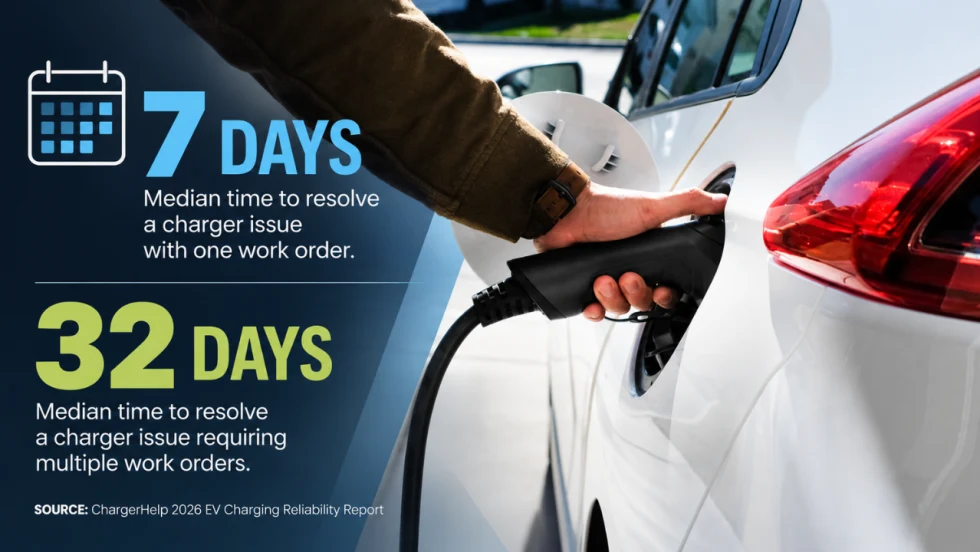
What Happens When an EV Charger Goes Down at Your Fleet Depot?
A failed EV charger can disrupt routes, delay vehicles, and create unexpected costs. Here's how fleets can troubleshoot problems, arrange backup charging, and minimize downtime.
Read More →
California Opens $28 Million in EV Fast-Charging Incentives
The Fast Charge California Project offers up to $100,000 per charging port for eligible, ready-to-build public charging projects, with applications open through Jan. 14, 2027.
Read More →
Honda Develops In-Motion Wireless EV Charging Technology for Commercial Vehicles
Honda, Taisei and Taisei Rotec are developing a road-embedded wireless charging system capable of transferring up to 150 kW, with public-road testing planned in Japan beginning in fiscal 2027.
Read More →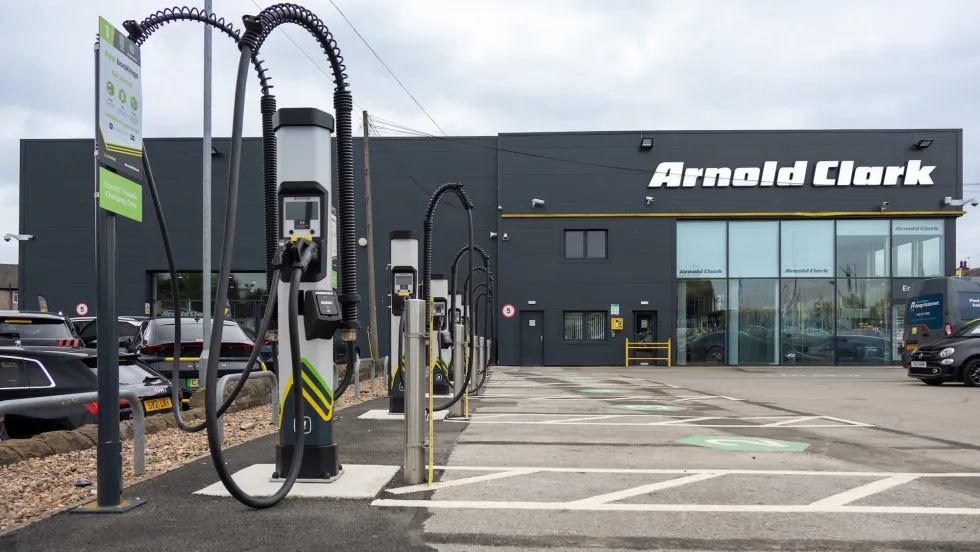
Arnold Clark Charge Opens Six Ultra-Rapid EV Chargers in Huddersfield
The new public charging site brings the Arnold Clark Charge network to 63 locations across the U.K., with charging priced at 55 pence per kWh.
Read More →
ChargerHelp Report Finds EV Charger Recovery Delays Can Stretch Beyond a Month
An analysis of approximately 500 million data points found charging issues requiring multiple work orders took a median of 32 days to resolve, highlighting the operational impact of diagnostics and repair coordination.
Read More →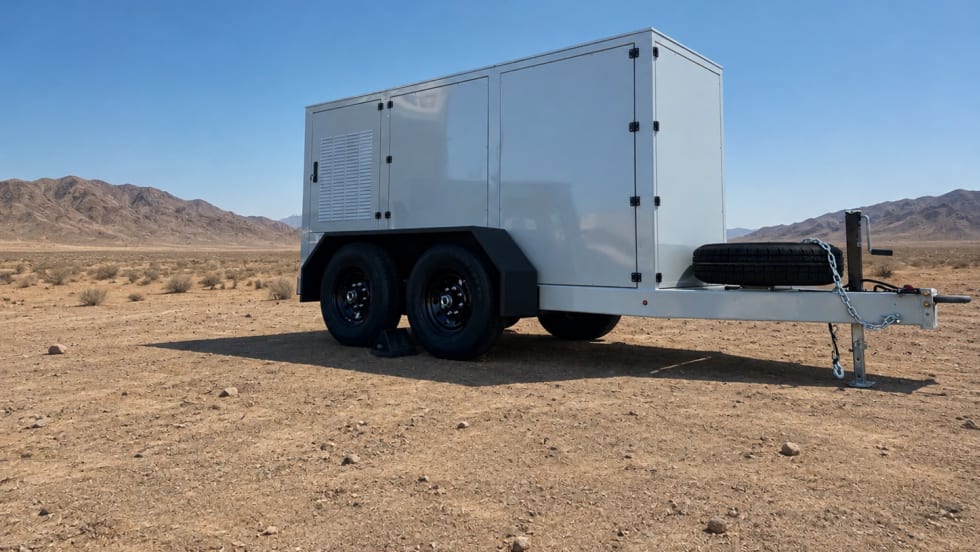
Xos Mobile Charging Hub Surpasses 1 GWh of Energy Delivered
As fleets electrify, charging capacity does not always arrive on the same timeline as the vehicles. Operating data from one Xos Hub shows how mobile, grid-independent charging can support vehicles when permanent infrastructure or utility upgrades aren't available.
Read More →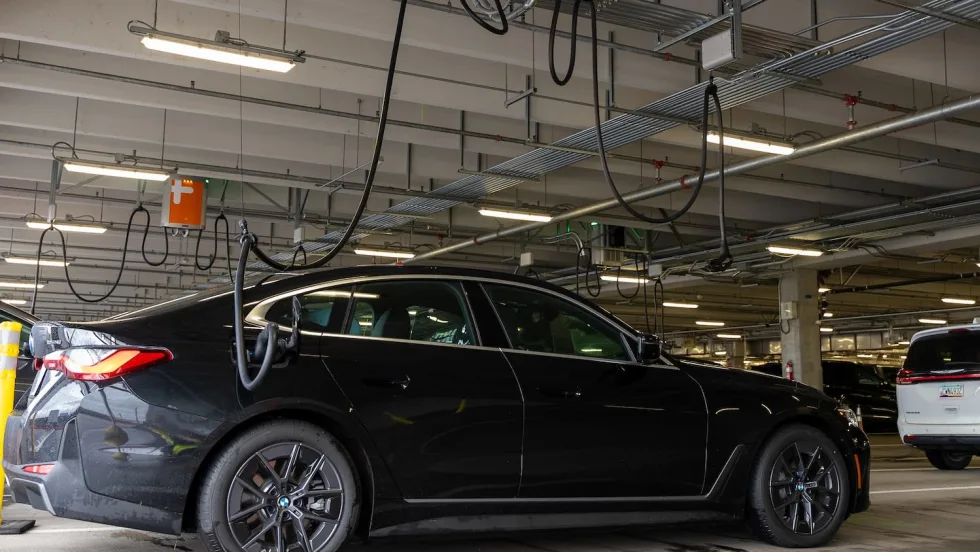
ChargePoint Adds Overhead EV Fast Charging at Portland International Airport
The installation can charge up to 20 rental vehicles simultaneously and uses overhead equipment to preserve ground-level space at the airport's Quick Turnaround Facility.
Read More →
Octopus Energy Launches Public EV Charging App in U.S.
Octopus Charge allows EV drivers to locate and access public charging stations through a single app, building on the company's Electroverse platform in Europe.
Read More →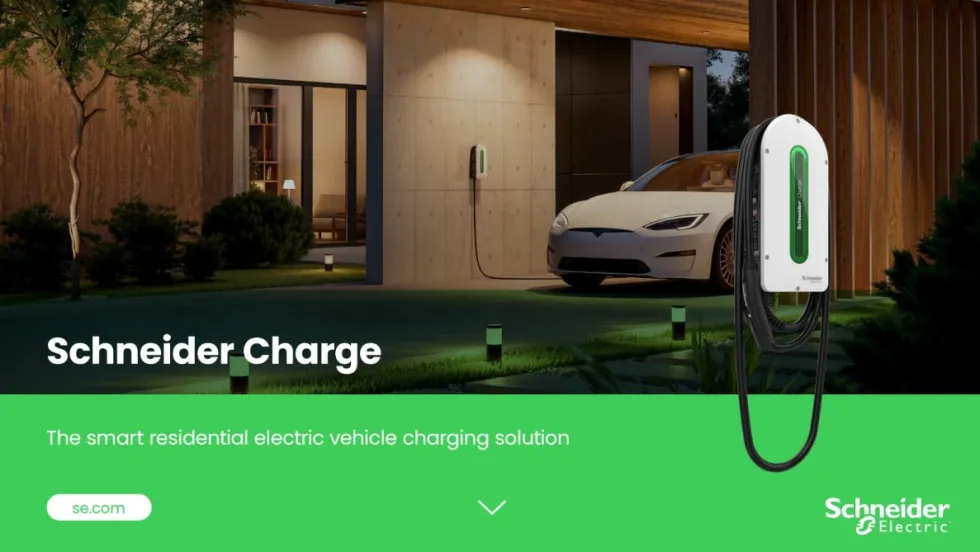
Schneider Electric Launches Level 2 Home EV Charger With Integrated Load Management
Schneider Charge uses integrated SmartAmp technology to adjust charging output based on household electrical demand and is available with NACS or J1772 connectors.
Read More →
Why EV Charging Reliability Is More Complicated Than It Looks
GridLink CEO Josh Silets explains what causes EV chargers to fail, why fleet operators often struggle to identify the source, and what questions they should ask charging vendors.
Read More →