


Thinking Electric? Survey the Neighborhood
For on-facility or warehouse driving, neighborhood electric vehicles are available now to help you save money and the environment. Several production freeway-ready EVs are coming in the near future.
If you are looking for a highway-ready, pure-electric vehicle, your choices are limited to one at the moment — the all-electric sport/utility truck available in California from Phoenix Motorcars.You have many choices, however, if your fleet needs call for a neighborhood electric vehicle (NEV). A traditional NEV resembles a large golf cart and is used for on-facility, on-campus, or warehouse driving. Yet a newer class of NEV has arrived, with the look and functionality of a sedan or pickup, and top speeds of 35 miles per hour.
Some towns are beginning to relax the rules for over-the-road driving. Wisconsin, Minnesota, and Michigan state legislatures have all passed laws allowing cities to enact ordinances allowing NEVs on streets with speed limits of 35 mph and under.
As EVs are powered by electricity, running costs are very low — about 1 to 3 cents per mile.
Besides the obvious financial benefit of not having to fill up with fossil fuel, electric vehicles incur less maintenance costs. Most use regenerative braking, which cuts brake wear considerably. EVs need no oil changes, tune-ups, or belt replacements. An internal combustion engine has many moving parts, but the driveshaft is the only moving part in an electric motor. Fewer moving parts means a lot less can break down.
The biggest maintenance issue is batteries, says Bill Moore, publisher and editor-in-chief of EV World (www.evworld.com). Batteries last three to four years, yet their life can be cut in half with abuse. Replacement battery packs can cost $1,500 to $1,800, Moore says.
Many individuals and businesses are now looking to do business with companies that leave a less harmful imprint on the environment. Electric vehicles have no tailpipe emissions and produce no local pollution or carbon dioxide.
Yet electric vehicles are not entirely pollution-free, as most are recharged from an electric power grid that burns fossil fuels.
The major manufacturers tinkered with limited commercially available electric vehicles (GM’s EV1, Ford’s Th!nk, and the Toyota RAV4 EV) to comply with California’s short-lived zero emissions mandate in the late 90s. At present none offer an on-highway, purely-electric vehicle. However, General Motors has said it may have a production-ready model of the Chevy Volt in “three to four years.”
Here’s what’s out there now, along with some production on-highway EVs from smaller manufacturers making their way to the market.
ZAP
ZAP, which stands for “zero air pollution,” has been in transportation technologies since 1994. Last year, the company began importing to the United States a modified version of the European micro Smart Car.
ZAP Automotive is currently launching the Xebra, which ZAP says is the first 100-percent production EV not designated as a low-speed vehicle. ZAP claims the Xebra is the only production EV available in the U.S. with a top speed of 40 mph.
ZAP manufactures the Xebra sedan and the Xebra truck, similarly priced at about $10,000. Both are based on a three-wheel chassis, which classifies Xebra as a motorcycle under the National Highway Traffic Safety Administration (NHTSA) regulations. The truck is steel-aluminum construction, while the outside of the sedan is fiberglass and the inside is steel aluminum. The sedan has four doors and carries four passengers, while the truck carries two passengers and has a bed that can convert to a dump or flat bed.
The Xebra is manufactured through a partnership with a Chinese auto manufacturer.
This past May, ZAP sold several Xebra sedans, trucks, and ZAP scooters to six Domino’s Pizza franchises for pizza deliveries. Domino’s will test them for possible larger-scale use throughout the company.
As for future production vehicles, the ZAP-X Crossover, being developed with Lotus engineering, will feature an all-wheel-drive option with electric motors inside each wheel, potentially delivering a whopping 644 hp and speeds up to 155 mph. ZAP says this high-performance electric car will be available in 2009.
Global Electric Motorcars (GEM)
Global Electric Motorcars (GEM), a DaimlerChrysler company, manufactured its first vehicle in 1998 — a 48-volt, twopassenger
vehicle with a top speed of 20 mph. Soon thereafter, NHTSA designated
the neighborhood electric vehicle as a new class of motor vehicle.
All GEM vehicles come equipped with safety belts, headlamps, windshield wipers, and safety glass. GEM offers a choice of six models suiting passenger and utility needs. The GEM e6 six-passenger model is popular for shuttling in environments such as campuses, hospitals, and other large complexes. The two-passenger e2 starts at under $7,000.
GEM also has a security vehicle option set for patrolling in planned communities, colleges, parking lots, and downtown areas.
GEM’s newest model, the GEM eL XD, is a heavy-duty utility vehicle. “The eL XD has a half-ton payload capacity and is proving to be a great addition to a variety of fleets such as those found at military installations, state parks, work sites, and university grounds,” says Russ Kiefer, director of sales and marketing at GEM.
Columbia ParCar
Columbia ParCar Corp. manufactures gasoline and electric-powered golf
carts and utility, industrial, commercial, and passenger vehicles. Columbia’s Eagle line of passenger vehicles include neighborhood EVs available in two- or four-passenger configurations.
The Eagle’s 48-volt system uses eight six-volt batteries instead of six eight-volt batteries like many of its competitors. Columbia says its customer response has shown that this is the best system for extended run time and better hill-climbing ability.
Miles Automotive
For the past three years, Miles Automotive Group Ltd. has developed a
series of low-speed all-electric vehicles, manufactured in China. The
three low-speed cars are now being imported for sale in the U.S. for fleet and government use, and for sale to individual consumers through regional dealerships. Vehicles include:
The ZX40 all-electric vehicle, available in two- and four-seat models, operates to 25 miles per hour with a range of 40 to 50 miles on a single charge.
The ZX40S has a similar top speed of 25 miles per hour, but a longer range of 60 to 70 miles. The ZX40S combines high torque with rapid acceleration and is suitable for hilly roads.
The OR70 is a similar all-electric vehicle that operates at a speed between 35 and 40 miles per hour and has a similar range to the ZX40S. This vehicle is for non-public roads only and may not be registered or licensed in any state.
Miles Automotive Group Ltd. is continuing to develop the Javlon, an all-electric vehicle with top speeds of more than 80 miles per hour. The car will have a range in excess of 125 miles on a single charge. Miles says the Javlon will be available for sale by the end of 2008.
Dynasty IT
British Columbia, Canada-based Dynasty began the design of the IT line of electric low-speed vehicles in the fall of 1999 and produced the first sedan model in April 2001.The models include a sedan, utility, and van, along with the Tropic, a “fourseat rag top,” and Sport, a four-door, four-seater. The following features are standard with the sedan: halogen headlamps, self-canceling turn signals, three-point anchored seat belts, automotive safety windshield, dual zone automotive brakes, side- and rear-view mirrors, windshield wiper with two speeds, and a heater/de-mister system. Prices start at around $11,000.
Highway Ready and Available: Phoenix Motorcars
Phoenix Motorcars manufactures zero-emission, freeway-speed fleet vehicles. In August, the company began deliveries of its five-passenger Crew Cab pickup truck, similar in size and configuration to a Chevrolet Colorado or Dodge Dakota Crew Cab, allowing for payload in the back and multiple passengers.The vehicle, priced at $45,000, gets about 100 miles per charge and has a top speed of 95 mph. The company will release an SUV model in the first quarter of 2008. Scheduled customer deliveries include Pacific Gas and Electric in Northern California, the County of San Bernardino, Calif., Univ. of California Los Angeles, the city of Santa Monica, Calif., and the Port of Los Angeles.
Phoenix Motorcars Vice President of Sales and Marketing Bryon Bliss says the long-lasting engine is one reason why the vehicle is worth the asking price.
The vehicle uses a permanent magnet DC motor that has only 10 moving parts, Bliss says. “It’s brushless, meaning there’s no friction, allowing for a motor that’s going to last much longer and run much more efficiently than an internal-combustion engine,” says Bliss.
Bliss claims the vehicle, including the battery, will last up to 400,000 miles.
On the high end, this fall, Tesla Motors will start selling a $92,000 all-electric roadster that does 0 to 60 in about 4 seconds. The company is also said to be working on two other mass-market models.
Originally posted on Automotive Fleet
More Electric Vehicles
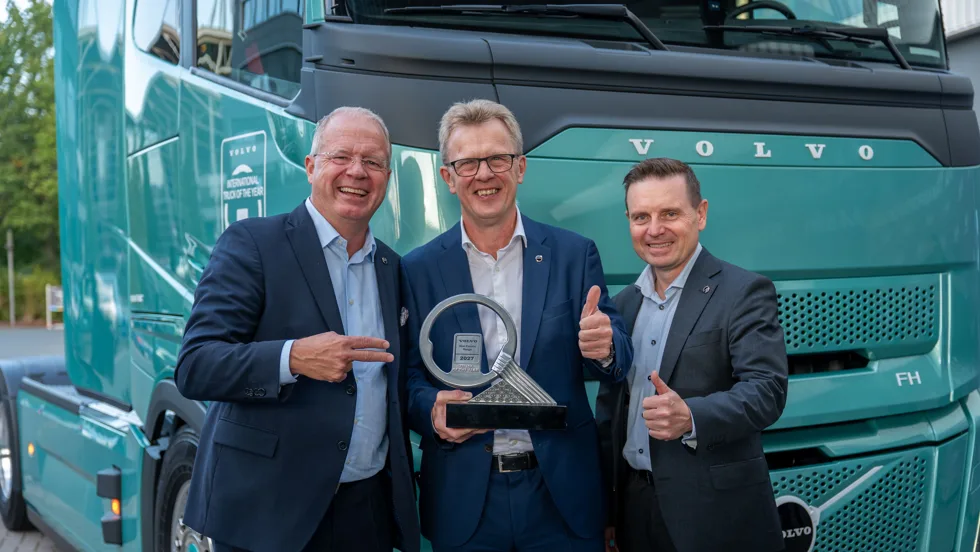
Volvo Trucks’ Electric Range Named International Truck of the Year 2027
The award recognizes Volvo’s global heavy-duty electric lineup, while more than 750 VNR Electric trucks have accumulated nearly 37 million miles in U.S. and Canadian fleet operations.
Read More →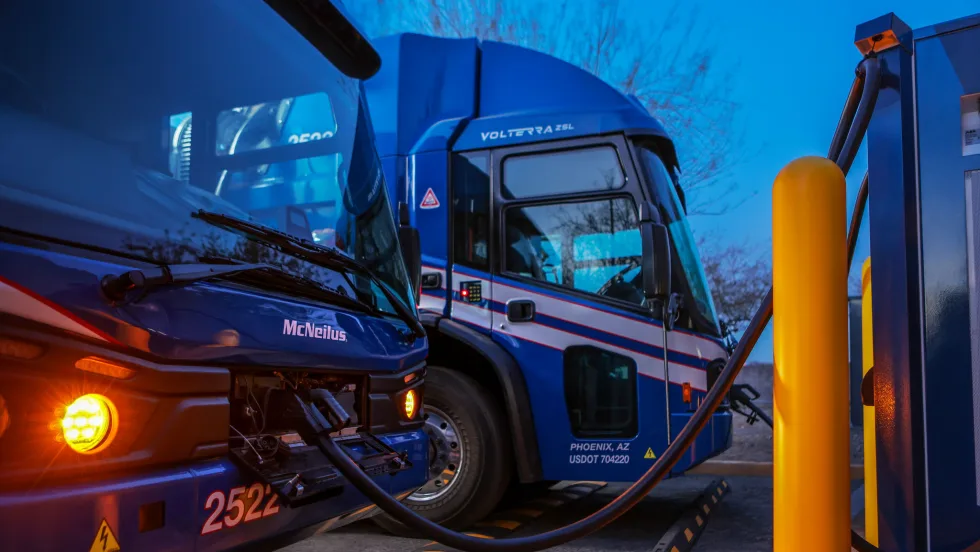
How Republic Services Decides Where Its Next Electric Trucks Can Go
With 250 electric collection trucks now in service, Republic Services is learning that scaling electrification depends less on proving the vehicle and more on whether each site can support what comes next.
Read More →
EV Charging Use Is Outpacing Infrastructure Growth
ChargePoint’s 2026 Charging Forward Report points to rising charger use, higher-powered charging, commercial vehicle electrification, and energy-management technology. Here’s what fleets should know.
Read More →
EV Realty Names Henrik Holland President as Charging Platform Expands
The former Prologis Mobility and Shell executive will help expand EV Realty’s truck charging business and move its power-first infrastructure model into autonomous vehicle depots and other fleet sectors.
Read More →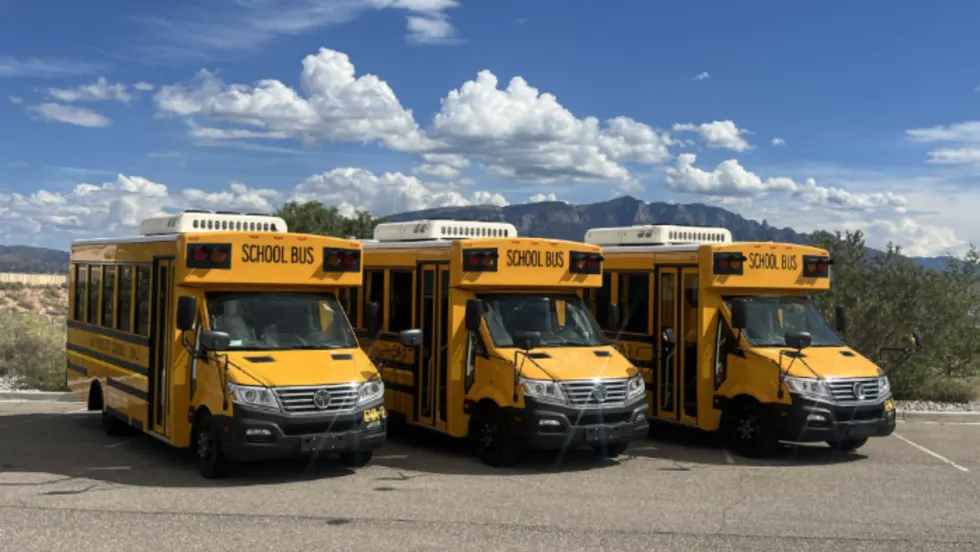
GreenPower Expands New Mexico EV Pilot With Larger Buses, V2G Testing
After logging more than 17,000 electric miles in the first year, New Mexico’s statewide pilot is moving into its second phase with larger vehicles, continued charging evaluations, and more.
Read More →
Can EV-as-a-Service Help Fleets Scale Electrification?
Sustainability Partners CEO Adam Cain explains how matching EVs, charging infrastructure, and duty cycles can help fleets scale electrification.
Read More →
How EV-as-a-Service Is Moving Fleets Beyond Pilots
Adam Cain, president and CEO of Sustainability Partners, explains how EV-as-a-service can help fleets scale deployments by addressing duty-cycle requirements and charging challenges.
Read More →
PowerFlex, The Mobility House Join Forces to Advance Fleet Electrification
Two EV charging providers are joining forces to deliver a broader portfolio of energy management and fleet electrification solutions.
Read More →
Ford Retools Louisville Plant for Fathom Electric Truck Production
Ford's $2 billion Louisville Assembly Plant overhaul introduces a three-part assembly process for the Fathom midsize electric truck, with production scheduled to begin in 2027.
Read More →
Merchants Fleet Reports 290M EV Miles as Fleets Navigate Changing Electrification Market
From millions in operating savings to hundreds of millions of EV miles, Merchants Fleet’s latest report reveals what’s working and what’s changing in fleet electrification.
Read More →