

FULL WEBINAR AVAILABLE FROM LEASEPLAN USA
This article is based on a a webinar presented by LeasePlan.
To listen to the entire webinar, visit globalfleetexperience.com, register for free on the site, and scroll to find the May 25, 2021, session.

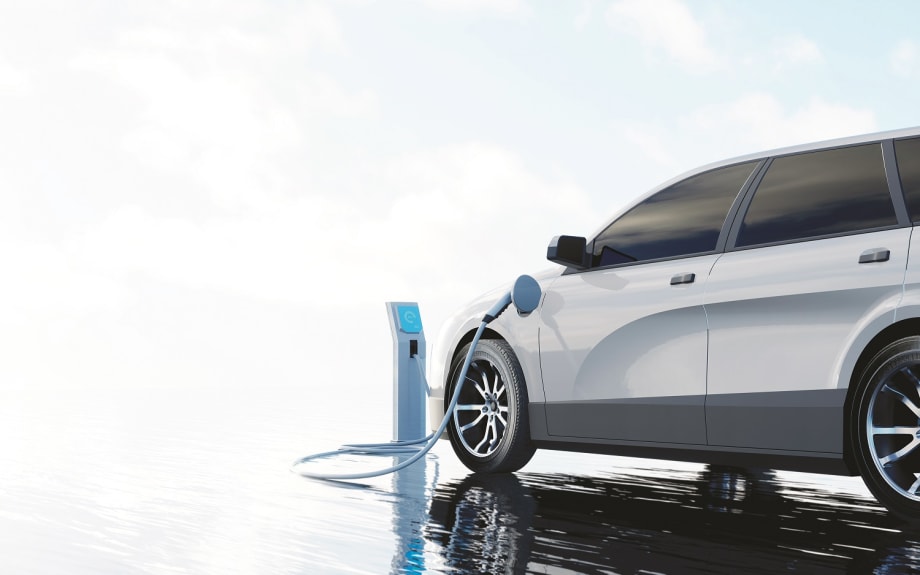
Fleet electrification is a new industry business model and a milestone event. Five global fleet experts discuss how they’re handling the hurdles in the early days of their EV transitions.
gettyimages.com/3alexd
How many people have this opportunity to be involved in a milestone event—the electrification of the fleet industry and the automotive industry in general?” asked Mike Antich, a 20-plus year fleet industry veteran. “Our grandchildren will study this issue in their MBA classes.”

Automotive Fleet
Antich, editor of Automotive Fleet, posed the question as moderator of a recent webinar panel of industry experts examining the wide range of hurdles in converting global fleets to electric vehicles (EV).
The webinar, “Challenges in Transitioning to an Electric Vehicle Fleet” was featured in the Global Fleet Conference Experience, a month-long series of virtual presentations held this spring. Hosted by Ricardo Fonzaghi, chief commercial officer, LeasePlan USA, the panel also included:
Jordan Baynard, sourcing and procurement manager at Ecolab
Sharon Etherington, senior manager, regional administrative services at Roche Diagnostics
Joe Lukacs, global director of fleet operations at The Sherwin-Williams Company
Tania Mijas, senior regional category lead for travel & fleet — Americas at Genentech
Vin Ricciardi, North American fleet senior manager/U.S. sales operations business lead at Mondelez International
The following recap features highlights of the panel discussion.
Antich: All of you are involved in developing a new business model, which is a roadmap to electrification. What is the strategy and the tactics needed to implement this new business model?

Roche Diagnostics
Etherington: Our goals were driven from the top down and the bottom up. There’s a great synergy between our corporate global sustainability goals, that is, to be emissions-free by 2050, and fleet globally to be emissions free by 2030. We must have stakeholder buy-in and stakeholder education to understand the why and the how and the benefits. Our drivers want to understand what’s in it for them. As long as we include them in the process and education, we’ll have a great partnership across a global perspective, a milestone in meeting our initiative and supporting drivers.
Mijas: Our parent company, Roche, has a 10-year goal of 50% reduction of CO2 emissions. On the procurement side, we are working very closely with our fleet council to guide affiliates on strategy. We also offer affiliates support on the global procurement side with tools, such as driver profiling, global RFPs, and global OEM connections.

Ecolab
Baynard: We’re learning how to put the roadmap together. As we’ve started to look at the technical and economic feasibility of current and near-future EVs, what we’ve uncovered is the complexity with the drivers. Just one example: drivers charging vehicles at home or at a depot.
Right now, we need to step back, pull additional data—in a survey, perhaps—that we can’t get through fuel purchases or telematics. We’re getting things started with all our partners: electric charging companies, OEMs, LeasePlan, etc., to walk through all the elements involved in such a transition.
Lukacs: It’s a little different story for us. After a year of research, we dove into this process, taking the pandemic downtime to work with partners to identify specific drivers and locations, suitable vehicles, etc. We designed custom-fit packages and partnered with a charging station company and an installation company. We successfully piloted two EVs in a four-month period, which is almost unheard of. We expanded our pilot as a proof of concept and added 15 more vehicles.
Antich: What are the biggest challenges for your global fleets in transitioning to EVs?

Mondelez
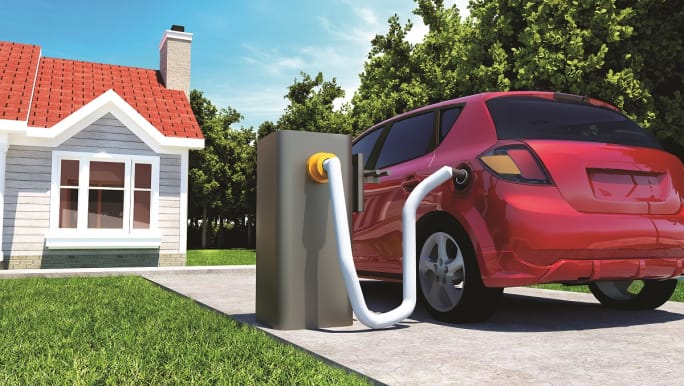
Ricciardi: The biggest challenges are the drivers. We are 100% home-based drivers. The vehicles are great; the issue is how do we fit the drivers with charging stations? About 30% of our drivers live in apartments or condos, governed by homeowners’ associations.
We have to step back and question the project’s scope. What drivers do we want to go after? It’s not going to be the majority of drivers, right now, because that space still needs some work. We’re taking a different approach: a smaller test with a pre-described driver who meets all the requirements and who we could currently retrofit, based on existing infrastructure. We need to start, to get our toe in the water sooner than later.
Baynard: A key message coming through is to change the way we look at it. What can we do now? Who are the profiles we can go after; what changes can we do now, knowing this will be an evolution? It’s a change of mindset: from what are we waiting to happen to enable this transition, to what can we do now. How can we assist this fleet industry ecosystem? How can we help everyone move to EV?
This is a gamechanger for everybody. Obviously, we’d like to lead the way—walk the talk. We talk about sustainability, but ultimately, it’s about helping this ecosystem get there collectively.
Sherwin-Williams
Lukacs: We will get there, but it’s a matter of getting your feet wet now. The cost will come down; the ecosystem will grow. As we do these pilots, we will identify more challenges and more opportunities we can work on collectively with our partners. The ecosystem will grow, so you have to get your feet wet now or you’ll be behind the curve.
Etherington: It’s okay to move forward and not have all the answers. Our strategy today recognizes that the vehicles available now do not fit our purpose, for what our drivers need. So we are temporarily launching plug-in hybrids. We have many PHEVs, knowing this will be a bridge for our drivers, and it will get us to where the OEMs will be in a few years: a vehicle that will fit our needs. We moved forward even though we didn’t have all the answers, and I think that will work to our benefit in the long term.
Mijas: In just six months in Uruguay, a very small country, we put everything together to sell the idea to our stakeholders, to our finance team: all the tax, benefits, costs, maintenance—everything, without knowing all the details. But, in less than six months, we put the pieces together and started to implement full-electric vehicles for all of Uruguay. This is a good example of not knowing everything, but we try to put together all the pieces we had anyway.
Antich: One industry conundrum is determining return on investment (ROI) on electric vehicles. How do you calculate it? How do you calculate total cost of ownership (TCO)?
Baynard: We approximate much of it right now. These EVs haven’t been on the road for six years to determine ROI accurately. We rely on our partners, the experts in that space, to model that number. We talk to a lot of people, not just one voice—LeasePlan, third-party consultants, OEMs—to try to triangulate the estimations, to develop ranges and levels of sensitivity. At the end of the day, to get support and alignment to roll the EV project out more broadly, we’ve got to prove the ROI. How we advance this is not necessarily to trial it for an extended period of time. But, other companies are also conducting trials in different areas and parts of their business with different people—that’s where we can collaborate. Share data to help accelerate the process for everyone.
Right now, I think there’s a lot of modeling, lots of “guess-timation.” We need harder numbers; that’s the challenge.

Genentech
Mijas: We don’t know exactly how this will be calculated in the future compared to what we have today. We have been putting all the pieces together for us to make sure we understand the ROI.
I think we’re going to get there, but right now we do not have a perfect formula. Management understands some gray areas are still there.
Antich: Collectively, as an industry, we are developing a new business model. One interesting idea is assigning a dollar value to the carbon emissions savings using an EV and to use this amount as a TCO deduct. Is this feasible?
Ricciardi: It’s a new concept. We use a lot of ranges for TCO and will definitely look at it.
gettyimages.com/mikkelwilliam
One key item is the extended vehicle life possible with EVs. We’re at 36 to 40 months now. If we’re going to 48 to 55 months, that’s a tough selling point for the drivers. They’re accustomed to a certain lifecycle. That’s a change we’re working through.
Baynard: I believe pricing carbon would help us with the equation. We talked about it in the sustainability group. It hasn’t been directly leveraged by the light fleet. But the value of carbon is a big gap in the equation when we’re monetizing all the components. I would like to see that discussion as well, but now we’re not leveraging it because there isn’t a price on it.
Antich: Which vehicle segments are important for fleets to have an EV alternative, which currently doesn’t exist or will be forthcoming in the next several years?
Lukacs: You hit the nail on the head. We don’t have a one-size-fits-all for Sherwin-Williams with respect to EVs. The space that seems lacking is the commercial side. We offer a retail side and a commercial side, a 50/50 mix. I know the OEMs are coming out with vans, trucks, and so on, so we’re excited to see what comes out over the next few years.
Etherington: We’re in that same space. We’re bridging with plug-ins and it’s good: we’re introducing employees, teaching them how to work with a plug-in, knowing they’re going to go to electric.
But we are waiting for some new opportunities from the OEMs in the next year or two.
Mijas: As global procurement supporting our companies around the world, we sent a global RFP to OEMs to understand what will be available in the next 2-3 years: pricing, availability, batteries, everything. Not only OEMs, but also consulting our leasing companies to support us. We want to give affiliates at least what is possible—hybrid, plug-in cars, EV and for us to have a plan.
Antich: As you introduce these new electric vehicles within an existing framework, how will you change your fleet policies and procedures?
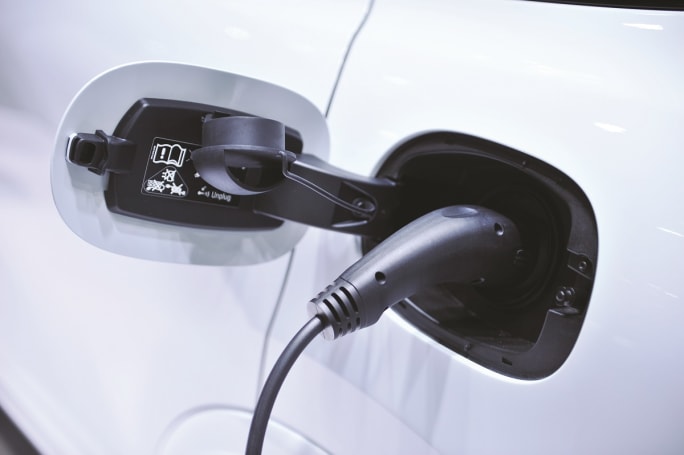
Lukacs: The policy changes in a couple of ways.One is reimbursement. Historically with a gasoline vehicle, you have a fuel card. That’s not an option now. You have a charging card that can tie back to a provider, but that’s a policy change.
gettyimages.com/ton_797
Home versus en route charging is a topic of conversation we need to address in our policy. Also the charger installation: driver eligibility and training, because some education is needed to show drivers how to charge their vehicle or to illustrate a top-level overview of the vehicle.
Lastly, termination of employment—if a driver moves on to a different company, what do we do with that equipment? From Sherwin-Williams’ perspective, our installation team installs the chargers in the home. The charger can be removed and moved to the next home. We’re taking a bite of the apple, one bite at a time.
Employee relocation that includes charger installation will include a cost to absorb and account for, probably in the TCO. It is subjective to a point, but until you get the data to plug into the TCO, I think that’s where we’ll see that fall.
Antich: What about stakeholders? What are your drivers saying?
Ricciardi: What really helped this go-round is a driver survey, not forcing anything on them. We identified the right demographic of driver and the right location and started with an informal survey. Surprisingly, we got good feedback early from drivers willing to voluntarily pilot with us. The driver’s survey really helped us narrow the field for the pilot. Our vehicles stay with the position. As drivers move to different locations, different jobs, the car stays with the position. We’ll have to work out if the charging station stays with the position.
Etherington: We used a little different approach. We did a soft launch with plug-in EVs last year. With little fanfare, we put it out in our selector. I was extremely surprised at the number of employees who selected the EV. We asked those employees, “What’s working well? What’s not working well? What are your pain points? What did you not know when you were given this vehicle? What did we not train you on?”
Originally posted on Automotive Fleet
ChargePoint’s 2026 Charging Forward Report points to rising charger use, higher-powered charging, commercial vehicle electrification, and energy-management technology. Here’s what fleets should know.
Read More →
The former Prologis Mobility and Shell executive will help expand EV Realty’s truck charging business and move its power-first infrastructure model into autonomous vehicle depots and other fleet sectors.
Read More →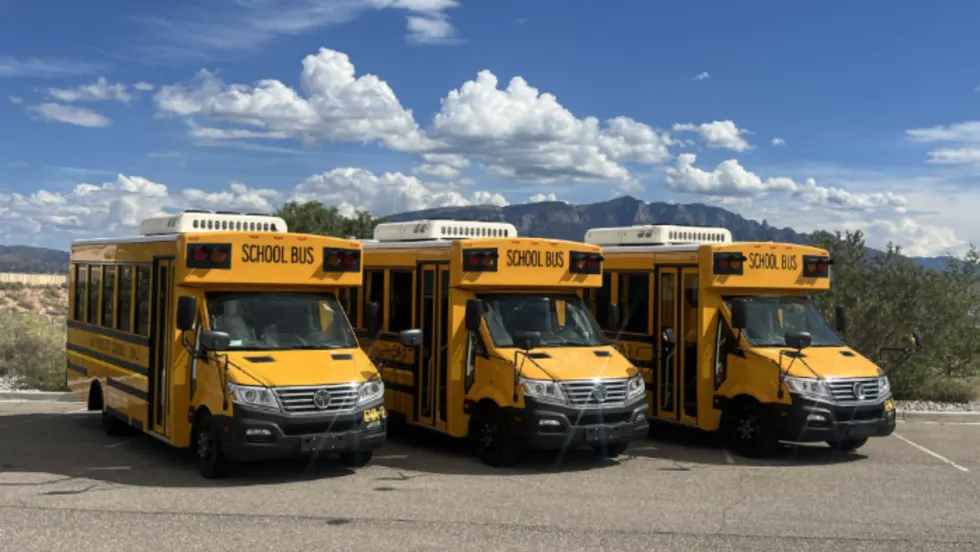
After logging more than 17,000 electric miles in the first year, New Mexico’s statewide pilot is moving into its second phase with larger vehicles, continued charging evaluations, and more.
Read More →
Sustainability Partners CEO Adam Cain explains how matching EVs, charging infrastructure, and duty cycles can help fleets scale electrification.
Read More →
Adam Cain, president and CEO of Sustainability Partners, explains how EV-as-a-service can help fleets scale deployments by addressing duty-cycle requirements and charging challenges.
Read More →
Two EV charging providers are joining forces to deliver a broader portfolio of energy management and fleet electrification solutions.
Read More →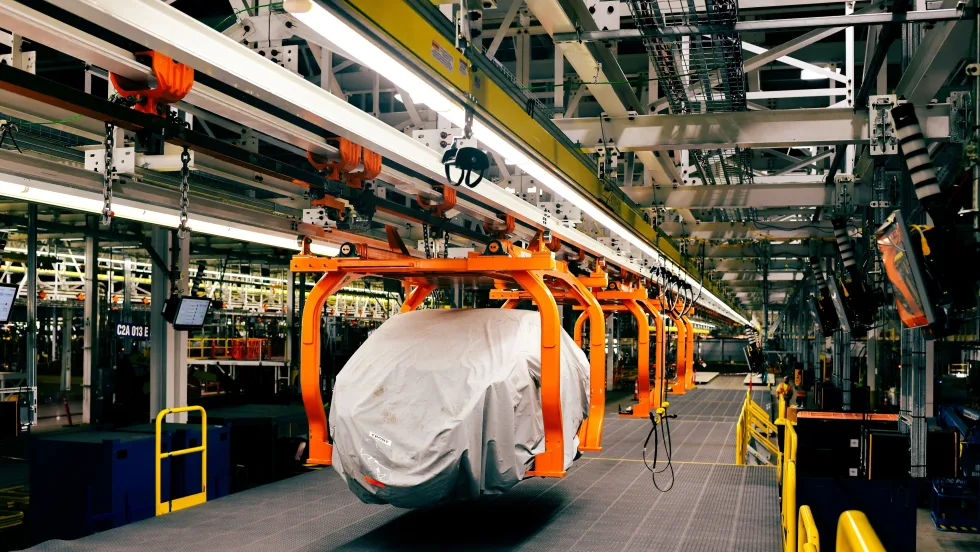
Ford's $2 billion Louisville Assembly Plant overhaul introduces a three-part assembly process for the Fathom midsize electric truck, with production scheduled to begin in 2027.
Read More →
From millions in operating savings to hundreds of millions of EV miles, Merchants Fleet’s latest report reveals what’s working and what’s changing in fleet electrification.
Read More →
One of the nation's largest school bus electrification projects to date demonstrates how grants, charging infrastructure, and public-private partnerships can help fleets transition to EVs at scale.
Read More →
Aptera Motors Corp. has issued purchase orders for the major structural components of its first 40 vehicles, and body and chassis components are expected to begin arriving in October.
Read More →